

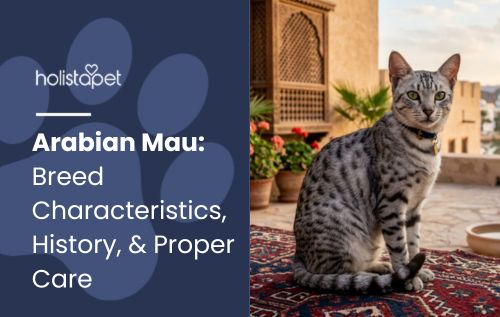
Arabian Mau cats thrive in hot climates, bringing energy, intelligence, and loyalty into the home. This natural breed from the Arabian Peninsula stands out for its playful personality, healthy build, and low maintenance care needs.
Understanding the Arabian Mau personality and history helps owners raise a happy and active companion. Browse our cat breed articles to explore more feline profiles from around the world.
What is the Arabian Mau?

The Arabian Mau is a natural breed from the Arabian Peninsula known for its intelligence, high energy, and strong hunting instincts. These cats developed naturally in harsh deserts, which gave them a muscular build, long legs, large ears, and a short coat suited for extreme heat.
Cat lovers across the Middle East value the breed for its loyal nature, playful attitude, and low-maintenance grooming needs.
Origins in the Arabian Peninsula
The Arabian Mau traces its roots to the deserts and cities of the Arabian Peninsula. For centuries, these cats lived near human settlements across Gulf countries like Dubai and Kuwait.
Natural selection shaped the breed into a hardy and healthy desert cat capable of surviving hot climates with limited resources.
Connection to Early Wild Cats
Experts link the Arabian Mau to the early African wildcat, which also influenced many modern cats. The breed kept many natural hunting instincts that helped it hunt food in harsh environments.
Unlike many modern breeds, the Arabian Mau developed without heavy human intervention.
Recognition as a Natural Breed
The World Cat Federation officially recognized the Arabian Mau as a natural breed in 2008. Breeders and rescue groups across the Middle East helped preserve the breed’s long history and unique traits.
Today, owners appreciate the Mau for its affectionate personality, active lifestyle, and intelligent behavior. The TICA: Cat Breed Directory provides additional recognized breed standards for those researching natural cat breeds.
What are the Arabian Mau’s Characteristics?
The Arabian Mau combines intelligence, athleticism, and strong survival instincts. This breed stays active, forms strong bonds with owners, and adapts well to hot climates.
Physical Appearance
The Arabian Mau has a lean but powerful build shaped by life in harsh deserts.
-
A medium-sized body with muscular bodies
-
Long legs built for climbing and hunting
-
Large ears that help release heat
-
Short coat suited for extreme heat
-
Common coat color patterns include tabby variations
Personality and Behavior
The Arabian Mau personality stands out for its energy and curiosity. These cats stay extremely playful and require lots of attention and mental stimulation.
-
Affectionate with owners
-
Intelligent and quick to learn
-
Active during the day and night
-
Loud and high-pitched when seeking attention
-
Curious around people, animals, and new spaces
Hunting and Activity Level
This desert cat keeps strong natural hunting instincts. Interactive toys and puzzle feeders help prevent bored behavior indoors.
-
Loves play and chasing movement
-
Enjoys climbing and learning
-
Prefers active homes
-
May show restless or hyperactive behavior without enough stimulation
-
Gets along with other cats if socialized early
Health and Maintenance
The breed developed through natural selection, which helped create a hardy and healthy domestic cat with low maintenance care needs.
-
Minimal grooming needs
-
Handles hot climates well
-
Healthy appetite and active energy levels
-
Needs a balanced diet with quality food and treats the Cornell Feline Health Topics page offers trusted guidance on nutrition and preventive care for domestic cats
-
Benefits from regular play and movement to stay healthy
How Much Does an Arabian Mau Cost?
An Arabian Mau usually costs between $300 and $1,500, depending on the cat’s age, pedigree, breeder reputation, and location.
Rescue adoption fees often range from $75 to $300, while rare coat color patterns, certified bloodlines, and imported cats from Gulf countries can increase the price.
Health checks, vaccinations, and registration through organizations like the World Cat Federation also affect the final cost.
What are the Standard Arabian Mau Breed Colors?
Arabian Mau cats come in several natural coat color patterns recognized by the World Cat Federation:
-
Brown tabby
-
Red tabby
-
Black
-
White
-
Bicolor patterns
-
Spotted markings
The breed’s short coat helps Arabian Mau cats handle hot climates and extreme heat. Unlike heavily groomed breeds, the coat feels firm and stays low-maintenance.
Related Post: How to Introduce Cats: Successful Methods
How Long Does the Arabian Mau Live?

The Arabian Mau usually lives between 12 and 15 years, though some healthy cats live longer with proper care. A balanced diet, regular play, mental stimulation, and routine vet care help maintain strong health and energy levels throughout the cat’s life.
Are There Variations of Arabian Maus?
Yes. Arabian Mau cats show several natural variations in coat color, markings, and body features because the breed developed naturally across the Arabian Peninsula instead of through strict selective breeding.
-
Tabby Arabian Mau: The most common variation with striped or spotted tabby markings.
-
Bicolor Arabian Mau: Features a mix of white with black, red, or brown coat color patterns.
-
Solid Colored Arabian Mau: Includes fully black, white, or red cats with minimal markings.
-
Regional Variations: Cats from Gulf countries like Kuwait and Dubai may show slight differences in head shape, ears, and body size due to local environments.
-
Male and Female Differences: Males often appear larger and more muscular, while females usually maintain a leaner build.
Related Post: Cat Exercise: Different Ways to Play with Your Cat
How Do I Care for an Arabian Mau?
Arabian Mau cats need daily activity, balanced nutrition, regular health care, and consistent mental stimulation.
|
Care Area |
Recommended Routine |
Helpful Products or Tools |
Warning Signs |
Why It Matters |
|
Exercise |
20 to 30 minutes of daily play |
Interactive toys, climbing towers |
Crazy behavior, scratching furniture |
Supports healthy energy levels |
|
Diet |
High protein meals twice daily |
Quality cat food, healthy treats |
Weight gain, low energy |
Maintains muscle health |
|
Mental Stimulation |
Daily enrichment activities |
Puzzle feeders, hunting toys |
Bored behavior, loud vocalizing |
Keeps intelligent cats engaged |
|
Grooming |
Weekly brushing and ear cleaning |
Soft brush, pet wipes |
Dirty coat, irritated ears |
Maintains coat and skin health |
|
Vet Care |
Annual health checkups |
Vaccinations, dental care |
Appetite changes, excessive sleeping |
Detects health problems early |
Provide Daily Exercise
The Arabian Mau has high energy and strong hunting instincts. Without enough activity, cats may become bored, loud, or destructive.
-
Use interactive toys for daily play
-
Add puzzle feeders for mental stimulation
-
Create climbing areas for active movement
-
Schedule short play sessions during day and night
Researchers from the Journal of Feline Medicine and Surgery found that regular play reduces stress and supports healthy behavior in domestic cats.
Feed a Balanced Diet
This breed needs quality food that supports muscular bodies and active lifestyles. Protein-rich meals help maintain energy and healthy weight.
-
Choose high-protein cat food
-
Limit treats to avoid excess weight gain
-
Keep clean water available at all times
-
Monitor diet changes carefully
Kittens, adult cats, and senior cats may require different feeding routines based on age and activity level.
Support Calm Behavior and Relaxation
Arabian Mau cats are highly active and can be sensitive to changes in their environment. Situations such as travel, loud noises, or disruptions in routine may sometimes lead to stress-related behaviors like hiding or restlessness.
To support overall well-being, maintaining a calm and stable environment is often helpful. This can include providing consistent daily routines, enriching activities, and quiet resting spaces where the cat feels secure. Some owners also use cat CBD oil or CBD cat biscuits as part of a broader calming routine, particularly during periods of change or disruption.
If a cat continues to show signs of stress or behavioral changes, it is important to consult a veterinarian. A non-psychoactive oil for cats may also be worth discussing as a supplemental option during that conversation. A professional can help assess the underlying cause and recommend appropriate, individualized care strategies when needed.

Maintain Grooming and Health Care
The Arabian Mau has a short coat that requires minimal grooming. Regular health checks still help prevent common problems.
-
Brush the coat weekly
-
Clean ears regularly
-
Trim nails as needed
-
Schedule routine vet visits
-
Watch for changes in sleeping, eating, or activity
The breed’s hardy background and natural selection contribute to strong overall health, especially in hot climates.
Related Post: Wet Vs. Dry Food: Why Does It Matter?
Frequently Asked Questions
Do Arabian Mau cats get along with dogs?
Yes, Arabian Mau cats can live with a dog if owners introduce them properly at an early age. Their social and curious personality helps them adapt to other pets in active homes.
Can Arabian Mau cats live in apartments?
Yes, these cats adapt well to apartment living if they receive enough play and mental stimulation. Interactive toys and climbing spaces help prevent restless behavior indoors.
Do Arabian Mau cats like water?
Some Arabian Mau cats show curiosity around water because of their active and intelligent nature. Most still prefer dry spaces and regular routines.
Are Arabian Mau cats good for families with children?
Yes, the breed usually bonds well with families because it stays affectionate, playful, and active. Supervised play helps children interact safely with energetic cats.
Do Arabian Mau cats meow a lot?
Arabian Mau cats can become loud when they want attention, food, or play. Their high-pitched vocal sounds often increase during active periods at night.
Can Arabian Mau cats stay alone for long hours?
No, this breed prefers regular interaction and activity. Long periods without stimulation may lead to bored or destructive behavior.
Do Arabian Mau kittens require special care?
Yes, baby Arabian Mau cats need extra food, safe spaces, socialization, and short play sessions throughout the day. Early training also helps kittens adjust to people and other animals.
Are Arabian Mau cats easy to train?
Yes, Arabian Mau cats learn quickly because they are intelligent and highly curious. Many owners teach them simple commands, toy games, and daily routines through rewards and play.
If you enjoy learning about distinctive cat breeds, our guides on the bombay and the peterbald offer similarly detailed profiles worth exploring.






Leave a comment
All comments are moderated before being published.
This site is protected by hCaptcha and the hCaptcha Privacy Policy and Terms of Service apply.