

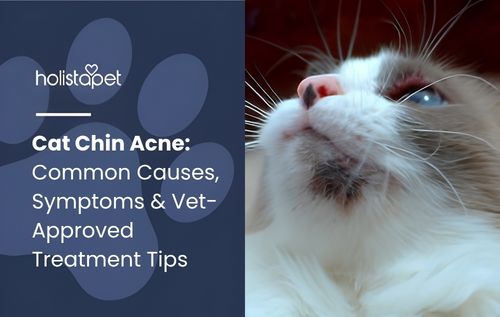
Feline chin acne is a common skin condition that many cat owners may not notice right away. Similar to people, cats can develop acne-like skin issues caused by excess oil, clogged hair follicles, and affected skin.
Feline acne often appears as blackheads, small bumps, or pimple-like lesions around the chin and lower lip. Recognizing symptoms early and identifying possible triggers may help support your cat’s skin health and overall comfort.
Below, we’ll cover common causes, symptoms, veterinary treatment options, and supportive at-home care tips for feline chin acne.
For broader cat care support, you may also explore general wellness topics and conditions that can affect feline skin and behavior.
What Is Cat Chin Acne?

What Causes Cat Acne?
Poor Grooming Habits
Stress and Immune Response
Hormonal Changes
Dietary Sensitivities
Bacteria and Environmental Irritants
Common Symptoms of Feline Acne

Feline acne symptoms may range from mild to severe depending on the condition and whether infection is present.
Black Specks on the Chin
Blackheads often resemble dirt or small dark crumbs on the chin.
Greasy or Oily Fur
The fur around the chin may appear oily, matted, or slightly discolored.
Redness and Swelling
Inflamed skin may appear red, swollen, or irritated.
Hair Loss
Some cats may experience patchy hair loss around affected areas due to irritation or excessive scratching.
Sores or Bleeding
In more severe cases, infected lesions or sores may develop. Veterinary attention is recommended if bleeding, swelling, or signs of infection occur.
Supportive Home Care for Cat Chin Acne

Home care may help support skin cleanliness and comfort while you work with your veterinarian to determine the best treatment plan.
Some pet owners also explore calming and wellness options such as CBD tincture for felines or calming oil drops for cats as part of a broader stress-support routine.
Other supportive options may include CBD wellness treats for cats when included as part of a veterinarian-approved wellness plan.
Keep the Area Clean
Your veterinarian may recommend gently cleaning the affected area using a pet-safe cleanser or antiseptic solution. Always follow veterinary guidance before using medicated products on your cat’s skin.
Use Warm Compresses
A warm compress may help soothe irritated skin and support comfort in inflamed areas.
Replace Plastic Food and Water Bowls
Some experts believe that switching from plastic bowls to stainless steel or ceramic dishes may help reduce bacterial buildup and discomfort in some cats.
Support Skin Health With Omega-3 Fatty Acids
Some pet owners also learn veterinarian-approved skin and coat wellness products, including omega-3 supplements formulated for cats, as part of a broader skin-support routine.
Discuss Wellness Products With Your Veterinarian
Some pet owners may consider incorporating wellness-focused supplements or skin-support products as part of their cat’s overall care routine. Ingredients such as omega-3 fatty acids are commonly included in veterinarian-recommended skin and coat support plans and may help maintain normal skin function and coat condition.
In some cases, pet wellness brands such as HolistaPet offer cat-specific supplements that include omega-3s and other nutrients designed to support general skin and coat health. These products should only be used as part of a broader care plan and introduced under the guidance of a veterinarian to ensure they are appropriate for your cat’s individual needs.
It is important to remember that supplements are not a replacement for veterinary diagnosis or treatment. A veterinarian can help determine whether supportive products are suitable alongside prescribed care, especially if your cat is experiencing recurring or severe symptoms.
Veterinary Treatments for Cat Acne

Treatment options may vary depending on the severity of the acne and whether infection is present.
Topical Treatments
Veterinarians may recommend medicated cleansers, topical antibiotics, or prescription skin treatments to help manage bacteria and irritation.
Oral Medications
In more severe cases, oral medications such as antibiotics or anti-inflammatory treatments may be prescribed.
Prescription Cleansers
Antibacterial or antifungal cleansers may help reduce bacteria and support healthier skin.
Management of Secondary Infections
If a bacterial infection develops, your veterinarian may recommend additional treatment to help manage inflammation and discomfort.
Tips to Help Prevent Cat Chin Acne
While feline acne may not always be preventable, some habits may help reduce future flare-ups:
- Clean food and water bowls regularly
- Use stainless steel or ceramic dishes
- Keep your cat’s chin area clean and dry
- Schedule regular veterinary checkups
- Monitor for possible food sensitivities
- Reduce environmental stress when possible
Final Thoughts
Feline chin acne is a common condition that may range from mild blackheads to more noticeable skin irritation. Fortunately, many cases can be managed with proper hygiene, routine veterinary care, and supportive home care practices.
If you notice persistent blackheads, swelling, sores, or signs of discomfort, contact your veterinarian for a proper diagnosis and treatment plan. Early care may help maintain your cat’s skin health and comfort.
Cat Acne FAQs
1. What is cat acne, and why does it happen?
Cat acne is a skin condition that commonly affects the chin and lower lip area. It may develop when excess oil, dead skin cells, and debris collect inside hair follicles, leading to blackheads and irritation.
2. What are the signs of feline acne?
Common signs include black specks on the chin, greasy fur, redness, swelling, small bumps, hair loss, and irritation around the mouth area.
3. Can plastic bowls contribute to cat acne?
Plastic bowls may contribute to irritation in some cats because scratches in the material can trap bacteria. Stainless steel or ceramic bowls are often easier to keep clean.
4. How do veterinarians diagnose cat acne?
A veterinarian may examine the affected skin and rule out other skin conditions, infections, or allergies before recommending treatment.
5. Can feline acne become a recurring condition?
Yes, some cats may experience recurring flare-ups, especially if underlying triggers are not addressed. Consistent hygiene and veterinary guidance may help manage the condition long-term.






Leave a comment
All comments are moderated before being published.
This site is protected by hCaptcha and the hCaptcha Privacy Policy and Terms of Service apply.