

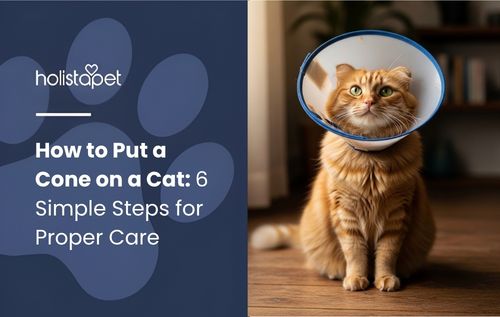
A cone protects a healing wound and stops licking or biting right away. Many cats resist it because it affects movement and vision, which is why learning more about overall cat health and care can help owners manage recovery more smoothly.
A calm approach and a proper fit make the process quick and far less stressful.
How Do I Put a Cone on My Cat?

Putting a cone on a cat comes down to control, fit, and calm handling. Secure the cat, slide the cone over the cat’s head, then fasten it to the cat’s regular collar so it stays snug without feeling tight.
Step #1: Prepare the Cone and Collar
A rigid HDPE plastic Elizabethan collar, typically 4-6 inches in depth, blocks full neck reach and holds shape after repeated contact with surfaces.
Veterinarians emphasize accurate cone sizing because an oversized collar allows the cat to bypass the barrier, while an undersized cone restricts breathing and natural head movement. The American Animal Hospital Association notes that a secure but comfortable fit helps prevent licking and biting without adding stress.
Step #2: Keep the Cat Calm and Still
Place the cat on a stable surface like the floor or a table. Wrap the body in a towel if the kitty shows signs of scratching or stress. Hold the front legs gently and keep the head steady. Watch for cat’s ears forward since that shows a calmer state, a signal often explained in guides about our cat body language.
Speak softly and move with control. Quick and rough handling can lead to unwanted behaviors like biting or trying to slip away.
Step #3: Slide the Cone Over the Head
Hold the cone open and guide it toward the cat’s face. Gently pull it over the cat’s head while keeping the chin slightly lifted. Make sure the cone clears the ears without folding them down.
Check that the cone sits evenly around the neck and does not press into the body or restrict movement. The cat should still move the head and shift position without getting stuck.
Step #4: Attach the Cone to the Collar
Thread the cone through the cat collar or attach it to the cat’s regular collar using the provided slots. This step keeps the cone from slipping off during movement or grooming attempts.
Adjust the collar so it feels snug but not tight. You should still slide fingers underneath with ease. A loose fit can cause the cone to slip, while a tight one can affect breathing and comfort.
Step #5: Check Comfort and Movement
Observe how the cat moves with the cone. Look at walking, turning, and reaching water dishes or food. The cone must prevent licking or biting while still allowing the cat to eat, sleep, and move comfortably without obstruction.
The ASPCA highlights that cats wearing an e-collar may need help with food and water placement to avoid frustration and stress.
Step #6: Monitor and Adjust as Needed
Watch for signs of discomfort like constant pawing, scratching, or refusal to eat. Adjust the fit if needed or switch to soft cones if the cat struggles with a rigid plastic design.
Keep the cone on as advised by the veterinarian tameo protect stitches and prevent licking that can delay healing. Regular checks ensure the cat stays safe and comfortable during recovery.
Some owners also explore calming wellness options like plant-based oil drops for cats to help reduce stress while a cat adjusts to wearing a cone.
What Collar Type Should I Use for My Cat?
Choosing the right collar depends on comfort, safety, and how well it supports the cone. A flat, adjustable collar works best for most cases.
|
Collar Type |
Best Use Case |
Security Level |
Comfort Level |
Notes |
|
Flat Adjustable |
Attaching cone after surgery |
High |
Moderate |
Rogz Reflective Collar fits most cats and threads securely through standard cone slots |
|
Breakaway |
Everyday wear |
Low |
High |
May slip off with cone |
|
Soft Recovery Type |
Sensitive or stressed cats |
Moderate |
High |
Good for comfort focus |
|
No Collar Option |
Fabric or wrap cones |
Varies |
High |
Depends on cone design |
Flat Adjustable Collar
A standard flat cat collar gives the best fit for attaching a cone.
- Allows easy adjustment based on the cat’s neck size
- Threads through cone holes for secure placement
- Keeps the cone from slipping during movement
Breakaway Collar
A breakaway collar offers safety but may not hold the cone in place.
- Releases under pressure to prevent choking
- Not ideal for securing an elizabethan collar
- Can slip off if the cat pulls or gets stuck
Soft Recovery Collar
The Alfie Pet Recovery Collar and All Four Paws Comfy Cone include built-in neck support and reduce pressure compared to rigid plastic designs.
- Designed for comfort during recovery
- Reduces stress compared to hard plastic
- Works well for mild wound protection
Alternative Methods
In some cases, no collar works better with certain cone types.
- Use soft cones that wrap around the neck
- Try fabric options that fasten with Velcro
- Always check for a snug but not tight fit
Veterinarians often recommend a secure flat collar for post surgery care since it keeps the cone stable and protects the wound site from licking or biting.
Does Collar Fitment Matter for Cats?
Yes. Proper collar fitment directly affects safety, comfort, and recovery.
A collar that feels too tight can restrict breathing and irritate the neck. A loose collar can slip off during grooming attempts or movement, which removes wound protection entirely and increases the risk of self-inflicted injury when the cat reaches surgical sites.
A properly fitted collar should allow two fingers of space, stay secure during movement, and not restrict breathing or head motion. Poor fit increases stress and reduces protection, while loose collars may slip off or fail to keep the cone in place.
The American Veterinary Medical Association highlights that improper restraint or gear fit can increase stress and trigger unwanted behaviors. Cats often react by pawing at the collar, refusing food, or trying to escape.
Fit also affects daily function.
- The cat should still eat and reach water dishes without struggle
- The cone and collar should not block vision completely
- The cat should walk, turn, and rest without getting stuck
A well-fitted collar protects the body while keeping the cat calm. Regular checks help adjust for changes like swelling, coat shifts, or weight changes during recovery.
When Do I Go to the Vet for Cat Collars?
Go to the veterinarian when the collar or cone causes harm, fails to protect the wound, or triggers unusual behavior.
A collar should support healing, not create new problems. Quick action prevents complications after surgery or injury.
- Swelling, redness, or hair loss around the neck
- The cone slips off or fails to cover the wound site
- The cat keeps licking, biting, or reaching stitches
- Signs of pain, stress, or refusal to eat food
The American Association of Feline Practitioners notes that behavior changes such as hiding, reduced eating, or aggression often signal discomfort or medical issues that need attention.
Watch for movement and function issues.
- Trouble reaching water dishes or wet food
- Difficulty walking, sleeping, or using the litter area
- The cone blocks vision too much, leading to accidents
If stress increases, support options can help while waiting for guidance.
- Calming aids like CBD oil tinctures for cats may ease tension during recovery.
- Products from Holistapet, such as hemp treats for cats or calming chews, can support relaxation when used responsibly.
- Always check with a veterinarian before adding supplements
A quick vet visit ensures the best fit and protects the cat’s well-being during recovery.
Research discussing cannabinoid safety in felines, such as PubMed: Pharmacokinetics and Safety of CBD in Cats, provides additional scientific context on responsible use.

Avoid Collar Discomfort in Cats
A proper fit, calm handling, and regular checks keep a cone and collar from causing discomfort. Watch the cat’s movement, eating habits, and behavior to catch issues early.
For additional veterinary guidance on feline recovery and medical care, the Cornell Feline Health Center offers trusted resources for cat owners.
Frequently Asked Questions
Can a cat sleep comfortably while wearing a cone?
Yes. Most cats adjust after some cat time. Place soft bedding and keep the floor area clear so the cone does not get stuck during sleeping. A clear space also protects the tail and prevents a mess if the cat shifts often during rest.
How long should a cat wear a cone after surgery?
Follow the veterinarian’s advice and make sure the cat is not left unsupervised for long periods during early recovery, especially if you are unsure how long can you safely leave a feline alone.
Most cats need it for 7 to 14 days to help prevent licking of stitches. Regular checks help prevent matting around the neck and coat during this period.
Can a kitten use the same cone as an adult cat?
No. A kitten needs a smaller cone based on neck size and body proportions. A poor fit can slip or feel too tight, especially when the kitten starts standing or moving around more.
Is it safe to remove the cone during meals?
Only remove it if supervision stays constant. Many cats try to lick the wound within a moment when the cone comes off. Keep arms ready to guide the head away if needed.
What should I do if my cat refuses to eat with a cone?
Adjust bowl height or use a spoon to feed small portions. Some cats eat better when food sits closer to the chin. A small treat after feeding can help build a positive routine.
Can a cone affect a cat’s balance?
Yes. The cone can limit vision and awareness. Keep the space simple so the cat can move without bumping into objects. Watch the foot placement to avoid slips.
How do I clean a dirty cone?
Wipe it with warm water and mild soap. Dry it fully before putting it back to avoid skin irritation. Use a light spray of water for quick cleaning if only a small bit of dirt shows.
Are fabric cones as effective as plastic ones?
Fabric options work for mild cases. A plastic cone gives stronger protection when the risk of biting or licking stays high. Some owners have figured that a soft option feels less stressful, though stronger protection may still be needed in serious cases.










Leave a comment
All comments are moderated before being published.
This site is protected by hCaptcha and the hCaptcha Privacy Policy and Terms of Service apply.