

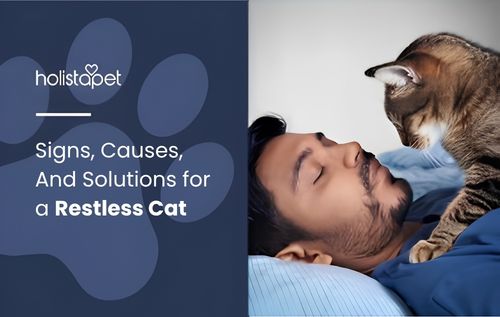
A restless cat usually indicates stress, discomfort, or illness. Sudden pacing, increased vocalization, or unusual cat behavior often signals stress or discomfort, boredom that cats experience, or underlying medical conditions, and some pet owners also explore cbd oil for cats benefits as part of supportive care options.
Early recognition allows faster identification of the underlying cause.
Why is My Cat Restless?

A restless cat usually reacts to a specific underlying cause. Common reasons cats show this include cat stress, boredom cats experience, changes in the cat environment, or separation anxiety.
Pain, irritated skin, and other medical conditions often trigger restless behavior in cats. Cat owners should check for obvious symptoms and other signs to decide if the situation needs veterinary attention.
How Do I Know If I Have a Restless Cat?
A restless cat shows clear changes in behavior that break its usual routine. Watch for specific signs that point to discomfort, stress, or possible medical issues.
- Excessive movement: Constant pacing around the house or inability to settle.
- Increased vocalization: Frequent meowing or sounds that signal distress.
- Changes in eating habits: Sudden loss of appetite or unusual hunger.
- House soiling: Avoiding the litter box or missing the litter tray.
- Increased aggression: Reacting negatively to other pets or people.
- Subtle signs: Small shifts in routine that signal early behavioral problems.
- Physical symptoms: Irritated skin, bald spots, or signs of pain.
What are the Common Reasons for Cat Restlessness?
Specific triggers such as stress, illness, or environmental change commonly cause restlessness in cats. Identifying the cause helps cat owners respond quickly and prevent bigger issues.
Environmental Changes
A shift in the cat's environment can disrupt routine and cause a stressed cat to act out. Many cats rely on stability to feel secure.
- New home, furniture, or layout changes.
- Presence of other pets or unfamiliar people.
- Loud noises that trigger anxiety.
Lack of Stimulation
Boredom often leads to restless behavior, especially in young cats with high energy.
- Limited access to cat toys or playtime.
- No vertical space like a cat tree.
- Long periods without interaction or activity.
Separation Anxiety
Some cats may struggle when left alone, leading to noticeable behavior problems.
- Excessive vocalization when pet parents leave.
- Following people around constantly.
- Trouble settling without familiar objects nearby.
Medical Issues
Health conditions can cause discomfort that leads to restlessness. Pain often drives sudden behavior changes.
- Underlying medical conditions such as skin irritation or internal pain.
- Weight loss or changes in eating habits.
- Other symptoms that signal medical problems.
The Cornell University College of Veterinary Medicine reports that sudden behavior changes often signal underlying medical conditions and require early veterinary evaluation.
Hormonal and Reproductive Factors
A female cat in heat often shows increased activity and vocal behavior as part of a natural instinct.
- Increased vocalization and pacing.
- Seeking attention more than usual.
- Attempting to escape the house.
Aging and Cognitive Changes
Older cats may develop cognitive decline, which affects normal behavior and awareness.
- Confusion or disorientation.
- Changes in sleep patterns.
- Increased vocalization at unusual times.
How Do I Help With a Cat’s Restlessness?

Address a restless cat by targeting the underlying cause and improving daily routine, comfort, and stimulation. Simple changes often reduce stress and restore balanced behavior.
|
Area |
Key Action |
Why It Matters |
|
Routine |
Keep feeding times consistent |
Helps cats thrive and feel secure |
|
Environment |
Provide safe spaces |
Reduces environmental stressors |
|
Stimulation |
Use cat toys and structures |
Prevents boredom |
|
Emotional Support |
Use calming aids if needed |
Helps manage anxiety |
|
Health |
Monitor symptoms and consult a vet |
Detects underlying medical conditions early |
Improve the Cat's Environment
A stable cat's environment helps cats feel secure and reduces anxiety linked to environmental stressors.
- Maintain a consistent routine for feeding times and play.
- Provide safe spaces where the cat can retreat and relax.
- Keep familiar objects in place to avoid unnecessary stress.
Increase Physical and Mental Stimulation
Many indoor cats become restless due to boredom.
- Use interactive cat toys to engage natural instinct.
- Add a cat tree to encourage climbing and movement.
- Spend time daily to support bonding and activity.
Manage Stress and Anxiety
A stressed cat often reacts to subtle changes or triggers inside the house.
- Limit exposure to loud noises and sudden disruptions.
- Separate the cat from other pets if tension builds.
- Support a calm space to reduce stress and prevent behavioral problems.
Support Emotional Balance
Some cases involve separation anxiety or ongoing anxiety that needs extra support.
- Gradually adjust routines if changes occur.
- Leave familiar objects to comfort the cat when alone.
- Consider calming aids or supplements if behavior persists.
Veterinary researchers continue to study hemp-derived CBD for its potential role in managing stress responses in pets. Some evidence suggests CBD interacts with the endocannabinoid system, which helps regulate mood, sleep cycles, and behavioral balance. Pet owners sometimes use CBD cat treats or oils to support relaxation during separation anxiety or environmental stress. A veterinarian should evaluate symptoms before introducing supplements to ensure safe and appropriate use.
Some pet parents use products like CBD oil for cats and calming supplements to help reduce stress and support relaxation, especially in cases of ongoing anxiety or separation anxiety.
Some owners also explore ECS support oil for cats as part of broader feline wellness routines focused on relaxation and balance.
Monitor Health and Seek Veterinary Care
Medical issues often drive restlessness and require proper diagnosis.
- Watch for obvious symptoms like weight loss or irritated skin.
- Track subtle signs such as changes in eating habits or activity.
- Seek veterinary attention if the behavior started recently or worsens.
- Visit a vet immediately if severe symptoms or pain appear.
Tracking body condition changes alongside a cat weight chart may also help identify underlying health concerns early.
When Do I Visit the Vet for Feline Restlessness?

Visit a vet when a restless cat shows obvious symptoms that suggest medical issues or when behavior started recently without a clear reason. Seek veterinary attention if signs like weight loss, pain, irritated skin, or changes in eating habits appear, as these may point to underlying medical conditions.
A cat that vocalizes excessively, shows increased aggression, or develops house soiling may also need evaluation. If symptoms worsen over a few days or seem severe, seek veterinary attention immediately to rule out serious health conditions.
Learn additional cat care tips to better understand behavior changes, stress triggers, and practical ways to support long-term feline comfort.
Environmental toxins discussed in our plants that are toxic guide may also contribute to unusual feline behavior or distress.
Help Your Cat Get More Rest
A restless cat often signals a need for routine adjustment or medical evaluation, attention, or care. By improving routine, reducing stress, and watching for subtle signs, cat owners can support better cat health and help their pets feel secure and relaxed.
Frequently Asked Questions
Can a restless cat be a normal part of behavior?
Yes. Some activity levels reflect a normal part of a cat's behavior, especially in young cats with high energy. Sudden or extreme changes still need attention.
How long should restlessness last before concern?
Monitor for a few days. If the cat restless behavior continues or worsens, check for other signs and consider veterinary attention.
Do feeding times affect restlessness?
Yes. Irregular feeding times can disrupt a consistent routine and lead to anxiety or increased vocalization in most cats.
Can multiple pets cause restlessness?
Yes. Tension with other cats or other pets can trigger environmental stressors that affect behavior and cause a stressed cat to act unsettled.
Does a litter box setup impact behavior?
Yes. A poorly placed or unclean litter box or litter tray can lead to house soiling and discomfort, which may increase restlessness.
Are older cats more prone to restlessness?
Yes. Older cats may develop cognitive decline or medical conditions that affect behavior and lead to increased vocalization or confusion.






Leave a comment
All comments are moderated before being published.
This site is protected by hCaptcha and the hCaptcha Privacy Policy and Terms of Service apply.