

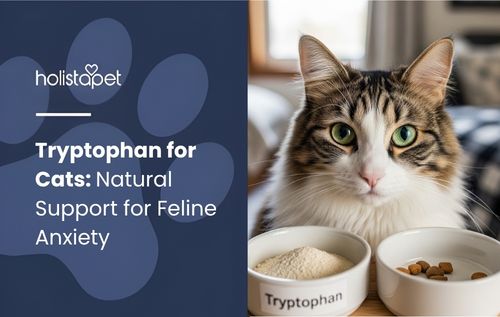
A restless cat often signals anxiety that affects mood, sleep, and behavior. Many pet owners seek a natural alternative that supports calm without relying on strong medications, and some also explore CBD oil collection for cats as part of a broader calming routine.
Tryptophan for cats offers a nutritional supplement that helps regulate serotonin levels and promotes emotional balance, and may support cbd oil for cats anxiety relief.
What is Tryptophan?
Tryptophan is an essential amino acid that a cat cannot produce, so it must come from the cat’s diet through food or a nutritional supplement.
Researchers Richard J. Wurtman and John D. Fernstrom demonstrated the role of tryptophan in serotonin synthesis, a finding supported by broader nutritional neuroscience research published in peer-reviewed journals such as the Journal of Nutrition and related veterinary behavior studies.
In cats, this amino acid supports various bodily functions tied to emotional balance and appetite, which makes it a common active ingredient in calming supplements used to manage anxiety and restlessness.
How Does Tryptophan Work in Cats?

Tryptophan enters a cat’s body through food or a nutritional supplement, then moves to the brain where it supports chemical processes tied to behavior and mood.
The body converts L-tryptophan into serotonin in the brain, which helps regulate mood, sleep patterns, and appetite. A portion of serotonin also supports melatonin production, influencing rest cycles.
- The digestive system breaks down tryptophan from food or chews into usable form
- The bloodstream carries it to the brain
- The brain converts it into serotonin
- Serotonin regulates mood, behavior, and bodily functions
- Some serotonin converts into melatonin, which affects sleep
Several factors influence how this process works in cats:
- The balance of nutrients in the cat’s diet
- The presence of other amino acids that compete for absorption
- The cat’s health, including conditions like kidney disease
- The form of supplement, such as tablets or chews mixed into food
A veterinarian can determine how effectively tryptophan works based on the pet's diet, health status, and specific needs — the Cornell Feline Health Center is a trusted resource for understanding feline nutritional health.
What are the Benefits of Tryptophan for Cats?
Tryptophan for cats supports mood, behavior, and sleep by helping regulate serotonin levels in the brain. This calming supplement works as a natural alternative to support emotional balance and overall health.
- Reduces anxiety: Helps an anxious cat stay calm during stressful situations like veterinary visits.
- Supports better sleep: Aids melatonin production, which improves sleep patterns and reduces restlessness.
- Improves mood: Supports neurotransmitter activity linked to emotional stability and behavioral balance.
- Encourages appetite: Supports healthy eating habits, especially in picky eaters.
- Promotes emotional balance: Helps regulate responses to environmental changes and daily stress.
- Supports overall health: Contributes to various bodily functions linked to brain health and well-being.
How Do I Dose Tryptophan for Felines?
Dosing tryptophan for cats depends on weight, health, and supplement form. A veterinarian should determine the correct dosage to ensure safety, especially for cats with kidney disease or those taking medications.
- Follow product guidelines: Use label instructions based on weight and formulation.
- Consult a veterinarian: A vet can determine the right dose based on diet, symptoms, and overall health.
- Start low: Begin with the minimum amount to reduce risk of overdose.
- Adjust carefully: Increase only if needed under veterinary guidance.
- Watch for side effects: Look for stomach upset or changes in behavior.
Several factors affect dosing:
- Age and size: Smaller cats require lower dosage.
- Health condition: Issues like kidney disease affect how the body processes supplements.
- Supplement type: Tablets, chews, or other forms vary in concentration.
- Diet: Nutrient balance in food can influence absorption.
- Medications: Other medicines may interact with tryptophan.
Contact a veterinarian immediately if symptoms of overdose occur or an emergency arises.
How Do I Give Tryptophan to My Cat?
Giving tryptophan to cats works best when it fits naturally into the cat’s diet and routine.
|
Method |
Best For |
Key Advantage |
Notes |
|
Mixed with food |
Picky eaters |
Easy intake |
Ensure full portion gets eaten |
|
Chews |
Treat based approach |
Convenient |
Works well for routine use |
|
Tablets |
Precise dosing |
Accurate control |
May require manual feeding |
|
Veterinary supplements |
Health focused care |
Reliable safety |
Consult a veterinarian first |
|
Holistapet chews |
Stress support |
Multi ingredient formula |
Helpful for anxiety and restlessness |
Mix with Cat’s Food
Adding a supplement directly to cat’s food offers the easiest method for most cats.
A small amount blended into wet food helps mask taste and supports consistent intake.
- Use powdered or capsule forms for easy mixing.
- Combine with strong smelling food to help picky eaters accept it.
- Ensure the full portion gets eaten to maintain proper dosage.
Use Chews or Tablets
Pre measured options like chews or tablets simplify dosing and improve convenience.
Many calming supplement products include L-Tryptophan with other active ingredients like l theanine.
- Offer chews as treats during calm moments.
- Use tablets for precise control of dosage.
- Follow product instructions to avoid overdose.
Choose Veterinary Approved Supplements
Quality matters when selecting a supplement for cats.
Research in veterinary nutrition journals highlights that consistent amino acid intake supports serotonin production and stable behavior when properly dosed, a finding also supported by PubMed: Pharmacokinetics and Safety of CBD in Cats for pet owners exploring complementary supplement options.
- Select products tested for safety and efficacy.
- Avoid unverified supplements with unclear ingredients.
- Consult a veterinarian before starting new medicines.
Try Holistapet Calming Products
Some brands design products specifically for stress and anxiety in pets.
Holistapet offers calming chews that include L-Tryptophan, l theanine, and other natural ingredients intended to support emotional balance in dogs and cats — pet owners may also consider CBD salmon cat treats or oil drops for cat anxiety as complementary options.
- Their calming chews work great for stressful situations like travel.
- The formula supports mood, sleep, and overall health.
- Easy to give for pets that resist powders or tablets.

Stay Consistent and Monitor Response
Routine plays a key role in effectiveness.
- Give the supplement at the same time daily.
- Track changes in mood, behavior, and sleep.
- Contact a vet if symptoms worsen or no improvement occurs.
Provide Feline Anxiety Support with Tryptophan
Tryptophan for cats offers a simple way to support calm behavior, stable mood, and better sleep through a well-balanced diet or supplement.
With the right dosage and veterinary guidance, it can help manage anxiety and improve overall health in stressful situations.
Pet owners looking for additional guidance can explore cat owner guides covering topics from feline chin acne to when to remove a cone after neutering.
Frequently Asked Questions
Can tryptophan work alongside other calming supplements?
Yes. Many products combine L-Tryptophan with l theanine or valerian root. A veterinarian should review combinations to ensure safety and avoid interactions with medications.
How long does tryptophan take to affect a cat’s behavior?
Most cats show changes within a few days to a few weeks. Consistent use and proper dosage improve effectiveness over time.
Are there common side effects of tryptophan in cats?
Some cats may experience stomach upset, lethargy, or changes in appetite. These common side effects usually remain mild, but a vet should evaluate persistent symptoms.
Can kittens take tryptophan supplements?
A veterinarian should determine if a supplement suits young animals. Age, weight, and overall health affect safety and dosage.
Does tryptophan replace medications for anxiety?
No. Tryptophan supports emotional balance but does not replace prescribed medicines for severe anxiety. A vet can determine the right treatment plan.
What should I do if my cat eats too much tryptophan?
Contact a veterinarian immediately. High levels may lead to overdose symptoms that require emergency care.
Can tryptophan affect a cat’s appetite?
Yes. It can influence appetite through its role in serotonin production. Monitor eating habits and adjust the cat’s diet if needed.
Is tryptophan safe for cats with existing health conditions?
Cats with conditions like kidney disease need careful evaluation. A veterinarian should confirm safety before adding any supplement.





Leave a comment
All comments are moderated before being published.
This site is protected by hCaptcha and the hCaptcha Privacy Policy and Terms of Service apply.