

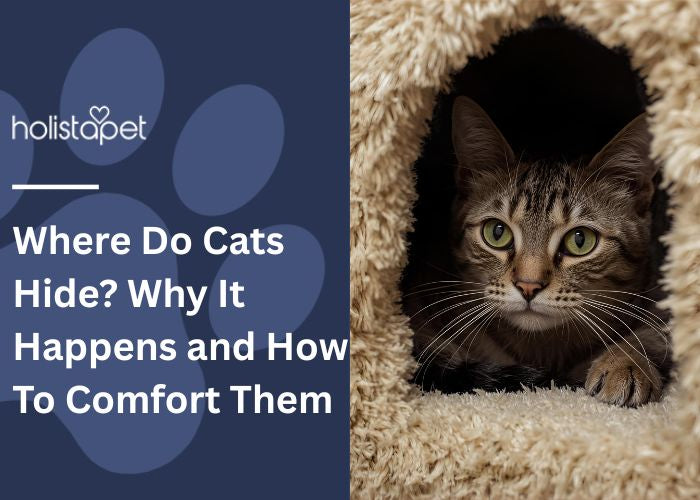
Ever tried calling your cat only to find they've vanished like a magician? Answering the question "Where do cats hide?" feels like playing detective in your own house — and as any seasoned cat owner knows, the hiding spots only get more creative over time. Maybe they're tucked inside a laundry basket or snoozing behind the curtains.
Their secret hideouts are cozy retreats that make them feel snug and safe. Finding them just means understanding their little world of comfort and curiosity.
Why Do Cats Hide?

Cats hide for all sorts of reasons. Some retreat to feel calm and secure, while others just want a peaceful nap away from the buzz of the house. Hiding is part of normal cat behavior, as it helps them manage changes, loud sounds, or strange guests and it's one of many cat owner tips worth understanding early on. Many cats also slip away when they're unsure or simply craving peace. Every tucked tail and silent corner tells a story about comfort, security, or curiosity.
Instinctual Need for Safety and Security
Every cat has a built-in survival instinct, and hiding is part of that ancient code. Long before house cats lounged on beds, their wild ancestors sought dark, quiet places to stay hidden from potential predators. That same instinct still lives in your furry friend today.
When your cat curls up under furniture or inside a cardboard box, it's a safety strategy. Those cozy hideouts help them feel protected and in control of their surroundings.
Emotional Triggers — Fear, Anxiety, and Stress
Sometimes cats hide because something has upset their peace. A loud vacuum, a visiting dog, or even a move to a new house can make them feel nervous or uneasy. Hiding gives them time to process what's happening and regain a sense of calm.
You might notice your kitty slipping into dark or quiet corners after a scare — similar to how sudden aggression can surface, which is why it helps to understand why does my feline attack me as part of the broader picture of feline stress responses. This isn't bad behavior but emotional self-care. By staying tucked away, your cat shields itself from whatever feels overwhelming until the world feels right again.
Hiding as a Coping Mechanism
When life feels too noisy or unpredictable, cats do what they know best: find a hiding place. It's their natural way to handle changes, visitors, or other animals around the house. Many seek shelter under beds or inside closets to block out stress and regain their balance.
This kind of hiding helps them reset emotionally. By staying tucked in a safe spot, they can rest, breathe, and feel fine again. It's their version of self-soothing and control.
Illness or Injury as a Cause for Hiding
Cats are masters at keeping discomfort to themselves. When they feel sore, tired, or unwell, they often hide instead of showing signs of weakness. It's a protective behavior that comes from their wild instincts. Staying out of sight helps them feel protected while they recover.
If your cat suddenly avoids people or skips meals while hiding, it could signal a problem. Watch for changes in appetite, movement, or grooming, and consult resources like the Cornell Feline Health Center if you're unsure whether your cat's withdrawal signals something more serious. Gentle attention and a calm environment can help them feel cared for and supported.
Seeking Comfort or Solitude
Sometimes cats hide simply because they want a break. After a long day of play or new activity, slipping behind the curtains or under the bed feels like a personal retreat. It's how many cats recharge: alone time wrapped in softness and warmth.
A cozy hiding place gives them control over their space and mood. Whether they curl up in laundry baskets, cat caves, or closets, these moments of solitude help them feel at ease much like the calming effect that how much catnip to give a feline can offer as a gentle, natural comfort tool.
Common Places Where Cats Like To Hide
Cats can turn almost anything into a secret hideout. You've probably found your kitty in at least one of these classic locations:
- Under Beds and Sofas: soft, dark, and perfectly private.
- Inside Closets or Drawers: warm spots filled with familiar scents.
- Behind Furniture or Appliances: great for avoiding attention.
- In Laundry Baskets and Cardboard Boxes: enclosed, cushioned spaces that feel guarded.
- Inside Blankets, Bedding, or Curtains: snug places that trap warmth.
- Outdoor Hiding Spots — Bushes, Garages, Under Cars, and Sheds: ideal for outdoor cats seeking shelter.
When Hiding Is Normal vs. When To Be Concerned

Most cats hide now and then. Short spells under the bed during storms or when guests visit are perfectly normal. They're simply finding a quiet space to stay calm until the noise or commotion passes.
But if your cat hides for long periods, skips meals, or avoids contact, something may be wrong. Persistent hiding can point to soreness, discomfort, or behavioral issues. When your usually social kitty withdraws completely, it's time to check in with your vet.
How To Help a Hiding Cat Feel Safe
A hiding cat doesn't need chasing; it needs reassurance. The goal is to create an environment where your furry friend feels confident enough to come out on their own. Remember the following:
- Avoid Forcing Interaction. Let them emerge when ready.
- Maintain a Calm, Predictable Environment. Routine helps reduce worry.
- Keep Noise and Activity Levels Low. Fewer disruptions mean less stress.
- Offer Safe Spaces for Voluntary Retreat. Cat trees, beds, or boxes work well.
- Use Familiar Scents and Gentle Lighting. Comfort smells like home.
- Introduce Slow, Positive Reinforcement. Reward curiosity with soft praise or treats.
Calming Techniques for Stressed or Anxious Cats

Even confident kitties can get upset sometimes, and soothing them takes a soft touch. A few small changes in their surroundings can help them feel at ease again. Try adding these calming techniques to their daily routine:
- Soothing Sounds and Music for Cats. Gentle tunes can mask loud noises.
- Feline Pheromone Diffusers and Sprays. These mimic natural comfort signals.
- Gentle Petting and Vocal Reassurance. Calm words and slow movements build trust.
- Consistent Routine and Predictable Feeding Times. Structure keeps their world steady.
How CBD Promotes Relaxation and Emotional Balance
CBD (cannabidiol) can help cats remain calm and steady without making them drowsy or distant a finding supported by research published by the PubMed: Pharmacokinetics and Safety of CBD in Cats. It works with the body's natural systems to support relaxation and balance during stressful times. Many cat owners use CBD as part of a regular wellness routine to help their pets stay composed.
A few drops or chews can help ease worried behaviors, support steady moods, and encourage rest. With consistent intake, CBD can gently promote your cat's emotional well-being and create a more peaceful home environment.
Supporting Calm Behavior Naturally with HolistaPet CBD
HolistaPet stands out as a trusted source for pet wellness products. Our offerings use all-natural, vegan ingredients that are gluten-free, dairy-free, and non-GMO. Every item is third-party lab tested, vet-approved, and proudly made in the USA. Choose from our:
- CBD Calming Chews for Situational Stress. Soft salmon-flavored chews with 2mg of broad-spectrum CBD each, offering calm during busy days.
- CBD Cat Treats for Daily Mood Support. Crunchy salmon or chicken non-GMO CBD cat treats with 2mg of CBD per bite for steady, happy moods.
- Calming CBD Oil for Fast-Acting Relief. Easy-to-use premium CBD oil for cats that blends into food or water to support relaxation when it's needed most.
Building Trust and Confidence Over Time
Helping a cat feel confident takes patience and kindness. Move slowly, speak softly, and give them the freedom to approach you when they're ready. Over time, consistent care teaches them that home is a safe, predictable space.
Encourage exploration with gentle praise and favorite treats. Keep their world stable. Routine meals, cozy beds, and peaceful corners help them relax. As confidence grows, hiding becomes less about fear and more about choice, creating a stronger bond between you and your furry friend.
FAQs About Cats Hiding
Cats and their hiding habits can leave anyone puzzled, so it helps to know what's normal and what's not. Below are some quick answers to common questions about feline hiding behavior. Each one sheds light on how cats think, feel, and seek comfort.
How long is it normal for a cat to hide?
Most cats hide for short stretches, anywhere from a few hours to a day. This is normal, especially after big changes like a move or the arrival of new animals. It gives them time to adjust and feel okay again.
If hiding lasts for several days or your cat avoids food, it might signal discomfort or distress. Offer comfort and observe their behavior. Once they feel secure, they'll step back into view at their own pace.
Do cats love hiding in dark spaces?
Yes, most felines adore dark spaces because they feel protected there. Shadowy corners, closets, and box springs create the perfect hiding place where they can rest without feeling exposed. It's their version of peace and privacy.
Dark spaces also mimic the quiet shelter their wild ancestors sought for safety. When your cat curls up out of sight, it's instinct. A dim, cozy spot helps them feel safe, protected, and ready for a well-earned nap.
What should I do if my cat is hiding and won't come out?
Start by giving them space and quiet. Forcing interaction can make your cat retreat even more. Instead, sit nearby and speak softly, so they know you're close. This gentle presence builds trust without pressure.
Make their surroundings feel inviting with soft lighting, familiar scents, and calm energy. Offer treats or favorite toys near their hiding place to spark curiosity. With patience and consistency, your kitty will come out once they feel completely safe again.
How can I use CBD to help my cat stop hiding?
If you suspect your cat is hiding in fear or nervousness, CBD may help your cat relax and feel content by supporting emotional balance and reducing anxious behaviors. A few drops of dropper oil supplement for cats or a small treat with broad-spectrum CBD can help ease tension and encourage calm curiosity. Over time, this may help cats feel secure enough to avoid hiding.
Choose high-quality, pet-safe CBD from trusted brands like HolistaPet. Our formulas are natural, non-psychoactive, and crafted for feline pets. With steady intake, CBD can gently promote confidence and comfort in stressful moments.
Is it okay to let my pet have a "safe spot" or "cat cave" to hide?
Absolutely! It's healthy for cats to have a private hideout. A cat cave, soft bed, or quiet corner gives them a safe place to rest and recharge. These cozy spaces help them feel in control of their surroundings.
Many cats rely on these retreats when they feel nervous or overstimulated. Respect their need for solitude and let them come out when they're ready. A secure hiding spot is a sign of trust, not avoidance.
Closing Thoughts: Our Cats and Their Hiding Places
Every hiding cat has a reason, and most of the time, it's perfectly natural. These quiet moments help them feel secure, rested, and balanced in their own way. Giving your furry companion a calm space to retreat shows love, patience, and understanding.
For felines that need a little extra comfort, HolistaPet's CBD products offer gentle support. Our natural, vet-approved formulas help your furry friend feel chill and content—because a happy kitty is one that feels safe at home.








Leave a comment
All comments are moderated before being published.
This site is protected by hCaptcha and the hCaptcha Privacy Policy and Terms of Service apply.