

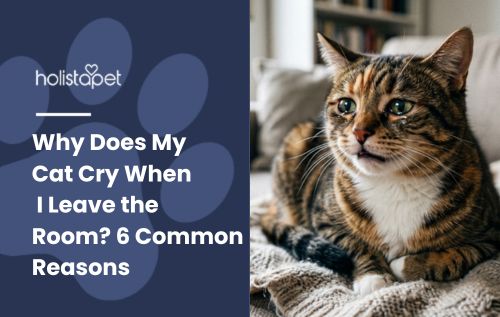
Many owners wonder, “why does my cat cry when I leave the room?” Cats often meow because of separation anxiety, boredom, stress, or a strong bond with a favorite person.
Understanding the cause can help stop meowing and improve your cat's behavior. Our cat care articles cover more topics to help you support a happy and balanced feline.
Why Does My Cat Cry When I Leave the Room?

Most cats meow for attention, due to stress, boredom, or separation anxiety-related behavior.
Some also react to boredom, routine changes, or illness.
1. Your Cat Feels Attached to You
Cats often form strong bonds with humans. And only cat may follow a favorite person everywhere and start meowing after a door closes. This behavior usually comes from comfort seeking and attachment.
2. Separation Anxiety May Be the Cause
Some cats experience separation anxiety when left alone for long periods. Common signs include excessive meowing, destructive behavior, and excessive grooming.
A 2020 PLOS One study linked separation anxiety in cats to stress-related behavioral problems.
3. Boredom may contribute to increased meowing
Indoor cats generally benefit from regular stimulation throughout the day. Without interactive toys, cat trees, or regular play, an anxious cat may cry for attention. Intelligent animals often create vocal habits when they lack activity.
4. Changes in Routine Can Upset Cats
Cats rely on routine to feel safe. Delayed meals, a dirty litter box, or a new cat in the house can trigger stress and behavioral changes. Some cats also become vocal during stressful situations.
5. Pain or Illness May Be Involved
A sudden increase in meowing can signal pain or illness. The Cornell Feline Health Center states that older cats sometimes vocalize more because of thyroid disease or cognitive decline. A veterinarian should check ongoing symptoms, and our guide on how to tell if a cat is in pain can help you identify warning signs before your appointment.
6. Your Cat May Need Comfort
Some pets calm down with environmental enrichment, pheromone diffusers, or calming products. In severe cases, a vet may recommend anti-anxiety medication or support from a pet sitter.
How Do I Know If My Cat Has Separation Anxiety?

Cats experiencing this condition often show noticeable behavioral changes when left alone.
-
Excessive meowing: A cat meows constantly after a family member leaves or closes the door.
-
Destructive behavior: Some cats scratch walls, claw furniture, or knock over objects during stressful situations.
-
Excessive grooming: An anxious cat may lick or groom itself so much that bald spots appear.
-
Following behavior: The cat spends most of its time following one person around the house.
-
Litter box problems: Stress and anxiety can cause accidents outside the litter box.
-
Loss of appetite: Some pets eat less when left alone for an extended period.
-
Restlessness: Cats with cat separation anxiety may struggle to stay calm or relax alone.
-
Attention seeking: A kitty may cry, paw at the door, or demand constant interaction before owners leave.
-
Changes in routine: Sudden behavioral problems often happen after moving, adopting a new cat, or losing a companion.
How Do I Manage My Cat’s Separation Anxiety?
Cats with separation anxiety need structure, stimulation, and calming support. Small changes in routine and environment can reduce stress and help an anxious cat feel safe when left alone.
|
Method |
Helps With |
Useful Tools |
Best For |
|
Consistent routine |
Stress and upset behavior |
Scheduled meals, regular play |
Cats sensitive to change |
|
Interactive play |
Boredom and excessive meowing |
Interactive toys, treats |
Indoor cats |
|
Environmental enrichment |
Destructive behavior |
Cat trees, window perches |
Active pets |
|
Companion support |
Loneliness |
Two cats, slow introductions |
Social cats |
|
Calming support |
Anxiety symptoms |
Pheromone diffusers, calming products |
Anxious cat behavior |
|
CBD and ECS support |
Emotional balance and calm |
Separation anxiety in cats |
|
|
Veterinary care |
Severe symptoms |
Anti-anxiety medication, veterinarian support |
Ongoing behavioral problems |
Create a Consistent Routine
Cats feel calmer when daily habits stay predictable.
-
Feed meals at the same time each day
-
Keep the litter box clean
-
Schedule regular play before leaving the house
-
Avoid sudden changes in the room or home environment
A study from the Journal of Veterinary Behavior found that stable routines help reduce stress related behavioral changes in pets.
Add More Mental Stimulation
Boredom can trigger excessive meowing and destructive behavior.
-
Use interactive toys and puzzle feeders
-
Place cat trees near windows
-
Rotate toys to keep the cat interested
-
Create quiet spaces around the house
Environmental enrichment helps intelligent animals stay calm during long periods alone.
Avoid Reinforcing Constant Meowing
Some cats learn that crying brings attention.
-
Wait for quiet behavior before giving treats
-
Stay calm when leaving or returning home
-
Avoid dramatic goodbyes at the door
-
Reward relaxed behavior instead
This approach may help reduce excessive meowing without creating more anxiety.
Consider a Companion
Some cats do better with another pet around.
-
Two cats may keep each other occupied
-
Kittens often adapt better with companions
-
Introduce a new cat slowly to avoid stress
This solution works best for social cats that enjoy interaction with other cats.
Try Calming Tools and Veterinary Support
Some pets need extra support during stressful situations.
-
Use pheromone diffusers in common rooms
-
Ask a veterinarian about anti-anxiety medication
-
Hire a pet sitter during an extended period away
-
Monitor symptoms like excessive grooming or appetite changes. Cats that also react to loud sounds may benefit from reading our are cats scared of fireworks guide for additional calming strategies.
The American Association of Feline Practitioners recommends combining behavior management with veterinary guidance for severe anxiety cases.
Support Calm Behavior With CBD and the ECS

CBD is sometimes included in pet wellness discussions due to its interaction with the endocannabinoid system (ECS), which is involved in various physiological processes in mammals, including stress response and mood regulation.
Some early research, including a study published in Frontiers in Veterinary Science, has explored how cannabinoids may be associated with stress-related behaviors in animals. However, research in this area is still developing, and findings are not yet conclusive.
Because of this, products such as stress support oil drops for cats or CBD hard treats for cats are sometimes considered by pet owners as part of a broader approach to supporting calm behavior. Research from PubMed: Pharmacokinetics and Safety of CBD in Cats provides helpful context on how cats process these compounds. These products should be used under veterinary guidance when appropriate.
Related Post: Warning Signs Your Cat Is Crying for Help [Learn How to Respond]
When Do I Take My Cat to the Vet for Separation Anxiety?
Take your cat to the vet when separation anxiety starts affecting daily life or causes severe behavioral changes. A veterinarian can rule out illness, pain, or medical conditions that may look similar to anxiety.
Watch for signs like:
-
Excessive meowing that does not stop
-
Destructive behavior around the house
-
Excessive grooming or hair loss
-
Refusing food or avoiding the litter box
-
Aggressive or unusually withdrawn behavior
Senior cats should also see a vet if vocalization suddenly increases. Conditions like thyroid disease, cognitive decline, and high blood pressure can affect cat behavior and trigger constant meowing.
A vet may recommend behavioral training, calming products, changes to the cat's diet, or anti-anxiety medication for severe cases of cat separation anxiety.
Frequently Asked Questions
Can cats grow out of separation anxiety?
Yes. Some cats improve with age and training, but many continue the behavior without support. A stable routine, environmental enrichment, and calming tools may help support relaxation over time.
Do certain cat breeds become more attached to humans?
Yes. Breeds like Siamese, Burmese, and Ragdolls often form stronger bonds with people. These cats may become more vocal or clingy when left alone.
Can a camera help monitor cat behavior?
Yes. Pet cameras help owners track meowing, pacing, sleeping habits, and destructive behavior while away from home. The footage can also help a veterinarian evaluate symptoms.
Does leaving the TV or music on help cats stay calm?
Soft background noise can comfort some pets by making the house feel less empty. Calm music and familiar sounds may reduce stress in quiet environments.
Can moving to a new home affect a cat emotionally?
Yes. Moving can upset cats and trigger behavioral changes. Many cats need time to adjust to new smells, rooms, and routines after relocation.
Is it normal for kittens to cry more than adult cats?
Yes. Kittens often cry more because they rely heavily on comfort, attention, and companionship. Most become more independent as they adapt to their environment.






Leave a comment
All comments are moderated before being published.
This site is protected by hCaptcha and the hCaptcha Privacy Policy and Terms of Service apply.