

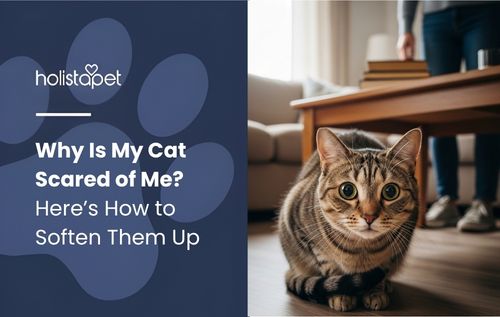
Cats develop fear when they experience stress triggers such as loud sounds, sudden movements, unfamiliar environments, or negative past interactions, which are commonly discussed in guides on cat health and wellness. These triggers condition cats to associate certain situations or people with danger, which leads to avoidance behavior.
Is It Normal for Cats to Fear Their Owners?
Yes, a cat scared of its owner shows a common response to fear, not a lack of affection. A fearful cat reacts to stress, unfamiliar people, sudden movements, or past negative experiences.
Many cats develop this behavior when they feel unsafe or overwhelmed. Understanding your cat's behavior and body language helps identify what triggers your cat's fear and makes it easier to help your cat feel safe again.
Why is My Cat Scared of Me?

Cats get scared of their owners when something feels threatening or unfamiliar. This reaction comes from fear, stress, or learned behavior, not rejection. Identifying the cause helps your cat feel safe.
1. Past Negative Experiences Shape a Cat's Fear
A cat's history plays a major role in how it reacts to humans. Cats that faced rough handling, neglect, or stressful environments often develop a strong fear response.
According to the American Society for the Prevention of Cruelty to Animals, many cats link humans to past negative experiences, which leads to fearful behavior even in safe homes.
2. Sudden Movements and Loud Noises Trigger Fear
Quick movements and loud noises can make a cat afraid in seconds. Cats rely on sharp senses, so sudden changes feel like threats.
Research from Dr. John Bradshaw, a feline behavior expert, shows that unpredictable human actions often trigger stress and anxiety in many cats.
More detailed veterinary insights on this topic appear in VCA: Fears and Phobias in Cats.
3. Lack of Early Exposure to Humans
A kitten that lacks early exposure to humans often grows into a fearful cat. Cats need positive experiences with people during early development to feel comfortable later in life. Without that, unfamiliar people and even regular family members can cause fear.
4. Stress From New Surroundings or Changes
A sudden change in environment can make a cat feel unsafe. Moving homes, rearranging furniture, or introducing other pets can increase stress. Cats prefer routine, so changes in their space or daily life can lead to avoidance and hiding.
5. Misreading Human Body Language
Cats read body language differently than humans. Direct eye contact, approaching too quickly, or trying to pick up a scared cat can feel threatening. This mismatch often causes a cat scared of its owner to keep distance or hide.
6. Presence of Other Animals or Pets
Other animals in the home can increase tension. Dogs or other cats may create a stressful situation, especially during the introduction process. A cat that feels threatened by other pets may also associate that stress with nearby humans.
7. Health Issues and Hidden Pain
Pain or illness can change a cat's behavior quickly. A cat afraid of touch or interaction may deal with discomfort.
The American Veterinary Medical Association notes that sudden fearful behavior can signal underlying health issues, which makes vet visits important when behavior shifts without a clear cause.
How Do I Know If My Cat’s Scared of Me?

A cat shows fear through clear changes in body language and behavior. These signs confirm when a scared cat feels unsafe around you.
- Hiding or avoiding contact: A cat may hide under furniture or stay in a hiding spot when you enter the room.
- Flattened ears and lowered body: This body language signals a strong fear response and discomfort.
- Dilated pupils: Wide eyes often appear when a cat feels afraid or stressed.
- Hissing or growling: Vocal reactions show that the cat feels threatened and wants distance.
- Running away quickly: Sudden movements from you can trigger escape behavior.
- Refusing to eat or use the litter box: Stress can disrupt normal habits and daily routines.
- Tail tucked or puffed up: A tense tail reflects anxiety and fear.
- Freezing in place: Some cats stay still instead of running when fear takes over.
- Avoiding eye contact: A fearful cat often looks away to reduce tension with humans.
How Can I Help My Cat Feel Better Around Me?
 Help your cat feel better by reducing fear triggers and building trust through calm, consistent actions. Focus on making your cat feel safe at its own pace.
|
Action |
What to Do |
Key Details |
Why It Matters |
|
Create a safe space |
Set up a quiet cat's room or spare bedroom |
Include a litter box, food, water, and a hiding spot; keep door open for control |
Helps your cat feel safe and reduces stress in new surroundings |
|
Stay calm and move slowly |
Avoid quick movements and loud noises |
Sit on the floor, stay calm, and allow the cat to approach at its own pace |
Prevents triggering a fear response and builds trust |
|
Use positive reinforcement |
Reward calm and relaxed behavior |
Use treats, a wand toy, and gently pet when body language shows comfort |
Builds positive association and encourages good behavior |
|
Limit pressure and speak softly |
Keep interactions low intensity |
Speak softly, avoid forcing contact, and give space during a stressful situation |
Reduces anxiety and helps the cat feel comfortable |
|
Manage introductions |
Introduce unfamiliar people and other pets gradually |
Control the introduction process over several weeks and monitor reactions |
Prevents fear caused by unfamiliar people, other cats, or dogs |
|
Try calming support |
Use natural calming aids when needed |
CBD options from Holistapet like cat treats or chews may support relaxation |
Helps reduce stress and supports calm behavior in many cats |
|
Seek professional help |
Consult experts for ongoing issues |
Visit a veterinary office or work with a veterinary behaviorist if fear persists |
Addresses deeper behavior or health concerns effectively |
Create a Safe Space
Give your cat a quiet area where it can relax without pressure. A safe room or spare bedroom works well.
- Add a comfortable bed, litter box, and water.
- Include a hiding spot to reduce stress.
- Keep the door open so the cat can learn when ready.
Move Slowly and Stay Calm
Your actions shape your cat’s behavior. Calm movements reduce fear and anxiety.
- Avoid sudden movements and loud noises.
- Sit on the floor and spend time sitting quietly.
- Let your feline friend approach at its own pace.
Use Positive Reinforcement
Reward good behavior to build a positive association with your presence. This approach helps prevent fear over time.
- Offer treats when the cat stays near you.
- Use a wand toy for safe, low-pressure interaction.
- Gently pet only when the cat shows comfort through body language.
Dr. Mikel Delgado, a certified cat behavior consultant, explains that positive reinforcement strengthens trust and reduces fearful behavior in many cats.
Speak Softly and Limit Pressure
Your voice and presence influence how your cat reacts.
- Speak softly to avoid triggering a fear response.
- Avoid forcing interaction, especially with a scared cat.
- Give space during a stressful situation.
Manage New People and Other Pets
Unfamiliar people and other animals can increase stress. A slow introduction process helps your cat feel comfortable.
- Introduce a new person gradually.
- Keep distance from other pets at first.
- Allow short, controlled interactions over several weeks.
Try Calming Support Options
Some cats benefit from added support to reduce anxiety. Natural options can help during stressful periods.
-
Some pet wellness brands, including Holistapet, offer CBD-based products such as calming treats, chews, and cat relaxation oil drops that may support relaxation in stressed cats. These products work best when combined with environmental changes and positive reinforcement training.
- Options like organic CBD treats for cats or calming chews support relaxation without harsh effects.
- Use these products alongside positive experiences for better results.
Studies published in Frontiers in Veterinary Science suggest that certain hemp-derived compounds may help reduce stress and anxiety in animals, though more research continues.
Pet owners looking for additional options often explore formulas like feline CBD oil designed to support calm behavior and daily balance.
What Should I Do If My Cat Continues to Avoid Me?

If your cat continues to avoid you, focus on reducing stress and giving it control over interactions. Consistent, gentle actions help rebuild trust over time.
- Give more space: Allow the cat to hide and approach at its own pace without pressure.
- Stick to a routine: Feed, play, and spend cat time at the same hours each day.
- Limit triggers: Reduce loud noises, sudden change, and unfamiliar people.
- Use positive reinforcement: Reward calm behavior with treats or a wand toy.
- Create a safe room: Set up a quiet space with a litter box and hiding spot.
- Observe body language: Watch for signs of fear and stop before the cat feels overwhelmed.
- Gradual interaction: Sit nearby and stay calm without forcing contact.
- Consult a professional: Seek help from a veterinary behaviorist if avoidance continues for several weeks.
Some avoidance behaviors may also appear alongside unusual habits such as excessive grooming or licking, which is explored in guides like why does my cat lick everything.
When Do I Take My Cat to the Vet?
Take your cat to the vet when fear or avoidance lasts for several weeks, worsens, or appears suddenly. These changes in cat's behavior may signal stress, anxiety, or health issues.
A veterinary office can check for pain or illness that affects behavior.
- Sudden behavior changes: May indicate underlying health issues.
- Avoiding touch: Can signal pain or discomfort.
- Litter box changes: Often linked to stress or illness.
- Loss of appetite: Requires prompt attention.
- No improvement over time: Needs professional help.
Vet visits may lead to guidance from a veterinary behaviorist if needed.
Additional academic guidance on feline behavioral concerns can also be found in resources such as Cornell: Feline Behavior Problems.
Build the Right Relationship with Your Cat

Building trust takes time, patience, and consistency. Focus on calm interactions, respect your cat’s pace, and create positive experiences. These small efforts make all the difference in helping your cat feel safe and comfortable around you.
Frequently Asked Questions
Can a cat bond again after losing trust?
Yes, a cat can rebuild trust with consistent positive experiences, calm behavior, and patience over time.
How long does it take for a fearful cat to adjust?
Adjustment can take several weeks depending on the cat’s history, environment, and daily interactions.
Do some cat breeds act more scared than others?
Yes, some breeds show more sensitivity, but environment and early exposure shape behavior more than breed alone.
Should a scared cat be picked up to comfort it?
No, avoid picking up a scared cat. Let it approach and feel comfortable before physical contact.
Can indoor cats develop fear easily?
Yes, indoor cats can still develop fear from sudden change, loud noises, or lack of positive experiences.
Is it okay to ignore a scared cat?
Do not ignore completely. Stay nearby, stay calm, and allow the cat to approach without pressure.
Can toys help reduce fear in cats?
Yes, interactive toys like a wand toy help build confidence and create positive associations with humans.
Does routine help a fearful cat feel safe?
Yes, a consistent routine helps reduce stress and makes the cat feel more secure in its environment.
If your cat experiences separation-related stress, it may also help to understand topics like how long can you safely leave a cat alone at home.








Leave a comment
All comments are moderated before being published.
This site is protected by hCaptcha and the hCaptcha Privacy Policy and Terms of Service apply.