

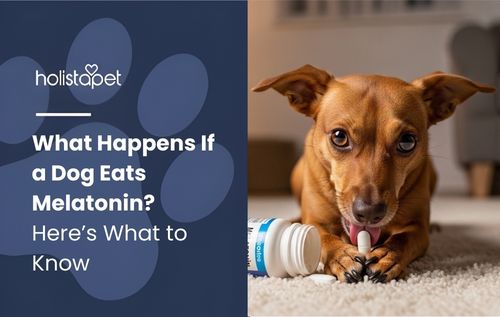
If your dog eats melatonin, plain xylitol-free products most often cause sleepiness, lethargy, vomiting, or stomach upset, but the risk changes with your dog’s size, how much was swallowed, the product strength, and any added ingredients. For dog owners, caregivers, and anyone dealing with accidental melatonin ingestion, the key issue is that melatonin products vary widely: some contain xylitol or other ingredients that can turn a mild exposure into an emergency, so fast, informed action can prevent serious harm.
Below, you’ll find what to do right away, how to check the label for dangerous ingredients, which symptoms need urgent care, when to call a veterinarian or emergency clinic, what treatment a vet may recommend, how gummies, tablets, liquids, and combination products differ, and how to help prevent another accident. Call immediately if xylitol is suspected, the amount is large or unknown, or your dog is already showing symptoms.
Key Highlights
- If a dog eats melatonin, pet owners should check the product label, look for xylitol, estimate the amount eaten, and contact a veterinarian or poison-control service when needed.
- Plain, xylitol-free melatonin most often causes sleepiness, lethargy, vomiting, stomach upset, or poor coordination in dogs.
- Xylitol is a serious emergency for dogs and may appear in gummies, flavored liquids, dissolvable tablets, or other human sleep supplements.
What Should You Do If Your Dog Ate Melatonin?

Move the product out of reach, check that your dog is breathing and responsive, and gather the package. Do not wait for symptoms before investigating the ingredients. Early advice matters because a poison specialist may recommend a different response based on how recently the ingestion occurred.
1. Read the Entire Product Label
Confirm the brand, formulation, strength, serving size, and complete ingredient list. “Melatonin” on the front does not mean it is the only active ingredient. Human sleep products come in different types and a wide variety of formulations, and may also contain botanicals, vitamin blends, sleep aids, cannabinoids, flavorings, or sweeteners. Photograph both ingredient panels to share with the veterinarian. If melatonin is ever used intentionally, choose products specifically reviewed or approved by your veterinarian.
2. Look for Xylitol Immediately
URGENT XYLITOL WARNING: If the label lists xylitol—or if the ingredients cannot be confirmed—call a veterinarian or animal poison-control service immediately. Do not wait to see whether your dog becomes sick. Gummies and flavored human supplements deserve particular caution because some use xylitol, a sugar substitute that is harmful to dogs. If a melatonin gummy contains no xylitol or other toxic additives, your dog may be fine, but you should still monitor closely and check in with a veterinarian.
Xylitol can trigger a rapid insulin release in dogs, causing dangerously low blood sugar. The Merck Veterinary Manual reports that signs may appear within 30 minutes or be delayed for 12 to 18 hours when the product slows absorption. Liver injury can emerge later, sometimes 24 to 48 hours after ingestion.
Xylitol content varies widely among products and may not be stated in milligrams. Never try to decide that an exposure is safe based only on xylitol’s position in the ingredient list.
3. Estimate the Exposure
Write down these details before calling:
- Your dog’s current weight
- How many tablets, capsules, gummies, chews, or milliliters may be missing
- The melatonin strength per unit, not merely the serving size
- The earliest and latest possible time of ingestion
Calculate the total melatonin only to give the veterinary team clearer information:
Number eaten × milligrams per unit = total milligrams consumed
For example, four 5 mg gummies equal 20 mg of melatonin. This calculation does not determine whether the product is safe, as xylitol and other ingredients may pose separate risks. If the amount is uncertain, give the highest reasonable estimate so the veterinarian can better understand what complications could occur.
HolistaPet Quick-Reference Decision Guide
This original HolistaPet guide is a triage tool, not a toxicity calculator or a substitute for professional advice.
|
Dog’s Weight |
Amount Eaten |
Product Strength |
Xylitol Status |
Recommended Action |
|---|---|---|---|---|
|
Any weight |
Any amount |
Any strength |
Present or suspected |
Emergency: Call a veterinarian or animal poison-control service now. Do not wait for symptoms. |
|
Under 10 lb |
One or more units |
Known or unknown |
Confirmed absent |
Call promptly. A single human-strength unit represents a larger exposure for a very small dog. |
|
10–25 lb |
One known unit |
Clearly labeled |
Confirmed absent |
Record the total milligrams and call your veterinarian for case-specific advice, especially if the dose was not prescribed for this dog. |
|
Over 25 lb |
One known unit |
Clearly labeled |
Confirmed absent |
Monitor only if a veterinarian or poison expert advises it. Call if the dog is young, senior, pregnant, ill, medicated, or symptomatic. |
|
Any weight |
Multiple units, a whole bottle, or an unknown amount |
Any or unknown |
Confirmed absent or unknown |
Call now. Product strength, other ingredients, wrappers, and the possibility of a pill mass or obstruction must be considered. |
|
Any weight |
Any amount |
Any strength |
Any status |
Emergency: Go to an emergency veterinarian for collapse, seizures, difficulty breathing, severe weakness, repeated vomiting, inability to stand, or unresponsiveness. |
Do not use another dog’s experience, an online dosing chart, or a standard human serving to decide whether care is necessary.
When Should You Contact a Veterinarian Immediately?
Call immediately when any of the following applies:
- The product contains or may contain xylitol.
- The ingredient list or amount eaten is unknown.
- Your dog swallowed several units, a whole bottle, packaging, or wrappers.
- The supplement contains other active ingredients, such as another sleep aid or medication.
- Your dog is a puppy, very small, pregnant, nursing, elderly, or has liver, kidney, endocrine, or other health problems.
- Your dog takes prescription medication or other sedating supplements.
- Your dog is vomiting repeatedly, unusually sleepy, weak, wobbly, confused, trembling, collapsing, having a seizure, or difficult to wake.
The American Veterinary Medical Association emphasizes that time is critical in possible poisoning. If you notice severe signs, please call the nearest emergency veterinary hospital and arrange transport.
Do not give food, sugar, activated charcoal, hydrogen peroxide, salt, or another home remedy unless a veterinary professional familiar with the case directs you. The Pet Poison Helpline’s emergency guidance specifically advises against using home remedies or inducing vomiting without professional guidance.
What Symptoms Can Melatonin Cause in Dogs?

Plain melatonin is generally less concerning than xylitol or a multi-ingredient sleep product. According to the ASPCA Animal Poison Control Center, accidental melatonin overdoses most often cause vomiting, sleepiness, and lethargy; incoordination is less common. Possible signs include:
- Excessive sleepiness or difficulty waking
- Low energy or unusual quietness
- Vomiting, diarrhea, or stomach discomfort
- Wobbliness or poor coordination
- Restlessness or behavior that is unusual for the dog
If a dog becomes unsteady, keep the dog in a quiet, confined area away from stairs, furniture edges, pools, and other fall hazards while seeking veterinary advice. Do not assume that sleepiness is harmless if the product or dose is unknown.
Symptoms Linked to Xylitol
Xylitol poisoning may cause vomiting followed by weakness, reduced activity, staggering, poor coordination, collapse, tremors, seizures, or coma as blood sugar falls. Later liver injury may cause continued vomiting, profound lethargy, yellowing of the gums or eyes, bruising, or abnormal bleeding. A dog can initially appear normal, so the absence of symptoms does not make a known xylitol exposure safe. As low blood sugar worsens, a dog may become unable to stand or walk, which is an emergency.
When Might Symptoms Appear?
Melatonin-related drowsiness or stomach upset typically begins within 1 to 2 hours after administration and may last for hours afterward. VCA Animal Hospitals describes melatonin as short-acting, with effects generally expected to wear off within 24 hours, though they may last longer in pets with liver or kidney disease.
Xylitol has a different and more dangerous timeline. Low blood sugar can develop rapidly or be delayed for many hours, and evidence of liver injury may not appear until the following day or later. Follow the monitoring period recommended by the veterinarian or poison specialist rather than stopping observation because the dog looked normal for the first hour, including through the night if needed.
What Will a Veterinarian Do?
The veterinary team will assess the dog’s weight, product ingredients and strength, number missing, ingestion time, symptoms, medical conditions, and medications. Bring the package or clear photos.
The veterinarian may perform a physical and neurologic examination and check body temperature, heart rate, breathing, hydration, and coordination. Testing and treatment depend on the formulation and estimated dose.
For a recent ingestion in a dog that is still alert and clinically normal, a veterinarian may decide that medically induced vomiting is appropriate. This should not be attempted at home without direct instructions. Vomiting can be unsafe in a very sleepy, uncoordinated, seizing, or otherwise impaired dog because material may enter the lungs.
Why the Product Type Matters
Melatonin is a hormone involved in the sleep-wake cycle. Veterinarians may recommend it for selected dogs, but an accidental exposure cannot be judged by the word “melatonin” alone. Tablets and capsules may contain only melatonin and inactive fillers, while gummies, flavored liquids, and combination sleep supplements can include ingredients that change the urgency.
Extended-release products may behave differently from immediate-release products. Swallowing caps, wrappers, desiccant packets, or multiple tablets can also cause gastrointestinal concerns.
For planned use, ask a veterinarian to select the formulation and dose. HolistaPet’s melatonin dosage guide for dogs explains why body weight and individual health matter. Additional background is available in this clean, direct PetMD guide to melatonin for dogs.
How Pet Parents Can Prevent Another Accidental Ingestion

Store supplements in a closed cabinet. Do not leave pill organizers, handbags, packages, or gummy containers on counters or bedside tables; these precautions help protect a curious pup from accidental ingestion, and dogs may chew through child-resistant packaging.
If a veterinarian recommends melatonin in the future:
- Confirm the exact dose and timing for that individual dog.
- Use only the formulation the veterinarian approves.
- Recheck the ingredient list whenever purchasing a new bottle or flavor.
- Avoid human gummies or flavored products unless the veterinarian has reviewed every ingredient.
- Keep a current list of medications and supplements because people in the home may use different products that pets can access.
For more background, review HolistaPet’s educational guides on dog sedatives, safe-use considerations, and sleep aids for dog travel. After the emergency is resolved, pet owners whose veterinarian recommends a dog-specific option can review melatonin for dogs.
Final Takeaway
Plain, xylitol-free melatonin often causes only drowsiness, lethargy, or stomach upset after accidental ingestion, but the label determines the real risk. Check for xylitol, calculate the maximum amount your dog may have eaten, note the product strength and time, and call a veterinarian or animal poison-control service when the product, amount, or dog’s condition raises concern. Any xylitol exposure or serious symptom requires immediate action.
Frequently Asked Questions
Will One Melatonin Tablet Hurt a Dog?
One plain tablet may cause little more than sleepiness, but it cannot automatically be considered safe. The answer depends on the dog’s weight, tablet strength, health, medications, and inactive ingredients. Check the label and call a veterinarian if the dose was not prescribed for that dog.
What If My Dog Ate Melatonin Gummies?
Read the full label immediately. Gummies can contain xylitol or other active ingredients. If xylitol is present, suspected, or impossible to rule out, contact a veterinarian or animal poison-control service now, even if the dog appears normal.
How Much Melatonin Is Too Much for a Dog?
There is no single accidental-ingestion cutoff appropriate for every dog and every product. A veterinary professional should consider the dog’s weight, total milligrams, formulation, other ingredients, symptoms, and medical history. Do not use a routine dosing chart to evaluate an overdose.
Should I Make My Dog Vomit?
Not unless a veterinarian or veterinary poison expert directly instructs you. Inducing vomiting can cause complications, especially when a dog is sleepy, uncoordinated, seizing, or having trouble swallowing. Xylitol cases also require rapid professional assessment and monitoring.
How Long Should I Watch My Dog?
Follow the monitoring instructions given for the specific product. Plain melatonin effects are generally short-acting, but xylitol-related low blood sugar may be delayed for hours, and liver injury may develop 24 to 48 hours later. A brief symptom-free period is not enough to clear a suspected xylitol exposure.
Can I Give My Dog Melatonin Again Later?
Only after asking the dog’s veterinarian. A product involved in an accidental ingestion should not be reused until its ingredients and intended dose have been reviewed. Melatonin is also used in other animals, including cats, but pet parents should never assume a product or dose is interchangeable between species. Melatonin should support a veterinarian-directed plan, not replace evaluation of ongoing sleep, anxiety, behavior, or health concerns.







Leave a comment
All comments are moderated before being published.
This site is protected by hCaptcha and the hCaptcha Privacy Policy and Terms of Service apply.