


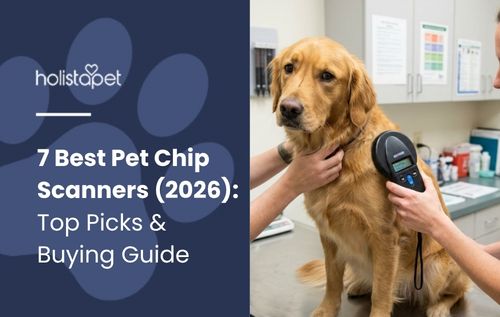
Pet chip scanners help veterinarians, shelters, and pet owners quickly identify lost animals by reading microchip data. These devices improve identification efficiency by providing fast and reliable access to pet information stored in a microchip registry. Choosing the right scanner depends on compatibility, speed, portability, and ease of use.
What is a Pet Chip Scanner?
 A pet chip scanner is a handheld device that reads the identification number stored inside a pet microchip through radio frequency identification technology.
Veterinarians, shelters, and animal rescue teams use these scanners to detect implanted chips in pets such as dogs and cats. The scanned ID number is then matched with a registry database to retrieve the owner’s contact information.
Related Post: 4 Best Microchip Dog Doors for Smart & Secure Pet Access
What are the Best Pet Chip Scanners?

The best pet chip scanners offer fast detection, reliable chip reading, portability, and compatibility with multiple microchip frequencies.
Instead of focusing on a single feature, high-quality scanners balance scanning speed, accuracy, and usability for both professional and personal use.
|
Product |
Best For |
Bluetooth |
Mobile App |
Rechargeable Battery |
Standout Feature |
|
Alacrity 3 in 1 Bluetooth Pet Microchip Scanner |
Overall use |
Yes |
Yes |
Yes |
3 in 1 connectivity |
|
Alacrity Bluetooth Pet Microchip Reader |
Handheld scanning |
Yes |
Yes |
Yes |
Lightweight portable design |
|
NetumScan Bluetooth Pet Microchip Scanner |
Wireless scanning |
Yes |
Yes |
Yes |
Fast data transfer |
|
NetumScan Upgraded Pet Microchip Reader |
Shelters |
No |
No |
Yes |
Stores 256 records |
|
Smoostart Microchip Scanner |
Budget buyers |
No |
No |
Yes |
Affordable cost |
|
Halo Microchip Scanner for Pets |
Large pets |
No |
No |
Yes |
Strong scanning range |
|
Smoostart Universal Animal Microchip Tag Reader |
Universal compatibility |
No |
No |
Yes |
Multiple frequency support |
1. Alacrity 3 in 1 Bluetooth Pet Microchip Scanner

Key Specifications:
-
Material: ABS plastic
-
Battery Life: Rechargeable battery with long standby time
-
Mobile App: Yes
-
Bluetooth: Yes
Unique Features:
-
Supports Bluetooth and USB connection
-
Reads multiple chip frequencies
-
Compact pocket-sized design
The Alacrity 3 in 1 Bluetooth Pet Microchip Scanner stands out for its versatility and user-friendly controls. This portable scanner allows shelters, veterinarians, and pet owners to quickly detect microchip data using wireless scanning features. The device can connect to a phone or computer, allowing easier data access and record management during identification checks.
2. Alacrity Bluetooth Pet Microchip Reader

Key Specifications:
-
Material: Durable plastic housing
-
Battery Life: Rechargeable
-
Mobile App: Yes
-
Bluetooth: Yes
Unique Features:
-
Lightweight handheld device
-
Fast scanning process
-
Clear display screen
The Alacrity Bluetooth Pet Microchip Reader offers reliable performance for daily scanning tasks. Its portable build fits comfortably in one hand, which makes it ideal for veterinarians and rescue teams handling lost pets in the field. The scanner also supports common ISO microchip standards used for dogs and other animals.
3. NetumScan Bluetooth Pet Microchip Scanner

Key Specifications:
-
Material: ABS shell
-
Battery Life: Rechargeable battery
-
Mobile App: Yes
-
Bluetooth: Yes
Unique Features:
-
Wireless Bluetooth connection
-
Quick chip detection
-
Easy data transfer
The NetumScan Bluetooth Pet Microchip Scanner works well for pet owners and shelters that need a simple but reliable microchip scanner. Its scanning range and fast response time support efficient detection of microchips, while stored data can be used for future reference.
4. NetumScan Upgraded Pet Microchip Reader

Key Specifications:
-
Material: High strength plastic
-
Battery Life: Rechargeable
-
Mobile App: No
-
Bluetooth: No
Unique Features:
-
Stores up to 256 records
-
Designed for shelters
-
Supports multiple frequencies
The NetumScan Upgraded Pet Microchip Reader suits shelters and animal rescue organizations handling large numbers of pets. Its built-in storage system helps staff track identification records without relying on external tools or internet access during the scanning process.
5. Smoostart Microchip Scanner

Key Specifications:
-
Material: Plastic body
-
Battery Life: Rechargeable battery
-
Mobile App: No
-
Bluetooth: No
Unique Features:
-
Budget-friendly cost
-
Simple one-button operation
-
Portable handheld design
The Smoostart Microchip Scanner delivers dependable performance at a lower purchase price. This pet microchip scanner works well for pet owners who want an affordable device for occasional chip scanning and identification checks at home or during travel.
6. Halo Microchip Scanner for Pets

Key Specifications:
-
Material: Rugged plastic casing
-
Battery Life: Rechargeable
-
Mobile App: No
-
Bluetooth: No
Unique Features:
-
Strong scanning range
-
Comfortable handheld grip
-
Reliable for large dogs
The Halo Microchip Scanner for Pets performs well in environments that involve larger animals and thicker fur coverage. Its reliable scanning distance improves the chances of detecting a chip quickly during health checks, rescue work, or shelter intake procedures.
7. Smoostart Universal Animal Microchip Tag Reader
Key Specifications:
-
Material: Durable ABS material
-
Battery Life: Rechargeable
-
Mobile App: No
-
Bluetooth: No
Unique Features:
-
Universal scanner compatibility
-
Supports multiple chip types
-
Lightweight portable device
The Smoostart Universal Animal Microchip Tag Reader offers broad compatibility for animal identification across different chip frequencies. This universal scanner works well for shelters, veterinarians, and rescue groups that scan pets from different programs and microchip manufacturers around the world.
Related Post: 7 Best Microchip Cat Doors for a Safer, Smarter Home
Who Should Use a Pet Chip Scanner?

Pet chip scanners help veterinarians, shelters, rescue teams, breeders, and pet owners identify lost pets quickly through microchip scanning.
|
User Group |
Main Purpose |
Key Benefits |
Ideal Scanner Features |
|
Veterinarians |
Check pet microchip information during visits |
Faster identification and health record verification |
Universal scanners, rechargeable battery, clear display |
|
Animal Shelters |
Scan missing pets during intake |
Improved tracking and successful reunion rates |
Portable device, long battery life, multiple frequencies |
|
Rescue Organizations |
Identify animals in the field |
Reliable scanning in different environments |
Pocket sized scanner, durable build, strong range |
|
Pet Owners |
Verify contact details and chip presence |
Extra peace of mind during travel or emergencies |
User friendly controls, lightweight design |
|
Breeders |
Confirm identification records |
Better organization and animal care management |
Data storage, USB support, compatibility |
|
Animal Control Teams |
Detect microchip data during rescue operations |
Faster response and safer handling |
Portable scanner, fast scanning process |
How Do I Choose the Right Chip Scanner for Pets?

A reliable device should read multiple chip frequencies quickly, offer simple controls, and provide dependable performance during emergencies or routine identification checks.
Check Microchip Compatibility
Not all microchip scanners support the same frequencies. Universal scanners work best because they detect multiple chip types used across different regions and animal programs.
The American Animal Hospital Association recommended universal microchip readers because shelters and veterinarians often encounter pets with different microchip standards.
Prioritize Fast and Accurate Scanning
A good scanner should detect a pet microchip within seconds and maintain a consistent scanning range. Faster scanning can support more reliable chip detection in practical settings.
Portable devices with strong detection sensitivity also help users scan larger dogs or nervous animals more effectively.
Choose a Portable and User-Friendly Design
Handheld scanners with lightweight construction fit better in daily rescue work and veterinary care. A pocket-sized scanner also improves convenience during field operations, travel, and intake checks.
Clear display screens and simple buttons reduce scanning errors and help users access identification data faster.
Look for Rechargeable Battery Support
Rechargeable battery systems reduce long-term cost and make the device more reliable during regular use. Many modern pet chip scanners also include USB charging, which adds convenience for shelters, veterinarians, and pet owners working in different environments.
Consider Bluetooth and Data Storage Features
Bluetooth enabled scanners allow users to connect the device to a phone or PC for easier record management. Some models also store scanning data internally, which helps shelters and rescue groups track multiple pets without writing information manually.
Evaluate Durability and Build Quality
Animal rescue work often involves outdoor scanning, transport vehicles, and unpredictable conditions. Durable scanners with strong casing materials handle frequent use better and provide more reliable long-term performance.
Compare Cost With Long-Term Benefits
A lower purchase price may look appealing, but higher quality microchip readers often provide better scanning accuracy, stronger compatibility, and longer battery life.
The National Institute of Standards and Technology noted that reliable RFID scanning systems improve identification accuracy when devices support standardized frequencies and proper detection range.
Investing in a dependable scanner can improve safety and increase the chances of a successful reunion for missing pets and their families.
How Do I Use a Pet Chip Scanner?
Using a pet chip scanner involves turning on the device, scanning the animal correctly, and checking the identification number linked to the pet microchip.
Step #1. Turn On the Scanner and Check the Battery
Power on the scanner and confirm the battery has enough charge before scanning. Many portable microchip readers include rechargeable battery systems and display indicators that show battery status.
Step #2. Keep the Pet Calm and Secure
Place dogs or other pets in a stable position before scanning. A leash or gentle restraint helps reduce movement and improves scanning accuracy during the process.
Step #3. Start Scanning Near the Shoulders
Move the scanner slowly over the animal’s shoulders and upper back because veterinarians usually place the microchip between the shoulder blades. Hold the device within a few inches of the skin for better chip detection.
Step #4. Scan the Entire Body if Needed
Some pet microchips can shift position over time. Continue scanning along the neck, chest, and sides if the scanner does not detect the chip immediately. Slow and steady scanning works better than quick movements.
Step #5. Read the Identification Number on the Display
Once the scanner detects the microchip, the display screen will show the identification number. Some Bluetooth enabled devices can also transfer the data to a phone or PC through wireless connection.
Step #6. Check the Contact Details in a Registry Database
Enter the identification number into a pet recovery database to locate the owner’s contact details. Shelters and veterinarians often use this step to reconnect missing pets with their families.
Step #7. Clean and Store the Scanner Properly
Wipe the scanner after use and store it in a dry environment. Proper care helps maintain reliable performance and extends the life of the device.
What Do I Do After Scanning a Pet Chip?
After scanning a pet chip, record the identification number and check it through a trusted pet recovery registry to access the owner’s contact details. Contact the owner, local shelters, or veterinarians if the pet appears lost or missing.
If the scanner does not detect a chip, continue scanning slowly across the animal’s body because some pet microchips can shift from their original placement over time.
Frequently Asked Questions
Can a pet microchip scanner track pets in real time?
No. A microchip scanner only reads identification data at close range and does not provide GPS tracking.
How far can a microchip scanner detect a chip?
Most scanners work within a short range of a few inches.
Do all scanners read every chip type?
No. Universal scanners support multiple frequencies, while others are more limited.
Can pet owners use scanners at home?
Yes. Some portable scanners are designed for basic home use.
Why might scanning be difficult?
Detection may vary due to chip position, device compatibility, or scanning technique.
How long does a microchip last?
Most microchips are designed to last for the lifetime of the pet.
Are Bluetooth scanners better than standard models?
Bluetooth models may offer easier data transfer, while standard scanners focus on basic scanning functions.








Leave a comment
All comments are moderated before being published.
This site is protected by hCaptcha and the hCaptcha Privacy Policy and Terms of Service apply.