


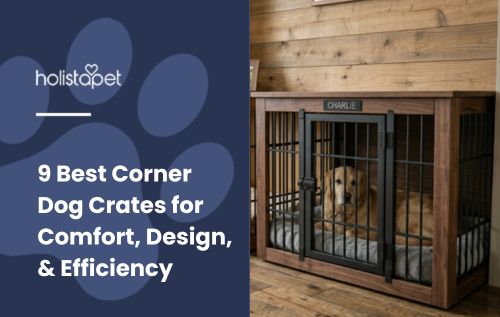
A large dog crate can take up significant floor space and affect room layout. Corner dog crates are designed to fit into unused corners, creating a defined resting area without disrupting room flow.
Many designs also incorporate furniture-style elements, allowing them to function as tables or storage units in indoor living spaces.
What is a Corner Dog Crate?
 A corner dog crate is a kennel designed to fit into angled room spaces. Its structure helps maximize floor space while providing a designated resting area for dogs.
Many models are designed with furniture-style finishes, allowing them to blend with common indoor setups such as apartments and compact homes.
What are the Best Corner Dog Crates Today?
Selection depends on dog size, home layout, and functional requirements such as durability and accessibility.
|
Product |
Primary Characteristic |
Suitable For |
Material |
Additional Function |
|
APRILSOUL Corner Dog Cage Kennel |
Balanced overall design |
Medium breeds |
Wood and metal |
Table surface |
|
Saudism 67" XL Corner Crate |
Extra-large size |
Large dogs |
Steel and wood |
Spacious interior |
|
MAHANCRIS Wooden Corner Crate |
Decorative finish |
Stylish interiors |
Wood and mesh |
Furniture-inspired finish |
|
VECELO Corner Crate Furniture |
Dual-door access |
Easy daily access |
Wood and metal |
Removable cushion |
|
YITAHOME Corner Dog Kennel |
Budget-friendly option |
Everyday use |
Wood and steel |
Compact footprint |
|
DEYGIA L-Shaped Double Dog Crate |
Two-dog layout |
Shared pet homes |
Wood and metal |
Removable divider |
|
DEYGIA Three-Dog Corner Kennel |
Multi-pet organization |
Three-dog homes |
Metal and wood |
Divider sections |
|
VOWNER Corner Crate |
Heavy-duty durability |
Active dogs |
Reinforced metal |
Secure locks |
|
FACBOTALL Corner Kennel |
Built-in storage |
Organized spaces |
Wood and metal |
Storage shelves |
1. APRILSOUL Corner Dog Cage Kennel

Key Specifications:
-
Height: 29.5 inches
-
Width: 43.3 inches
-
Material: Engineered wood and metal
Comfort Features:
-
Enclosed resting space
-
Secure locking system
-
Flat top surface usable as furniture
Best For:
-
Medium dogs
-
Compact interiors
-
Multi-use furniture setups
This model is structured for corner placement and uses an enclosed frame suitable for indoor use.
2. Saudism 67" XL Corner Crate for Dogs

Key Specifications:
-
Height: 34 inches
-
Width: 67 inches
-
Material: Wood and reinforced steel
Comfort Features:
-
Expanded interior space
-
Reinforced frame
-
Ventilated structure
Best For:
-
Large dogs
-
Open-plan interiors
-
High-activity pets
This crate offers a larger interior space and uses reinforced materials for structural support in larger setups.
3. MAHANCRIS Wooden Corner Crate

Key Specifications:
-
Height: 31.5 inches
-
Width: 43.3 inches
-
Material: Wooden panels and metal mesh
Comfort Features:
-
Furniture-style exterior
-
Enclosed resting area
-
Smooth interior finish
Best For:
-
Decorative interiors
-
Apartments
-
Style-focused setups
This model is designed to visually align with home furniture while serving as a containment structure.
4. VECELO Corner Crate Furniture

Key Specifications:
-
Height: 31 inches
-
Width: 43 inches
-
Material: Engineered wood and metal bars
Comfort Features:
-
Dual-door access
-
Removable cushion
-
Ventilated frame
Best For:
-
Frequent access use
-
Busy households
-
Flexible placement
This crate supports practical daily use with multiple access points and removable comfort features.
5. YITAHOME Corner Dog Kennel

Key Specifications:
-
Height: 31.5 inches
-
Width: 43.3 inches
-
Material: Wood and steel
Comfort Features:
-
Corner-fit structure
-
Secure latch system
-
Flat top surface
Best For:
-
Budget-conscious users
-
Small to medium dogs
-
Standard indoor setups
This model offers a straightforward corner-fitting design suitable for everyday indoor use.
6. DEYGIA L-Shaped Double Dog Crate

Key Specifications:
-
Height: 33 inches
-
Width: 78 inches
-
Material: Engineered wood and metal
Comfort Features:
-
Two-dog layout
-
Removable divider
-
Separated resting zones
Best For:
-
Two-dog households
-
Shared living spaces
-
Adjustable setups
This design allows flexible configuration for either shared or separated use.
7. DEYGIA Three-Dog Corner Kennel

Key Specifications:
-
Height: 33 inches
-
Width: Extra-large multi-crate layout
-
Material: Reinforced metal and wood
Comfort Features:
-
Three compartments
-
Structured separation
-
Organized layout
Best For:
-
Multi-dog homes
-
Breeding environments
-
Structured indoor setups
This unit provides segmented resting spaces within a single structured frame.
8. VOWNER Corner Crate for Large Dogs

Key Specifications:
-
Height: 32 inches
-
Width: 43 inches
-
Material: Heavy-duty metal and wood
Comfort Features:
-
Reinforced frame
-
Secure locking system
-
Durable construction
Best For:
-
Active dogs
-
Long-term use
-
Secure containment needs
This model is designed for stability and containment in high-activity environments.
9. FACBOTALL Corner Kennel With Storage Shelves
Key Specifications:
-
Height: 67 inches
-
Width: 43 inches
-
Material: Wood and metal
Comfort Features:
-
Integrated storage shelves
-
Enclosed kennel space
-
Vertical layout
Best For:
-
Small rooms
-
Storage needs
-
Multi-functional setups
This design combines a kennel space with vertical storage to maximize utility in compact interiors.
Related Post: 10 Best Dog Crate Furniture Designs
How Do I Choose the Right Corner Crate for Dogs?
Selecting the right corner dog crate starts with understanding a dog’s size, behavior, and daily needs. The available room space and furniture layout also play an important role.
Size Compatibility
Ensure adequate space for standing, turning, and resting.
Material Quality
Wood and metal combinations provide structural balance for indoor use.
Ventilation
Proper airflow supports long-term comfort.
Corner Fit Design
Review dimensions carefully to confirm the kennel fits properly into the intended corner area.
Furniture Function
Some crates also work as end tables or storage surfaces, which can provide additional surface use in smaller homes.
Divider Features
Removable dividers may help accommodate growing puppies or multiple dogs sharing one structure.
Door Accessibility
Dual-door designs can make feeding, cleaning, and pet handling more convenient.
Storage Options
Certain models include shelves or built-in storage for toys, treats, leashes, and pet supplies.
Mobility
Wheels or movable frames may simplify cleaning and furniture rearrangement.
Breed Suitability
Small, medium, and large dogs require different crate dimensions for proper comfort and movement.
Safety Features
Stable frames and secure locks may help provide additional security during crate use.
Assembly Requirements
Before purchasing, review delivery details, assembly instructions, and estimated setup difficulty.
How Do I Train My Dog for a New Corner Crate?
Dogs typically adjust more easily to a new crate when training is introduced gradually and consistently. The goal is to help the crate feel safe and familiar rather than restrictive or stressful.
Start With a Calm Introduction
Begin by placing the crate in a quiet, low-traffic area where your dog already feels comfortable. Keep the door open so your dog can learn freely without pressure.
You can support early positive association by:
-
Leave the crate door open
-
Add bedding or familiar toys
-
Allow pets to explore naturally
-
Reward calm behavior nearby
The American Kennel Club recommends gradual crate introduction to help build positive associations and reduce stress during training.
Begin With Short Crate Sessions
Start with brief sessions to help your dog adjust without feeling overwhelmed. Avoid long periods inside the crate during the first few days.
-
Start with 5–10 minute intervals
-
Stay nearby during early sessions
-
Gradually increase duration over time
-
Keep the experience calm and predictable
Short sessions help dogs develop comfort and trust in the new environment at their own pace.
Build Positive Associations
Encouraging positive experiences helps your dog view the crate as a safe and rewarding space.
You can do this by:
-
Feeding meals near or inside the crate
-
Offering treats after voluntary entry
-
Using calm verbal praise
-
Maintaining a relaxed environment around the crate
Crate setup often includes bedding, ventilation, and sufficient space for movement.
Maintain Comfort and Security
A comfortable crate setup plays an important role in successful training and long-term acceptance.
Ensure the crate includes:
-
Soft, washable bedding
-
Proper ventilation
-
A quiet placement away from noise or crowds
-
Enough space for your dog to stand, turn, and lie down comfortably
Research published by Frontiers in Veterinary Science noted that predictable resting environments may help reduce stress-related behaviors in dogs.
Support Nervous or Slow-to-Adapt Dogs
Some dogs may take longer to adjust to a new crate. In addition to consistent training routines, some pet owners incorporate calming wellness products as part of their dog’s environment.
Common options include:
-
CBD calming chews for dogs
-
CBD oil for dogs
-
Soft chew wellness treats
Some pet owners include products such as CBD calming chews, which may contain ingredients like chamomile and L-tryptophan.
Keep a Consistent Routine
Consistency helps dogs understand that the crate is part of their normal daily life.
-
Use the crate at consistent times each day
-
Maintain regular feeding and walking schedules
-
Avoid using the crate as punishment
-
Keep commands simple and consistent
A consistent routine is commonly used in crate training.
Frequently Asked Questions
Can a corner dog crate work for puppies?
Yes. A properly sized crate with a divider can support a puppy’s growth and training needs.
Do corner dog crates save more space than standard crates?
Yes. Their angled design allows placement in unused corners, improving floor space efficiency.
Are corner dog crates hard to clean?
No. Many designs include wide openings and removable components for easier cleaning.
Can a corner crate match home furniture?
Yes. Many models use wood finishes and furniture-style designs that blend with indoor interiors.
Should dogs sleep in a corner crate every night?
Yes, if the crate is appropriately sized and comfortable. A quiet environment supports better rest.
Are wheels useful on a corner dog crate?
Yes. Wheels can make repositioning and cleaning easier, especially for larger units.
How long does crate training take?
Adjustment time varies by dog, but many adapt within days to weeks with consistent training.
Can corner dog crates hold multiple pets?
Yes. Larger models may include dividers to support multi-dog use.








Leave a comment
All comments are moderated before being published.
This site is protected by hCaptcha and the hCaptcha Privacy Policy and Terms of Service apply.