


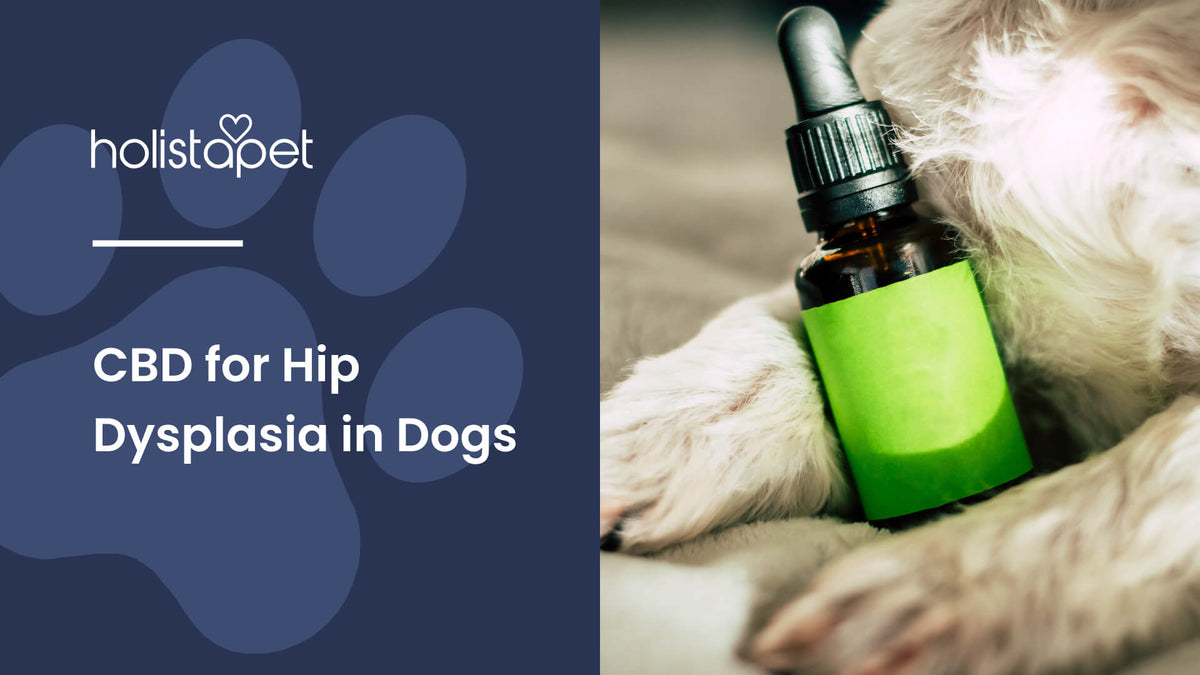
CBD for dog hip dysplasia may help support comfort in a joint condition that has no surgical or medical fix on its own, only ways to manage the discomfort it causes. Hip dysplasia is a structural issue, a poorly formed hip joint that leads to friction, instability, and eventually arthritis in that joint, and CBD is not going to correct the underlying anatomy. What it may help with is the day-to-day comfort layered on top of that structural problem, alongside weight management and a vet-directed care plan.
Large and giant breeds carry the highest risk for this condition, but it can impact dogs of any size as they age. Because the damage is mechanical, long-term care focuses heavily on reducing inflammation, protecting mobility, and easing the daily aches caused by joint wear. Our CBD for Dog Pain guide covers the broader research behind CBD and joint discomfort, which applies directly here since hip dysplasia so often leads to arthritis in the same joint over time.
Signs of Hip Dysplasia in Dogs
A bunny-hopping gait, where a dog moves both hind legs together in a hop rather than a normal alternating stride, is one of the most recognizable signs, especially noticeable when a dog is running or climbing stairs. Difficulty rising after lying down, reluctance to jump into a car, and a visible sway or looseness in the hips while walking are other common indicators.

Puppies can show early signs as young as four to six months, well before arthritis has had time to set in, which is different from arthritis that develops gradually with age. A Great Dane puppy who tires quickly on walks or seems reluctant to play the way littermates do is worth a vet visit sooner rather than later, since early detection changes the management options available.
Why Hip Dysplasia Happens
Hip dysplasia is primarily genetic; an inherited malformation where the ball and socket of the hip joint do not fit together properly, leading to abnormal wear with every step. German Shepherds, Labradors, Golden Retrievers, and Great Danes are among the breeds most commonly affected, largely due to their size and specific genetic predisposition.
Rapid growth during puppyhood, excess weight, and overexertion on hard surfaces during the growth phase can all worsen the condition in a dog already genetically predisposed to it. Responsible breeders screen breeding dogs through OFA hip scoring, an evaluation system that grades hip conformation, specifically to reduce the odds of passing the condition to puppies.
How CBD May Help With Hip Dysplasia Discomfort
CBD may help support general comfort in a dog managing chronic hip discomfort, working alongside rather than replacing whatever vet-directed treatment plan is already in place, whether that is medication, physical therapy, or in some cases surgery.
It does not correct joint structure and should not be treated as a substitute for a diagnosed treatment path. Many dogs with hip dysplasia are already on a vet-prescribed joint medication, common options include carprofen (Rimadyl), firocoxib (Previcox), or an injectable like Librela, and CBD is generally something owners layer alongside one of those rather than in place of it.
Consistency in dosing tends to matter more here than for a one-off situational trigger, since joint comfort responds to steady daily use rather than an occasional dose. Our CBD Oil for Dogs collection includes options built for this kind of ongoing daily support.
Dosage for This Situation
You may start with a weight-based dose using our CBD dosing chart for pets, and expect to give it consistently, generally once or twice a day. For a growing puppy already diagnosed with hip laxity, check with your vet before starting any supplement, since growth-phase dogs need different considerations than adults.
Give a new dosing routine two to four weeks before judging its effect, watching for small, cumulative changes like an easier time rising or slightly more willingness to take a full walk rather than a dramatic overnight shift.
Other Ways to Support Your Dog

- Use ramps: Ramps instead of stairs, both for the car and any elevated furniture your dog uses, reduce repeated strain on an already compromised joint.
- Keep them active: Keeping a dog lean, even a few pounds under standard breed weight guidelines, takes meaningful pressure off the hips and is one of the most effective non-surgical interventions available. Controlled, low-impact exercise like swimming builds supporting muscle without the joint impact of running.
- Consider therapy: Some vets recommend rehab-focused therapies. Cold laser therapy, underwater treadmill sessions, and acupuncture are all options that can be part of a hip dysplasia management plan depending on your dog's needs and your vet's assessment.
- Additional supplements: A number of owners also combine CBD with other non-CBD joint-support supplements, such as Adequan injections, omega-3 fatty acids (EPA/DHA), turmeric or curcumin, and green-lipped mussel, as part of a broader multi-pronged approach rather than relying on any single product alone.
When to Call Your Vet
A sudden inability to bear weight on a hind leg, or visible pain when a hip is gently manipulated, both warrant an immediate vet visit rather than home management. If your dog has not yet been formally diagnosed but shows the gait or mobility signs described above, an X-ray is the only way to confirm hip dysplasia versus another joint or spinal issue.
Surgical options exist for more severe cases, and your vet is the right person to evaluate whether your dog's age, size, and severity make that a reasonable path compared to lifelong management alone.
Frequently Asked Questions
Can CBD help a dog with hip dysplasia avoid surgery?
CBD may help support comfort but does not correct the structural joint problem behind hip dysplasia, so it is not a substitute for surgery in cases where a vet recommends it. It can be a useful part of a broader management plan either alongside or instead of surgery, depending on severity.
At what age can a dog start showing hip dysplasia symptoms?
Some puppies show signs as early as four to six months old, particularly in large and giant breeds with a strong genetic predisposition. Other dogs do not show symptoms until arthritis develops later in life from years of joint stress.
Is CBD safe for a growing puppy with hip laxity?
Talk to your vet before giving any supplement to a growing puppy, since dosing and safety considerations differ from an adult dog. Your vet can advise on timing and whether CBD makes sense alongside your puppy's specific growth and treatment plan.
How much CBD should I give a large breed dog with hip dysplasia?
Dosage is based on body weight, so a large breed dog needs a proportionally higher amount than a small dog using the same product. Our dosing chart breaks this down by weight range for a practical starting point.
Final Thoughts on CBD for Hip Dysplasia in Dogs
Hip dysplasia is a lifelong management condition for most dogs, and the right combination of weight control, low-impact movement, and daily support makes a real difference. Our CBD Mobility Chews for Dogs are formulated for ongoing joint support, and the full CBD Oil for Dogs collection has other options to explore.





Leave a comment
All comments are moderated before being published.
This site is protected by hCaptcha and the hCaptcha Privacy Policy and Terms of Service apply.