


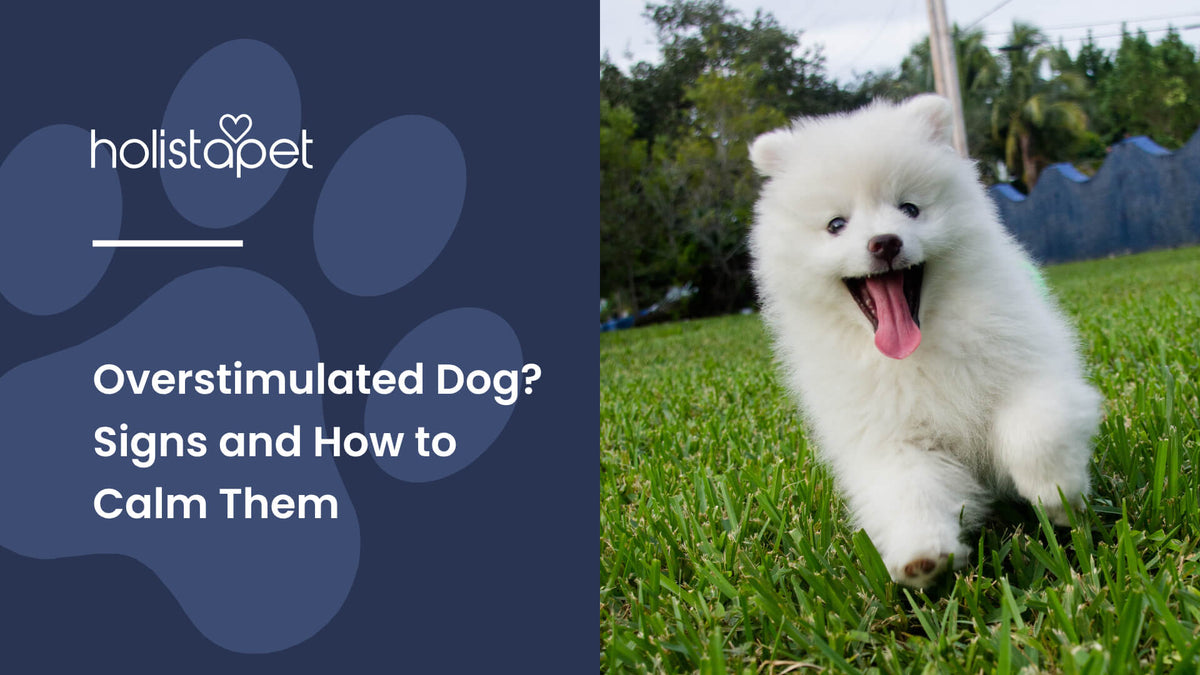
An overstimulated dog is one whose nervous system has taken in more noise, movement, people, or excitement than it can process, and the result usually looks like frantic zoomies, jumping, mouthing, or a dog who suddenly can't settle no matter what you try. It's common after dog parks, busy holidays, house guests, or long car rides, and it isn't the same thing as bad behavior. Your dog isn't being defiant. Their brain is simply overloaded, and the fastest fix is usually less stimulation, not more correction.
Some dogs settle quickly in a quiet room. Others have a harder time winding down, especially when overstimulation happens often. A calmer routine and extra support may help. CBD is one option to discuss with your veterinarian alongside rest, structure, and behavioral support. CBD for Dog Anxiety: What Works, What to Expect explains what pet parents can realistically expect.
Below, we'll cover the signs, common triggers, ways to help your dog settle, and when it may signal something bigger.
Signs Your Dog Is Overstimulated
A dog dealing with sensory overload rarely looks calm. Instead, you may see restless energy that seems to have nowhere to go. Zoomies may continue even when you call your dog’s name. Play can also become more frantic than playful.

Other signs may include:
- Whale eye, where you can see the whites of the eyes, or a hard stare
- Panting when it is not hot and your dog has not been exercising
- Barking that becomes louder or more frequent
- Pacing or being unable to lie down and stay there
- Nipping at hands, sleeves, or leashes during play
- Ignoring familiar cues your dog normally follows
Individual reactions vary, but the basic pattern is similar. Too much is happening at once, and your dog is struggling to settle.
What Causes Overstimulation
Once you learn your dog’s patterns, you may recognize sensory overload before it builds. Common triggers include dog parks, visitors, fireworks, vacuums, running children, and long car rides filled with unfamiliar sights.
Age and breed tendencies may influence how a dog responds. Herding breeds often notice movement quickly, which can make busy settings especially exciting. Puppies are also still developing their ability to settle after stimulating activities. Older dogs with hearing changes may startle more easily when they cannot locate a sound.
Adequate sleep is also important. Without enough uninterrupted rest, your dog may have more difficulty managing excitement the next day.
Predictable routines can make busy moments easier to handle. Dogs also notice changes in your voice and body language, so calm interactions may prevent an already exciting situation from becoming more intense.
How to Calm an Overstimulated Dog (Including CBD)
Your first step is usually to create distance from the trigger. Guide your dog toward a quiet room or an open-door crate they already consider secure. Avoid forcing them into the crate. When your dog feels overwhelmed, even familiar cues may be difficult to follow.
Once you reach a calmer space, try one or two simple options:
- Offer a frozen Kong or lick mat for slow, repetitive licking
- Dim the lights and reduce the surrounding sights and sounds
- Try a properly fitted pressure wrap if your dog enjoys gentle pressure
- Offer a sniffing activity that encourages a slower pace
- Sit nearby without demanding attention
For dogs who become overstimulated often, some pet parents include CBD in a broader calming routine. Others use it before a predictable trigger.
CBD may help support calmness in some dogs, although responses vary and canine research remains limited. A small 2024 study found differences in some stress-related measures during repeated car travel. Results varied depending on the measure researchers evaluated.
CBD interacts with the endocannabinoid system, which plays a role in stress-response signaling and overall balance. It is not designed to work like a fast-acting sedative or replace a quieter environment. Some dogs may become sleepy after taking it.
Choose pet-formulated CBD and check every ingredient, since some human products may contain substances that are unsafe for dogs. Ask your veterinarian whether CBD fits your dog’s needs. Our CBD Dog Treats collection includes pet-formulated options designed to support calmness and focus.
Dosage for This Situation
Your dog’s weight, product directions, and individual response should guide the amount. A bigger reaction does not call for a bigger serving. Never give extra CBD simply because an episode looks intense.
Pet parents may begin with the lowest amount recommended for their dog’s weight. Track your dog’s response and discuss any adjustments with your veterinarian. For a known trigger, you may give CBD 45 to 60 minutes beforehand. Timing varies by product and dog, so always follow the product directions.
If your veterinarian recommends day-to-day use, follow their guidance rather than changing the amount from one day to the next. Our CBD dosing chart for pets lists starting amounts by weight. If your dog takes medication, ask your veterinarian about CBD before adding it to their routine.
Other Ways to Support Your Dog
Overstimulation and poor sleep can create a frustrating cycle. A dog who struggles to wind down may get less restful sleep and become more sensitive to excitement the next day. CBD for Dog Sleep: Does It Help? shares practical ways to support a calmer nighttime routine.

Thoughtful exercise can also provide a calmer outlet for energy. A tired dog is not always a relaxed dog, especially after chaotic play. For some dogs, a 20-minute leash walk may feel more settling than an hour of off-leash excitement. The goal is decompression, not exhaustion.
A simple behavior journal may help you identify patterns. Record the time, location, and trigger for each episode.
Growling, snapping, or guarding may point to reactivity or fear rather than sensory overload alone. CBD for Aggressive or Reactive Dogs explains how these behaviors may overlap and why they can require different support.
When to Call Your Vet
An occasional episode after a big day may ease once the stimulation stops, often within an hour. Call your veterinarian if episodes happen daily or your dog cannot settle in a quiet, familiar room. Seek guidance promptly if the behavior includes biting that breaks skin.
A sudden behavior change also deserves attention, especially in a previously easygoing dog. Pain does not always look like obvious limping. Some dogs become jumpy, restless, or reactive when they feel uncomfortable.
Your veterinarian can check for pain or another physical cause. Mention any changes in sleep or appetite too, since those details may help reveal what is going on.
Frequently Asked Questions
Is an overstimulated dog the same as an anxious dog?
Not quite. Overstimulation happens when your dog receives too much sensory input in the moment. Anxiety often involves expecting something stressful before it happens. A dog can experience both, but the causes may differ. That means the most helpful calming approach may change with the situation.
How long does dog overstimulation usually last?
Many episodes begin easing within 10 to 30 minutes after your dog leaves the trigger and enters a quiet space. Some dogs need longer to decompress. Call your veterinarian if the episode remains intense after an hour. You should also call if your dog seems completely unable to settle.
Can puppies get overstimulated more easily than adult dogs?
Yes. Puppies under six months are still developing their self-regulation skills. Play sessions, new environments, and busy households can fill their cup quickly. As a result, they may become wound up faster and take longer to settle than an adult dog with similar experience.
Does CBD calm an overstimulated dog right away?
Usually not. CBD is not intended to work as a fast-acting rescue during an active episode. Some pet parents use it for daily or pre-trigger support instead. It may support calmness in some dogs, but responses vary. Removing your dog from the trigger and reducing stimulation should still come first.
An easily overstimulated dog is not difficult. Sometimes, their world simply gets too loud, busy, or exciting. A quieter routine, enough rest, and thoughtful daily support may make it easier to find that off switch. Give any new routine a few weeks, and note how your dog responds along the way. If your veterinarian agrees CBD may fit your dog’s routine, consider our CBD Calming Chews for Dogs. You can also explore the full CBD Dog Treats collection and compare the available options.






Leave a comment
All comments are moderated before being published.
This site is protected by hCaptcha and the hCaptcha Privacy Policy and Terms of Service apply.