


A cat’s tooth can fall out for several reasons, and the cause determines the next step. Kittens often lose baby teeth during normal growth, but adult cats usually lose teeth due to injury or dental disease. Pet owners should check the mouth, watch for pain or bleeding, and contact a veterinarian if the tooth came from an adult cat. If your cat is experiencing discomfort while waiting for veterinary care, you may also ask your veterinarian how to use CBD oil for cats as part of a supportive wellness plan. When used under veterinary guidance, CBD oil may help promote calmness and comfort, but it should never replace proper dental treatment or address the underlying cause of tooth loss.
For more information on feline wellness, oral hygiene, and everyday health, explore our complete collection of cat health and care articles.
Key Takeaways
- A kitten losing baby teeth usually reflects normal growth, while an adult cat losing a tooth often needs veterinary attention.
- Dental disease, tooth resorption, and injuries rank among the most common causes of tooth loss.
- A quick mouth check can help spot signs that require prompt care.
- Early diagnosis and treatment can reduce pain and help protect long term oral health.
- Routine dental care and regular veterinary visits lower the risk of future tooth loss.
When is Tooth Loss Normal in Cats?

Tooth loss only counts as normal during kittenhood. Most kittens start losing their baby teeth at around three to four months of age. Their permanent teeth, including the canine teeth, gradually replace the smaller baby teeth until the full adult set develops by about six months.
This stage rarely causes serious issues, although some kittens may show mild mouth difficulty eating for a short time. Chewing on safe toys can help ease discomfort while the new teeth come in.
When is Feline Tooth Loss Not Normal?
Adult cats should not lose teeth as part of normal aging. If a cat lost a tooth, an underlying dental condition often caused the problem. A veterinarian should perform an oral examination to identify the affected tooth and check for underlying health problems that could contribute to tooth loss.
Common causes include:
- Feline tooth resorption, which slowly destroys the tooth structure and often causes significant pain.
- Advanced gum disease that damages the bone supporting the teeth until they loosen.
- Trauma from accidents or hard impacts.
- Severe infections that weaken the tooth and surrounding tissue.
Watch for these warning signs:
- Mouth difficulty that makes chewing uncomfortable.
- Mouth difficulty eating or dropping food while chewing.
- Bad breath or bleeding gums.
- Swelling around the mouth.
- Excessive drooling or pawing at the face.
Early treatment helps prevent dental disease from progressing and supports a healthy life for cats.
Why Did My Cat’s Tooth Fall Out?
Tooth loss in cats usually points to a specific cause. Age, dental health, and physical trauma often explain why a tooth fell out. Identifying the reason helps determine the right response.
Kitten Teething
Kittens lose baby teeth as adult teeth develop.
- Kittens begin losing baby teeth around three to four months of age.
- Most adult teeth appear by six to seven months.
- Mild gum irritation and chewing behavior often appear during this stage.
The American Veterinary Dental College states that normal kitten development includes the natural shedding of deciduous teeth as permanent teeth erupt.
Dental Disease
Dental disease remains one of the most common health issues in cats. Research from the Cornell University College of Veterinary Medicine notes that most cats show signs of periodontal disease by about three years of age if preventive dental care is not provided.
- Plaque and tartar buildup irritate the gums.
- Gum inflammation damages the tissue that supports teeth.
- Advanced periodontal disease weakens the tooth until it falls out.
Injury or Trauma
Physical impact can dislodge a tooth.
- Falls from high places
- Rough play with other animals
- Accidents involving hard objects
Sudden tooth loss after trauma often includes bleeding, swelling, or visible mouth pain.
Poor Nutrition or Health Problems
Underlying health issues can weaken teeth and gums.
- Nutritional deficiencies that affect oral tissue health
- Chronic infections that damage gum structures
- Conditions that weaken bone and connective tissue
Veterinarians often check overall health because systemic illness can contribute to oral problems in cats.
What are Some Common Dental Problems in Cats?
Several dental conditions can damage the teeth and gums over time. Early recognition gives cat owners a better chance to protect their pet's comfort and oral health.
Tooth Resorption
Feline tooth resorption develops when the body gradually destroys part of the tooth. The condition often affects an affected tooth below the gumline, making it difficult to spot without an oral examination.
Watch for these signs:
- Drooling
- Sensitivity around the mouth
- Trouble chewing
- A tooth that suddenly appears broken or missing
Many cats need tooth extraction to relieve pain and stop the condition from worsening.
Gingivitis
Gingivitis marks the earliest stage of gum disease. Plaque buildup irritates the gums and causes inflammation before deeper tissues become damaged.
Early symptoms may include:
- Bright red gums
- Mild bleeding
- Tenderness around the gumline
- Bad breath
Prompt dental care can reverse gingivitis and help prevent dental disease from progressing.
Tooth Fracture
A fractured tooth can happen after a fall, an injury, or chewing something too hard. Even a small crack can expose the sensitive inner portion of the tooth.
Signs to look for include:
- A visible chip or crack
- Bleeding from the tooth
- Pain while eating
- Reluctance to chew on one side
A veterinarian should examine the damaged tooth as soon as possible to reduce the risk of infection.
Oral Infection or Abscess
An untreated dental problem can allow bacteria to spread around the tooth and surrounding tissue. This often causes intense pain and can affect a cat's overall health.
Possible warning signs include:
- Swelling around the face or jaw
- Pus near the gums
- Strong foul odor from the mouth
- Reduced appetite
- Fever or lethargy
Early treatment can stop the infection before it spreads further.
What Do I Check If My Cat’s Tooth Fell Out?
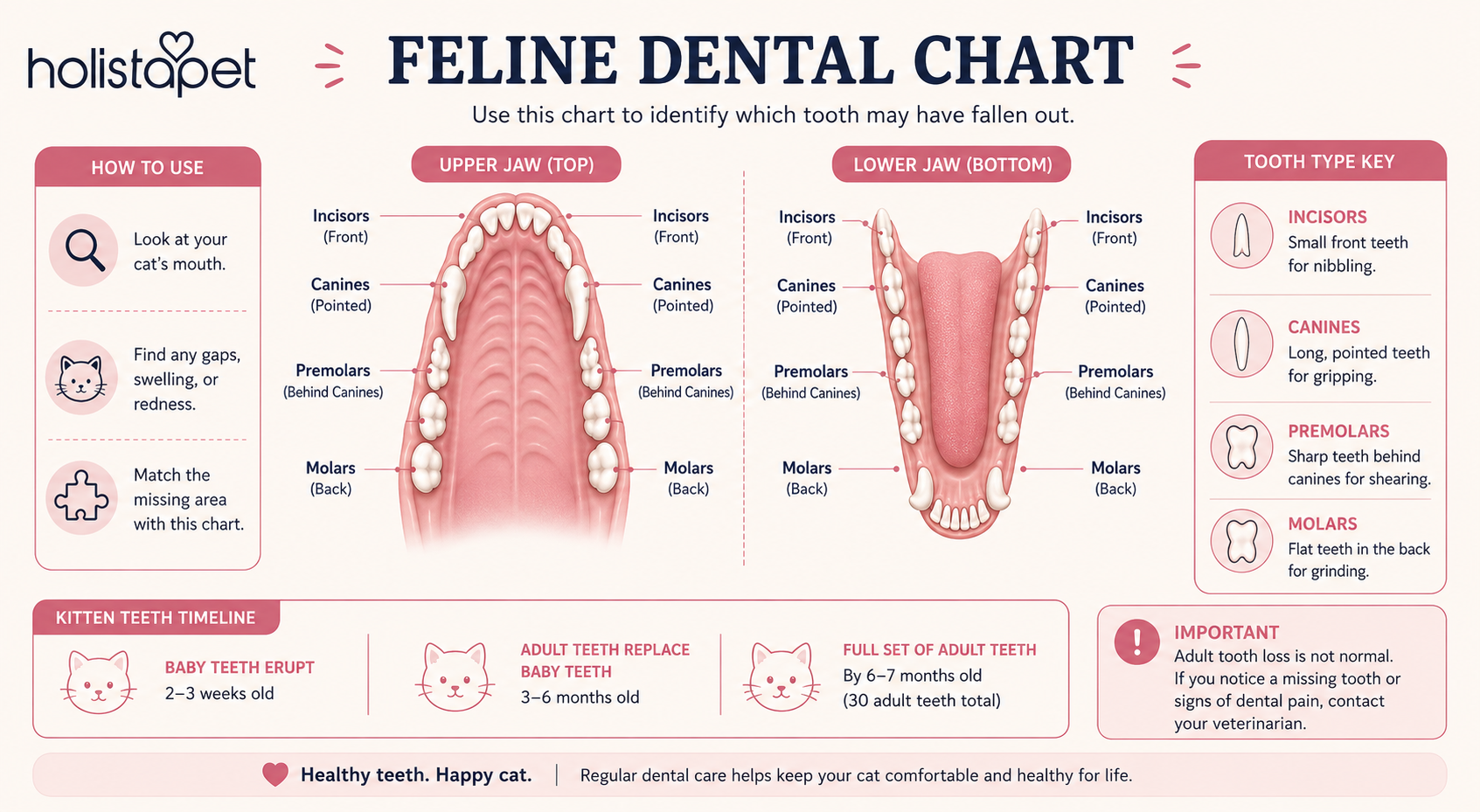
A quick check of the cat's mouth helps determine if the situation needs urgent care. Focus on clear signs of injury, infection, or discomfort. Paying attention to these details can reveal dental issues early and protect the pet's comfort.
- Bleeding in the mouth: Look for fresh blood or continuous bleeding from the gum where the tooth came out. Ongoing bleeding may signal injury cats often hide, especially after losing milk teeth or a fang tooth.
- Swelling or redness: Check the gums and nearby tissue for inflammation. Changes like gum recession can point to infection or damaged teeth left untreated.
- Pain or sensitivity: Notice signs like pawing at the mouth, drooling, or refusal to eat. These subtle signs often reflect discomfort inside the cat's mouth and may require care to make eating easier.
- Broken tooth fragments: Inspect the area for any remaining pieces. Fragments can stay lodged and affect other teeth, leading to further complications.
- Bad breath: A strong odor can signal advanced dental disease or infection. A vet may recommend dental cleanings and dental x rays to assess deeper issues not visible during a basic dental x.
- Difficulty eating: Watch for changes in eating habits such as chewing on one side or dropping food. These signs often indicate pain that needs attention.
- Behavior changes: Reduced activity, hiding, or irritability can point to oral discomfort. A veterinary visit may include imaging and evaluation under a creative commons license reference guide if educational materials apply.
What to Do After Finding a Cat's Tooth?

Contact a veterinarian as soon as possible if an adult cat loses a tooth. If the tooth came from a kitten that is going through normal teething, monitoring at home usually provides enough care unless other symptoms develop.
|
Age |
Bleeding |
Pain |
Appetite |
Tooth Type |
Action |
|---|---|---|---|---|---|
|
Kitten under 6 months |
None or slight |
Mild or none |
Normal |
Baby tooth |
Monitor at home |
|
Adult |
None |
Mild |
Slightly reduced or normal |
Adult tooth |
Schedule a veterinary visit |
|
Adult |
Mild |
Moderate |
Reduced |
Adult tooth |
See a veterinarian the same day |
|
Any age |
Heavy or ongoing |
Severe |
Not eating |
Baby or adult tooth |
Seek emergency veterinary care |
1. Check the Mouth Carefully
Look for bleeding, swelling, broken teeth, or food trapped around the area. Avoid touching a painful spot because it can make a frightened cat react aggressively.
2. Save the Tooth if Possible
Place the tooth in a clean container or plastic bag and bring it to the appointment. The veterinarian may use it to help determine what caused the tooth loss.
3. Watch for Changes at Home
Monitor eating habits and behavior over the next several hours. Pay close attention to:
- Bleeding that does not stop
- Drooling or pawing at the face
- Difficulty chewing
- Bad breath
- Swelling around the mouth
4. Schedule a Veterinary Visit
Adult tooth loss always deserves professional attention. A veterinarian can identify the cause, check for additional damage, and recommend the most appropriate treatment.
5. Offer Soft Food Until the Appointment
Soft food places less pressure on sore areas and can make eating more comfortable. Fresh water should remain available at all times, especially if the mouth feels tender.
How Much Does a Feline Dental Appointment Cost?

A feline dental appointment often costs between $50 and $150 for a basic exam. The total cost can increase if the veterinarian recommends imaging or treatment.
- Oral examination: About $50 to $150, depending on the clinic and location.
- Dental X rays: About $100 to $300, often performed under anesthesia for a complete evaluation.
- Tooth extraction: About $300 to $1,500 or more, depending on the number of teeth removed, the complexity of the procedure, and anesthesia costs.
- Additional treatment: Medications, blood work, and follow up care can add to the overall cost.
How Do I Prevent Tooth Loss in Cats?
The best way to prevent tooth loss involves consistent dental care at home and regular veterinary checkups.
- Brush their teeth regularly: Use a toothbrush and toothpaste made for cats to reduce plaque and bacteria.
- Schedule professional dental cleanings: Regular cleanings remove tartar and allow a veterinarian to detect problems early.
- Feed a dental friendly diet: Dental diets and approved dental treats can help reduce plaque buildup. Approved products by the Veterinary Oral Health Council often provide the most reliable benefit for plaque control.
- Use veterinarian recommended dental products: Water additives, oral rinses, or dental gels can support daily oral care.
- Watch for early warning signs: Bad breath, swollen gums, drooling, or changes in eating habits deserve prompt attention.
- Keep up with routine veterinary visits: Regular checkups help identify dental issues before they lead to an affected tooth or tooth loss.
HolistaPet offers CBD oil tinctures for cats to support calm behavior, joint comfort, and overall wellness. Depending on your cat's preferences, hemp treats for cats and plant-based oil drops for cats may also complement a veterinarian-approved wellness routine. While CBD does not treat dental disease directly, it may help support comfort while a cat receives proper veterinary care.
Related Post: How to Give CBD
Frequently Asked Questions
Can a cat live normally after losing a tooth?
Yes. Many cats continue to eat and stay comfortable after losing a tooth. Vets often remove diseased teeth to improve a cat's oral health and overall life. Once pain fades, most cats return to normal eating habits and daily routines.
Should a lost cat tooth be saved?
Yes. Saving the tooth helps the vet identify the underlying cause. Place it in a clean container and bring it to a veterinary appointment for proper evaluation during an oral exam.
Do indoor cats still develop dental problems?
Yes. Indoor cats still face dental issues like plaque buildup, gum disease, and tooth resorption. Diet, genetics, and daily care affect a cat's dental health more than the home environment.
How often should a cat receive a dental checkup?
Cats should receive a dental checkup at least once a year. Some cases require more frequent visits, especially when subtle signs of gum health problems or missing teeth appear. Regular veterinary care supports long term health.
Can soft food help a cat with dental discomfort?
Yes, but only for comfort. Soft food can ease eating when the cat's mouth feels sensitive. It does not treat dental disease or prevent further tooth loss. Proper treatment, dental cleanings, and professional cleanings remain essential for lasting care. If you're looking for additional ways to keep your cat mentally stimulated during recovery, our what are the easiest guide shares simple training ideas that can encourage gentle interaction and enrichment.
Double Check Your Cat’s Teeth Today
A lost tooth in a cat needs attention. A quick mouth check and timely veterinary care help prevent pain, infection, and further oral problems.
Discover more cat health and care tips here.






Leave a comment
All comments are moderated before being published.
This site is protected by hCaptcha and the hCaptcha Privacy Policy and Terms of Service apply.