


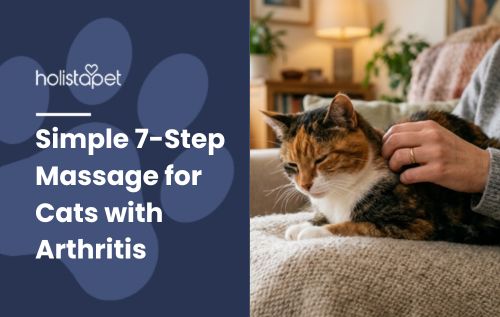
A gentle massage routine may help support comfort in cats with arthritis by easing muscle tension and encouraging relaxation, according to Cornell: Feline Arthritis. When done correctly, it can be a simple at-home method to complement veterinary care and improve your cat’s daily well-being.
Can You Massage a Cat with Arthritis?

Yes, a gentle massage may be used for cats with arthritis when the cat is calm and receptive to touch. It may help support relaxation, reduce muscle tightness, and improve overall comfort around stiff joints.
Veterinary guidance often highlights that touch-based therapies can support soft tissue flexibility and relaxation when applied carefully and consistently, as noted in VCA: Arthritis in Cats
How to Massage a Cat with Arthritis?
Follow these steps slowly and observe your cat’s comfort level throughout the session.
Step #1. Create a Comfortable Space
Choose a quiet area with supportive bedding where the cat already likes to rest.
-
Place soft blankets or even yoga mats underneath for stability.
-
Keep food and water bowls nearby.
-
Make sure the litter box stays easy to access.
-
Avoid slippery flooring that may worsen joint pain.
Step #2. Start With Gentle Strokes
Begin with light contact to help the cat feel safe.
Use slow strokes along the shoulders, back, and sides of the cat's body. This approach helps identify areas that may be sensitive while promoting relaxation.
Watch for subtle signs such as:
-
Purring
-
Relaxed muscles
-
Slow blinking
-
Stretching
Stop if the cat shows signs of severe pain or discomfort.
Step #3. Use Effleurage Strokes
Effleurage involves long, gliding movements across sore muscles.
This massage technique may improve blood flow, may help support circulation, and ease stiff muscles associated with feline arthritis.
According to the American Massage Therapy Association, light gliding strokes help stimulate circulation and promote muscle relaxation, making them useful during therapeutic massage sessions.
Step #4. Apply Gentle Circular Motions
Use fingertips to create small circles around large muscle groups.
Focus on areas that commonly develop muscle tension:
-
Hips
-
Lower back
-
Shoulders
-
Upper legs
Avoid pressing directly on sore joints affected by degenerative joint disease.
Step #5. Try Light Kneading
Gentle kneading can help reduce stiffness and support muscle tone.
Use soft pressure only. The goal involves relaxing tight tissue surrounding the joints rather than working directly on painful areas. Many cats respond well when pet parents keep movements slow and predictable.
Step #6. Support Range of Motion
Cats with chronic arthritis often lose flexibility over time.
A veterinarian or physical therapy professional may recommend passive range exercises to support range of motion and joint function.
Keep movements minimal:
-
Bend and extend limbs slowly.
-
Never force a joint.
-
Stop immediately if the cat pulls away.
According to the American Association of Feline Practitioners, maintaining mobility plays an important role in managing arthritis and preserving a cat's quality of life.
Step #7. Finish With a Full Body Massage

End the session with light strokes from head to tail. This calming approach may help the cat relax and support overall comfort
A calm ending helps the cat feel comfortable after massage. Supportive care routines may include massage alongside other wellness strategies for joint comfort.
Massage may be one part of a broader supportive care plan for cats with arthritis. Depending on a veterinarian's recommendations, other strategies may include environmental modifications, weight management, gentle exercise, nutritional support, and appropriate medical treatments. Combining multiple approaches may help support a cat's comfort, mobility, and overall quality of life.
When Is It Safe to Massage a Cat with Arthritis?

Massage may be appropriate when your cat:
-
Is relaxed and willing to be touched
-
Shows no signs of pain during handling
-
Is resting or seeking attention
Always consider your cat’s mood and physical condition before starting.
For cats with ongoing health conditions, consult a veterinarian before adding massage to their care routine.
When Should I Avoid Massaging Cats with Arthritis?
Avoid massaging cats with arthritis when touch may worsen discomfort or aggravate an existing condition. Massage should never continue if it causes pain or stress.
|
Situation |
Why to Avoid Massage |
Recommended Action |
|
Joint swelling |
May increase irritation in the area |
Contact a veterinarian |
|
Recent injury |
Can worsen tissue damage |
Allow proper healing |
|
Open wounds |
May cause discomfort and contamination |
Wait until wounds heal |
|
Severe pain |
Touch may increase distress |
Review the treatment plan |
|
Unusual reactions to touch |
May indicate an underlying issue |
Consult the veterinary healthcare team |
Supporting Cats With Arthritis
Arthritis care in cats is typically multi-factorial and may include:
-
Environmental modifications (ramps, soft bedding)
-
Weight management
-
Veterinary-prescribed medications
-
Gentle physical activity
-
Stress reduction strategies
Massage may be included as a complementary supportive practice when appropriate. More general guidance on overall wellbeing can be found in cat health and wellness, Stress reduction strategies, including gradual introductions such as how to introduce a cat to a dog may also help support comfort in multi-pet households.
CBD Use in Cats With Arthritis
In some veterinary discussions, cannabidiol (CBD)-based products such as feline CBD oil are sometimes examined as part of broader supportive care approaches for cats with arthritis. These products are generally discussed for their potential role in supporting relaxation and comfort.
However, research on CBD use in animals is still limited, and outcomes may vary between individual cats. CBD is not considered a primary treatment for arthritis.
If CBD is being considered, it should only be used under veterinary supervision. A veterinarian can assess suitability based on the cat’s health status, medical history, and current medications. Other commonly discussed options include organic CBD treats for cats and cat relaxation oil drops which are sometimes included in supportive routines.
Frequently Asked Questions
How often should a cat with arthritis receive massage?
Most cats benefit from short massage sessions several times per week. Start with a few minutes and adjust based on how the cat responds.
Can massage replace arthritis medications for cats?
No, massage should not replace prescribed pain medications. Massage works as a supportive technique that can complement a veterinarian's treatment plan for managing arthritis.
Do younger cats get arthritis?
Yes, younger cats can develop arthritis, although older cats face a higher risk. Joint injuries, developmental issues, and certain health conditions can contribute to early joint degeneration.
What are the early signs of cat arthritis?
Early signs often include reduced jumping, less interest in play sessions, difficulty climbing, and changes in grooming habits, such as cat pacing behaviors. Many cat owners miss these subtle signs because they develop gradually.
Can weight management help cats with arthritis?
Yes, maintaining a healthy weight can reduce stress on aching joints and support long-term joint health. Excess body weight often increases discomfort and limits mobility.
Are there natural ways to support a cat with arthritis?
Yes, several natural ways can help support comfort and movement, including approaches discussed in feline CBD oil. Supportive bedding, environmental modifications, fish oil, gentle exercise, and massage may help improve a cat's quality of life when used alongside veterinary care, including options such as cat relaxation oil drops.







Leave a comment
All comments are moderated before being published.
This site is protected by hCaptcha and the hCaptcha Privacy Policy and Terms of Service apply.