


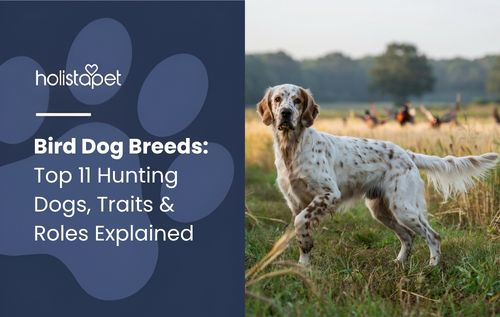
Bird dog breeds have been developed over generations to assist hunters in a variety of field tasks, from finding hidden game birds to recovering birds after the shot. Each breed brings a unique combination of instincts, athleticism, and trainability that makes it well-suited for specific hunting conditions.
Beyond hunting, many bird dogs have become popular family companions thanks to their intelligence, loyalty, and active personalities. Whether you enjoy upland bird hunting, waterfowl hunting, or simply appreciate energetic sporting dogs, understanding the strengths of each breed can help you choose the right canine partner and if you're still exploring options, browsing dog breed articles can offer additional guidance.
In this guide, you'll learn what bird dog breeds are, how they're classified, the characteristics they share, and the 11 most popular breeds used by hunters today.
What Are Bird Dog Breeds?

Bird dog breeds are sporting dogs selectively developed to assist hunters throughout various stages of bird hunting. Depending on the breed, they may specialize in finding game birds by scent, signaling their location, flushing birds from cover, or recovering harvested birds from land and water.
Today, these versatile working dogs continue to excel in hunting while also serving as active companions for families who enjoy outdoor activities similar to which service dog breeds are best for specific lifestyle needs.
The Role of Bird Hunting Dogs
Bird hunting dogs perform specialized functions during a hunt, depending on their breed type. Instead of repeating general traits, this section focuses on how those traits are applied in real hunting scenarios.
Some dogs are used to locate and track birds across wide terrain, while others are trained to flush birds from dense cover or retrieve them after a shot. Each role contributes to a more efficient and controlled hunting process.
Their effectiveness comes from training and instinct working together, allowing hunters to cover more ground with greater accuracy and success.
Key Traits of Bird Dog Breeds
Although each breed has its own strengths, most bird dogs share several characteristics that contribute to their success in hunting environments:
- Strong scenting ability for detecting birds at distance
- High stamina for long hours of outdoor work
- Trainability and responsiveness to handler commands
- Steady focus during tracking, pointing, or flushing tasks
- Strong cooperation with human handlers in varied environments
These traits allow bird dogs to perform specialized roles efficiently across different hunting conditions.
Types of Bird Hunting Dogs
Bird dogs are grouped based on their specialized field function rather than shared abilities.
Retrievers
Retrievers are trained to recover birds from both land and water, supporting waterfowl hunting where retrieval accuracy is essential.
Pointers
Pointers locate game birds and signal their position by holding a steady stance, helping hunters identify targets from a distance.
Setters
Setters work methodically across open terrain, using scent tracking to locate birds without disturbing the field.
Flushers
Flushers move birds out of cover quickly, allowing hunters to take clear shots in dense vegetation.
Top 11 Popular Bird Dog Breeds
Labrador Retriever

Known for its dependable temperament and excellent swimming ability, the Labrador Retriever is one of the most trusted waterfowl dogs. Its eagerness to work and gentle retrieving style have made it a favorite among hunters worldwide.
Golden Retriever

Golden Retrievers combine intelligence with a calm, cooperative nature. Although widely recognized as family pets, they also perform well when recovering birds across fields, marshes, and wetlands.
English Pointer

The English Pointer is admired for covering open landscapes quickly while using its exceptional nose to detect game. Once birds are found, it freezes in a classic pointing stance that alerts the hunter.
German Shorthaired Pointer

Highly versatile and athletic, the German Shorthaired Pointer adapts well to different hunting situations. Its stamina allows it to work comfortably over long distances throughout the day.
Irish Setter

With its graceful movement and impressive endurance, the Irish Setter searches large hunting areas methodically while maintaining close cooperation with its handler.
Cocker Spaniel

Compact yet energetic, the Cocker Spaniel performs especially well in thick brush where larger breeds have difficulty moving. Its enthusiasm makes it an effective flushing dog. Its manageable size also makes it a popular choice as a family companion, much like the chinese crested, which is equally beloved for its distinct personality and adaptable nature.
Brittany Spaniel

The Brittany is valued for its speed, agility, and versatility. It adapts well to upland hunting and is capable of performing multiple field tasks with consistent reliability.
English Setter

Recognized for its smooth hunting style, the English Setter works patiently across open fields while maintaining excellent scenting ability.
Chesapeake Bay Retriever

Originally developed for demanding waterfowl hunts, the Chesapeake Bay Retriever is known for its strength, endurance, and ability to work confidently in cold water.
Vizsla

Fast, athletic, and highly trainable, the Vizsla performs best in open country where it can take advantage of its speed and endurance
Springer Spaniel

The English Springer Spaniel is an energetic hunting companion that excels in heavy cover. Its close-working style makes it especially useful when birds remain hidden in dense vegetation.
Training Bird Hunting Dogs
Successful bird dogs are developed through consistent training, early socialization, and regular practice. Building a strong foundation from an early age helps them develop the skills needed for reliable performance in the field.
Early Training and Socialization
Early exposure to different environments, sounds, and scents helps build confidence. Basic obedience training establishes control and communication between handler and dog.
Developing Natural Hunting Instincts
Scent training and controlled field exercises help strengthen natural abilities. Repetition and gradual exposure to hunting conditions improve reliability and performance.
Positive reinforcement methods such as rewards and praise are commonly used to encourage learning.
Common Health Concerns in Bird Hunting Dogs
Like many active working breeds, bird dogs can experience certain health concerns as they age or participate in demanding physical activities. Routine veterinary care and preventive maintenance can help keep them healthy throughout their lives.
Joint and Mobility Issues

High levels of physical activity may contribute to joint stress, especially in larger breeds. Regular rest and monitoring are important for long-term mobility, and supplementing with dog CBD oil may support comfort during recovery periods.
Ear Infections in Water-Working Breeds
Dogs that frequently swim may be more prone to ear infections due to moisture retention. Routine ear cleaning can help reduce risk, and some owners also incorporate hemp-infused dog treats into their dog's wellness routine to support overall comfort.
Maintaining Physical Fitness
Regular exercise supports muscle strength, stamina, and overall health. Structured activity helps maintain working ability and general well-being, and pairing that routine with an all-in-one vitamin for dogs can help fill nutritional gaps in active sporting breeds.
How To Choose the Right Bird Dog Breed for You
Choosing the right bird dog starts with understanding how each breed's abilities, energy level, and care requirements fit your lifestyle and hunting goals. Considering these factors can help you find a dog that's well suited to your needs.
Matching a Breed to Your Hunting Style
Consider the type of hunting you do most often. Retrievers like the Labrador Retriever are well suited for waterfowl hunting, while pointers, setters, and flushing breeds such as the Brittany Spaniel and English Setter are commonly used for upland game birds.
Considering Energy Levels and Maintenance Needs
Bird dog breeds vary in exercise requirements and grooming needs. Highly active breeds benefit from regular physical activity and mental stimulation, while coat type influences how much grooming is required. Choosing a breed whose care requirements match your lifestyle can help create a successful long-term partnership; resources like VCA: Selecting a Dog Breed offer additional guidance for first-time sporting dog owners.
Final Thoughts
Bird dog breeds have earned their reputation through generations of selective breeding for intelligence, endurance, and teamwork. While each breed excels in different hunting situations, they all share a willingness to work closely with their handlers and thrive when given regular physical activity and training.
Whether you're preparing for upland bird hunts, waterfowl season, or searching for an energetic outdoor companion, selecting a breed whose instincts, energy level, and care requirements match your lifestyle will create a rewarding partnership for years to come.
FAQs
What Are Bird Dog Breeds?
Bird dog breeds are specialized hunting dogs bred to locate, point, flush, and retrieve birds for hunters. These versatile dogs excel in bird hunting thanks to their keen noses, athletic builds, and instincts. Many bird dogs are also loyal companions and excellent family pets, making them popular among both hunters and non-hunting families.
Which Bird Dog Breeds Are Considered the Best?
Some of the most popular and dependable bird dog breeds include the German Shorthaired Pointer, Labrador Retriever, German Wirehaired Pointer, English Setter, English Pointer, Boykin Spaniel, and American Water Spaniel. These breeds are known for their ability to hunt, point game, retrieve birds, and hunt dependably in a variety of conditions explore the full AKC: Complete Dog Breed Directory for detailed breed profiles and standards.
What Makes a Good Bird Dog?
Good bird dogs possess a strong desire to find birds, excellent retrieving skills, intelligence, and a willingness to work closely with their hunter. Highly trainable breeds that can track wounded game, retrieve downed birds, and flush birds from dense cover often become successful hunting companions.
What Is a Versatile Hunting Dog?
A versatile hunting dog can perform multiple hunting tasks, including pointing, flushing birds, retrieving ducks, tracking wounded game, and working in both upland hunting and waterfowl hunting environments. The German Shorthaired Pointer, German Wirehaired Pointer, Wirehaired Pointing Griffon, Portuguese Pointer, and Braque Francais are excellent examples of versatile hunting dog breeds.
Are Labrador Retrievers Good Bird Dogs?
Yes. Labrador Retrievers are among the most popular bird dogs in the world. They excel at waterfowl hunting, retrieving ducks, and recovering birds from cold water. Their eager-to-please attitude, strong bonds with owners, and natural retrieving skills make them among the best hunting and family dogs available owners also find that dog melatonin soft chews can help high-energy retrievers settle down after long days in the field.






Leave a comment
All comments are moderated before being published.
This site is protected by hCaptcha and the hCaptcha Privacy Policy and Terms of Service apply.