

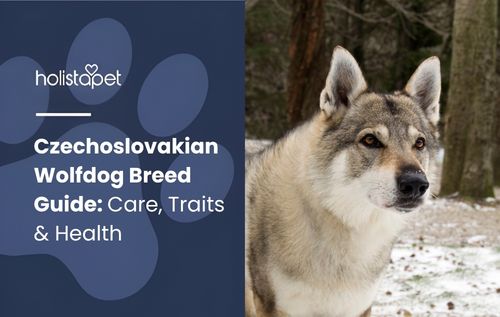
The Czechoslovakian Wolfdog is an athletic, intelligent breed known for its striking wolf-like appearance and exceptional endurance. Originally developed by crossing German Shepherds with Carpathian wolves, this unique breed combines the trainability of working dogs with many natural instincts inherited from its wild ancestors.
Although the Czechoslovakian Wolfdog is loyal and highly capable, it is best suited for experienced dog owners who understand the demands of active, intelligent breeds. Proper training, early socialization, regular exercise, and consistent care are essential for helping these dogs thrive.
In this guide, you'll learn about the breed's history, personality, physical characteristics, nutritional needs, exercise requirements, grooming routine, and common health concerns to help determine whether the Czechoslovakian Wolfdog is the right companion for your lifestyle.
Meet the Czechoslovakian Wolfdog

The Czechoslovakian Wolfdog, also known as the Czechoslovakian Vlcak, is a working breed developed for strength, endurance, and intelligence. Its appearance closely resembles that of a wolf, featuring amber eyes, erect ears, a lean muscular body, and a thick weather-resistant coat.
Despite its wild appearance, this breed is fully domesticated and forms strong bonds with its family. However, it also retains a high level of independence and requires experienced handling, structured training, and plenty of mental stimulation.
|
Characteristic |
Details |
|
Breed Group |
Working Dog |
|
Height |
23.5-26 inches |
|
Weight |
44-60 pounds |
|
Coat |
Double coat |
|
Coat Colors |
Silver-gray, yellow-gray, gray |
|
Energy Level |
Very High |
|
Trainability |
High with experienced owners |
|
Shedding |
Moderate to Heavy (Seasonal) |
|
Good With Families |
Yes, with proper training and socialization |
|
Life Expectancy |
12-16 years |
Breed History and Origins
The Czechoslovakian Wolfdog originated in the former Czechoslovakia during the 1950s as part of a military breeding program. Researchers crossed German Shepherds with Carpathian wolves to develop a working dog that combined the intelligence, trainability, and obedience of domestic dogs with the stamina, resilience, and environmental adaptability of wolves.
The breeding program proved successful, producing dogs capable of demanding military and border patrol work. Over time, breeders refined the bloodline, emphasizing stable temperament, working ability, and physical soundness.
The breed was officially recognized as a national breed in Czechoslovakia in 1982. In 1989, the Fédération Cynologique Internationale (FCI) granted international recognition. Today, the Czechoslovakian Wolfdog is also recognized by the United Kennel Club (UKC), while the American Kennel Club (AKC) currently lists the breed through its Foundation Stock Service (FSS).
Physical Characteristics

The Czechoslovakian Wolfdog has a lean, athletic body designed for endurance rather than bulk. Every aspect of its build supports speed, agility, and long-distance movement, making it one of the most physically capable working breeds.
Its wolf-like appearance includes a wedge-shaped head, upright triangular ears, amber eyes, a straight back, and a dense double coat that provides protection in harsh weather conditions.
Size, Weight, and Build
Adult males typically stand between 25.5 and 26 inches tall at the shoulder, while females measure at least 23.5 inches. Most adults weigh between 44 and 60 pounds, although highly conditioned working dogs may vary slightly.
Unlike heavier working breeds, the Czechoslovakian Wolfdog maintains a lean, muscular physique that allows it to travel long distances with minimal fatigue. Strong legs, a deep chest, and balanced proportions contribute to its exceptional endurance.
Coat Type and Shedding
The breed has a thick double coat consisting of a dense undercoat and a coarse outer coat. This combination helps protect the dog from cold temperatures, moisture, and harsh outdoor environments.
Seasonal shedding occurs heavily during spring and fall as the undercoat changes. During these periods, brushing several times each week helps remove loose hair and maintain coat health. Outside seasonal shedding, weekly brushing is generally sufficient.
Distinctive Appearance
Few breeds resemble wolves as closely as the Czechoslovakian Wolfdog. Its amber eyes, erect ears, narrow muzzle, and silver-gray coat create a striking appearance that often attracts attention.
While its appearance reflects its ancestry, generations of selective breeding have produced a domestic dog with predictable behavior when properly trained and socialized. The breed's confident posture, efficient gait, and alert expression further distinguish it from many other working breeds.
Temperament and Personality
The Czechoslovakian Wolfdog is highly intelligent, energetic, and deeply loyal to its family. Originally bred as a working dog, it thrives when given structure, purpose, and regular physical and mental challenges. While affectionate with trusted family members, this breed is naturally cautious around unfamiliar people and situations.
Unlike many companion breeds, the Czechoslovakian Wolfdog values independence and may not constantly seek attention. Instead, it forms strong bonds through shared activities, consistent training, and daily interaction. Because of its intelligence and strong instincts, this breed responds best to confident, experienced owners who can provide clear leadership using positive reinforcement.
This alert, scent-aware nature makes them very different from tracking breeds like the bloodhound.
Are Czechoslovakian Wolfdogs Good Family Pets?
The Czechoslovakian Wolfdog can become a devoted family companion when raised in the right environment. However, this breed is generally recommended for experienced dog owners rather than first-time pet parents.
A well-socialized Czechoslovakian Wolfdog may live successfully with older children who understand how to interact respectfully with dogs. Due to its high prey drive and natural instincts, careful introductions are important if the household includes cats, small pets, or livestock.
Families considering this breed should be prepared to provide:
- Daily exercise and mental enrichment
- Consistent training from puppyhood
- Secure fencing to prevent wandering
- Ongoing socialization with people and other dogs
- Plenty of time for companionship and structured activities
When these needs are met, the breed often develops into a loyal, confident, and dependable family member.
The Loyal and Independent Nature
One of the defining characteristics of the Czechoslovakian Wolfdog is its balance of loyalty and independence. These dogs form strong attachments to their owners but often prefer participating in activities rather than seeking constant affection.
Because they are naturally observant and intelligent, they frequently assess situations before responding. This thoughtful nature can sometimes be mistaken for stubbornness, but it often reflects their problem-solving ability and independent thinking.
With patient guidance and consistent routines, owners can build a trusting relationship based on mutual respect.
Socialization and Training Tips
Early socialization is one of the most important aspects of raising a well-adjusted Czechoslovakian Wolfdog. Introducing puppies to different people, environments, sounds, and other animals during their developmental stages helps reduce fearfulness and encourages confident behavior as adults.
Training should remain positive, consistent, and rewarding. Harsh corrections or punishment may damage trust and make training more difficult.
Best Training Practices
- Begin socialization as early as possible.
- Use positive reinforcement with treats, praise, or toys.
- Keep training sessions short, engaging, and consistent.
- Establish household rules from the beginning.
- Provide advanced obedience training and mental challenges.
- Consider working with a professional trainer experienced with working breeds if behavioral issues arise.
Because the breed is highly intelligent, incorporating puzzle toys, scent work, and advanced obedience exercises helps prevent boredom and destructive behaviors.
Diet and Nutritional Needs

The Czechoslovakian Wolfdog requires a nutrient-dense diet that supports its active lifestyle and lean muscle mass. A complete and balanced dog food formulated for active or working breeds generally provides the protein, healthy fats, vitamins, and minerals necessary to maintain overall health.
Fresh water should always be available, and any dietary changes should be introduced gradually to help reduce digestive upset. Owners considering fresh or raw diets should consult their veterinarian or a board-certified veterinary nutritionist to ensure the diet remains complete and balanced.
Active breeds may also benefit from supportive products such as probiotic chews for dogs as part of a balanced wellness routine.
Ideal Portion Sizes and Feeding Frequency
Portion sizes vary depending on the dog's age, body condition, activity level, and overall health.
General feeding guidelines include:
|
Life Stage |
Feeding Frequency |
|
Puppies |
3–4 meals per day |
|
Adults |
2 meals per day |
|
Highly Active Working Dogs |
May require additional calories based on activity level |
Avoid overfeeding, as maintaining a healthy body weight may help reduce stress on the joints and support long-term mobility.
Exercise Requirements
The Czechoslovakian Wolfdog is one of the most energetic dog breeds and requires substantial daily exercise to remain physically and mentally healthy. Most adults benefit from at least 90 to 120 minutes of activity each day, although individual needs vary based on age and fitness level.
Without sufficient exercise and enrichment, this breed may develop unwanted behaviors such as excessive barking, digging, escaping, or destructive chewing.
Providing a combination of physical activity and mental stimulation helps satisfy the breed's natural working instincts while supporting emotional well-being.
Owners interested in other active working groups may also enjoy learning about herding canines and their exercise needs.
Best Engaging Activities for Health
Because of its athletic ability and intelligence, the Czechoslovakian Wolfdog excels in activities that challenge both body and mind.
Recommended activities include:
- Long hikes and trail adventures
- Running with experienced owners
- Agility courses
- Obedience training
- Scent detection games
- Search-and-rescue style exercises
- Puzzle feeders and interactive toys
- Structured play sessions with compatible dogs
- Advanced canine sports
Regular opportunities to learn new skills and solve problems help prevent boredom while strengthening the bond between dog and owner.
Mental Enrichment Is Equally Important
Physical exercise alone is not enough for this intelligent breed. Daily mental stimulation plays a critical role in preventing frustration and promoting balanced behavior.
Activities such as food puzzles, scent work, trick training, and interactive games encourage problem-solving while satisfying the dog's natural curiosity. Rotating toys and introducing new challenges regularly can help maintain long-term engagement.
A well-exercised and mentally stimulated Czechoslovakian Wolfdog is generally more relaxed, focused, and responsive during training and daily life.
Common Health Concerns in Czechoslovakian Wolfdogs
The Czechoslovakian Wolfdog is generally considered a healthy breed with a life expectancy of 12 to 16 years. Like all dogs, however, it may be predisposed to certain inherited or acquired health conditions.
Choosing a responsible breeder who performs recommended health screenings, scheduling routine veterinary examinations, and maintaining a healthy lifestyle may help support your dog's long-term well-being.
Hip Dysplasia
Hip dysplasia is one of the most common orthopedic conditions affecting medium and large dog breeds. It occurs when the hip joint develops abnormally, which may lead to joint instability, discomfort, and reduced mobility over time.
Signs may include:
- Difficulty standing after resting
- Reluctance to jump or climb stairs
- Limping or stiffness
- Reduced activity levels
Maintaining a healthy body weight, providing regular low-impact exercise, and following your veterinarian's recommendations may help support joint health.
Progressive Retinal Atrophy (PRA)
Progressive Retinal Atrophy (PRA), is an inherited eye disease that gradually damages the retina, eventually leading to vision loss.
Early symptoms may include:
- Difficulty seeing at night
- Hesitation in unfamiliar or dimly lit environments
- Bumping into furniture or obstacles
- Dilated pupils
Although there is currently no cure for PRA, routine eye examinations may help identify the condition early and allow owners to make adjustments that improve their dog's quality of life.
Gastric Dilatation-Volvulus (Bloat)
Gastric Dilatation-Volvulus (GDV), commonly called bloat, is a life-threatening emergency that requires immediate veterinary care. Large, deep-chested breeds, including the Czechoslovakian Wolfdog, may have an increased risk.
Possible signs include:
- Swollen or distended abdomen
- Excessive drooling
- Restlessness
- Unsuccessful attempts to vomit
- Rapid breathing
Owners should seek emergency veterinary care immediately if these symptoms occur.
To help reduce risk, veterinarians often recommend:
- Feeding smaller meals throughout the day
- Avoiding vigorous exercise immediately before and after meals
- Encouraging slower eating for dogs that eat rapidly
Epilepsy
Some Czechoslovakian Wolfdogs may develop inherited epilepsy, a neurological condition characterized by recurrent seizures.
Seizures can vary in severity and frequency. If your dog experiences a seizure, contact your veterinarian for a complete evaluation. Many dogs with epilepsy can live comfortable lives with appropriate veterinary care and ongoing management.
Grooming and General Care
Although the Czechoslovakian Wolfdog has a dense double coat, its grooming needs are relatively straightforward compared with many long-coated breeds.
Grooming Routine
Regular grooming helps maintain coat health while allowing owners to monitor for skin issues, parasites, or injuries.
A typical grooming routine includes:
- Brushing once or twice weekly
- More frequent brushing during seasonal shedding
- Nail trimming every few weeks
- Ear inspections and cleaning as recommended
- Dental care through regular tooth brushing or veterinarian-approved dental products
- Bathing only when necessary using a dog-safe shampoo
Because this breed naturally maintains a clean coat, excessive bathing is generally unnecessary.
Preventive Health Care

Routine preventive care plays an important role in maintaining overall health.
Recommended preventive care includes:
- Annual or semiannual veterinary wellness examinations
- Vaccinations as recommended by your veterinarian
- Year-round flea, tick, and heartworm prevention
- Routine parasite screenings
- Weight management
- Regular exercise
- Mental enrichment and training
These preventive measures may help identify health concerns early while supporting your dog's long-term quality of life.
If your veterinarian recommends supplements to support your dog's joint health, skin, coat, or overall wellness, choose high-quality products formulated specifically for dogs. HolistaPet offers dog CBD oil, hemp-infused dog treats, melatonin treats for dogs, and other pet wellness supplements that can complement a balanced diet and regular veterinary care when used appropriately.
Is the Czechoslovakian Wolfdog Right for You?
The Czechoslovakian Wolfdog is best suited for owners who enjoy active lifestyles and have experience managing intelligent, high-energy breeds.
This breed may be a good fit if you can provide:
- Daily vigorous exercise
- Consistent training
- Early socialization
- Mental enrichment
- Secure outdoor space
- Long-term commitment to an active companion
First-time dog owners or families seeking a low-maintenance pet may find this breed more challenging than many traditional companion dogs.
Final Thoughts
The Czechoslovakian Wolfdog is an impressive working breed known for its intelligence, endurance, loyalty, and distinctive wolf-like appearance. While it requires experienced handling, consistent training, and significant daily exercise, owners who can meet these needs often develop a strong and rewarding bond with this remarkable breed.
Providing a balanced diet, regular veterinary care, mental enrichment, and appropriate physical activity helps support the overall health and well-being of Czechoslovakian Wolfdogs throughout every stage of life.
If you're researching active working breeds, understanding the unique characteristics and care requirements of the Czechoslovakian Wolfdog can help you determine whether it is the right companion for your household.
For more breed comparisons, temperament breakdowns, and care resources, explore our full collection of dog breed articles.
FAQs
What is a Czechoslovakian Wolfdog?
The Czechoslovakian Wolfdog, also known as the Czechoslovakian Vlcak, is a working breed developed by crossing German Shepherds with Carpathian wolves during a controlled breeding program in the 1950s. The breed is recognized for its intelligence, athleticism, endurance, and wolf-like appearance.
Do major kennel clubs accept the Czechoslovakian Wolfdog?
Yes, the Czechoslovakian Wolfdog has been accepted by several organizations. The United Kennel Club recognizes the breed, and the American Kennel Club lists the Czechoslovakian Vlcak through its Foundation Stock Service, with the Czechoslovakian Vlcak Club serving as the parent club in America. The breed standard describes its wolf-like characteristics, silver-gray coat, light mask, strong neck, athletic body shape, and confident movement. It is also considered a national breed, closely linked to the history of Czechoslovakia.
What is the history of the Czechoslovakian Wolfdog breed?
Breed development began when breeders crossed German Shepherds with Carpathian wolves to create a strong working dog with the intelligence and obedience of a German Shepherd and the endurance, instincts, and primitive breed traits of a wolf. The goal was to create a healthy, loyal, and highly capable dog that could maintain strength, agility, and focus in demanding conditions. Over time, the breed became known for its independent nature, sharp mind, and strong bond with humans when properly raised and trained.
What does a Czechoslovakian Wolfdog look like?
A Czechoslovakian Wolfdog has a wolf-like appearance, with a strong chest, a well-built body, upright ears, a powerful neck, and a thick coat. The coat is usually silver gray or yellow gray, with a light mask, one of the breed's most recognizable traits. Their eyes are often amber, though some people mistakenly describe them as black eyes because of their intense expression. Males are usually larger and stronger than females, but both have athletic characteristics, balanced movement, and a natural, wild-looking beauty.






Leave a comment
All comments are moderated before being published.
This site is protected by hCaptcha and the hCaptcha Privacy Policy and Terms of Service apply.