

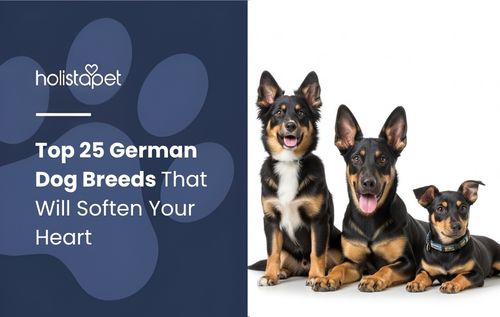
German dog breeds combine loyalty, intelligence, and purpose. From the dependable German Shepherd to lesser known companions, these dog breed descriptions fit roles from working dogs to loving family pets.
Here are 25 picks that continue to win hearts around the world.
What are the Most Popular German Dog Breeds?
German dog breeds rank among the most trusted and recognizable breeds in the world. These dogs handle work, companionship, and protection with ease.
1. German Shepherd

Breed Summary:
- Breed Group: Herding
- Height: 22 to 26 inches
- Weight: 50 to 90 pounds
- Energy Rating: High
- Coat Type: Double coat, medium length
- Coat Color: Black and tan markings, sable, solid black
- Temperament: Loyal, confident, highly trainable
- Lifespan: 9 to 13 years
The German Shepherd originated in Germany during the 19th century as a herding and working dog. The German Shepherd Dog Club helped standardize the breed. This versatile breed performs well in police work, service roles, and search and rescue operations. Families value the German Shepherd for its dependable temperament and strong handler focus.
2. Doberman Pinscher

Breed Summary:
- Breed Group: Working
- Height: 24 to 28 inches
- Weight: 60 to 100 pounds
- Energy Rating: High
- Coat Type: Short, sleek
- Coat Color: Black with tan markings
- Temperament: Alert, loyal, fearless
- Lifespan: 10 to 12 years
The Doberman Pinscher originated in Germany as a guard dog. It became known for strength and intelligence. This highly trainable breed supports police work and adapts well to structured family environments.
3. Rottweiler

Breed Summary:
- Breed Group: Working
- Height: 22 to 27 inches
- Weight: 80 to 135 pounds
- Energy Rating: High
- Coat Type: Short, dense
- Coat Color: Black with tan markings
- Temperament: Confident, protective, loyal
- Lifespan: 9 to 10 years
The Rottweiler served as a cattle driving dog during Roman times and later in Germany. It remains one of the most reliable working dogs. Proper training builds a steady and loyal companion.
4. Dachshund

Breed Summary:
- Breed Group: Hound
- Height: 5 to 9 inches
- Weight: 16 to 32 pounds
- Energy Rating: Moderate
- Coat Type: Smooth, long, or wire haired
- Coat Color: Red, black and tan
- Temperament: Brave, curious, playful
- Lifespan: 12 to 16 years
The Dachshund was originally bred to hunt badgers. Its long body helps it enter burrows. This little dog now ranks among popular family pets with a bold personality.
5. Boxer

Breed Summary:
- Breed Group: Working
- Height: 21 to 25 inches
- Weight: 50 to 80 pounds
- Energy Rating: High
- Coat Type: Short, smooth
- Coat Color: Fawn, brindle
- Temperament: Playful, protective, energetic
- Lifespan: 10 to 12 years
The Boxer developed in the 19th century as a guard and working dog. It gained popularity during world war i as a service dog. This breed remains a playful and protective family companion.
6. Great Dane

Breed Summary:
- Breed Group: Working
- Height: 28 to 34 inches
- Weight: 110 to 175 pounds
- Energy Rating: Moderate
- Coat Type: Short
- Coat Color: Fawn, brindle, blue
- Temperament: Gentle, friendly, calm
- Lifespan: 7 to 10 years
The Great Dane stands among the largest dog breeds. It once hunted large game. Today, it lives as one of the most beloved gentle giants and wonderful companions.
7. Weimaraner

Breed Summary:
- Breed Group: Sporting
- Height: 23 to 27 inches
- Weight: 55 to 90 pounds
- Energy Rating: High
- Coat Type: Short, sleek
- Coat Color: Gray, silver
- Temperament: Energetic, loyal, intelligent
- Lifespan: 10 to 13 years
The Weimaraner originated in Germany for big game hunting. Nobles used it to hunt deer and boars. Today, it thrives in active families and needs constant engagement.
8. Miniature Schnauzer

Breed Summary:
- Breed Group: Terrier
- Height: 12 to 14 inches
- Weight: 11 to 20 pounds
- Energy Rating: Moderate
- Coat Type: Wire haired
- Coat Color: Salt and pepper, black
- Temperament: Alert, friendly, spirited
- Lifespan: 12 to 15 years
The Miniature Schnauzer developed as a farm dog to control pests. It stays alert and social. This breed adapts well to families and forms strong bonds.
9. German Shorthaired Pointer

Breed Summary:
- Breed Group: Sporting
- Height: 21 to 25 inches
- Weight: 45 to 70 pounds
- Energy Rating: High
- Coat Type: Short, dense
- Coat Color: Solid liver, liver and white
- Temperament: Energetic, friendly, eager
- Lifespan: 10 to 12 years
The German Shorthaired Pointer developed as a german hunting dog that could track, point, and retrieve. Hunters prized this breed for versatility and stamina. This hunting dog thrives in active families and enjoys dog sports and outdoor work.
10. Leonberger

Breed Summary:
- Breed Group: Working
- Height: 25 to 31 inches
- Weight: 90 to 170 pounds
- Energy Rating: Moderate
- Coat Type: Double coat, thick
- Coat Color: Golden, lion like shades
- Temperament: Gentle, calm, loyal
- Lifespan: 8 to 10 years
The Leonberger developed as one of the gentle giants of Germany. It worked as a farm and rescue dog. Families admire its calm nature and strong loyalty.
11. German Wirehaired Pointer

Breed Summary:
- Breed Group: Sporting
- Height: 22 to 26 inches
- Weight: 50 to 70 pounds
- Energy Rating: High
- Coat Type: Wire haired, harsh
- Coat Color: Liver, liver and white
- Temperament: Bold, intelligent, driven
- Lifespan: 12 to 14 years
German breeders created this rugged german hunting dog for harsh terrain. The wire haired coat protects it from weather and brush. This breed works hard in the field and needs mental stimulation and daily activity.
12. German Longhaired Pointer

Breed Summary:
- Breed Group: Sporting
- Height: 23 to 28 inches
- Weight: 55 to 80 pounds
- Energy Rating: High
- Coat Type: Long, soft
- Coat Color: Brown, brown and white
- Temperament: Gentle, loyal, calm
- Lifespan: 12 to 14 years
Breeders in Germany refined this dog for hunting in forests and wetlands. The German Longhaired Pointer works as a steady hunting dog with a calm nature. It forms strong bonds and fits well as a loyal companion in active homes.
13. German Pinscher

Breed Summary:
- Breed Group: Working
- Height: 17 to 20 inches
- Weight: 25 to 45 pounds
- Energy Rating: High
- Coat Type: Short, smooth
- Coat Color: Black with tan markings, red
- Temperament: Alert, energetic, confident
- Lifespan: 12 to 14 years
The German Pinscher dates back to the middle ages as a farm dog. It controlled pests and guarded property. This german breed stays active and bonds closely with family members.
14. German Spitz

Breed Summary:
- Breed Group: Non Sporting
- Height: 9 to 15 inches
- Weight: 10 to 25 pounds
- Energy Rating: Moderate
- Coat Type: Double coat, fluffy
- Coat Color: White, black, cream, orange
- Temperament: Lively, alert, affectionate
- Lifespan: 13 to 15 years
The German Spitz belongs to one of the oldest recognizable breeds. It served as a watchdog and companion animals across Europe. This small but confident dog suits family companions and adapts well to home life.
15. German Spaniel

Breed Summary:
- Breed Group: Sporting
- Height: 18 to 21 inches
- Weight: 40 to 55 pounds
- Energy Rating: High
- Coat Type: Wavy, medium length
- Coat Color: Brown, roan
- Temperament: Friendly, eager, loyal
- Lifespan: 12 to 14 years
The German Spaniel, also known as the german quail dog, works as a flushing hunting dog. Hunters use it to track birds and small game like wild boars. It remains rare but valued for skill and dedication.
16. Pomeranian

Breed Summary:
- Breed Group: Toy
- Height: 6 to 7 inches
- Weight: 3 to 7 pounds
- Energy Rating: Moderate
- Coat Type: Double coat, fluffy
- Coat Color: Orange, cream, black
- Temperament: Lively, bold, affectionate
- Lifespan: 12 to 16 years
The Pomeranian traces roots to larger German Spitz dogs. It gained popularity among nobility. This small but bold dog suits apartment living and thrives as a companion.
17. Affenpinscher

Breed Summary:
- Breed Group: Toy
- Height: 9 to 11 inches
- Weight: 7 to 10 pounds
- Energy Rating: Moderate
- Coat Type: Rough, wiry
- Coat Color: Black, gray
- Temperament: Curious, bold, playful
- Lifespan: 12 to 15 years
The Affenpinscher dates back to early European households as a rat catcher. It now serves as a lively companion. This small dog shows strong personality and charm.
18. Biewer Terrier

Breed Summary:
- Breed Group: Toy
- Height: 7 to 11 inches
- Weight: 4 to 8 pounds
- Energy Rating: Moderate
- Coat Type: Long, silky
- Coat Color: Tri color
- Temperament: Cheerful, affectionate, playful
- Lifespan: 12 to 15 years
The Biewer Terrier developed in Germany from Yorkshire Terrier lines. It gained recognition for its striking coat. This breed fits well as a loving companion in homes.
19. Poodle

Breed Summary:
- Breed Group: Non Sporting
- Height: Varies by size
- Weight: Varies by size
- Energy Rating: High
- Coat Type: Curly
- Coat Color: White, black, apricot
- Temperament: Intelligent, active, friendly
- Lifespan: 12 to 15 years
The Poodle originated in Germany as a water retriever. It ranks among the most highly trainable dog breeds. Toy poodles and larger sizes both thrive as companion animals.
20. Jagdterrier

Breed Summary:
- Breed Group: Terrier
- Height: 13 to 16 inches
- Weight: 17 to 22 pounds
- Energy Rating: High
- Coat Type: Smooth or rough
- Coat Color: Black and tan
- Temperament: Bold, driven, fearless
- Lifespan: 10 to 12 years
The Jagdterrier developed for hunting underground prey. It remains a focused hunting dog with strong instincts. This breed suits experienced owners who enjoy active work.
21. Hanoverian Scenthound

Breed Summary:
- Breed Group: Hound
- Height: 19 to 22 inches
- Weight: 80 to 100 pounds
- Energy Rating: Moderate
- Coat Type: Short, dense
- Coat Color: Red, brindle
- Temperament: Calm, focused, loyal
- Lifespan: 10 to 12 years
The Hanoverian Scenthound tracks wounded game with precision. Hunters value its strong scent ability. It forms deep bonds and needs structured training.
22. Löwchen

Breed Summary:
- Breed Group: Hound
- Height: 19 to 22 inches
- Weight: 80 to 100 pounds
- Energy Rating: Moderate
- Coat Type: Short, dense
- Coat Color: Red, brindle
- Temperament: Calm, focused, loyal
- Lifespan: 10 to 12 years
The Hanoverian Scenthound tracks wounded game with precision. Hunters value its strong scent ability. It forms deep bonds and needs structured training.
23. Hovawart

Breed Summary:
- Breed Group: Working
- Height: 23 to 28 inches
- Weight: 65 to 110 pounds
- Energy Rating: High
- Coat Type: Long, dense
- Coat Color: Black, blonde
- Temperament: Protective, loyal, confident
- Lifespan: 10 to 14 years
The Hovawart served as a guard dog in the middle ages. It protected farms and estates. Today, it remains a dependable working dog and loyal family companion.
24. Standard Schnauzer

Breed Summary:
- Breed Group: Working
- Height: 17 to 20 inches
- Weight: 30 to 50 pounds
- Energy Rating: High
- Coat Type: Wire haired
- Coat Color: Salt and pepper, black
- Temperament: Intelligent, alert, spirited
- Lifespan: 13 to 16 years
The Standard Schnauzer stands as the original schnauzer type. It worked on farms and guarded property. This breed thrives with training and regular activity.
25. Small Munsterlander

Breed Summary:
- Breed Group: Sporting
- Height: 19 to 22 inches
- Weight: 40 to 60 pounds
- Energy Rating: High
- Coat Type: Medium length, dense
- Coat Color: Brown and white
- Temperament: Friendly, intelligent, eager
- Lifespan: 12 to 14 years
The Small Munsterlander works as a versatile breed for hunting and retrieving. It handles land and water tasks with ease. This dog suits active families who enjoy outdoor life.
What are the Common Traits of German Canines?
German dog breeds share strong working instincts, problem-solving ability, and handler responsiveness. These traits come from their history as working dogs and hunting companions.
- High intelligence: Learns commands quickly and excels in structured training
- Strong work ethic: Performs well in roles like police dogs and search and rescue
- Loyal nature: Forms deep bonds with family members and acts as a loyal companion
- Versatile abilities: Adapts to tasks from herding to guarding and dog sports
- High energy levels: Needs daily exercise and mental stimulation
- Protective instincts: Naturally guards homes and people
- Trainability: Responds well to early socialization and consistent guidance
- Physical strength: Many breeds fall into medium to big dogs with solid builds
- Weather resistant coats: Often features a double coat or wire haired texture
- Health considerations: Some breeds face risks like hip dysplasia
|
Trait |
Description |
Why It Matters |
|
Intelligence |
Fast learning and problem solving |
Supports training and complex tasks |
|
Energy Level |
Moderate to high |
Requires active families and engagement |
|
Temperament |
Loyal and protective |
Builds strong bonds and security |
|
Coat Type |
Double coat or wire haired |
Handles cold climates and outdoor work |
|
Size Range |
Small to large |
Offers options from little dogs to gentle giants |
|
Trainability |
Highly trainable |
Fits roles like service dogs and working dogs |
|
Health Risks |
Includes hip dysplasia |
Guides proper care and monitoring |
How Do I Take Care of a German Dog Breed?

German dog breeds need structured care, daily activity, and proper health support. Focus on routine, training, and balanced nutrition to keep them healthy.
Exercise and Physical Activity
German dog breeds often come from working dogs and hunting dog lines. They need consistent movement to stay balanced.
- Daily walks and structured play
- Activities like dog sports or search and rescue drills
- Space to run for big dogs like the Great Dane
The AKC: Complete Dog Breed Directory highlights that high-energy breeds such as the German Shorthaired Pointer require daily vigorous exercise to prevent behavioral issues.
Training and Mental Stimulation
These dogs rank among the most highly trainable breeds. Strong focus and intelligence demand regular engagement.
- Early socialization with people and other dogs
- Obedience training from a young dog’s age
- Puzzle toys and task based games
- Research from canine behavior specialist Stanley Coren emphasizes that working breeds perform best with consistent mental stimulation and structured training. (Source: Stanley Coren publications – https://www.apa.org)
Nutrition and Diet

A balanced diet supports muscle, coat, and long term health. Many breeds reach or exceed 70 pounds, so portion control matters.
- High quality protein for muscle maintenance
- Healthy fats for double coat and skin
- Controlled feeding schedule
Large breeds like the Rottweiler and Doberman Pinscher need joint support nutrients to reduce strain.
Grooming and Coat Care
Many German breeds carry a double coat or wire haired texture. Regular grooming prevents buildup and discomfort.
- Weekly brushing for medium length coats
- More frequent care during shedding seasons
- Bathing only when needed
Breeds like the German Spitz and Pomeranian need extra coat maintenance to avoid matting. A healthy coat also reflects internal wellness supporting your dog's dog microbiome supplement routine can improve skin condition and reduce shedding over time.
Joint and Health Support
Some German dog breeds face genetic concerns like hip dysplasia. Preventive care improves quality of life.
- Regular vet checkups
- Joint supplements are often used for large breeds to support joint health.
- Weight management to reduce pressure
The Orthopedic Foundation for Animals reports higher rates of hip dysplasia in breeds such as German Shepherds and Rottweilers. (Source: Orthopedic Foundation for Animals – https://ofa.org)
Calming Support and Recovery
Active and protective breeds may face stress or anxiety. Natural support can help regulate mood and recovery.
A 2018 study from Cornell University explored how CBD interacts with discomfort and mobility in dogs with joint concerns.
- Some pet owners choose veterinarian-approved calming supplements such as a daily melatonin supplement for dogs to support relaxation after physical activity.
- These products are available in forms such as treats, oils, and soft chews.
- They are commonly used to support calm behavior and general comfort after exercise or activity, and are available as lab-tested CBD oil for dogs or CBD dog treats.
Social Bonding and Daily Life
These dogs thrive when treated as family members. Strong bonds shape behavior and stability.
- Daily interaction with family members
- Clear routines and boundaries
- Time spent as loyal family pets and companion animals
German dog breeds respond best in homes that match their energy and need for connection, especially in active families.
German Dog Breeds Bring Light to Your Life
German dog breeds offer loyalty, intelligence, and purpose in one dog. From working roles to loving family companions, these dogs adapt and thrive in the right home.
With proper care and training, they become lifelong partners that bring value to everyday life.
Frequently Asked Questions
Are German dog breeds good for first time owners?
Some are, but many need experienced handling. Breeds like the German Shepherd and Doberman Pinscher demand consistent training and structure. A first time owner can succeed with proper guidance, time, and commitment to training.
Do German dog breeds get along with other pets?
Yes, with early socialization and supervision. Many breeds accept other dogs when introduced properly. A strong prey drive in a german hunting dog may create challenges around smaller animals.
How much space do German dog breeds need?
Most need moderate to large space to stay active. Big dogs like the Great Dane benefit from open areas, while little dogs such as the Miniature Pinscher adapt to smaller homes if daily exercise stays consistent VCA: Selecting a Dog Breed offers helpful guidance for matching breed size to your living space.
Do German dog breeds bark a lot?
Some do due to alert and protective instincts. Breeds developed as working dogs often react to movement and sound. Training and mental stimulation reduce unnecessary barking.
How long do German dog breeds live?
Lifespan depends on size, genetics, and care. Smaller breeds like the Pomeranian often outlive large breeds. Proper diet and health monitoring improve a dog’s age and quality of life.
Are German dog breeds good with children?
Yes, many form strong bonds with kids. Loyal family pets like the Boxer and Leonberger interact well with family members when properly trained and socialized early.
Do German dog breeds need a lot of grooming?
It depends on coat type. Double coat breeds like the German Spitz shed heavily and need regular brushing. Short coated dogs require less upkeep but still benefit from routine care.







Leave a comment
All comments are moderated before being published.
This site is protected by hCaptcha and the hCaptcha Privacy Policy and Terms of Service apply.