

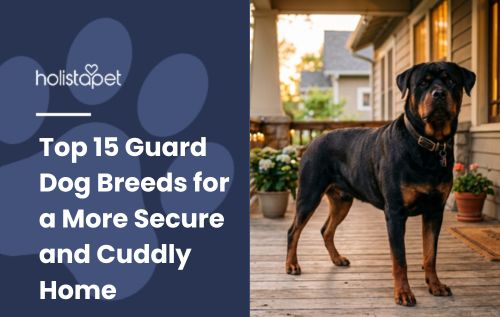
The best guard dogs do more than protect a home. These loyal and protective dog breeds offer security, companionship, and peace of mind exploring dog breed education can help owners make a more informed choice before committing to a specific breed.
What are the Best Guard Dog Breeds Today?
 The best guard dogs combine loyalty, intelligence, and strong protective instincts. These guard dog breeds can help protect a family home while also serving as devoted companions.
|
Breed |
Size |
Trainability |
Family Friendly |
Protection Level |
|
German Shepherd |
Large |
Very High |
Excellent |
Very High |
|
Rottweiler |
Large |
High |
Excellent |
Very High |
|
Boxer |
Large |
High |
Excellent |
High |
|
Bullmastiff |
Large |
Moderate |
Excellent |
Very High |
|
Great Dane |
Giant |
Moderate |
Excellent |
High |
|
Doberman Pinscher |
Large |
Very High |
Excellent |
Very High |
|
Giant Schnauzer |
Large |
High |
Good |
Very High |
|
American Staffordshire Terrier |
Medium |
High |
Excellent |
High |
|
Dogue de Bordeaux |
Large |
Moderate |
Good |
Very High |
|
Akita |
Large |
Moderate |
Good |
High |
|
Rhodesian Ridgeback |
Large |
Moderate |
Good |
High |
|
Irish Wolfhound |
Giant |
Moderate |
Excellent |
Moderate |
|
Kuvasz |
Large |
Moderate |
Good |
High |
|
Komondor |
Large |
Moderate |
Good |
High |
|
Puli |
Medium |
High |
Excellent |
Moderate |
1. German Shepherd

Key Traits:
-
Highly intelligent
-
Highly trainable
-
Deeply loyal
-
Confident and alert
Guarding Strengths:
-
Excellent watchdog
-
Strong protection instincts
-
Quick response to potential threats
-
Reliable in protection work
The German Shepherd originated in Germany as a herding dog before becoming one of the world's most respected protection dogs. Its intelligence, obedience, and natural instinct to guard make it a great guard dog for families and working roles alike.
2. Rottweiler

Key Traits:
-
Muscular build
-
Courageous
-
Calm temperament
-
Strong loyalty
Guarding Strengths:
-
Natural territorial awareness
-
Strong deterrent presence
-
Protective of family members
-
Excellent confidence under pressure
The Rottweiler traces its roots to Roman cattle driving dogs. This breed developed a reputation for dependability and strength, making it one of the most protective dog breeds for experienced owners willing to provide proper training and socialization much like the similarly loyal chow chow, which shares a strong territorial nature.
3. Boxer

Key Traits:
-
Energetic
-
Intelligent
-
Affectionate
-
Playful
Guarding Strengths:
-
Naturally alert
-
Protective of children
-
Courageous when facing danger
-
Strong family attachment
Originally developed in Germany, the Boxer served as a hunting and working dog. Today, it balances a fun loving personality with dependable guarding instincts, making it a popular choice for active households.
4. Bullmastiff

Key Traits:
-
Powerful
-
Quiet
-
Fearless
-
Gentle with family
Guarding Strengths:
-
Strong protective instincts
-
Excellent property guardian
-
Intimidating size
-
Observant and watchful
The Bullmastiff emerged in England to help gamekeepers deter trespassers. Its combination of strength and restraint allows it to guard effectively without excessive aggression.
5. Great Dane
Key Traits:
-
Gentle giant
-
Friendly
-
Patient
-
Confident
Guarding Strengths:
-
Impressive size
-
Strong awareness of surroundings
-
Protective nature
-
Excellent deterrent presence
Great Danes originated in Germany and once hunted large game. Despite their towering stature, these gentle giants often form close bonds with family members and remain attentive to unusual activity a temperament that shares some common ground with the even-keeled labrador retriever, though the two serve very different roles.
6. Doberman Pinscher

Key Traits:
-
Athletic
-
Highly intelligent
-
Loyal
-
Fearless
Guarding Strengths:
-
Fast reaction time
-
Excellent obedience potential
-
Strong protective drive
-
Outstanding personal protection abilities
The Doberman Pinscher was developed by a German tax collector seeking a dependable protector. The breed remains one of the most recognizable guard dogs due to its intelligence, speed, and devotion.
7. Giant Schnauzer
Key Traits:
-
Strong willed
-
Intelligent
-
Energetic
-
Loyal
Guarding Strengths:
-
Natural suspicion of strangers
-
Excellent watchdog abilities
-
Strong work ethic
-
Reliable home guardian
Originally bred in Germany to drive livestock, the Giant Schnauzer later served in police and military roles. Its confidence and trainability contribute to its guarding success.
8. American Staffordshire Terrier
Key Traits:
-
Confident
-
Affectionate
-
Courageous
-
Strong
Guarding Strengths:
-
Loyal to family
-
Alert temperament
-
Protective when necessary
-
Determined and fearless
The American Staffordshire Terrier developed from early bulldog and terrier lines. With proper socialization, this breed becomes a devoted companion while remaining attentive to family security.
Related Post: Bully Kutta: A Fierce and Protective Companion
9. Dogue de Bordeaux
Key Traits:
-
Powerful
-
Calm
-
Loyal
-
Courageous
Guarding Strengths:
-
Natural guarding instinct
-
Strong territorial awareness
-
Protective disposition
-
Intimidating appearance
One of France's oldest breeds, the Dogue de Bordeaux historically guarded estates and livestock. Its steady temperament and strength make it a dependable guardian.
10. Akita
Key Traits:
-
Independent
-
Dignified
-
Loyal
-
Intelligent
Guarding Strengths:
-
Strong protective instincts
-
Reserved around strangers
-
Courageous nature
-
Reliable watchdog
The Akita originated in Japan and traditionally hunted large game. This breed forms strong bonds with its family and remains vigilant around unfamiliar people.
11. Rhodesian Ridgeback
Key Traits:
-
Athletic
-
Confident
-
Independent
-
Loyal
Guarding Strengths:
-
Strong awareness
-
Protective family instincts
-
Courage under pressure
-
Excellent endurance
The Rhodesian Ridgeback was developed in southern Africa to assist hunters. Its alert nature and self confidence help it excel as a household guardian.
12. Irish Wolfhound
Key Traits:
-
Gentle
-
Patient
-
Calm
-
Courageous
Guarding Strengths:
-
Impressive size
-
Protective presence
-
Attentive temperament
-
Strong loyalty
Originally bred to hunt wolves in Ireland, the Irish Wolfhound combines a calm demeanor with a commanding presence that discourages unwanted visitors.
13. Kuvasz
Key Traits:
-
Intelligent
-
Independent
-
Loyal
-
Fearless
Guarding Strengths:
-
Livestock protection heritage
-
Strong decision making ability
-
Alert personality
-
Devoted guardian
The Kuvasz comes from Hungary, where it protected livestock from predators. This breed remains deeply loyal and highly protective of its household.
14. Komondor
Key Traits:
-
Courageous
-
Independent
-
Protective
-
Confident
Guarding Strengths:
-
Strong guarding heritage
-
Natural suspicion of threats
-
Excellent territorial awareness
-
Fearless protector
The Komondor's distinctive corded coat makes it instantly recognizable. Bred to guard livestock, it continues to excel as a vigilant protector.
15. Puli
Key Traits:
-
Agile
-
Intelligent
-
Energetic
-
Alert
Guarding Strengths:
-
Strong watchdog abilities
-
Quick reactions
-
Excellent awareness
-
Protective nature
The Puli originated in Hungary as a herding breed. Its intelligence, agility, and attentiveness allow it to serve as a capable watchdog despite its smaller size.
What Makes a Great Guard Dog?
The most effective protection dogs can identify potential danger, remain calm under pressure, and respond appropriately when needed.
-
Protective Instincts: Natural awareness of people, animals, and unfamiliar situations.
-
Intelligence: Ability to learn commands, assess situations, and make sound decisions.
-
Trainability: Strong response to obedience training and consistent training methods.
-
Loyalty: Deep commitment to owners and family members.
-
Confidence: Steady temperament without unnecessary fear or aggression.
-
Alertness: Quick recognition of strangers, unusual sounds, and potential intruders.
-
Proper Socialization: Positive exposure to other dogs, other pets, children, and new environments.
-
Physical Strength: Capability to protect a family home when a threat arises.
-
Controlled Temperament: Ability to distinguish normal activity from genuine security concerns.
-
Energy and Drive: Willingness to stay engaged through regular exercise and mental stimulation.
The AKC: Complete Dog Breed Directory is a reliable resource for comparing temperament, trainability, and energy levels across all recognized breeds.
How Do I Choose the Right Guard Dog?
Choose a guard dog that matches your lifestyle, living space, and experience level. The best guard dogs provide protection while fitting comfortably into family life.
-
Size: Make sure the breed suits your home and available space.
-
Training Needs: Some breeds require more obedience training and guidance.
-
Energy Level: Active dogs need regular exercise and mental stimulation.
-
Household Members: Consider children, other pets, and other animals.
-
Experience: Certain protective dog breeds do best with experienced owners.
Proper training and early socialization help a dog develop into a confident, reliable guardian. Research each breed carefully to find the right choice for your home and security needs VCA: Selecting a Dog Breed offers practical guidance on matching a breed's characteristics to your household.
How Do I Train and Care for Guard Dog Breeds?
 Guard dog breeds need structured training, daily care, and consistent socialization to become reliable protectors and balanced family companions.
Start Training Early
Early socialization helps dogs develop confidence around strangers, children, other dogs, and new environments. A puppy that receives positive exposure often grows into a more stable adult dog.
-
Introduce new experiences gradually.
-
Reward calm behavior.
-
Focus on basic obedience training first.
-
Maintain consistent training routines.
The American Veterinary Society of Animal Behavior states that early socialization plays a critical role in reducing fear based behavioral issues later in life.
Prioritize Daily Exercise
Many protective dog breeds have high energy levels and strong working instincts. Regular exercise helps prevent boredom and destructive behavior.
-
Schedule daily walks and structured activities.
-
Include agility exercises for highly intelligent breeds.
-
Rotate activities to support mental stimulation.
-
Match exercise levels to the breed's needs.
Dogs that stay physically active often respond better during training sessions, and pairing a consistent routine with multivitamin soft chews for dogs can help sustain daily energy and overall vitality.
Build Control Before Protection Work
Protection training should never come before obedience. A great guard dog must respond to commands before handling advanced protection work.
-
Teach recall, stay, and leash control.
-
Reinforce commands consistently.
-
Avoid encouraging unnecessary aggression.
-
Work with qualified trainers when needed.
Reliable control creates safer interactions with family members, pets, and visitors.
Support Joint Health and Recovery
Large dog breeds often place extra stress on their joints. Recovery and mobility support become especially important as dogs age.
Natural CBD oil for dogs and CBD biscuits for dogs are among the options that support active dogs participating in regular exercise and training. The mobility chews contain ingredients such as Boswellia and turmeric, which support joint health and mobility.
Manage Stress and Rest
Even excellent guard dogs need downtime. Constant alertness can increase stress levels in some dogs, and melatonin sleep chews for dogs may help support restful sleep as part of a balanced recovery routine.
The American Kennel Club notes that mental enrichment, predictable routines, and proper rest all contribute to healthier behavior and emotional balance in dogs.
Frequently Asked Questions
Can guard dogs live safely with small pets?
Yes, many guard dogs can live with small pets when owners provide early socialization and proper introductions. A dog's temperament and training often influence compatibility more than breed alone.
Do guard dogs bark more than other breeds?
Not always. Some guard dog breeds stay quiet and observe before reacting, while others use barking to alert owners to unfamiliar activity. Individual personality and training play a major role.
At what age do guard dogs start showing protective behavior?
Many dogs begin showing protective instincts during adolescence, usually between six months and two years of age. Maturity levels vary by breed and individual dog.
Can apartment dwellers own a guard dog?
Yes, some protective breeds adapt well to apartment living when they receive enough exercise, mental stimulation, and daily structure. Energy level often matters more than size alone.
How long does it take to train a guard dog?
Most dogs need several months of obedience training before progressing to advanced skills. Consistency, socialization, and regular practice influence the timeline.
Are male or female guard dogs better for protection?
Both can make excellent guard dogs. Temperament, training, and individual personality typically have a greater impact on guarding ability than sex.
Do guard dogs need professional training?
Not always. Many dogs learn basic guarding behaviors through proper obedience training and socialization. Professional guidance can help owners who want advanced protection work.
Which guard dog breed requires the least grooming?
Breeds such as the Doberman Pinscher and Boxer generally require minimal coat maintenance. Regular brushing and routine care still support healthy skin and fur.
![Carolina Dog: A Rare Gem of the South [The American Dingo]](http://www.holistapet.com/cdn/shop/articles/carolina_dog.jpg?v=1781057889&width=500)







Leave a comment
All comments are moderated before being published.
This site is protected by hCaptcha and the hCaptcha Privacy Policy and Terms of Service apply.