


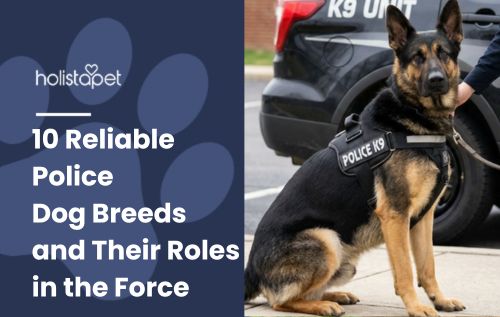
Police dogs support law enforcement every day by tracking suspects, detecting drugs, and protecting communities. Many people ask which police dog breeds perform these demanding roles best. If you want to explore about dog breeds beyond working dogs, our breed library covers a wide range of canines.
A small group stands out due to intelligence, discipline, and reliability. These dogs handle real police work and prove their value in the field.
Why are There Specific Police Dog Breeds?

Certain dog breeds excel in police work because genetics shape traits like intelligence, drive, and temperament.
The AKC: Complete Dog Breed Directory states that working breeds such as German Shepherds, Belgian Malinois, and Dutch Shepherd show high trainability and a strong work ethic, which allows them to learn commands quickly. The National Institute of Justice highlights their advanced scent detection ability as essential for drug detection, explosives search, and tracking suspects.
These traits make them reliable for demanding law enforcement duties, so police agencies select only breeds that consistently meet these standards.
What are the Most Reliable Police Dog Breeds?
Police departments rely on a select group of police dog breeds that consistently perform under pressure. These dogs combine intelligence, scent detection, and physical ability, which makes them reliable partners in law enforcement. The VCA: Selecting a Dog Breed resource outlines how temperament and working ability should guide any breed selection decision.
|
Breed |
Primary Role |
Key Strength |
Common Duties |
|
German Shepherd |
General purpose police dogs |
Intelligence |
Patrol duties, tracking, protection |
|
Belgian Malinois |
Tactical operations |
Agility |
Detection, suspect apprehension |
|
Labrador Retriever |
Detection |
Sense of smell |
Drug detection, search |
|
Dutch Shepherd |
Patrol and rescue |
Versatility |
Tracking, patrol duties |
|
Golden Retriever |
Rescue and detection |
Temperament |
Search and rescue, community work |
|
American Pit Bull Terrier |
Specialized roles |
Determination |
Tracking, rescue |
|
Doberman Pinscher |
Security |
Alertness |
Patrol duties, protection |
|
Bloodhound |
Tracking |
Scent ability |
Search, locating suspects |
|
Bouvier des Flandres |
Patrol |
Strength |
Protection, patrol duties |
|
Beagle |
Detection |
Smell |
Narcotics, airport security |
1. German Shepherd
Key Paw-lice Qualities:
-
Highly intelligent
-
Strong work ethic
-
High trainability
-
Protective temperament
German Shepherds dominate police work due to their intelligence and versatility. Their use expanded during World War I, where they served as messenger and rescue animals.
Today, police agencies rely on them as general purpose police dogs for patrol duties, tracking suspects, and protecting handlers. Their ability to learn commands quickly and respond under stress makes them a top choice worldwide.
2. Belgian Malinois
Key Paw-lice Qualities:
-
High energy
-
Exceptional agility
-
Strong detection skills
-
Quick response
Belgian Malinois stand out for speed and focus. Military and police departments increased their use after modern operations highlighted their efficiency.
These dogs excel in detection tasks such as explosives and narcotics. Their agility and high level of drive allow them to handle intense police duties with precision.
3. Labrador Retriever
Key Paw-lice Qualities:
-
Excellent scent detection
-
Friendly temperament
-
High intelligence
-
Reliable focus
Labrador Retrievers play a major role in detection work. Their calm nature and strong sense of smell make them ideal for drug detection and search tasks in crowded communities.
Police agencies often use them in airports and public spaces where a less aggressive presence helps maintain security without causing fear.
4. Dutch Shepherd
Key Paw-lice Qualities:
-
Strong endurance
-
High intelligence
-
Versatile skills
-
Agile movement
The Dutch Shepherd shares many traits with German Shepherds and Belgian Malinois. Police departments value this breed for patrol duties and tracking. Their adaptability allows them to serve in various roles, including search and rescue operations and suspect apprehension.
5. Golden Retriever
Key Paw-lice Qualities:
-
Gentle temperament
-
Strong detection ability
-
Easy to train
-
Social behavior
Golden Retrievers support law enforcement through detection and rescue services. Their friendly nature makes them effective in community settings, especially around children. These dogs assist in search operations and help locate survivors during emergencies.
6. American Pit Bull Terrier
Key Paw-lice Qualities:
-
Strong build
-
High determination
-
Loyalty
-
Agility
American Pit Bull Terriers contribute to specific police work that requires strength and persistence. Some police agencies train them for search and rescue and suspect tracking. Their determination and energy allow them to perform demanding tasks when properly trained.
7. Doberman Pinscher
Key Paw-lice Qualities:
-
Protective instincts
-
Speed
-
Intelligence
-
Alertness
Doberman Pinschers once served widely in police roles, especially during early modern law enforcement development. Their alert nature and protective ability make them effective for security and patrol duties. They respond quickly to commands and remain focused during operations.
8. Bloodhound
Key Paw-lice Qualities:
-
Superior sense of smell
-
Tracking accuracy
-
Persistence
-
Focus
Bloodhounds lead in tracking due to their unmatched scent ability. Law enforcement agencies use them to locate missing persons, suspects, and evidence. Their tracking results often hold up in court due to their accuracy, which strengthens criminal investigations.
9. Bouvier des Flandres
Key Paw-lice Qualities:
-
Strong build
-
Calm temperament
-
Protective nature
-
Versatility
The Bouvier des Flandres served in World War efforts as a working dog before joining police service. Police departments value their strength and calm behavior during patrol duties. They handle protection tasks and assist in maintaining control during operations.
10. Beagle
Key Paw-lice Qualities:
-
Excellent scent detection
-
Compact size
-
Friendly nature
-
High energy
Beagles play a specialized role in detection work. They primarily assist in detecting prohibited items such as drugs and food products at borders and airports.
Their small size helps them search tight spaces, and their friendly temperament allows them to work in busy public areas without causing concern.
How Do I Keep a Police Dog Breed in Shape?
Keeping police dog breeds in peak condition requires consistent training, proper nutrition, and structured care. These dogs perform demanding duties, so handlers must maintain their physical and mental health daily.
Maintain Daily Physical Conditioning
Police dogs need regular exercise to sustain strength, agility, and endurance required for patrol duties and search tasks.
-
Schedule structured runs and obstacle training
-
Include agility drills to improve coordination
-
Rotate activities to prevent fatigue and injury
The American College of Sports Medicine states that working dogs require consistent conditioning to support joint health and overall performance.
Provide High Quality Nutrition
A balanced diet fuels energy and supports recovery after intense police work.
-
Feed high protein meals to build muscle
-
Include healthy fats for sustained energy
-
Ensure proper hydration at all times
According to the National Research Council, working dogs need higher caloric intake than average dogs due to increased energy demands.
Reinforce Consistent Training
Ongoing training sharpens special skills such as detection, tracking, and response to commands.
-
Practice scent detection exercises regularly
-
Reinforce obedience with clear commands
-
Simulate real life law enforcement scenarios
Studies in Applied Animal Behaviour Science show that repetition and consistency improve how dogs respond to commands quickly under stress.
Support Recovery and Stress Relief
Recovery plays a key role in maintaining long term performance and preventing burnout.
-
Allow proper rest between duties
-
Use calming support when needed
-
Monitor behavior for signs of stress or fatigue
Schedule Routine Health Checks
Regular health monitoring ensures dogs stay fit for service and avoid injuries.
-
Conduct routine veterinary checkups
-
Track weight and mobility
-
Check paws and joints after operations
The American Veterinary Medical Association emphasizes preventive care to keep working animals healthy and capable of performing their duties.
Find the Best Police Dog Breed for Your Force
Some police dog breeds shine brighter than the rest. These working pups bring a mix of loyalty, strength, and versatility to every mission. Let's look at the top 9 canine stars that support police departments and keep neighborhoods safe every day.
Choosing the right police dog breed depends on the specific duties required in law enforcement. Each breed offers unique strengths, from detection and tracking to protection and rescue.
Police departments must match the dog’s ability, temperament, and training potential to the job to ensure reliable performance in the field.

Frequently Asked Questions
What age do police dogs start training?
Most police dogs start training between 12 and 24 months. At this stage, pups show enough maturity to handle structured lessons. Trainers assess intelligence, temperament, and drive early, then build skills through extensive training focused on obedience, detection, and control.
How long do police dogs stay in service?
Police dogs usually serve for 6 to 9 years. The exact duration depends on health, performance, and job demands. Handlers monitor physical condition and behavior closely to decide when a canine should retire from active police work.
Do all police dogs live with their handlers?
Yes, most police dogs live with their handlers. This setup strengthens trust and improves how the dog responds to commands in real situations. A strong bond helps both the officer and the canine perform effectively during operations.
Can police dogs work in crowded public places?
Yes, trained police dogs can work in busy areas. Breeds like Labrador Retrievers and Beagle often handle these roles due to their calm temperament. These dogs assist in detection tasks without causing fear, which helps maintain security in communities.
What happens to police dogs after retirement?
Retired police dogs usually stay with their handlers or move to approved homes. Many continue to live as companions after years of service. Some organizations also support retired K 9 units to ensure proper care and comfort.
Are police dogs trained to be aggressive?
No, police dogs do not train to act aggressive without control. Trainers teach them to respond to specific commands and situations. They use controlled force only when required, such as stopping suspects or protecting their handler.
How do police dogs detect drugs and explosives?
Police dogs use their sense of smell to detect drugs and explosives. Their noses can identify specific scents at very low levels. Trainers teach them to associate certain smells with rewards, which strengthens detection accuracy during searches.
Can any dog breed become a police dog?
No, only certain dog breeds qualify for police work. Dogs must show high intelligence, strong work ethic, and stable temperament. Police agencies select breeds that consistently meet these standards and perform reliably in demanding duties.
For more breed-specific guidance, explore whether is the staffordshire bull terrier the right dog for your lifestyle, or read our whats a basenji guide for another intelligent, driven breed worth considering.







Leave a comment
All comments are moderated before being published.
This site is protected by hCaptcha and the hCaptcha Privacy Policy and Terms of Service apply.