

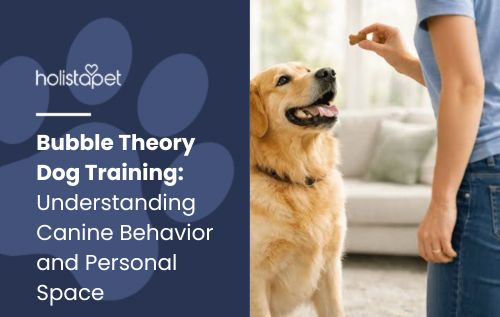
Bubble theory in dog training is an approach that focuses on a dog's personal space, often described as their "bubble", and how distance and environmental pressure can influence behavior. For broader dog care information, this concept fits within a growing movement toward force-free, awareness-based handling. It emphasizes observation, timing, and respect for a dog’s comfort level to help guide training and behavior management.
This method is based on the idea that many behavioral responses are influenced by how close a dog is to triggers such as people, animals, sounds, or unfamiliar environments.
What Is Bubble Theory Dog Training?
 Bubble theory in dog training refers to the concept that every dog has an invisible personal space boundary. When that boundary is approached or crossed too quickly, the dog may show stress-related behaviors such as barking, pulling on the leash, avoidance, or reactivity.
Instead of focusing only on obedience commands, this approach encourages handlers to observe early signs of discomfort and adjust distance before the dog becomes overwhelmed.
The goal is to help the dog remain within a comfortable emotional and physical range during training and daily interactions.
Understanding a Dog’s Personal Space
A dog’s “bubble” represents their comfort zone. When that space is reduced too quickly or without warning, dogs may respond defensively or anxiously.
Common signs that a dog may be uncomfortable include:
-
Stiff body posture
-
Ears pinned back
-
Avoiding eye contact
-
Backing away or trying to increase distance
-
Excessive barking or pulling
Recognizing these signals allows handlers to adjust the environment and reduce stress before behavior escalates.
How Bubble Theory Differs From Traditional Training Methods
 Many traditional training approaches emphasize command compliance, such as “sit,” “stay,” or “heel,” sometimes with less focus on emotional state or distance from triggers.
Bubble theory, in contrast, prioritizes:
-
Emotional comfort before obedience
-
Distance management from triggers
-
Gradual exposure to stimuli
-
Observation of body language and stress signals
This approach supports the idea that dogs may respond more effectively to training when they feel secure and not pressured.
Potential Benefits of Bubble Theory Dog Training
 When applied consistently, bubble theory may help support improved behavior and communication between dogs and handlers. Potential benefits include:
-
Improved trust and handler awareness
-
Reduced stress-related behaviors in some dogs
-
Better focus in controlled environments
-
More gradual and structured social exposure
-
Increased understanding of canine body language
Results can vary depending on the individual dog, environment, and consistency of training.
What Dogs Can Benefit From Bubble Theory Dog Training?
 Bubble theory dog training may be particularly relevant for dogs that show sensitivity to environmental triggers. This can include dogs that:
-
React strongly to other dogs or people
-
Show nervous or avoidant behavior
-
Struggle with new environments
-
Become overstimulated in busy areas
The approach is not limited to specific behavioral categories and may be adapted to different temperaments, including dogs that may benefit from guidance on how to train a hyper or easily overstimulated dog.
Is Bubble Theory Suitable for Reactive or Anxious Dogs?
This method may be helpful for dogs that display reactive or anxious behavior, as it emphasizes distance management and early recognition of stress signals.
By increasing space between the dog and triggering stimuli, handlers may help the dog remain below their stress threshold, allowing for more controlled learning experiences over time. Some handlers also explore calming pills for canines as a supplementary option alongside behavioral strategies.
Related Post: Reactive Dog Training: Proven Techniques for Success
Can It Be Used With Dogs Showing Aggression?
Bubble theory principles may be applied when working with dogs that display aggressive responses, particularly when those behaviors are linked to fear or overstimulation.
By maintaining safe distance and avoiding forced interaction, dogs are given more time to process their environment. This may help reduce the likelihood of defensive reactions and support gradual behavior improvement.
However, aggressive behavior should be assessed carefully, and professional guidance may be necessary in some cases.
Bubble Theory and Socialization
Instead of exposing dogs directly to busy or overwhelming environments, bubble theory encourages gradual introduction to new stimuli.
This may include:
-
Controlled introductions to other dogs
-
Gradual exposure to new environments
-
Maintaining safe distance during interactions
-
Positive reinforcement for calm behavior
The focus is on allowing the dog to adjust at their own pace without pressure.
The Basics of Bubble Theory Dog Training
At its core, the bubble theory centers on space, dedication, and observation. Here are the basics:
-
Creating a Safe Space for Your Dog. This gives your pup room to relax without pressure from other pets, people, or noise.
-
Establishing Personal Space for Both You and Your Dog. You learn to respect your dog's comfort zone, and they learn to respect yours, too.
-
Gradually Expanding the Bubble for Training Success. Little by little, you shrink that bubble as your companion builds confidence in more situations.
How To Implement Bubble Theory Dog Training
Bubble theory training does not require immediate or drastic changes. It focuses on gradual adjustments and consistent observation.
Step 1: Observe and Identify Your Dog's Comfort Zone
Every dog has a limit, and your job is to spot it. Watch how close other dogs, people, or even loud noises can get before your pup starts showing signs of discomfort. Look for stiff posture, pinning of the ears, or attempts to move away. Keep your leash loose, your eyes open, and your snacks ready.
Step 2: Maintain a Calm and Controlled Environment
If a training session begins in a loud or busy environment, it may be more difficult for the dog to focus and process cues effectively. A quiet, low-stimulation space can help the dog remain more relaxed and attentive.
Handler behavior also plays an important role. Remaining calm and consistent can help create a more stable learning environment, as dogs are often sensitive to human body language and energy levels.
Step 3: Introduce Gradual Challenges To Expand the Bubble
New stimuli should be introduced one at a time. If the dog shows signs of stress, distance should be increased and the intensity reduced.
Step 4: Use Positive Reinforcement Within the Bubble
Calm and appropriate behavior within the dog’s comfort zone should be reinforced consistently to encourage positive associations.
Step 5: Monitor and Adjust as Needed for Progress
Progress may vary daily. Adjustments should be made based on the dog’s current comfort level and responses.
Tips for Successful Bubble Theory Training
-
Stick to a Routine. Dogs love structure. Consistency helps them know what to expect and feel more secure.
-
Keep Sessions Short and Sweet. End on a good note before your pup gets overwhelmed or bored.
-
Watch Body Language Closely. Your dog tells you how they're feeling without saying a word.
-
Celebrate Small Wins. Calm behavior, soft eyes, or ignoring a trigger? Throw them a tasty treat consider keeping CBD wellness treats for dogs on hand as a high-value reward during sensitive sessions.
-
Stay Calm and Patient. Calm handler behavior contributes to calmer canine responses.
Additional Considerations in Bubble Theory Dog Training
Your dog's bubble might look totally different than your neighbor's fluffy companion. That's okay and expected. Some dogs bounce back fast, while others need more time. Weather, mood, and who's nearby can shift their reactions.
Pay attention and adjust without stress. The goal? Help your pup feel in control, not cornered. Respect the space, respect the pace.
How To Handle Setbacks During Training
When your dog regresses, take a step back (literally). Go back to a distance where they felt safe before, stay calm, reset, and keep things short and sweet. Setbacks are just part of the process, not the end of it. Progress isn't linear; our canine friends can also experience off days. Keep your cool, and your dog will, too.
Can Bubble Theory Be Combined With Other Training Techniques?
Absolutely, the bubble theory blends well with other techniques. You can combine it with positive reinforcement, clicker training, or calming routines — some owners also incorporate melatonin and calming chews for dogs to help take the edge off during early desensitization work. You can still teach "sit," "stay," and "leave it just with more awareness of your dog's space. It's all about layering smart strategies. The more tools, the better the results.
How To Make the Most Out of Bubble Theory Dog Training
The secret to bubble theory success is paying attention and sticking with it. Watch your dog's reactions, adjust your space, and reward the calm moments. Don't be afraid to slow down when things feel off. Keep sessions short, fun, and focused on your pet's comfort. The more you tune in, the better the results.
Final Thoughts on Bubble Theory Dog Training
Bubble theory dog training emphasizes respect for a dog’s personal space and gradual exposure to different environments. This approach may support better communication, reduced stress responses, and improved learning outcomes over time.
For dogs that experience ongoing anxiety or sensitivity, some pet care products are sometimes considered as part of a broader wellness routine including organic CBD oil for dogs or dog vitamin chews to support overall well-being. The AKC: CBD Oil for Dogs — What You Need to Know and PubMed: Pharmacokinetics, Safety, and Clinical Efficacy of CBD in Dogs offer helpful reference points when evaluating these options. Suitability and safety should always be evaluated carefully with professional guidance when needed.






Leave a comment
All comments are moderated before being published.
This site is protected by hCaptcha and the hCaptcha Privacy Policy and Terms of Service apply.