

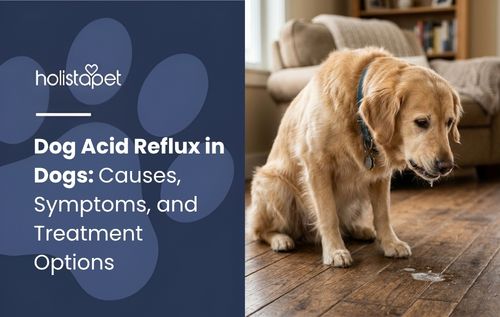
Dog acid reflux can affect dogs of any age or breed. It occurs when stomach acid flows back into the esophagus, causing discomfort and irritation. You may notice symptoms such as restlessness after meals, burping, or subtle changes in behavior that suggest your dog is not feeling well.
Early detection of dog acid reflux can help reduce irritation and prevent the condition from becoming chronic. Dietary adjustments and consistent routines may help support digestive comfort and reduce symptoms over time. For broader wellness guidance, our dog care support hub covers a wide range of topics to help keep your pup healthy.
What Is Acid Reflux in Dogs?

Acid reflux, also known as gastroesophageal reflux disease (GERD), occurs when stomach acid flows backward into the esophagus instead of remaining in the stomach. The lower esophageal sphincter, a small muscle at the stomach's entrance, should close tightly after food passes through, but sometimes it doesn't.
When this occurs, stomach acid can irritate the esophageal lining. Repeated exposure may lead to inflammation and digestive discomfort. Understanding how acid reflux works is the first step toward managing it and helping your pup feel comfortable again.
How Acid Reflux Develops in Dogs
Acid reflux develops when the lower esophageal sphincter relaxes or weakens at inappropriate times. This muscle normally keeps stomach acid and partially digested food where they belong. If it doesn't close properly, acid production keeps working, and the acid can travel up into the esophagus.
Repeated exposure to stomach acid may irritate the esophageal lining and interfere with normal digestion. Over time, this repeated exposure can lead to more discomfort and make treating the issue more complicated.
Causes, Triggers, and Risk Factors
Some dogs may be more prone to acid reflux due to diet, health conditions, or anatomical factors. Common contributing factors include:
- High-fat diets, which may slow digestion
- Overeating, which increases stomach pressure
- Hiatal hernia, which can affect normal stomach positioning
- Relaxation during anesthesia
- Breed or anatomy-related factors, such as a shorter esophagus
- Underlying digestive conditions that affect motility
Acid Reflux Symptoms To Watch for in Dogs

Acid reflux shows up in different ways, and the signs can range from mild to hard-to-miss. Spotting these changes early can help you get your pooch the care they need before things get worse.
Keep an eye out for:
- Vomiting or regurgitation
- Coughing after meals
- Loss of Appetite
- Weight Changes
- Signs of Discomfort After Eating
- Bad Breath
- Lip Licking
- Persistent Drooling
What Can I Give My Dog for Acid Reflux?

Helping a dog with acid reflux often starts with changes to their diet and routine. Vets may suggest adjustments to help reduce stomach acid production and ease esophageal irritation.
Dietary Adjustments
A bland, low-fat diet may help reduce digestive strain. Common gentle options include:
- Boiled chicken (no seasoning)
- White rice
- Easily digestible veterinary-formulated diets
Smaller, more frequent meals can also help reduce stomach pressure. Stool changes can also offer clues about digestive health if you've noticed unusual output, our guide on white dog poop explains what different stool appearances may indicate. Some pet owners complement dietary changes with a dog CBD treat collection to help support overall comfort and calm during mealtimes.
Vet-Approved Medications and Supplements
A veterinarian may recommend:
- Acid-reducing medications
- Pro-motility drugs to improve digestion speed
- Dietary supplements to support gut function
Treatment depends on severity and underlying cause, so professional evaluation is important.
Some pet owners also explore a full-spectrum alternative for dogs as part of a broader daily wellness routine alongside veterinary-recommended care.
HolistaPet Digestive Support Approach
HolistaPet's probiotic treats for dogs are formulated to support overall digestive health and maintain a balanced gut environment. They contain beneficial probiotic strains that may help support normal digestive function as part of a healthy routine.
These chews may also support:
- Healthy bowel regularity
- Digestive comfort
- Nutrient absorption balance
They are intended as a supportive supplement alongside veterinary care and a balanced diet.
Key Digestive Ingredients
Each chew includes a blend of probiotic strains such as:
- Lactobacillus acidophilus
- Lactobacillus rhamnosus
- Bifidobacterium lactis
- Other supportive strains for gut balance
These strains are commonly used in canine digestive supplements and may help support a healthy gut microbiome.
The formula also includes fiber sources such as pumpkin and sweet potato, which may help support healthy digestion and stool consistency.
How Our Probiotic Chews Support Gut Health
These probiotic chews work by adding good bacteria to your dog's digestive tract, helping the system function properly. A balanced gut can handle food better and reduce irritation from stomach acid.
The added fiber from pumpkin and sweet potato supports smoother digestion and less stomach upset. Over time, this mix can help maintain regular bowel movements, ease discomfort after meals, and keep your pup's digestive health in great shape.
Lifestyle Tips To Prevent Acid Reflux in Dogs
Small changes in daily habits can make a big difference in preventing acid reflux. These tips focus on reducing stomach acid build-up and keeping the lower esophageal sphincter working well. Try the following:
- Feed Smaller, More Frequent Meals. Helps prevent pressure on the stomach. If restlessness after meals is a concern, dog melatonin soft chews may help support a calmer post-meal routine.
- Avoid High-Fat Foods. Reduces stomach acid production.
- Keep Dogs Upright After Eating. Gives food time to move down the digestive tract.
- Maintain a Healthy Weight. Less strain on the digestive system.
-
Use a Consistent Feeding Schedule. Keeps the stomach from being empty for too long.
How Vets Diagnose Acid Reflux in Canines

Diagnosis typically involves a combination of observation and testing.
Physical Examination and History
A veterinarian may assess:
- Eating habits
- Vomiting or regurgitation frequency
- Weight changes
- Overall behavior after meals
Diagnostic Testing
If needed, vets may use:
- Imaging (X-rays or ultrasound)
- Endoscopy to examine the esophagus
- Additional digestive function tests
For more insight: [When to Visit a Vet for Digestive Issues]
Final Thoughts
Acid reflux in dogs is often manageable with the right combination of diet control, lifestyle adjustments, and veterinary support. Early detection is key to preventing chronic irritation and improving comfort after meals.
Supportive options like probiotics, along with a balanced diet and consistent feeding routine, may help maintain long-term digestive health and well-being.
For more general pet care reading, you might also enjoy our fun guide on big dog names because a healthy dog deserves a great name too.
FAQs
What causes acid reflux in dogs?
It may be caused by high-fat diets, overeating, delayed digestion, or a weakened lower esophageal sphincter.
What are common symptoms?
Symptoms include vomiting, regurgitation, bad breath, drooling, coughing after meals, and reduced appetite.
Can human food trigger acid reflux in dogs?
Yes. Fatty, spicy, or rich human foods may worsen digestive irritation in sensitive dogs.
For a trusted overview of supplement options, AKC: CBD Oil for Dogs — What You Need to Know is a helpful resource from a recognized authority.
Is acid reflux in dogs serious?
Mild cases are often manageable, but chronic or severe symptoms should always be evaluated by a veterinarian.
For evidence-based context on supplement safety, PubMed: Pharmacokinetics, Safety, and Clinical Efficacy of CBD in Dogs provides peer-reviewed findings relevant to canine wellness support.






Leave a comment
All comments are moderated before being published.
This site is protected by hCaptcha and the hCaptcha Privacy Policy and Terms of Service apply.