

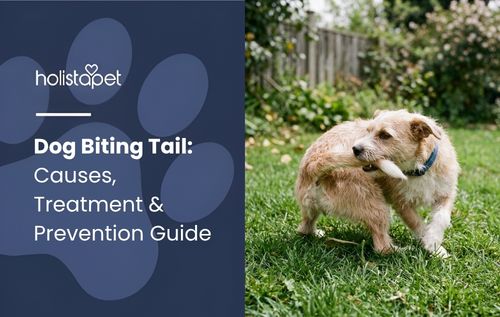
Dog tail biting is a behavior that usually signals discomfort, irritation, or behavioral distress and caring for your dog starts with recognizing when repeated behaviors like this need closer attention. While occasional scratching is normal, repeated biting may indicate an underlying issue that requires attention.
Understanding the cause is essential because tail biting can lead to skin damage, infection, and worsening irritation if left untreated.
Why Do Dogs Bite Their Tails?

Dogs bite their tails for various reasons, ranging from minor irritations to deeper behavioral or health issues. Sometimes, it's just an itch they can't ignore; other times, it's a sign that needs attention. Understanding your dog's tail-chewing habit is the first step to addressing the problem.
Common Medical Causes of Tail Biting
Dogs gnaw at and bite their tails for several reasons. Here are the most common culprits:
- Fleas and Ticks. These tiny pests can cause relentless itching, leading to your dog's tail biting and chewing.
- Allergies. Certain foods or environmental factors may trigger allergic reactions, leading to irritation and tail chewing.
- Skin Irritations. Dry skin, hot spots, or minor rashes can make your pet's tail an uncomfortable target for relief.
- Issues With the Anal Glands. Discomfort in this area can cause dogs to chew near their tail.
- Boredom. A lack of mental or physical stimulation might drive your pup to engage in this repetitive behavior.
Behavioral Causes of Tail Biting
Sometimes, dogs biting their tails has less to do with physical discomfort and more to do with their habits. Here are the key behavioral causes:
- Stress or Anxiety. Dogs may resort to tail biting as a coping mechanism for nervous or worried thoughts, and some owners turn to dog CBD oil as part of a broader routine to help support calm behavior.
- Boredom. Without enough playtime or stimulation, dogs may engage in repetitive behaviors such as tail-chasing and chewing.
- Attention-Seeking. Some pups quickly learn that tail biting gets their owner's attention.
- Obsessive-Compulsive Behavior. In rare cases, dog tail biting can become a compulsive act.
Health Issues That Cause Tail Biting
Health-related problems are a major reason dogs might start biting their tails. For example, fleas, food allergies, or even an infection might cause itching or irritation. When dogs feel discomfort in their tails, their instinct is to bite and chew in an effort to soothe the sensation. Identifying these health concerns early is essential to preventing more problems.
Allergies and Skin Irritations
Allergies and skin irritations are among the most common reasons behind tail biting. Your dog may experience allergic reactions to certain foods, environmental factors, or even grooming products, leading to redness, puffiness, or itching in the tail region supporting gut health with dog probiotic soft chews may help manage food-related sensitivities from the inside out.
Fleas, Ticks, and Parasites

Fleas, ticks, and other parasites are notorious for causing dogs to chew their tails. They cause itching and irritation that drives many dogs to bite their tail areas for relief. A single flea bite can trigger frequent chewing, especially in pets with flea allergies.
Regular deworming and flea and tick prevention help keep these pests at bay. Spotting signs early, such as excessive scratching or visible parasites, helps you take action before the problem gets worse.
Anal Gland Problems
When dogs' anal glands become full or infected, they cause discomfort near the tail area, prompting your dog to chew or bite. This behavior often comes with scooting or licking, making it easier to identify.
Psychological Reasons Behind Tail Chewing
Sometimes, tail chewing is more about what's happening in a dog's mind than in their body. Emotional triggers like anxiety, boredom, or even past trauma can lead to behavioral issues like tail biting. Dogs often resort to this habit to self-soothe or pass the time. Understanding the psychological reasons behind this behavior can lead to a solution.
Anxiety and Stress in Dogs
Anxiety and stress are common psychological triggers for dog tail chewing and biting. When they feel upset, dogs may chew their tails to cope, similar to how anxiety can drive other avoidance behaviors like why do dogs run away from home or familiar environments. This behavior can be a response to changes in their environment, separation from their owners, or other stressors.
Boredom and Lack of Stimulation
When dogs don't get enough mental stimulation or physical exercise, they may resort to repetitive behaviors, such as tail chewing, to entertain themselves and burn off pent-up energy.
How To Stop a Dog From Biting Its Tail

How to make your dog stop biting their tail? It all starts with identifying the root cause of the behavior. Tail biting isn't just annoying; it can lead to secondary infections or worsen existing conditions.
Suggested Solutions for Physical Causes
Start by making sure your dog is on a consistent flea and tick prevention plan to eliminate pest-related irritation. Consult your vet for allergies or skin irritations to identify triggers and learn treatments.
Behavioral Training and Redirection
Teaching your dog alternative behaviors, like responding to commands or playing with toys, helps redirect their focus away from their tail. Positive reinforcement, such as treats or praise, works wonders in encouraging good habits hemp-infused dog treats can double as a calming reward during redirection training sessions.
When To Seek Veterinary Help
If your dog's tail looks red or swollen, or shows signs of a secondary infection, see your vet, stat. Persistent chewing might indicate an underlying health issue or even a behavioral disorder. A vet can perform a thorough evaluation to uncover the root cause and recommend tailored solutions. Seeking help early helps your furry buddy get relief as soon as possible.
Preventing Tail Biting in Dogs
Prevention is always better than dealing with a chewed-up tail! Addressing the root cause of your dog's tail biting can help reduce their discomfort. There are plenty of ways to keep this habit at bay! Let's talk about specific preventative measures to make sure your pup stays happy and tail-chewing-free.
Tips for a Healthy and Happy Dog
A healthy, happy dog is less likely to develop bad habits, such as tail biting. Here are some tips to keep your pup feeling their best:
- Provide Regular Exercise. Daily walks or play sessions burn off energy and reduce boredom.
- Offer Mental Stimulation. Puzzle toys, training games, and interactive play keep your dog's mind sharp and engaged.
- Maintain a Balanced Diet. High-quality dog food supports overall health, reducing the risk of allergies and irritations adding dog multivitamin chews can help fill nutritional gaps that may contribute to skin and coat issues.
- Use Flea and Tick Prevention. Keeping pests away eliminates one of the most common triggers of tail biting.
- Create a Calm Environment. A predictable routine and safe space help reduce stress and agitation.
Final Thoughts
Itching, pain, allergies, parasites, or stress can cause tail biting in dogs. The best step is to identify the root cause early, before it leads to wounds, infections, or hair loss. If your dog keeps chewing their tail or shows pain, redness, odor, or open sores, contact your vet for the right treatment.
FAQs
What Causes a Dog to Bite Its Tail?
A dog biting its tail behavior can happen for many reasons, ranging from simple irritation to more serious health concerns. Some dogs engage in tail biting because of intense itching, while others may be reacting to stress, boredom, or pain. Finding the root cause is important because ongoing dog tail chewing can lead to hair loss, open wounds, and infections. According to pet health experts, common causes include fleas, ticks, allergies, parasites, skin problems, and behavioral concerns for owners exploring natural options, the AKC: CBD Oil for Dogs — What You Need to Know is a helpful starting point.
Why Is My Dog Chewing Its Tail Constantly?
If your dog's tail-chewing has become frequent, there may be an underlying cause. A dog's tail biting may result from skin irritation, irritated skin, dry skin, skin allergies, or anal gland issues. Some dogs may also chew due to stress, anxiety, or boredom. A closer look at your dog's skin and tail area can help you identify whether physical discomfort or behavioral factors are responsible.
Can Fleas and Ticks Cause Dog Tail Chewing?
Yes. Fleas, ticks, and other parasites are among the most common causes of dog tail chewing. These pests can trigger intense itching around the tail, causing your dog to chew, scratch, and bite repeatedly. Dogs with flea allergies may experience even more severe reactions. Consistent parasite prevention is one of the most effective ways to reduce tail-related discomfort.
Can Allergies Make a Dog Bite Its Tail?
Absolutely. Many dogs develop allergies to certain foods or environmental triggers. Environmental allergies, such as pollen, dust, mold, and grass, can cause severe itching, irritation, and inflammation in the affected area. Food sensitivities may also contribute to skin discomfort. If you notice recurring symptoms, your vet may recommend allergy testing and a customized treatment plan. For those looking into research-backed options, PubMed: Pharmacokinetics, Safety, and Clinical Efficacy of CBD in Dogs provides clinical insight into how CBD may support dogs dealing with chronic discomfort and irritation.
How Do Skin Infections Affect Tail Biting?
Skin infections can make the dog's tail painful and itchy. Bacteria or yeast may invade damaged skin, causing redness, swelling, hot spots, and even open sores. When dogs seek relief, they often resort to excessive chewing and biting. Prompt treatment helps prevent worsening infections and further damage to the tail area.







Leave a comment
All comments are moderated before being published.
This site is protected by hCaptcha and the hCaptcha Privacy Policy and Terms of Service apply.