

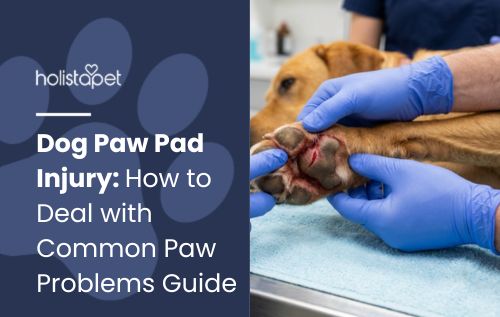
A dog paw pad injury can make every step uncomfortable. From a cut paw pad to burns from hot pavement, prompt care helps reduce discomfort, prevent infection, and support proper healing find more dog wellness tips to keep your dog comfortable year-round.
Are Dog Paw Pads Sensitive?
 Yes, dogs’ paw pads are sensitive despite their thick outer layer.
Research published in the British Journal of Pharmacology by researchers C. Bell and W. J. Lang found that canine paw pads contain specialized nerve and blood vessel networks that respond to pressure and environmental changes.
This rich nerve supply explains why a paw pad injury, sharp objects, or extreme temperatures can quickly cause pain and discomfort in a dog's paw similar to how stress and overstimulation affect the nervous system, as outlined in this guide on how to calm an overstimulated dog.
What are the Common Dog Paw Pad Injuries?
 Dog paw pad injuries can range from minor surface irritation to deeper wounds that may affect mobility. Early identification may help prevent complications and support faster recovery.
Cuts and Abrasions
A cut paw pad can happen when a dog steps on glass, sharp debris, or other foreign objects. Because paw pads have many blood vessels, even small cuts may bleed.
Dogs may also lick the area frequently, which can delay healing.
Burns From Hot Surfaces
Hot pavement, sand, or concrete can burn paw pads within minutes. Burned pads may appear red, swollen, or blistered.
Dogs often avoid putting weight on the affected paw and may lick the area because of discomfort watch for dilated pupils in dogs as a possible sign of pain response during this time.
Puncture Wounds
Puncture wounds occur when sharp objects such as thorns, nails, or sticks penetrate the paw pad. These injuries may leave debris inside the tissue and increase the risk of infection.
Veterinary evaluation is often recommended to ensure proper cleaning and treatment.
Torn Paw Pads
A torn paw pad can occur during rough play or movement on uneven surfaces. Severe tears may expose sensitive tissue and make walking painful.
These injuries may affect a dog’s ability to move comfortably.
Cracked or Dry Paw Pads
Dry weather, frequent walks, and rough terrain can cause cracked paw pads. While minor cracks may seem harmless, deeper splits can become painful and may worsen with continued activity.
How Do I Know If My Dog Has a Hurt Paw Pad?
A dog with a paw pad injury often shows changes in behavior and movement. Early signs include:
-
Limping or avoiding weight on the injured paw
-
Excessive licking or chewing of the paw pads
-
Bleeding from a cut paw pad
-
Swelling or redness around the injury
-
Cracks, tears, or puncture wounds on the paw pads
-
Signs of pain when touching the paw
-
Foreign objects stuck in the paw
-
Whining or behavioral changes due to pain
-
Visible wounds or damaged skin
-
Difficulty walking on rough surfaces
How Do I Care for Injured Paw Pads in Dogs?
Proper care for an injured paw starts with cleaning the area, protecting the paw pad, and reducing pain while the wound heals.
Clean the Injured Paw
Cleaning the injury site helps reduce infection risk and remove remaining debris from the wound.
-
Gently clean the paw pad with warm soapy water.
-
Use mild dish soap or liquid hand soap
-
Flush dirt and loosely embedded debris with cool water
-
Check for a foreign object lodged between the foot pads
-
Pat dry with a clean cloth
The AKC: CBD Oil for Dogs — What You Need to Know resource also covers how supportive wellness products can complement standard wound care and recovery routines.
Stop the Bleeding
A paw pad cut may bleed heavily due to rich blood supply.
-
Apply pressure using a clean cloth for several minutes.
-
Use a cold compress to reduce paw swelling.
-
Wrap the dog's foot with gauze and self-sticking bandage.
-
Secure the covering with vet wrap without making it too tight.
If bleeding continues or pain is severe, seek veterinary care.
Prevent Licking and Further Damage
Dogs may lick injuries, which can delay healing.
-
Use an Elizabethan collar
-
Limit activity on rough surfaces
-
Cover the bandage during walks
-
Keep the paw clean and dry indoors
Support Comfort and Recovery
 Comfort plays an important role in recovery, especially when a dog is healing from a paw injury.
Some pet owners include calming support options during recovery routines for dogs experiencing discomfort. These may include organic CBD dog treats or broad spectrum CBD oil for dogs designed to support relaxation and general wellness.
A Cornell University study published in Frontiers in Veterinary Science found that CBD administration may support comfort and activity levels in dogs with mobility-related discomfort, further supported by findings in this PubMed: Pharmacokinetics, Safety, and Clinical Efficacy of CBD in Dogs review.
Some owners also add probiotics for dog gut health and best melatonin for dogs to their dog's routine to support digestion and restful sleep during the recovery period.
When Do We Go to the Vet for Canine Paw Pad Injuries?
A vet visit is necessary if a paw pad injury causes heavy bleeding, severe pain, or signs of infection. Deep wounds and puncture injuries also need proper veterinary care.
Seek veterinary care if your dog shows these signs:
-
Limping or refusing to put weight on the injured paw
-
Continuous bleeding after you apply pressure
-
Paw swelling, redness, or pus
-
Excessive licking around the injury site
-
Broken glass or foreign object lodged in the paw pad
-
Severe dog's paw pad cut or exposed tissue
Visit an emergency animal hospital if the wound does not improve, symptoms worsen, or the pup's entire foot becomes painful or swollen.
How Do I Prevent Hurt Paw Pads in Dogs?
Preventing paw pad injuries involves protecting paws from heat, sharp objects, and rough surfaces.
-
Avoid hot sidewalks: test pavement before walks
-
Check paws after walks for debris or sharp objects
-
Keep paw pads moisturized to prevent cracking
-
Trim fur around paws to reduce trapped dirt
-
Use protective boots during hikes or heat exposure
-
Clean paws after outdoor activities
-
Limit rough play on harsh surfaces
-
Prevent excessive licking early
-
Inspect paws regularly for small injuries
Frequently Asked Questions
Can a dog walk with a paw pad injury?
Some dogs can walk with minor injuries, but movement may worsen the condition. Limit activity if swelling or pain is present.
How long does a cut paw pad take to heal?
Healing can take days to several weeks depending on severity. Deep wounds take longer due to constant pressure on the paws.
Should I bandage my dog’s paw at night?
Yes, a light bandage can protect the wound and prevent licking. Replace it regularly to keep the area clean.
Can dogs wear shoes to protect injured paws?
Yes, properly fitted boots can protect injured paws from dirt, heat, and rough terrain.
Why does my dog keep licking one paw?
Dogs may lick due to pain, irritation, allergies, or a hidden object. Always inspect the paw carefully.
Can snow and ice damage a dog’s paw pads?
Yes, cold weather, ice, and salt can dry, crack, and irritate paw pads after exposure.







Leave a comment
All comments are moderated before being published.
This site is protected by hCaptcha and the hCaptcha Privacy Policy and Terms of Service apply.