

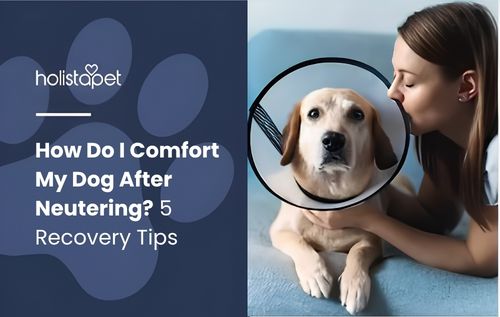
Neutering can leave dogs feeling tired, sore, or disoriented for several days. With proper care, most dogs recover comfortably at home within about two weeks. Pet parents can support healing by providing rest, limiting activity, monitoring the incision site, and following veterinary instructions closely.
Is It Okay to Spay or Neuter Dogs?

Yes, veterinarians generally consider it safe to spay or neuter healthy dogs when done at the appropriate age and under professional care.
The American Veterinary Medical Association states that spay or neuter procedures can help reduce unwanted puppies, lower the risk of testicular cancer in male dogs, and decrease some undesirable behaviors linked to hormones.
The organization also recommends discussing timing and potential complications with a veterinary team since breed, age, and a pet's condition can affect the best approach for each dog.
How Do I Help My Dog After Neutering?
Recovery support focuses on comfort, rest, and careful monitoring.
|
Recovery Area |
What To Do |
What To Avoid |
When To Contact Your Vet |
|
Activity |
Keep the dog comfortable in a quiet place |
Running or rough play |
Dog refuses to rest |
|
Incision Care |
Check incision site daily |
Licking the surgical site |
Swelling or discharge |
|
Pain Relief |
Use prescribed pain medications |
Human pain medications |
Dog seems in pain constantly |
|
Emotional Support |
Offer favorite toys and calm attention |
Overstimulation |
Dog stops eating |
|
Recovery Gear |
Use a recovery suit or Elizabethan collar |
Removing protection too early |
Incision opens or bleeds |
1. Create a Calm Recovery Space
A quiet environment may help reduce stress after surgery. Dogs often feel groggy or anxious following anesthesia, so limiting stimulation is important.
- Set up a soft, comfortable resting area
- Keep the dog indoors and away from other pets
- Reduce noise and household activity
- Avoid jumping, running, and stairs
2. Monitor the Incision Daily
Checking the surgical site helps detect early signs of complications.
- Inspect the incision once or twice daily
- Prevent licking using an e-collar or recovery suit
- Follow all veterinary cleaning instructions
- Watch for redness, swelling, discharge, or bleeding
Contact your veterinarian if your dog becomes unusually uncomfortable, stops eating, or shows worsening symptoms.
3. Use Pain Medications Safely
Mild discomfort is normal after neutering, but pain should be managed only with veterinary-approved medications.
- Give medications exactly as prescribed
- Never use human pain relievers unless instructed by a veterinarian
- Drugs like ibuprofen and acetaminophen can be dangerous for dogs
The U.S. Food and Drug Administration warns that human pain medications may cause serious or life-threatening reactions in pets, including organ damage.
Digestive support products like probiotics for dog digestion may also help maintain gut balance while dogs recover from stress or medication changes.
4. Consider Gentle Calming Support
Some dogs may benefit from a calm routine during recovery.
- Maintain a consistent daily schedule
- Keep the environment quiet and predictable
- Use veterinarian-approved calming aids if recommended
Some pet wellness products, including premium CBD oil for dogs, hemp dog treats, and dog melatonin, are designed to support relaxation in dogs. However, CBD products are not intended to diagnose, treat, cure, or prevent any disease. Always consult a veterinarian before introducing any new supplement during recovery.
Research from Cornell University (2022) studied cannabinoids and canine comfort, though evidence related specifically to post-surgical recovery remains limited.
5. Monitor Behavior Changes
Behavior often improves within a few days, but changes may indicate discomfort or complications.
Watch for:
- Whining or shaking
- Hiding or withdrawal
- Loss of appetite
- Excessive sleepiness
- Irritability or aggression
Contact a veterinarian if symptoms persist or worsen beyond a few days.
Mobility-related discomfort discussed in acl tear in dogs and dog wrist injury may show similar behavioral warning signs during recovery.
How Long Do Dogs Stay in Pain After Neutering?

Most dogs experience mild discomfort for about three to five days after neutering, although lower energy levels and tenderness can last up to two weeks during recovery.
The American College of Veterinary Surgeons explains that recovery usually improves quickly with proper rest, restricted activity, and veterinarian-prescribed pain management.
Pet owners should contact their veterinarian if pain appears severe, symptoms suddenly worsen, or the incision develops swelling, discharge, or bleeding.
Comfort Leads to Faster Recovery
Most dogs recover well after neuter surgery with proper rest, monitoring, and veterinary care. Creating a calm environment, limiting physical activity, and following post-surgery instructions closely can help support a safer and more comfortable healing experience for your pet.
For more recovery guidance, wellness education, and everyday dog owner tips, explore our full dog care resource library.
Frequently Asked Questions
Can my dog sleep alone after neutering?
Yes, most dogs can sleep alone after neutering if they stay in a safe and quiet place. Pet owners should still check the dog closely during the first night to monitor discomfort, bleeding, or unusual behavior.
Why is my dog crying after neuter surgery?
Dogs often cry because of soreness, confusion, or lingering anesthesia effects. Mild whining can happen during the first 24 hours, but persistent crying may signal pain or discomfort around the surgery site.
Can my dog drink water after getting fixed?
Yes, dogs can drink water after surgery once they arrive home and stay alert. Small amounts work best at first since some dogs feel nauseous after anesthesia.
When can my dog take a bath after neutering?
Most veterinarians recommend waiting at least 10 to 14 days before bathing a dog after neutering or spaying. Keeping the incision site dry helps prevent irritation and supports faster healing.
Should I stop my dog from climbing stairs?
Yes, limiting stair use helps reduce strain on the surgical site. Slow and controlled movement lowers the risk of reopening stitches during the recovery process.
Do dogs act differently after being neutered?
Yes, some dogs show behavioral benefits after neutering. Male dogs may become calmer and show fewer hormone-driven behaviors, though personality usually stays the same.
![How To Stop a Dog From Nipping When Excited [Causes + Solutions]](http://www.holistapet.com/cdn/shop/articles/how_to_stop_a_dog_from_nipping_when_excited_aa81c19b-4a86-42b9-856a-29c1b6cbc4ec.jpg?v=1780493376&width=500)






Leave a comment
All comments are moderated before being published.
This site is protected by hCaptcha and the hCaptcha Privacy Policy and Terms of Service apply.