

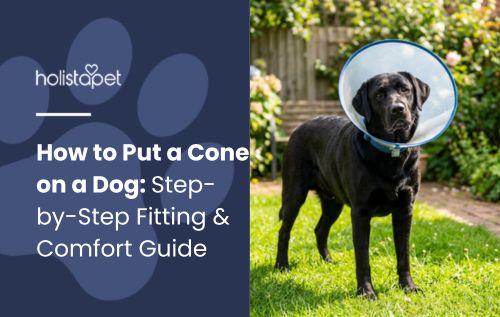
Learning how to put a cone on a dog can feel tricky at first, especially if your dog is nervous, recovering from surgery, or not used to wearing anything around their neck. A cone may look uncomfortable, but when it fits correctly, it can play an essential role in protecting your dog’s wound, stitches, bandage, or surgical site during recovery.
This step-by-step guide explains how to put a cone on a dog, adjust it properly, check the fit, and help your dog sleep, eat, drink, and move more comfortably while wearing it. For more helpful dog care articles on recovery and general wellness, the HolistaPet blog is a good resource to bookmark.
Why Do Dogs Wear Cones?
 Dogs wear cones to protect healing areas from licking, biting, chewing, or scratching. After surgery, an injury, or treatment for a skin issue, your veterinarian may recommend a cone to keep your dog away from the surgical site or wound.
Even gentle licking can cause problems. A dog's mouth contains bacteria, and repeated licking can irritate the skin, reopen stitches, loosen a bandage, or slow the healing process. Dogs that lick out of stress or excitement may also benefit from behavioral support understanding why a canine pees when excited is one example of how anxiety can surface in unexpected ways during recovery.
Chewing can be even more serious because it may pull out stitches or damage the wound.
Choosing the Right Cone for Your Dog
Before you put the cone on your dog, could you make sure you have the right type and size? The best cone should protect the wound while still allowing your dog to breathe, sit, relax, eat, drink, sleep, and move as comfortably as possible.
There are several types of cones and recovery collars to consider.
Plastic Cones
Traditional plastic cones are the most common type of Elizabethan collars. They are firm, durable, and usually extend past the dog’s nose. This makes them helpful for preventing access to wounds, stitches, hot spots, and surgical sites.
Soft Cones
Soft cones are made with flexible fabric or padded material. They may feel more comfortable around the dog's neck, and it can be easier for some dogs to sleep in. Supporting overall recovery with daily vitamins for dogs can also help maintain energy and immune health during the healing period.
However, they may not work for every wound because some dogs can bend or push through softer materials.
Inflatable Collars
An inflatable collar looks like a padded ring around the dog’s neck. This type may be more comfortable for the dog to wear than a traditional cone because it blocks the dog’s vision less. It may also make eating, drinking, and sleeping easier.
How to Put a Cone on a Dog
 Putting a cone on a dog is easier when your dog is calm. Please don't rush the process. Use treats, a gentle voice, and a relaxed approach to help your pet feel secure.
Step 1: Let Your Dog Inspect the Cone
Could you place the cone on the floor and let your dog sniff it? This helps the cone feel less scary. Give treats and praise when your dog stays calm near it. The goal is to make the cone feel familiar before putting it on. If your dog resists training or routine changes during recovery, our tips on our how to train a stubborn dog may provide useful guidance
Step 2: Position the Cone Around the Dog’s Neck
Gently guide the cone over your dog’s head or wrap it around the neck, depending on the cone style. Make sure the wider opening faces forward and the narrow part rests near the dog’s regular collar area.
Your dog’s ears should not be painfully folded, pinched, or trapped. Adjust the cone carefully around the head and neck so your dog can breathe normally.
Step 3: Secure the Cone
Fasten the cone using the built-in straps, tabs, or ties. Some cones attach to the dog’s regular collar for extra security. If your cone has loops, thread the dog’s regular collar through them, then secure the collar as usual.
The cone should be secure enough that it does not slip off when your dog moves, shakes their head, or lies down. However, it should never be tight.
Step 4: Use the Two Fingers Test
After securing the cone, slide two fingers between the cone or collar area and your dog’s neck. If you cannot fit two fingers, it may be too tight. If you can fit more than two fingers easily, it may be too loose and could slip off.
A proper fit should feel snug but comfortable.
Step 5: Check the Length
Could you look at the front edge of the cone? It should usually extend past the dog’s nose. This helps stop licking, chewing, and pulling at stitches or wounds.
If your dog can still reach the surgical site, the cone may be too short or not fitted correctly. If the cone blocks breathing, causes panic, or prevents movement, adjust it or ask your vet for another option.
Final Thoughts
Knowing how to put a cone on a dog correctly can make recovery much easier for both you and your pet. The cone should fit snugly around the dog’s neck, extend past the dog’s nose, and protect the wound without causing pain or pressure.
Most dogs need time to adjust, so be patient. Use treats, comfort, and a calm routine to help your dog feel secure. Adding gut health probiotics for dogs to their daily routine during recovery may also support digestive balance when appetite or eating habits change due to the cone. With the right fit and a little support, your dog can stay protected and heal safely.
FAQs About How to Put a Cone on a Dog
1. What is the easiest way to put a cone on a dog?
The easiest way to put a cone on a dog is to keep your dog calm, let them sniff the cone, then gently place it over the dog’s head or around the dog’s neck. Secure it so it fits snugly but not tightly. Use treats and praise to help your dog stay relaxed.
2. How tight should a dog cone be?
A dog cone should be snug but not tight. You should be able to fit two fingers between the cone or collar and your dog’s neck. If you cannot fit two fingers, it is too tight. If the cone slips off, it is too loose.
3. Should the cone extend past the dog’s nose?
Yes, in most cases, the cone should extend past the dog’s nose. This helps stop your dog from licking, chewing, or pulling at the wound, stitches, bandage, or surgical site.
4. Can my dog eat and drink while wearing a cone?
Yes, most dogs can eat and drink while wearing a cone, but they may need help at first. Try using shallow food and water bowls, or raise them slightly so the cone does not catch on the edges. Drizzling hemp oil tinctures for dogs over their food is also a convenient way to maintain their wellness routine without disrupting mealtime here's what AKC says about CBD oil for dogs if you're considering it during recovery.
5. Can my dog sleep with a cone on?
Yes, many dogs can sleep with a cone on. In fact, your vet may recommend leaving it on overnight to prevent licking or chewing. Make your dog’s sleeping area comfortable and free from objects that the cone could get stuck on.
6. What are Elizabethan collars?
Elizabethan collars are protective collars that stop dogs from reaching wounds, stitches, injuries, or surgical sites. They are also called e collars, pet cones, buster collars, or dog cones.
7. What if my dog hates wearing the cone?
If your dog seems fearful or uncomfortable, introduce the cone slowly with treats and praise. Let them wear it for short periods while supervised, then gradually increase the time. Exploring lab-tested dog treats designed to support calm behavior may also help ease the adjustment process PubMed: Pharmacokinetics, Safety, and Clinical Efficacy of CBD in Dogs supports their use as a calming aid during stressful recovery periods.. If your dog is extremely stressed, ask your vet about other options, such as a soft cone or inflatable collar.
8. Can I take the cone off when I am watching my dog?
Only remove the cone if your veterinarian says it is safe. Even when supervised, dogs can quickly lick, chew, or pull at a wound. If the wound is still healing, keeping the cone on is usually the safer choice.
9. What should I do if the cone keeps slipping off?
If the cone keeps slipping, check the fit around your dog’s neck. Use the two-finger rule and make sure it is secure. Some cones can be attached to the dog’s regular collar to prevent slipping. If it still does not stay on, ask your vet for a better size or style.
10. When can my dog stop wearing the cone?
Your dog can stop wearing the cone when the wound, stitches, or surgical site has healed enough that licking or chewing is no longer a concern. Always follow your veterinarian’s advice before removing the cone permanently.






Leave a comment
All comments are moderated before being published.
This site is protected by hCaptcha and the hCaptcha Privacy Policy and Terms of Service apply.