


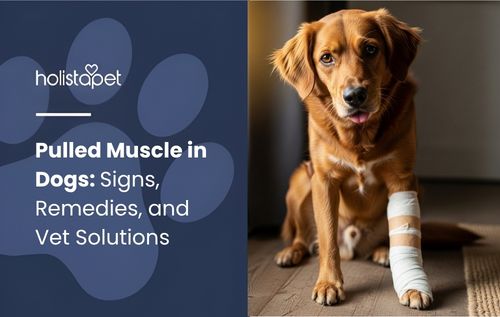
A dog pulled muscle can happen in seconds during rough play, a dog walk, or sudden bursts of movement. One moment the dog moves fine, then a limp or stiffness appears.
Muscle strains in dogs often show up as subtle changes, but quick action helps prevent further injury and supports faster recovery. For more general guidance, visit our dog care information hub.
Are Pulled Muscles Common in Dogs?

Are Pulled Muscles Common in Dogs?
Pulled muscles count among the most common soft tissue injury cases seen in veterinary medicine. The American College of Veterinary Surgeons states that muscle injuries, including muscle strains and muscle tears, often occur in active dogs due to overuse or sudden force on muscle fibers.
Veterinarians also report that most dogs recover well with early care, but severe muscle strains and repeated strain can lead to chronic pain if ignored.
What are the Symptoms of Pulled Muscle in Dogs?
A pulled muscle in dogs shows up through clear changes in movement and comfort. These signs point to a strained muscle or other soft tissue injury.
- Limping or favoring a limb: The dog avoids putting full weight on the affected leg or injured limb.
- Stiffness after rest: The dog moves slowly, especially after lying down.
- Swelling in the injured area: Inflammation appears around the muscle tissue or connective tissue.
- Pain when touched: The dog reacts when the injured muscle or dog’s leg gets handled.
- Reduced activity levels: The dog avoids play, dog park visits, or intense exercise.
- Difficulty with movement: Trouble with jumping, climbing, or normal mobility.
- Muscle spasms: Tightening in certain muscles due to damage in muscle fibers.
- Behavior changes: Signs of dog’s pain such as whining, restlessness, or irritability.
Why Did My Dog Get a Pulled Muscle?
A dog pulled muscle usually happens due to sudden stress on muscle tissue or overuse. These issues often link to activity level, body condition, and underlying joint health.
Sudden bursts of activity
Quick movements place stress on muscle fibers before they fully adjust. Running, jumping, or sharp turns during intense play or at the dog park can lead to strains in dogs, especially in active dogs and athletic dogs.
Overexertion during exercise
Long sessions of intense exercise or canine sports can overload certain muscles. The American Kennel Club notes that overuse ranks as a leading cause of muscle injuries, particularly in active breeds that push beyond normal limits — and supporting recovery with a dog vitamin and mineral supplement can help maintain muscle resilience over time.
Lack of proper conditioning
Dogs without regular controlled exercise face higher risk. Weak muscle tissue and poor joint support make the dog’s muscles more prone to muscle strains during even moderate exercise.
Rough play or accidents
Collisions, slips, or rough play can stretch or tear muscle fibers. These incidents often affect the dog’s leg or hind legs and may also involve connective tissue or ligament tears.
Poor joint health or underlying conditions
Conditions like hip dysplasia or cranial cruciate ligament issues place extra strain on surrounding muscles. According to studies in veterinary medicine, dogs with joint problems often develop secondary muscle strains due to uneven weight distribution.
Age and physical condition
Dogs age affects muscle strength and flexibility. Older dogs and smaller breed dogs may develop a strained muscle more easily, while excess weight increases pressure on the dog’s joints and raises risk factors tied to lack of a healthy weight.
Inadequate warm up before activity
Dogs that jump straight into intense play without gradual movement place sudden stress on certain muscles. This increases the chance that muscle fibers stretch beyond safe limits and leads to a dog’s strain.
How Do I Treat Pulled Muscles in Dogs?
Treat a pulled muscle in dogs with rest, controlled care, and targeted support to reduce pain and promote healing.
|
Treatment Method |
Purpose |
When to Use |
Key Benefit |
|
Strict rest |
Prevent further injury |
Immediately after injury |
Protects muscle fibers |
|
Cold compress |
Reduce swelling |
First 24 to 48 hours |
Controls inflammation |
|
Controlled exercise |
Restore movement |
After initial pain improves |
Supports normal mobility |
|
CBD support |
Manage discomfort |
During recovery phase |
Helps reduce dog’s pain |
|
Physical therapy |
Strengthen and heal tissue |
Ongoing recovery |
Improves flexibility and function |
Strict rest and activity control
Limit movement right away to prevent further injury and support recovery of the injured muscle.
- Restrict running, jumping, and intense play.
- Use exercise restriction with short, slow dog walk sessions only if needed.
- Prevent access to stairs or slippery surfaces.
- Keep the dog from placing excess strain on the affected leg.
The American College of Veterinary Surgeons explains that soft tissue injuries heal faster when stress on muscle fibers stays minimal during early stages.
Cold compress for inflammation
Apply a cold compress to the injured area to reduce swelling and ease discomfort.
- Use for 10 to 15 minutes every few hours during the first 48 hours.
- Wrap the compress to avoid direct contact with skin.
- Focus on the injured limb or leg muscle.
Cold therapy helps control inflammation in soft tissue and limits damage in muscle tissue after injury.
Controlled exercise and gradual movement
Reintroduce movement slowly once the dog moves with less stiffness.
- Start with controlled exercise such as short leash walks.
- Avoid sudden bursts or intense exercise.
- Monitor how the dog moves to protect normal mobility.
Studies in the Journal of Small Animal Practice show that gradual loading of muscle fibers supports proper healing and reduces risk of re-injury.
Support with CBD and natural recovery aids
Natural support can help manage discomfort and improve recovery in many dogs.
-
CBD may help reduce inflammation and support joint health.
-
Organic CBD oil for dogs and CBD wellness treats for dogs from Holistapet offer options designed for muscle and joint support in pet parents managing dog muscle strains.
-
CBD treats or oils can help calm discomfort linked to dog’s pain and mild chronic pain.
Research published in Frontiers in Veterinary Science suggests cannabinoids may help regulate pain and inflammation in dogs, making them useful for soft tissue recovery support. The AKC: CBD Oil for Dogs — What You Need to Know also outlines how CBD may benefit dogs during recovery.
Physical therapy and recovery techniques
Structured recovery improves strength and prevents long term issues.
- Gentle stretching helps restore range of motion.
- Light massage supports blood flow in connective tissue.
- Therapies like laser therapy may promote healing in deeper muscle injuries.
Rehabilitation methods in veterinary medicine often improve outcomes in moderate strains and reduce stiffness in affected areas.
Supporting gut health during recovery also matters a dog gut flora supplement can help maintain overall wellness while the dog heals.
When Do We Go to the Vet for My Dog’s Pulled Muscle?

Seek veterinary medicine care when symptoms go beyond mild muscle strains or fail to improve quickly. Early evaluation helps prevent severe injuries and ensures an accurate diagnosis.
- Severe pain or vocalization: The dog shows intense dog’s pain or cries out.
- Cannot bear weight: The dog refuses to bear weight on the affected leg.
- Worsening swelling: The injured area becomes more swollen over time.
- No improvement after rest: The condition stays the same after a few days of strict rest.
- Limited movement: The dog moves less and loses normal mobility.
A veterinarian performs a physical exam and may use range of motion tests to assess muscle injuries and joint injuries.
- Imaging may be needed: X rays help rule out fractures or ligament tears.
- Deeper damage check: Severe muscle strains or muscle tears may require further testing, and studies such as PubMed: Pharmacokinetics, Safety, and Clinical Efficacy of CBD in Dogs support the use of cannabinoids as a complementary aid during post-diagnosis recovery.
- Underlying issues: Problems like hip dysplasia or joint injuries may affect recovery.
Prompt care reduces the risk of chronic pain, re-injury, and long term problems, especially in active dogs and many dogs with underlying conditions.
How Do I Prevent Dog Pulled Muscle?
Preventing muscle strains in dogs starts with consistent care, proper conditioning, and smart activity choices. These steps protect the dog’s muscles and reduce risk factors.
- Maintain a healthy weight: Keeps pressure off the dog’s joints and muscle tissue.
- Build strength gradually: Increase activity slowly to support dogs muscle strains prevention.
- Use proper warm ups: Light movement before intense exercise prepares muscle fibers.
- Avoid overexertion: Limit long or intense play sessions that strain certain muscles.
- Provide safe surfaces: Reduce slips that can injure the dog’s leg or injured limb.
- Support joint health: Helps prevent strain linked to weak connective tissue.
- Monitor activity by dogs age: Adjust exercise for younger, older, or smaller breed dogs, similar to how grooming needs vary learn what are the best shih tzu styles as one example of breed-specific care.
- Schedule rest days: Allows muscle tissue to recover and prevents re injury.
- Supervise high energy play: Manage rough activity in active breeds and active dogs.
Treat Your Dog’s Pulled Muscle Like You Would Your Own
A dog pulled muscle needs the same care given to any strained muscle. Act early, limit strain, and support proper recovery. Smart care helps most dogs return to normal mobility and avoid further injury.
Frequently Asked Questions
How long does a pulled muscle in dogs take to heal?
Mild to moderate strains often improve within one to three weeks. Severe muscle strains or muscle tears can take several weeks or longer, especially in active dogs.
Can a dog pulled muscle heal on its own?
Yes, many dogs recover from minor muscle injuries with strict rest and proper care. Severe injuries need targeted treatment to avoid chronic pain or re injury. If you've ever wondered can i give my canine pepto bismol during recovery, that's another common care question worth exploring.
Should a dog still walk with a strained muscle?
Keep movement limited. Short, controlled exercise may help once pain decreases, but avoid intense exercise and sudden bursts that stress the injured muscle.
Can pulled muscles lead to other problems?
Yes, untreated strains in dogs can lead to joint injuries, ligament tears, or long term issues in the dog’s joints due to uneven movement.
Do certain breeds face higher risk of muscle strains?
Yes, active breeds and athletic dogs face higher risk due to intense play and canine sports. Smaller breed dogs may also strain muscles due to lower muscle mass.
What part of the body gets affected most?
Most muscle injuries affect the hind legs, especially the leg muscle groups that handle running and jumping.
Can diet affect muscle recovery?
Yes, proper nutrition supports muscle tissue repair and helps maintain a healthy weight, which reduces strain on the dog’s muscles.






Leave a comment
All comments are moderated before being published.
This site is protected by hCaptcha and the hCaptcha Privacy Policy and Terms of Service apply.