

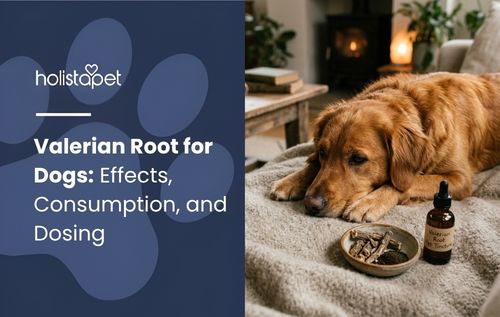
Many dogs struggle with anxiety during fireworks, car rides, vet visits, and other stressful situations. Valerian root for dogs may help promote calm and relaxation through natural calming effects, but proper dosage and safety matter.
Understanding how valerian works can help dog owners support a pet's well-being without unnecessary risks visit our dog owner guides for more natural wellness resources.
What is Valerian Root?
Valerian root comes from the plant Valeriana officinalis, a medicinal herb commonly used in herbal medicine and valerian supplements.
Researchers from the National Institutes of Health stated that valerian root may influence the nervous system by increasing gamma aminobutyric acid activity in the brain, which affects nerve transmissions linked to calmness and sedation.
The herb contains active ingredients such as valerenic acids and appears in tablets, capsules, teas, and other herbal supplement forms used by humans and dogs.
How Does Valerian Root Help Canines?
Valerian root may help dogs stay calmer during stressful situations, support relaxation, and encourage better sleep.
Supports a Calmer Stress Response
Valerian works through compounds that affect the nervous system.
Researchers Benke, Barberis, Kopp, Altmann, and Schubiger reported that valerenic acid can interact with GABA A receptors, which help quiet nerve activity in the brain. This may explain why valerian helps some dogs feel calmer during stressful events.
Helps During Noise Phobias
Dogs with noise phobias may bark, pace, or hide during fireworks and loud noises. A valerian root supplement may promote calm behavior without causing heavy sedation in small doses.
May Ease Travel Stress
Some dogs become anxious during car rides or before vet visits. Dog valerian root may help a furry friend relax and stay more comfortable in unfamiliar environments.
Encourages Better Rest
Stress and hyperactivity can make it difficult for dogs to fall asleep. Valerian supplements may support improved sleep and relaxation when anxiety keeps a pet restless at night.

Is Valerian Root Safe for Dogs?
Valerian root for dogs is generally safe in small doses when dog owners follow the recommended dose and use pet safe supplements. Still, overdosing can cause heavy sedation, stomach upset, restlessness, or hyperactivity.
Possible side effects include:
- Sleepiness
- Digestive issues
- Changes in behavior
- Negative reactions with other medications
Supporting your dog's digestive health with dog probiotic soft chews may help offset mild stomach upset sometimes associated with herbal supplements.
Valerian supplements may also interact with prescription medications, sedatives, and other drugs that affect the nervous system. A veterinarian should review the product label before valerian gets administered to a pet.
How Do I Dose Valerian Root for Dogs?
Valerian root dosage depends on a dog’s size, product strength, and overall health.
|
Dog Size |
Weight Range |
Suggested Starting Dosage |
Common Forms |
Notes |
|
Toy Breeds |
Under 10 lbs |
50 mg to 100 mg |
Tablets, powder |
Monitor closely for sedation |
|
Small Breeds |
10 to 25 lbs |
100 mg to 200 mg |
Capsules, food mix |
Use low dose first |
|
Medium Breeds |
26 to 50 lbs |
200 mg to 350 mg |
Valerian supplements |
May help during stressful events |
|
Large Breeds |
51 to 90 lbs |
350 mg to 500 mg |
Herbal supplement chews |
Avoid combining with sedative medication |
|
Giant Breeds |
Over 90 lbs |
500 mg to 1000 mg |
Root for dogs formulas |
Veterinary support recommended |
Check the product label carefully since active ingredients and concentration levels vary between supplements. Avoid products with artificial ingredients or herbs that may create interactions with other drugs.
When Should I Give Valerian Root to Dogs?

Give valerian root before predictable stressful events, not after anxiety peaks. A vet can help choose the safest timing and dose for your dog.
- Fireworks: Use before loud noises begin to support calm behavior.
- Vet visits: Give ahead of the appointment to ease stress.
- Car rides: Use before travel if your pup gets anxious on the road.
- Separation anxiety: Give before leaving the house if your dog struggles alone.
- Noise phobias: Use before storms, construction, or other stressful sounds.
- Sleep issues: Give near bedtime when anxiety makes it hard to fall asleep pairing it with a dog bedtime melatonin supplement may offer additional nighttime support.
- Stressful situations: Use before grooming, guests, boarding, or schedule changes.
How Do I Give Valerian Root to My Dog?
Dog owners can give valerian root through chews, capsules, powders, tinctures, or food mixes. The safest option depends on the dog’s size, preferences, and health needs.
The AKC: CBD Oil for Dogs — What You Need to Know and research via PubMed: Pharmacokinetics, Safety, and Clinical Efficacy of CBD in Dogs provide helpful context for dog owners exploring natural calming options alongside valerian.
Mix It With Food
Some dogs accept valerian more easily when mixed into wet food or soft treats.
- Sprinkle powder into meals
- Hide capsules in snacks
- Use small doses first
Use Chews or Tablets
Chews and tablets offer more consistent dosage control for dogs that need regular support during stressful situations.
Research published in Frontiers in Veterinary Science noted that flavored chew formats may improve supplement acceptance in companion animals because smell and taste strongly influence compliance.
Try Liquid Tinctures
Liquid herbal supplement formulas allow flexible dosing for toy and small breeds.
- Administered directly by dropper
- Mixed into food or water
- Easier to adjust dose gradually
Choose Pet Specific Products
Products made for humans may contain artificial ingredients or herbs that create interactions with other drugs. A veterinarian should always review the product label before use.
At HolistaPet, we offer pet focused options like a dog bedtime melatonin supplement, CBD treat variety for dogs, and CBD oil collection for dogs for dog owners looking for natural calming support.
Our formulas focus on simple ingredients and easy administration for pets during fireworks, separation anxiety, car rides, and other stressful events.
Frequently Asked Questions
Can valerian root make dogs too sleepy?
Yes, valerian can cause excessive sleepiness if the dose runs too high. Dog owners should start with a low dosage and monitor their pet’s behavior closely after administration.
How long does valerian root take to work in dogs?
Many dogs feel calming effects within 30 minutes to 2 hours. Timing may vary based on body size, food intake, metabolism, and the valerian root supplement used.
Can puppies take valerian root?
A veterinarian should evaluate puppies before valerian use. Younger dogs process herbal supplements differently, and incorrect dosing may increase safety risks.
Can dogs take valerian root every day?
Some dogs use valerian daily for ongoing anxiety support, but long term use still requires veterinary guidance. Regular monitoring helps reduce the risk of interactions or unwanted side effects. Dog owners who notice clingy or velcro behaviors alongside anxiety may also find our article on why pet follow me everywhere a helpful read.
What should dog owners avoid when buying valerian products?
Dog owners should avoid supplements with artificial ingredients, unclear dosage instructions, or added sedative compounds. Products designed specifically for pets usually offer clearer safety information on the product label.
Can valerian root affect a dog’s behavior?
Yes, valerian may change behavior in some dogs. While many pets relax, others may experience restlessness, hyperactivity, or unusual barking after taking the herb. If your dog shows excitable or reactive behaviors beyond anxiety, our guide on how to stop a dog from nipping may offer additional behavioral support tips.






Leave a comment
All comments are moderated before being published.
This site is protected by hCaptcha and the hCaptcha Privacy Policy and Terms of Service apply.