

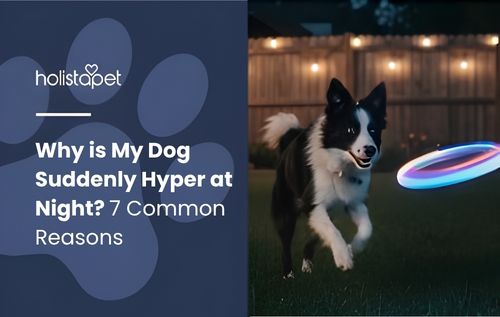
Sudden nighttime hyperactivity often signals unmet physical or mental needs earlier in the day. Many dog owners notice their furry friend pacing, zooming, or showing nighttime restlessness just when the house settles down.
This change can feel confusing, but it usually points to excess energy, disrupted sleep patterns, or rising nighttime anxiety that needs attention.
Why Does My Dog Get Hyper at Night?

A dog gets hyper at night due to excess energy, lack of stimulation, anxiety, or changes in routine or health. These factors build up during the day and surface once the environment becomes quiet.
1. Unused Energy Builds Up All Day
Dogs tend to release pent up energy when they lack adequate exercise. A restless dog often shows nighttime hyperactivity because the body still holds excessive energy.
High energy working breeds like Border Collies need structured outlets or they become hyper at night. Regular physical activity keeps energy levels balanced and supports calm behavior.
2. Lack of Mental Stimulation
Mental stimulation shapes a dog’s behavior. Without activities that challenge the mind, a dog suddenly hyper at night looks for ways to stay occupied. Puzzle toys, interactive toys, and short training sessions reduce boredom.
The American Kennel Club states that dogs without mental engagement often develop disruptive behaviors during quiet periods.
3. Disrupted Sleep Patterns
Dog sleep depends on a stable sleeping schedule. When a dog’s routine shifts, sleep patterns become inconsistent and lead to nighttime restlessness.
Many dog owners notice increased evening restlessness after changes in feeding schedules.
4. Frenetic Random Activity Periods
Many dogs experience bursts called frenetic random activity periods. These episodes often happen in the evening and involve sudden running or playful behavior.
This pattern reflects a natural release of energy, especially in dogs with more energy or limited daytime outlets.
5. Nighttime Anxiety or Environmental Triggers
Sudden nighttime anxiety can cause a dog suddenly anxious once the surroundings change. Noise sensitivity, sudden sounds, or shifts in the dog’s environment can trigger nighttime stress.
Dr. Karen Overall explains that unpredictable stimuli often increase dog anxiety during quiet hours.
6. Separation Anxiety at Night
Some dogs continue to seek attention when left alone at bedtime. Separation anxiety often causes excessive whining and pacing at bedtime.
Pet parents may notice the dog’s behavior escalate once the household becomes inactive. Consistent training and reliable pet care reduce this response over time.
Some owners also use comforting routines such as naming games and bonding activities inspired by adorably cute dog names to strengthen positive nighttime associations.
7. Medical or Age-Related Changes
Medical conditions can also explain why a dog suddenly shows nighttime hyperactivity. Urinary tract infections may cause discomfort and frequent movement. Older dogs may develop cognitive dysfunction, which resembles Alzheimer’s disease in humans.
Veterinary research shows that older pets often experience disrupted sleep cycles and increased nighttime anxiety. Veterinarians identify underlying health issues through medical evaluation.
How Do I Help My Dog Rest Better at Night?
A dog rests better at night when you meet their daily needs and the environment supports calm behavior. Focus on routine, stimulation, and comfort to reduce nighttime restlessness.
|
Area |
Focus |
Benefit |
|
Routine |
Consistent sleeping schedule |
Improves dog sleep |
|
Activity |
Physical and mental stimulation |
Reduces excess energy |
|
Environment |
Calm and quiet setup |
Supports restful night |
|
Anxiety Support |
Calming techniques |
Helps reduce anxiety |
|
Natural Aids |
CBD from HolistaPet |
CBD interacts with the endocannabinoid system in dogs, and some pet owners use it as part of routines it may interact with calm behavior. |
|
Health Check |
Veterinary evaluation |
Identifies health issues early |
Build a Consistent Routine
A stable dog’s routine supports better dog sleep and reduces nighttime anxiety. Most dogs respond well to predictability.
- Set fixed times for feeding, walks, and bedtime routine
- Keep the same sleeping schedule every day
- Ease into quiet activities before sleep
Increase Daily Physical and Mental Stimulation
A restless dog often needs more outlets during the day. Meeting physical and mental needs reduces excess energy at night.
- Add structured physical activity like walks or play sessions
- Use puzzle toys and interactive toys for mental stimulation
- Include short obedience training sessions
The American Kennel Club states that dogs with adequate exercise and mental stimulation show fewer behavior issues during nighttime hours.
Create a Calming Sleep Environment
A calm dog’s environment helps reduce nighttime stress and supports restorative sleep.
- Use a comfortable bed in a quiet area
- Add a night light for dogs with noise sensitivity or fear
- Play calming music or white noise to reduce sudden sounds
- Use pet safe calming scents
Address Anxiety and Stress Triggers
Dog anxiety often drives nighttime hyperactivity. Reducing triggers improves rest.
- Offer gentle petting or gentle strokes before sleep
- Use gentle massage to relax the body
- Limit exposure to sudden sounds
- Build a predictable wind down routine
Support Relaxation with Natural Options
Some pet parents use natural aids to reduce anxiety and support sleep.
- Research in Frontiers in Veterinary Science shows how CBD interacts with stress-related pathways in dogs, but outcomes can vary depending on the animal.
- Some pet owners use dog hemp oil tinctures, calming chews, or grain-free CBD dog treats that may support relaxation and help dogs settle at night.
- Some pet owners report that these products may support calmer behavior in dogs that experience nighttime restlessness or difficulty settling.
Consult a veterinarian before introducing supplements, especially for senior dogs or dogs with medical conditions.
Some pet owners also explore melatonin for dog anxiety as part of calming bedtime routines for restless dogs.
Digestive balance products such as natural probiotics for dogs may also support overall wellness and routine stability in some dogs.
Rule Out Medical Issues
Health issues can disrupt sleep and cause nighttime restlessness.
- Watch for excessive whining or frequent movement
- Check for urinary tract infections or other medical conditions
- Schedule a medical evaluation for sudden changes in dog’s behavior
Veterinary research shows that older dogs often develop cognitive dysfunction or cognitive decline, which affects sleep patterns.
When Do I Take My Dog to the Vet for Nocturnal Hyperactivity?

Take a dog to the vet for nocturnal hyperactivity when the behavior starts suddenly, intensifies, or shows signs of a medical issue. Sudden nighttime activity spikes can signal underlying health concerns that require attention.
Watch for clear warning signs:
- Excessive whining or persistent nighttime restlessness
- Frequent urination that may indicate urinary tract infections
- Disorientation, especially in senior dogs or older dogs
- Sudden nighttime anxiety with no obvious trigger
- Noticeable changes in appetite or energy levels
Act quickly in these situations:
- The dog suddenly shows new or unusual nighttime hyperactivity
- The behavior continues despite a consistent routine
- The dog’s restlessness disrupts sleep for both you and your furry friend
A medical evaluation helps identify medical conditions such as cognitive dysfunction or other health issues. Early action supports better outcomes and prevents worsening symptoms.
Owners of breeds with shorter average lifespans discussed in what dog has the shortest lifespan article may want to monitor sudden behavioral changes more closely as dogs age.
Help Your Dog Maintain Consistent Rest
Consistent rest starts with meeting your dog’s physical and mental needs while maintaining a stable routine and calm environment. Small daily adjustments help reduce nighttime stress and support better sleep for both you and your dog.
For additional behavior guidance, wellness support, and training strategies, explore our complete dog health and wellness resource library.
Frequently Asked Questions
Why is my dog suddenly hyper at night even after a long walk?
A long walk may not meet your dog’s mental stimulation needs. Many dogs still have pent up energy if activities lack variety or challenge. Add training sessions or puzzle toys to balance physical and mental stimulation.
Can certain dog breeds become more hyper at night?
Yes. High energy working breeds like Border Collies and similar dog breeds often show more energy during nighttime hours. These dogs need structured activity and engagement throughout the day.
Does my dog’s sleeping area affect nighttime behavior?
Yes. A poor dog’s environment can increase nighttime stress. Bright lights, noise, or uncomfortable bedding can disrupt dog sleep and lead to difficulty settling.
Can sudden sounds make my dog hyper at night?
Yes. Dogs with noise sensitivity often react to sudden sounds like traffic, fireworks, or household noise. These triggers can cause sudden nighttime anxiety and increase activity levels.
Do older dogs experience more nighttime restlessness?
Yes. Older dogs and senior dogs often show changes in sleep patterns due to cognitive decline. This can lead to confusion, pacing, or nighttime anxiety.
Can diet affect nighttime hyperactivity in dogs?
Yes. Feeding too close to bedtime or providing high energy food late in the day can increase energy levels. Adjust feeding times to support a calmer bedtime routine.
Is it normal for my dog to have bursts of energy before bed?
Yes. Many dogs experience short bursts of activity in the evening. These episodes, often called frenetic random activity periods, help release remaining energy before rest.








Leave a comment
All comments are moderated before being published.
This site is protected by hCaptcha and the hCaptcha Privacy Policy and Terms of Service apply.