

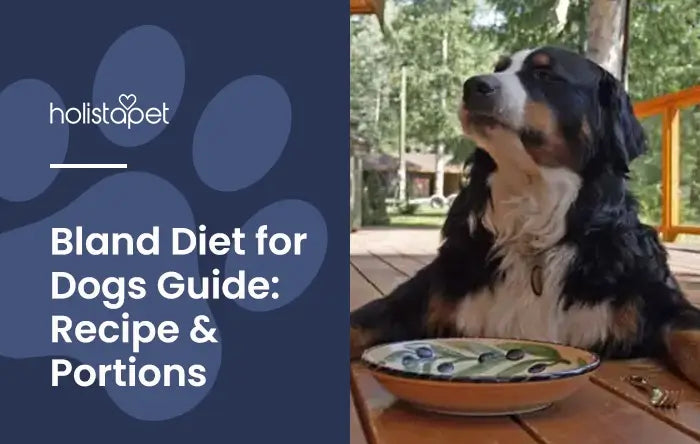
A bland diet for dogs is a short-term mix of white rice and lean protein. Tufts recommends 2 cups of cooked white rice to 1 cup of skinless chicken or turkey breast, with no seasoning, butter, or oil. Feeding this mix for a day or two causes no deficiencies, but feeding it for weeks can cause serious harm. Most dogs with a brief bout of vomiting or diarrhea can return to regular food after a few days.
Key points
- Go to an emergency vet now if your dog retches without bringing anything up, has a bloated or painful belly, pale gums, weakness, or collapses. These are signs of bloat, which Cornell describes as life-threatening.
- Any puppy or unvaccinated dog with vomiting and diarrhea needs a parvovirus test before starting a home diet, according to Cornell's parvovirus page.
- Leave out onion, garlic, and chives, which can cause stomach irritation and red blood cell damage, says the ASPCA.
- Call your vet if loose stool lasts more than two days. Also call if your dog stops eating, seems unusually tired, vomits, or has black, tarry, or bloody stool, as Cornell's diarrhea page advises.
- Reintroduce regular food gradually, over several days, as VCA Animal Hospitals advises.
What a bland diet for dogs is, and when vets still suggest it
A bland diet traditionally means feeding plain, home-cooked food, such as boiled chicken breast and white rice, for a few days after a mild stomach upset. Veterinary nutritionists writing for VCA Animal Hospitals say the term has fallen out of favor because it is vague. They also note that chicken and rice is no longer the best recommendation.

Your vet may instead recommend temporarily feeding a therapeutic diet designed for pets with digestive problems, according to Tufts' Petfoodology team. To understand how your dog's digestive system works, see the basics of a healthy dog gut.
Is chicken and rice good for a dog with an upset stomach?
It is a traditional choice for short-term feeding, though not the only option. Cornell's diarrhea page lists boiled chicken or low-fat hamburger with white rice, and names cooked pasta as another option. Tufts suggests baked chicken or turkey breast with white rice.
When should I put my dog on a bland diet?
Only for one mild bout of vomiting or loose stool in an adult dog that is alert and still drinking, with your vet's go-ahead. Check the warning signs in the next section first.
What veterinary nutritionists say:
- The term "bland diet" has fallen out of favor in veterinary medicine because it is vague (VCA).
- A day or two of chicken and rice will not cause deficiencies. However, feeding this unbalanced diet for weeks to months can cause serious harm (Tufts).
Before you start: water, fasting and when to call the vet
Check for warning signs first. Some need emergency care, while others need a call to your vet today. A home diet is suitable only for a mild upset in a dog that is otherwise well. Keep fresh water available, and ask your vet before withholding food.
Use this table to decide what to do before you cook anything.
| What you see | What to do |
|---|---|
| Retching with nothing coming up, heavy drooling, a bloated or painful belly, restlessness, pale gums, weakness or collapse | Go to an emergency vet now. These are signs of bloat (GDV), which is life-threatening and needs immediate treatment, according to Cornell's bloat page. |
| Vomit with blood or material that looks like coffee grounds; lethargy; vomiting for more than 24 hours; a painful belly; fever | Call your vet today, as Cornell's vomiting page advises. |
| Loose stool for more than two days; black or tarry stool; fresh blood; a dog that stops eating, is lethargic or also vomits | Call your vet today, as Cornell's diarrhea page advises. |
| A puppy or unvaccinated dog with vomiting and diarrhea | Call your vet today for a parvovirus test, before any home diet. Early treatment improves the chance of recovery, says Cornell's parvovirus page. |
| One mild bout of vomiting or loose stool in an adult dog that is bright and drinking | A bland diet may be fine, with your vet's OK. |
Can I give water to a dog with an upset stomach?
Yes. Keep fresh water available at all times, Cornell advises, and make sure your dog continues drinking, as VCA's nutritionists add. If your dog is vomiting, ask your vet how to offer water.
Should I starve my dog before a bland diet?
Not without veterinary advice. Ask your vet whether to withhold food and for how long, and keep fresh water available. Puppies, toy breeds, senior dogs, and dogs with health conditions can get worse more quickly. Call your vet sooner, and do not withhold their food without your vet's advice.
If the only sign is a noisy stomach, read about stomach gurgling that comes and goes.
Bland diet recipe: rice and chicken at 2 to 1
Mix 2 cups (about 300 g) of cooked white rice with 1 cup (about 150 g) of chopped baked chicken or turkey breast, as described by Tufts' Petfoodology team. Remove all skin and bones, and cook the meat with no seasoning, butter, or oil.
Ingredients
- 2 cups (about 300 g) of cooked white rice
-
1 cup (about 150 g) of chopped baked chicken or turkey breast, with skin and bones removed
Steps
- Remove all skin and bones from the chicken or turkey breast.
- Bake or boil the meat with no seasoning, butter, or oil.
- Cook the white rice in plain water.
- Chop the meat, then measure 1 cup of meat to 2 cups of rice.
-
Mix, let it cool, and refrigerate any portion you do not serve right away.
Prepare one day's amount at a time and keep it in the fridge.
What to leave out
Keep the mix plain. The ASPCA explains why most of the following ingredients should be left out:
- Onion, garlic, chives, and seasoning blends: Onion, garlic, and chives can cause stomach irritation and red blood cell damage. Use store-bought broth only if the label lists no onion or garlic.
- Milk, yogurt, and cheese: Dairy products can cause diarrhea or other digestive upset.
- Raw meat and raw eggs: These can carry Salmonella and E. coli.
-
Butter, oil, skin, and bones: Tufts' recipe calls for removing skin and bones and adding no butter or oil.
Is brown rice or white rice better for a bland diet?
Use white rice. Both Cornell and Tufts specify white rice in their bland diets.
Can I use ground beef instead of chicken?
Ask your vet first. Tufts warns that ground beef may be high in fat, regardless of how it is cooked, and can worsen some pets' upset stomachs. If your vet approves beef, use low-fat hamburger, the option Cornell lists. Otherwise, use chicken or turkey breast.
If you are considering other additions, read about adding plain canned pumpkin. Check with your vet before mixing anything else in.
What else can a dog eat on a bland diet?
A few other plain foods appear in veterinary guidance, but ask your vet before making substitutions. The VCA nutrition team considers therapeutic diets for digestive upset a much better option than chicken and rice. These diets are highly digestible, low in fat, and complete and balanced.
- Cooked pasta: Cornell lists it as another option in its bland diet.
- Cottage cheese: UC Davis's veterinary hospital lists cottage cheese and rice for dogs with a sudden digestive upset. However, dairy can cause diarrhea or other digestive upset in pets, the ASPCA notes. Use it only if your vet suggests it.
- Potato, sweet potato, oatmeal or egg: None of the veterinary pages cited here lists these foods, so check with your vet before using them.
Whatever you use, keep it low in fat. Fat slows food's movement out of the stomach and can worsen diarrhea during digestive upset, UC Davis explains. VCA also advises skipping table scraps and treats during recovery.
How much chicken and rice to feed a dog by weight
Base the daily amount on calories. The range is about 220 to 350 calories a day for a 10 lb dog, up to about 1,220 to 1,960 for a 100 lb dog. Your vet can tell you how many cups of the 2:1 mix provide that amount, or set an amount for a dog under 10 lb. Start at the lower number and divide the day's food into several small meals.
This table gives daily calorie estimates for common weights, based on the Merck Veterinary Manual's energy formulas.
| Dog weight | Calories per day (resting to maintenance) |
|---|---|
| 10 lb | 220 to 350 |
| 20 lb | 370 to 590 |
| 30 lb | 500 to 790 |
| 40 lb | 620 to 980 |
| 60 lb | 830 to 1,330 |
| 80 lb | 1,030 to 1,660 |
| 100 lb | 1,220 to 1,960 |
Where the numbers come from
Merck calculates resting energy needs by raising your dog's body weight in kilograms to the 0.75 power, then multiplying by 70. A neutered adult dog needs about 1.6 times that amount to maintain its weight; an intact dog needs about 1.8 times that amount. These formulas are only a starting point: a dog may need as much as 30% more or less.
Treat the numbers as estimates. Let your vet convert them into cups of the 2:1 mix and adjust the amount for your dog.
How many times a day should I feed a bland diet?
Offer several small meals rather than one or two large ones. Your vet can set the exact number. If your dog does not eat the amount your vet recommends, or its appetite or symptoms change, let your vet know. The VCA nutrition team advises reporting these changes.
How long should a dog stay on a bland diet?
For most dogs, a few days. Tufts' Petfoodology team notes that most pets with occasional, brief bouts of vomiting or diarrhea can then return to their regular food.
For an isolated case of vomiting, Cornell's vomiting page recommends feeding plain white rice and boiled chicken for two days. The VCA nutrition team notes that the duration depends on the cause and how quickly your dog recovers.

If loose stool lasts more than two days, call your vet, as Cornell's diarrhea page advises, rather than extending the bland diet. If your dog needs a special diet for longer, ask your vet for a nutritionally complete option, such as a therapeutic diet for digestive problems.
Can a dog stay on chicken and rice forever?
No. Chicken and rice alone are not a complete and balanced diet. Feeding this mix for weeks to months can cause serious harm, Tufts warns. Cornell agrees that these bland diets are not appropriate for long-term feeding.
How to switch back to regular food
Once your dog's stool and appetite are back to normal, reintroduce regular food gradually over several days, as VCA Animal Hospitals advises. This four-day plan is one way to do it; your vet can adjust it.
Use this schedule as a starting point.
| Day | Bland mix | Regular food |
|---|---|---|
| Day 1 | 75% | 25% |
| Day 2 | 50% | 50% |
| Day 3 | 25% | 75% |
| Day 4 | None | 100% |
If loose stool returns, go back one step for a day. If it returns again, or your dog vomits, call your vet. Cornell's diarrhea page advises calling when loose stool occurs with vomiting. Cornell's vomiting page advises calling for vomiting that lasts more than 24 hours.
After the bland diet: everyday digestive support
Once your dog is back on its regular food, return to its usual routine of meals, treats, and walks. Cornell's page on probiotics explains that probiotics support healthy gut bacteria that help digest food. Prebiotics are fiber that probiotics feed on.

A daily probiotic can be one part of a healthy dog's routine. HolistaPet offers Probiotics for Dogs, soft chews that come 30 to a bag. If you are considering adding one, learn more about Probiotics for Dogs from HolistaPet. Ask your vet whether a daily probiotic is suitable for your dog.
View more dog nutrition guides
Sources
- Tufts University Cummings School, Petfoodology (Deborah E. Linder, DVM, DACVIM-Nutrition). Does my pet need a bland diet? 2022.
- VCA Animal Hospitals (Canadian Academy of Veterinary Nutrition; Caitlin Grant, DVM, DVSc, Dip ECVCN). Nutrition for Dogs and Cats with Gastrointestinal Upset. 2024.
- Cornell University College of Veterinary Medicine, Riney Canine Health Center. Diarrhea. 2024.
- Cornell University College of Veterinary Medicine, Riney Canine Health Center. Vomiting. Undated.
- VCA Animal Hospitals. Vomiting in Dogs. 2026.
- Merck Veterinary Manual, Professional Version. Nutritional Requirements of Small Animals. 2024.
- ASPCA Animal Poison Control Center. People Foods to Avoid Feeding Your Pets. Undated.
- Cornell University College of Veterinary Medicine, Riney Canine Health Center. Parvovirus: transmission and treatment. 2024.
- Cornell University College of Veterinary Medicine, Riney Canine Health Center. Gastric Dilatation-Volvulus (GDV) or Bloat. 2025.
- Cornell University College of Veterinary Medicine, Riney Canine Health Center. The power of probiotics. Undated.
- UC Davis School of Veterinary Medicine, Veterinary Medical Teaching Hospital, Health Topics (Claire Youngerman). Nutritional Management of Gastrointestinal Disease. 2019.





Leave a comment
All comments are moderated before being published.
This site is protected by hCaptcha and the hCaptcha Privacy Policy and Terms of Service apply.