

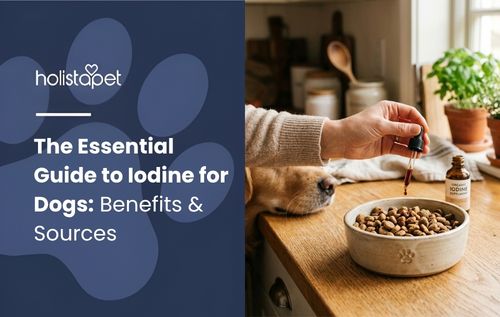
Iodine is an essential trace mineral that plays an important role in a dog’s overall health and well-being. It supports thyroid hormone production, which may help regulate metabolism, energy levels, and growth. While needed only in small amounts, both deficiency and excess can affect a dog’s well-being, making balanced intake important.
This guide explains what iodine does for dogs, the risks of both deficiency and excess, natural food sources, and how to ensure safe intake. For a broader overview of canine nutrition, explore these dog feeding tips from our nutrition blog.
What Is Iodine?
Iodine is a trace mineral required for the production of thyroid hormones, primarily thyroxine (T4) and triiodothyronine (T3), which regulate many bodily functions. These hormones may help regulate metabolism, energy use, and normal developmental processes in dogs.
Dogs obtain iodine through their diet, primarily from the following sources:
- Commercially formulated dog food
- Marine-based ingredients (such as kelp)
- Supplements (when recommended by a veterinarian)
Because the body does not store large amounts of iodine, consistent dietary intake is important. For more on how vitamins and minerals function in dogs, the VCA: Vitamins and Minerals for Dogs resource offers a useful reference.
The Importance of Iodine for Dogs

Iodine may help support thyroid function, which is involved in several key processes in a dog’s body, including:
- Metabolism regulation
- Energy production
- Growth and development
- Skin and coat maintenance
- Reproductive function
Maintaining appropriate iodine levels helps support overall physiological balance.
What Is Iodine Deficiency in Dogs?
Iodine deficiency occurs when dietary intake is too low to support normal thyroid hormone production.
Possible signs associated with deficiency may include:
- Weight gain
- Lethargy or low energy
- Hair thinning or hair loss
- Dry or dull coat
- Slower growth in puppies
Related thyroid condition:
-
Hypothyroidism – a condition where the thyroid gland produces insufficient hormones
Severe or prolonged deficiency may also contribute to thyroid enlargement (goiter). If iodine deficiency is suspected, veterinary evaluation is recommended for proper assessment and dietary guidance. The AKC: Does My Dog Need Vitamins? article provides additional context on when supplementation may be appropriate.
What Is Iodine Toxicity in Dogs?
While iodine is essential, excessive intake may also disrupt thyroid function.
Possible effects of excess iodine may include:
- Thyroid hormone imbalance
- Restlessness or increased activity
- Weight changes
- Increased appetite
In some cases, prolonged imbalance may contribute to conditions similar to hyperthyroidism, although this is less common in dogs than hypothyroidism.
Excess intake is often linked to over-supplementation rather than food sources alone. Veterinary guidance is recommended before adding iodine supplements.
How Does Iodine Benefit Dogs?
Iodine plays an important role in supporting multiple aspects of canine health. Learn these in more detail later, but here’s a brief overview of iodine’s potential benefits for dogs
- Thyroid Health and Metabolism
- Growth and Development
- Energy Balance
- Skin and Coat Health
- Reproductive Function
Thyroid Health and Metabolism
The thyroid gland requires iodine to produce thyroid hormones. These hormones are involved in regulating metabolic processes, including how the body uses energy from food. They may help support normal metabolic function and energy balance in dogs.
Thyroid hormones are also associated with weight regulation and overall energy levels. When iodine intake is insufficient over time, thyroid hormone production may be affected, which can be associated with conditions such as hypothyroidism.
Growth and Development
Thyroid hormones are involved in normal growth and developmental processes in dogs, particularly during early life stages. These hormones may help support bone development, muscle growth, and nervous system maturation.
In puppies, inadequate iodine intake over time may be associated with reduced thyroid hormone production, which can affect normal growth patterns. Balanced dietary iodine intake is important to support healthy development.
Energy Balance

Iodine plays a role in supporting normal thyroid hormone production, which is involved in metabolic activity and energy regulation. Adequate iodine intake may help support normal energy metabolism in dogs.
When iodine levels are balanced, thyroid function may help maintain steady energy utilization from nutrients consumed through diet. A probiotic supplement for dogs may also support nutrient absorption and digestive efficiency as part of a balanced routine.
Skin and Coat Health
Thyroid hormones are involved in supporting normal skin and coat maintenance, including hair follicle function and skin cell turnover. Adequate iodine intake may help support normal thyroid function, which in turn may contribute to healthy skin and coat condition.
When iodine intake is insufficient, dogs may show changes in coat appearance such as dryness or reduced coat quality. Some pet owners complement mineral support with vet-approved dog treats with CBD to help maintain overall skin and coat comfort. These effects may be associated with underlying thyroid imbalance.
Reproductive Function
Iodine is required for normal thyroid hormone production, and thyroid hormones are involved in endocrine system function, including reproductive processes in dogs.
Maintaining adequate iodine intake may help support normal thyroid function, which may also contribute to normal reproductive health. However, reproductive function in dogs is influenced by multiple factors beyond iodine intake alone.
May Help Support Certain Aspects of Health
Iodine is an essential nutrient required for normal thyroid hormone production in dogs. Adequate dietary iodine intake may help support normal thyroid function and metabolic processes.
Both insufficient and excessive iodine intake may affect thyroid balance. For this reason, maintaining appropriate iodine levels as part of a complete and balanced diet may help support overall health.
How Do I Make Sure My Dog Gets Enough Iodine?
When caring for dogs, diet should be at the top of every dog owner's priority list. What you feed your canine buddy not only satisfies their tummies but also supports their health. Here are three key ways pets can receive adequate iodine in their diets.
- Commercial Dog Foods. may provide iodine when it is properly formulated to meet nutritional requirements.
- Natural Sources. You can find naturally occurring iodine in sea vegetables, such as kelp. These are rich in the essential mineral and can be a great addition to your pup's diet. Understanding the benefits of using digestive supplements alongside mineral-rich foods can also help maximize nutrient uptake.
- Supplements With Iodine. Iodine-containing supplements may be used to help support dietary iodine intake when recommended by a veterinarian.
HolistaPet Products and Iodine Support

HolistaPet supplements are formulated with naturally derived ingredients and are intended to complement a balanced canine diet.
- Best multivitamin for dogs — HolistaPet's Multivitamin Soft Chews contain a blend of vitamins and minerals, including kelp-derived ingredients that naturally contain iodine. It may help support general nutritional balance in dogs as part of their overall diet.
- HolistaPet Fresh Breath Soft Chews for Dogs. This supplement is designed to support oral freshness and general wellness. It includes ingredients such as kelp powder, which naturally contains iodine, and may help support normal thyroid function when used as part of a balanced diet.
- It is recommended to consult a veterinarian before introducing any supplement, especially when managing dietary iodine intake, as both deficiency and excess may affect thyroid health.
How Do I Choose the Best Source of Iodine for My Dog?
Choosing an appropriate iodine source for dogs depends on individual dietary needs and overall nutrition plan.
- Commercial dog food may already provide iodine when formulated to meet complete and balanced nutritional standards.
- Natural food sources such as sea vegetables may contain iodine and can be included as part of a balanced diet when appropriate.
- Supplements containing iodine may be considered when recommended by a veterinarian based on individual dietary assessment.
Final Thoughts
The article is structurally solid and covers the topic of iodine in dogs in a logical, SEO-friendly way. It has clear headings, relevant subtopics, and generally aligns well with search intent. From a content organization standpoint, it performs well and would be easy for readers to manage. Pet owners exploring complementary wellness options may also want to learn can dogs have chamomile tea as part of a broader natural health routine, or consider a THC-free oil for dogs to support everyday balance alongside proper mineral nutrition.







Leave a comment
All comments are moderated before being published.
This site is protected by hCaptcha and the hCaptcha Privacy Policy and Terms of Service apply.