

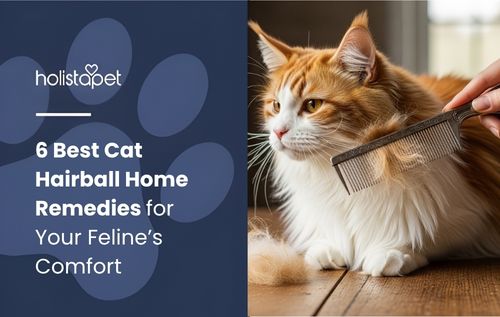
Hairballs can disrupt a cat’s comfort fast. When a cat grooms, it swallows loose hair that can build up in the cat's digestive tract and cause vomiting or discomfort.
Simple cat hairball home remedies can help move hair through the digestive system and keep a cat feeling better — browse more cat home remedy guides for related feline health topics.
What are Hairballs?
Hairballs form when a cat swallows loose hair during grooming, and the hair accumulates in the stomach instead of passing naturally through digestion. This mass of swallowed hair can clump together inside the cat's digestive system and later get expelled through vomiting.
Most hairballs pass without issue, but frequent buildup can affect cat health and signal problems in the digestive system.
Are Hairballs Bad for Cats?
Hairballs can affect cat health when they occur often or fail to pass through the intestinal tract. The Cornell Feline Health Center states that occasional hairballs are normal, but frequent vomiting, loss of appetite, or constipation can point to issues in the gastrointestinal system.
Research published in the Journal of Feline Medicine and Surgery notes that a mass trapped in the digestive tract can lead to blockage, which requires a veterinarian immediately. Older cats and long haired breeds face a higher risk due to slower digestion and increased loose hair intake.

Why Do Cats Get Hairballs?
Cats get hairballs because a cat grooms often and swallows loose hair that the digestive system cannot fully break down.
- Self grooming habits: A cat licks its coats daily, which leads to swallowed hair buildup.
- Excess loose hair: Shedding increases dead hair intake, especially in long haired breeds like maine coons.
- Digestive limits: The cat's digestive tract cannot move all hair smoothly through the intestinal tract.
- Lack of fiber in food: Low fiber reduces the ability to pass hair through the digestive system.
- Seasonal shedding: More fur loss means more hair enters the cat's stomach.
- Age factors: Older cats groom more and process hair slower than young cats and kittens.

What are the Best Cat Hairball Remedies?
Simple remedies can help move swallowed hair through the digestive tract and reduce hairballs quickly.
|
Remedy |
How It Works |
Recommended Amount |
Best For |
|
Canned pumpkin |
Adds fiber to move hair through digestive tract |
One teaspoon daily |
Mild hairballs |
|
Olive oil |
Oil lubricates the system to pass hair |
Small weekly amount |
Occasional issues |
|
Daily brushing |
Removes loose hair before ingestion |
Daily routine |
Prevention |
|
Wet food |
Supports hydration and digestion |
Regular feeding |
Constipation risk |
|
CBD products |
Supports calm and reduces overgrooming |
Follow product guide |
Stress related grooming |
|
Hairball formula food |
Increases fiber intake |
Daily diet |
Frequent hairballs |
1. Increase Fiber in Cat Food
Fiber helps push hair through the intestinal tract and improves digestion.
- Add canned pumpkin to food. Start with one teaspoon mixed into meals.
- Choose hairball formula food. These options contain more fiber to support the digestive system.
- Research from the Journal of Animal Physiology found that fiber rich diets improved hair passage and reduced symptoms in cats.
2. Use Natural Oils for Lubrication
Oil lubricates the digestive tract so hairballs pass more easily.
- Add olive oil in small amounts. Use about one teaspoon once or twice weekly.
- Use petroleum jelly sparingly with guidance from a veterinarian.
- Veterinary sources explain that lubrication helps move mass trapped in the cat's stomach through the system.
3. Daily Brushing to Remove Loose Hair
Remove loose hair before a cat licks and swallows it.
- Brush coats daily to reduce dead hair and shedding — the VCA: Grooming in Cats outlines effective techniques for managing loose fur at home.
- Focus on long haired cats like Maine Coons since they shed more.
- Veterinary guidelines identify grooming as a key method to prevent hairballs.

4. Improve Hydration and Diet Balance
Water supports digestion and helps hairballs pass smoothly.
- Feed wet food instead of relying only on dry food.
- Encourage water intake to support digestive fluids and reduce constipation.
- Experts highlight hydration as essential for proper digestion and hairball prevention.
5. Try CBD and Natural Supplements
Vet-formulated options like best CBD oil for cats or broad spectrum oil drops for cats are designed with standardized dosing and may support stress-related overgrooming behaviors and general feline comfort. These formulations typically include broad-spectrum hemp extract and naturally occurring cannabinoids, which may support stress-related overgrooming behaviors and general feline comfort.
Pet owners looking for an easy-to-administer option may also find CBD treats for cats a practical addition to a daily grooming and wellness routine.
6. Use Specialized Hairball Products
Targeted products support the cat's digestive system directly.
- Hairball remedy gels help pass hair through the gastrointestinal system.
- Fiber supplements support digestion and reduce hairballs.
- Hairball formula food supports long term hairball prevention.
When Do We Visit the Vet for My Cat’s Hairballs?
Visit a veterinarian immediately when hairballs do not pass or when clear warning signs appear. These include frequent vomiting, loss of appetite, constipation, lethargy, or signs of a blockage in the gastrointestinal system.
The American Veterinary Medical Association states that repeated symptoms can signal an issue in the cat's digestive system that needs medical care. Seek a vet if a cat struggles to pass hair, produces bile without a hairball, or shows changes in normal behavior, since these can point to a serious problem in the digestive tract.
Don’t Normalize Hairballs in Cats
Hairballs should not become part of a cat’s normal life. Frequent symptoms signal issues in the digestive system that need attention.
Use proper care, diet, and grooming to reduce hairballs and protect long term cat health.
Frequently Asked Questions
How often should a cat have hairballs?
A healthy cat should only produce hairballs occasionally. Frequent episodes can signal issues in the digestive tract and require a vet check.
Can hairballs cause serious blockage?
Yes. A mass trapped in the intestinal tract can cause a blockage, which needs a veterinarian immediately to prevent severe complications.
Do certain breeds get more hairballs?
Long haired breeds like maine coons face a higher risk due to thicker coats and more loose hair during self grooming — cats that also suffer from feline ear infection or ear mites 2 may groom more intensely, further increasing swallowed hair intake.
Can kittens get hairballs?
Kittens can develop hairballs, but it happens less often since young cats groom less than older cats.
Does dry food increase hairballs?
Dry food alone may not support enough fiber or hydration. A balanced mix with wet food and added fiber can help reduce hairballs.
Can a cat stop eating because of hairballs?
Yes. A cat may lose appetite if hair builds up in the stomach or causes discomfort in the digestive system.
Do hairballs affect a cat’s life long term?
Frequent hairballs can affect cat health over time by disrupting digestion and causing repeated irritation in the gastrointestinal system.





Leave a comment
All comments are moderated before being published.
This site is protected by hCaptcha and the hCaptcha Privacy Policy and Terms of Service apply.