



Dry heaving in dogs happens when a dog tries to vomit but nothing comes out. Several issues can trigger it, including stomach irritation, throat problems, eating too fast, or more serious conditions.
Understanding the common causes helps dog owners respond quickly and know when veterinary care is necessary.
Key Takeaways
- Dry heaving happens when a dog tries to vomit, but nothing comes out.
- Common causes include fast eating, stomach irritation, respiratory illness, and foreign objects.
- Learn how to tell dry heaving apart from vomiting, coughing, gagging, and reverse sneezing.
- Mild cases may improve with home care, but ongoing symptoms need veterinary evaluation.
- A swollen abdomen, repeated unproductive retching, or breathing problems require emergency care right away.
- Simple feeding changes and digestive support may help reduce occasional episodes in some dogs.
Why Do Dogs Dry Heave?

Dogs dry heave when the body tries to vomit, but nothing comes up. This natural gag reflex often starts because of irritation in the stomach, throat, or airways. Some cases improve on their own, while others point to serious health concerns that require veterinary intervention.
WARNING: Dry heaving with a swollen, tight, or painful abdomen may signal gastric dilation volvulus bloat, a life threatening condition that needs immediate treatment. This emergency can quickly cut off blood flow to vital organs and worsen within hours. Contact the nearest emergency veterinarian right away if these signs appear.
1. Eating Too Fast
Dogs that eat too quickly often swallow excess air, which can irritate the stomach and trigger dry heaving.
- Swallowed air builds pressure in the stomach.
- The body retches to relieve the discomfort.
- Slow feeder bowls can help reduce fast eating.
2. Minor Stomach Irritation
An upset stomach can trigger retching even when nothing remains to vomit.
- Grass, spoiled food, or unfamiliar items can irritate the stomach.
- The body reacts by trying to clear the irritation.
- Some dogs begin dry heaving for a short time before the stomach settles.
The American Kennel Club notes that mild digestive irritation can cause temporary gagging or retching in dogs.
3. Hair, Grass, or Debris in the Throat
Small materials can become stuck in their throat and trigger repeated gagging.
- Grass, fur, or debris can irritate the throat.
- A foreign object caught near the back of the throat may trigger repeated retching.
- Dogs may swallow often or cough.
4. Post Exercise Retching
Intense activity can cause brief dry heaving after exercise.
- Heavy panting increases air intake.
- Extra air creates stomach pressure.
- Symptoms usually stop after a short period of rest.
5. Kennel Cough
Kennel cough is a highly contagious respiratory infection that often causes a loud honking cough followed by gagging.
- Coughing fits may lead to retching and dry heaving.
- Contact with infected dogs increases the risk.
- Other respiratory infections, including tonsillitis sore throat conditions, can cause similar symptoms.
The American Veterinary Medical Association explains that kennel cough commonly causes a dry cough followed by gagging or retching.
6. Bloat
Gastric dilation volvulus bloat is a life threatening emergency that needs immediate care.
- The stomach fills with gas and twists.
- Dogs dry heaving repeatedly without producing vomit is an early warning sign.
- The abdomen often becomes swollen and firm.
7. Foreign Object Obstruction
A swallowed item can create a partial obstruction or a complete blockage in the digestive tract.
- A foreign object lodged in the throat or stomach can trigger repeated retching.
- A foreign object lodged or partially obstructing your dog's digestive tract can prevent food and fluids from passing normally.
- Dogs may drool, refuse food, or show signs of pain.
8. Respiratory or Heart Disease
Some medical conditions affect breathing and trigger coughing that leads to dry heaving.
- Diseases affecting the lungs or dog's heart can cause repeated coughing.
- Poor circulation may interfere with preventing blood from reaching the body efficiently.
- Breathing may become difficult as the condition worsens.
Veterinary experts at Cornell University explain that some heart and lung diseases can trigger coughing followed by gagging or retching.
Related Post: Why Is My Dog Coughing?
How to Identify Canine Dry Heaving?
Dry heaving can look similar to other common behaviors, but each has distinct signs.
|
Behavior |
What It Looks Like |
Common Cause |
Material Comes Out? |
|---|---|---|---|
|
Dry heaving |
Repeated retching with stomach contractions but no vomit |
Stomach irritation, throat irritation, gastric dilation volvulus bloat, or a foreign object lodged |
No |
|
Vomiting |
Forceful stomach contractions followed by food, liquid, or foam |
Digestive upset, toxins, infection, or other illnesses |
Yes |
|
Coughing |
Repeated hacking or a loud honking cough without abdominal retching |
Respiratory infections, kennel cough, heart disease, or airway irritation |
No |
|
Gagging |
Sudden choking motion or attempts to clear the throat |
Hair, grass, mucus, or a foreign object caught in the throat |
Usually no |
|
Reverse sneezing |
Rapid snorting while extending the neck and pulling air inward |
Nasal or throat irritation, excitement, or allergies |
No |
What to Do If Your Dog is Dry Heaving?
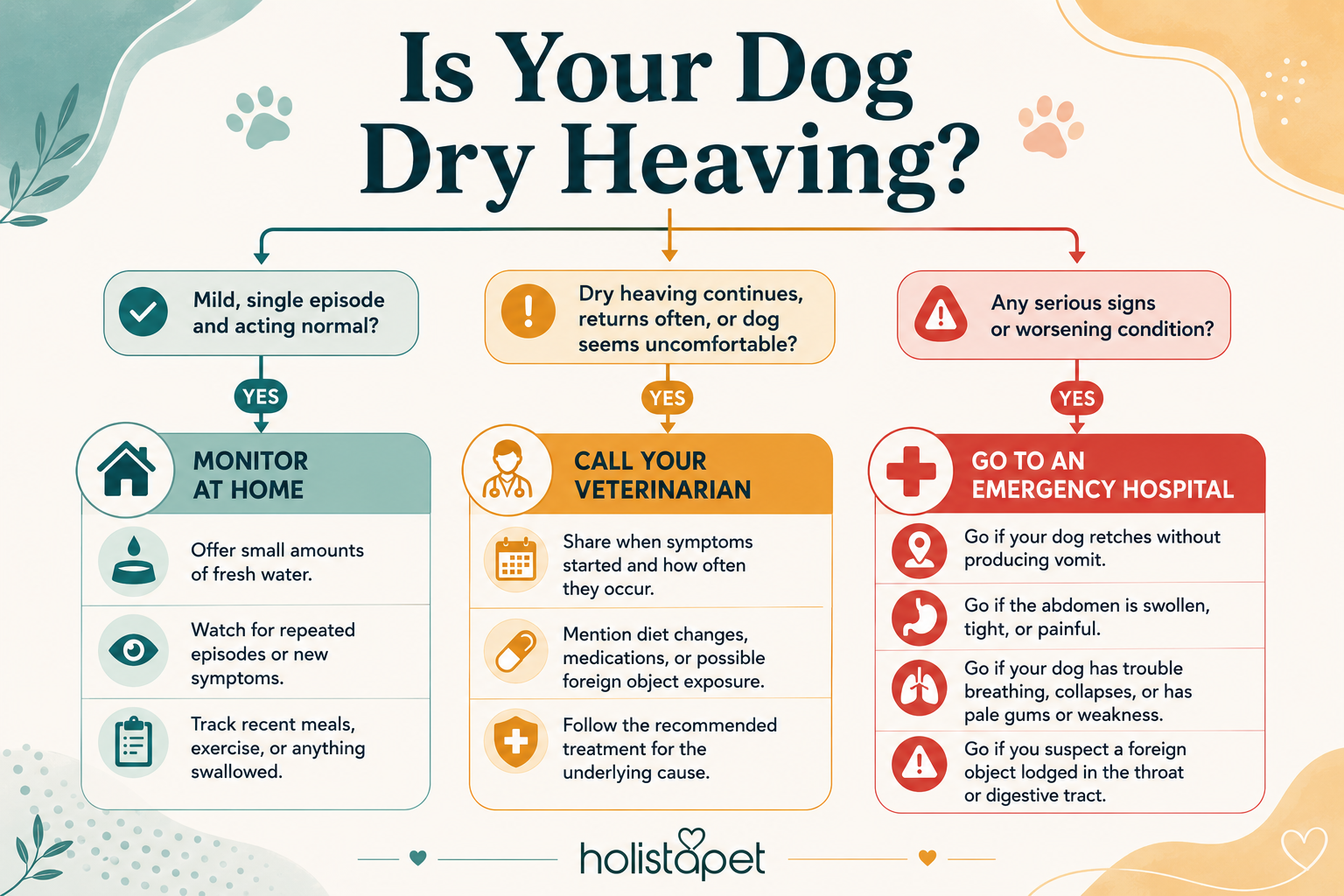
Stay calm and check your dog for other symptoms first. A single brief episode may only need monitoring, but repeated dry heaving can signal a problem that needs veterinary attention.
Monitor Your Dog at Home
A brief episode that stops on its own may only need close observation if your dog continues to eat, drink, and behave normally.
- Offer small amounts of fresh water.
- Watch for repeated episodes or new symptoms.
- Keep track of recent meals, exercise, or anything your dog may have swallowed.
Call Your Veterinarian
Contact your veterinarian if dry heaving continues, returns often, or your dog seems uncomfortable.
- Explain when the symptoms started and how frequently they occur.
- Mention any recent diet changes, medications, or possible foreign object exposure.
- Follow the recommended treatment for dogs suffering from the underlying condition.
Go to an Emergency Hospital
Seek immediate care if dry heaving occurs with other serious symptoms.
- Go to the nearest emergency veterinarian if your dog keeps retching without producing vomit.
- Seek emergency care if the abdomen becomes swollen, tight, or painful.
- Do not delay if your dog has trouble breathing, collapses, or shows extreme signs such as pale gums or severe weakness.
- Get immediate help if you suspect a foreign object lodged in the throat or digestive tract.
What are the Common Tests for Canine Dry Heaving?

Veterinarians run several diagnostic tests to identify the cause of dry heaving. The exam usually starts with a physical check and medical history, followed by lab tests or imaging if symptoms continue or worsen.
|
Test |
What the Vet Checks |
Why It Helps |
|
Physical Examination |
Heart, lungs, throat, abdomen, hydration, and vital signs |
Detects swelling, breathing issues, throat irritation, or abdominal pain that may trigger dry heaving |
|
Blood Tests (CBC and Chemistry Panel) |
Infection markers, organ function, inflammation, and electrolyte levels |
Identifies infections, pancreatitis, toxin exposure, or metabolic issues |
|
X Rays (Radiographs) |
Chest, stomach, lungs, and digestive organs |
Helps detect bloat, foreign objects, pneumonia, or airway problems |
|
Ultrasound |
Internal organs such as the stomach, liver, and intestines |
Provides detailed images to identify blockages, fluid buildup, or organ abnormalities |
|
Tracheal Wash or Airway Sampling |
Mucus and cell samples from the airways |
Detects respiratory infections, inflammation, or certain diseases affecting breathing |
|
PCR or Pathogen Testing |
Specific viruses or bacteria |
Confirms infections such as Bordetella linked to kennel cough |
|
Endoscopy |
Camera inserted into the throat or stomach |
Allows vets to locate foreign objects, irritation, or structural problems |
How Can I Help My Dog’s Dry Heaving at Home?

Mild dry heaving sometimes improves with simple care at home. Focus on reducing stomach irritation, slowing eating, and monitoring symptoms.
Let the Stomach Settle
A short break from food can calm stomach irritation.
- Pause food for 8 to 12 hours if the dog recently retched
- Offer small amounts of fresh water to prevent dehydration
- Reintroduce food in small portions
The American Kennel Club notes that short fasting periods often help dogs recover from mild digestive upset.
Feed Small and Slow Meals
Fast eating often leads to swallowed air, which can increase stomach pressure and trigger dry heaving. Controlled feeding reduces swallowed air and digestive strain.
- Serve smaller meals more frequently
- Use a slow feeder bowl to reduce gulping
- Avoid fatty foods and table scraps that may upset digestion
Supporting digestive health may also help some dogs with occasional stomach sensitivity. Holistapet's Probiotics for Dogs contain beneficial probiotics and digestive enzymes that promote healthy digestion and a balanced gut. They work best as part of a consistent feeding routine and do not replace veterinary care for ongoing or severe symptoms.
Keep the Dog Calm and Rested
Rest helps the stomach and respiratory system recover.
- Provide a quiet resting area
- Limit intense activity
- Avoid exercise after meals
Check the Mouth and Throat
Grass or small debris can trigger gagging.
- Look for grass, sticks, or foreign material
- Watch for repeated swallowing
- Remove visible debris carefully if safe
Persistent gagging still requires veterinary evaluation.
Monitor Symptoms
Observation helps identify when a problem needs medical care.
- Track how often dry heaving occurs
- Watch for coughing, swelling, or lethargy
- Monitor appetite and water intake
Contact a veterinarian if symptoms continue or worsen.
Frequently Asked Questions
Can dehydration cause dry heaving in dogs?
Yes. Dehydration can irritate the dog's throat and stomach, which may trigger gagging or dry heaving. When a dog's stomach fills unevenly or lacks proper fluids, it can lead to repeated gagging. Dogs suffering from fluid loss due to vomiting or diarrhea need attention, especially if other symptoms appear. Contact your vet if the pet's condition does not improve.
Can anxiety trigger dry heaving in dogs?
Yes. Anxiety can upset digestion and affect the dog's airway, which may lead to gagging or dry heaving. Stressful situations can trigger a dry heaving cough or repeated gagging. If the dog keeps dry heaving during specific events, paying attention to triggers can help guide appropriate treatment.
Do certain dog breeds dry heave more often?
Yes. Some breeds face a higher risk due to body structure. Large deep chested dogs may develop bloat gastric dilation volvulus, a very serious condition where the stomach flips and causes increasing pressure. This complex medical condition occurs quickly and can block blood flow. It requires emergency veterinary care at the nearest emergency vet.
Can allergies cause dry heaving in dogs?
Yes. Allergies can irritate the dog's throat and airways, leading to gagging or dry heaving. Signs may include nasal discharge, runny nose, or a sore throat. In some cases, a throat infection or swollen tonsils can develop. Dogs suffering from these issues may need oral antibiotics or anti inflammatory drugs as part of treatment.
Is dry heaving after drinking water normal for dogs?
Yes, in some cases. Drinking too fast can cause air intake that leads to gagging or dry heaving. Occasional episodes may pass quickly, but repeated gagging or other concerning symptoms should be considered urgent. Seek veterinary intervention for an accurate diagnosis if the issue continues.
Deal with Dog Dry Heaving the Right Way
Dry heaving in dogs can result from minor stomach irritation, fast eating, or more serious health conditions. Quick observation and simple care may help in mild cases. Persistent retching or additional symptoms require veterinary attention to prevent complications.








1 comment
Vicki
Thank you the advice given has been very helpful to help my very muched love dog Penny
Leave a comment
All comments are moderated before being published.
This site is protected by hCaptcha and the hCaptcha Privacy Policy and Terms of Service apply.