



A dog’s cough often points to an underlying issue that needs attention. Causes range from mild irritation and kennel cough to serious conditions like heart disease or lung disease.
Watch how the coughing started and look for changes in the dog's symptoms. Early action can make all the difference.
Key Takeaways
- A dog's cough can range from a minor irritation to a sign of a more serious health condition.
- The sound of the cough and any accompanying symptoms can help narrow down the possible cause.
- Kennel cough is one of the most common causes and spreads easily between dogs.
- Supportive home care may improve comfort, but some symptoms require prompt veterinary attention.
- Recognizing warning signs early helps protect your dog's respiratory health and recovery.
Is Dog Coughing Normal?

A dog’s cough can be normal in rare cases, such as occasional coughing from minor irritation or brief reverse sneezing. However, coughing frequently or showing other symptoms like breathing difficulties, nasal discharge, or low energy is not part of normal behavior.
Persistent coughing often signals an underlying respiratory condition or infection that needs veterinary attention.
What are the Common Dog Cough Sounds?
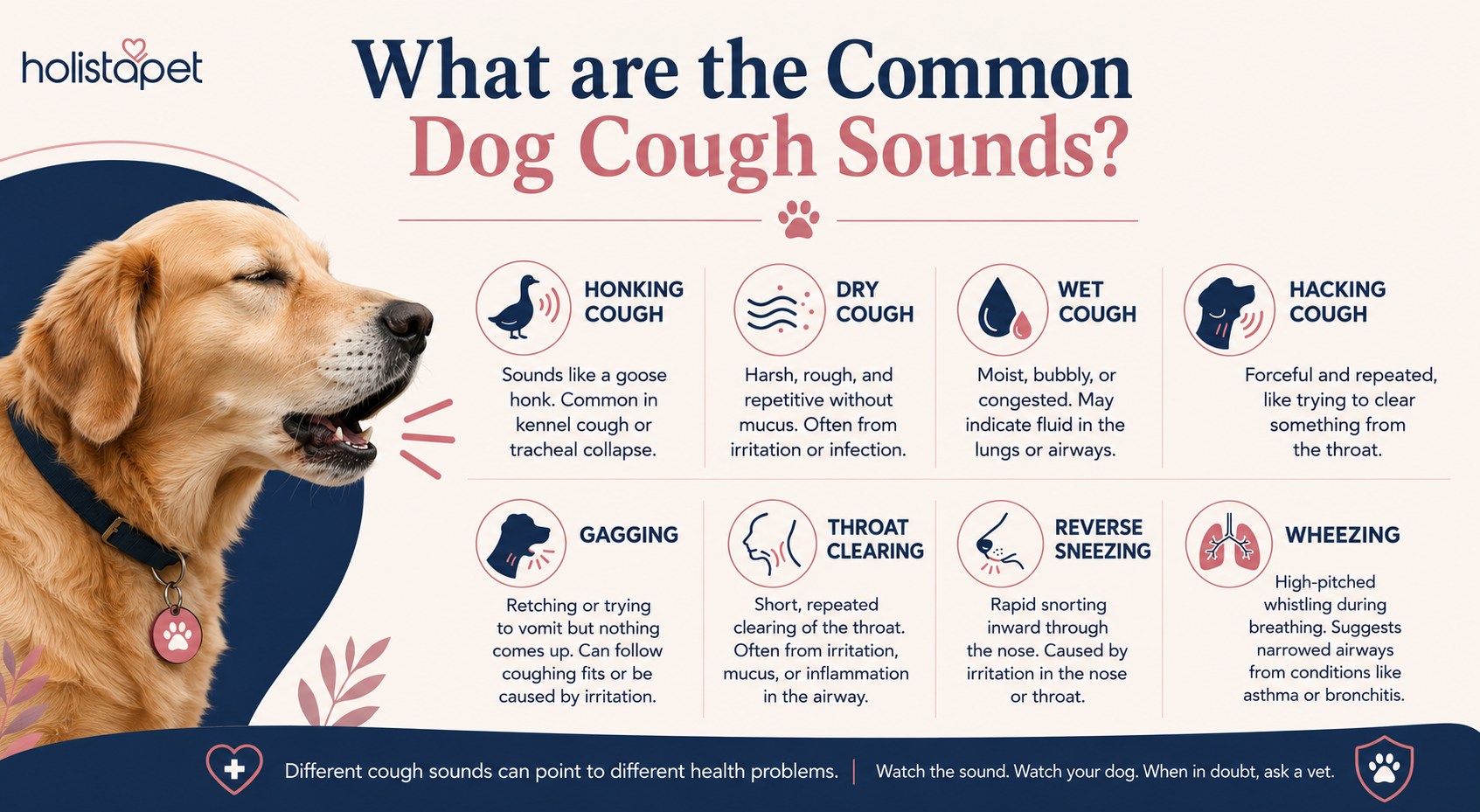
Dog coughs can sound different depending on the underlying cause. Listening to the sound can help identify the problem and determine how urgently a dog needs veterinary care.
- Honking cough: Sounds like a goose honk. This pattern often points to kennel cough or tracheal collapse, especially in small breeds.
- Dry cough: Sounds harsh, rough, and repetitive without producing mucus. It commonly occurs with kennel cough, chronic bronchitis, or airway irritation.
- Wet cough: Sounds moist, bubbly, or congested because fluid or mucus is present in the airways. It may indicate pneumonia, lung disease, or heart related conditions.
- Hacking cough: Sounds forceful and repeated, as if the dog is trying to clear something from the throat. It often develops from respiratory infections or airway irritation.
- Gagging: Sounds like retching or an attempt to vomit but nothing comes up. It can happen after coughing fits, throat irritation, or a foreign object stuck in the airway.
- Throat clearing: Sounds like a short, repeated clearing of the throat. It often results from mild irritation, mucus buildup, or inflammation in the upper airway.
- Reverse sneezing: Sounds like rapid snorting while the dog pulls air inward through the nose. Although it can resemble coughing, it usually comes from irritation in the nose or throat instead of the lungs.
- Wheezing: Sounds like a high pitched whistling during breathing. This pattern suggests narrowed airways and can occur with asthma like conditions, bronchitis, or allergic reactions.
Related Post: Why is My Dog Dry Heaving? Common Reasons and Solutions
Why is My Dog Coughing?
Dogs cough when something irritates the respiratory tract or affects breathing. The cause can range from mild issues to serious disease, so identifying the trigger matters.
1. Kennel Cough and Respiratory Infections
A common cause of coughing comes from infections that spread through close contact with other dogs, especially in dog parks.
- Often produces a dry cough or honking cough
- May sound like a goose honk or hacking cough
- Linked to bacterial infection such as Bordetella bronchiseptica, according to the American Veterinary Medical Association
- Can include nasal discharge and other symptoms
2. Tracheal Collapse in Small Breeds
Small dogs like Yorkshire Terriers face a higher risk of a collapsing trachea that affects the dog’s airway.
- Causes a harsh dog’s cough that resembles a honking cough
- Triggered by excitement, pressure on the dog’s throat, or exercise
- More common in small breeds and senior dogs
- May lead to breathing difficulties in severe cases
3. Heart Disease and Heartworm Disease
Heart related conditions can affect the dog’s lungs and lead to chronic cough.
- Fluid buildup in the dog’s chest can trigger persistent coughing
- Mosquito bites can spread heartworm disease, as noted by the American Heartworm Society
- Signs may include exercise intolerance, rapid breathing, and low energy
- More common in older dogs
4. Foreign Objects or Airway Irritation
Dogs often learn with their mouths, which increases the risk of foreign objects stuck in the respiratory tract.
- Sudden coughing started after chewing or playing
- May involve gagging or signs of respiratory distress
- Cigarette smoke and environmental triggers can also irritate the dog’s airway
- Usually linked to minor irritation but can become serious
5. Chronic Bronchitis and Lung Disease
Long term inflammation in the respiratory tract can lead to a chronic cough.
- Causes coughing frequently with a dry cough pattern
- Seen more in older dogs or those with weakened immune systems
- Research published in the Journal of Veterinary Internal Medicine links chronic bronchitis to ongoing airway inflammation
- May progress to breathing difficulties or labored breathing
6. Secondary Infections and Underlying Conditions
Some dogs develop a cough due to an underlying respiratory condition that worsens over time.
- Secondary infections can follow untreated respiratory infections
- Symptoms may include weight loss, low energy, and persistent coughing
- Can affect the dog’s breathing and overall health
- Needs proper diagnosis to identify the underlying cause, particularly in dogs with compromised immunity
Why is Kennel Cough Concerning for Dogs?
Kennel cough spreads quickly among dogs and can lead to more serious respiratory symptoms, especially in puppies, senior dogs, and those with weakened immune systems.
According to the Merck Veterinary Manual, kennel cough is part of canine infectious respiratory disease complex, which involves several bacteria and viruses, including canine influenza. The infection spreads easily in boarding facilities, dog parks, and other places where dogs gather.
What Causes Kennel Cough?
Kennel cough develops when bacteria, viruses, or both infect a dog's upper respiratory tract. These germs spread easily in places where dogs spend time together.
- Bordetella bronchiseptica: The most common bacterial cause of kennel cough.
- Canine parainfluenza virus: A virus that damages the airways and increases the risk of infection.
- Canine influenza: A contagious virus that can cause coughing, fever, and other respiratory symptoms.
- Canine adenovirus type 2: A virus that affects the respiratory tract and contributes to infectious tracheobronchitis.
- Close contact with infected dogs: Direct contact or shared water bowls, toys, and bedding can spread the infection.
- Boarding facilities and dog parks: Crowded environments increase exposure to infectious diseases.
- Stress or a weakened immune system: Reduced immunity makes dogs more vulnerable to developing kennel cough after exposure.
How Contagious is Kennel Cough?
Kennel cough is highly contagious and spreads through respiratory droplets, direct contact, and shared items such as food bowls, toys, and bedding. Dogs with suspected or confirmed kennel cough should stay isolated from other dogs until a veterinarian confirms they are no longer contagious.
Isolation helps reduce the spread of infection in homes, boarding facilities, dog parks, and other shared spaces.
Can Dogs Recover from Kennel Cough?
Yes. Most dogs recover from kennel cough with rest, supportive care, and appropriate treatment.
According to the American Kennel Club, uncomplicated cases usually improve within 10 to 14 days, while dogs with severe symptoms or underlying health conditions may need medications and a longer recovery period under veterinary care.
When Does Kennel Cough Become More Concerning?
Kennel cough becomes more concerning when symptoms worsen, last longer than expected, or suggest the infection has spread beyond the upper airway.
- Difficulty breathing: Trouble breathing or rapid breathing requires urgent veterinary attention.
- Blue or pale gums: Poor oxygen levels can cause blue tinged gums or pale gums and need emergency veterinary care.
- Persistent gagging: Frequent gagging may indicate worsening airway irritation or another underlying problem.
- Loss of appetite or low energy: A noticeable drop in activity or refusal to eat can signal a more serious illness.
- Fever: A high temperature may indicate secondary bacterial infections.
- Productive or wet cough: Mucus producing coughs can suggest pneumonia or lower respiratory tract involvement.
- Cough lasting more than two weeks: A prolonged cough needs a veterinary evaluation and a thorough physical examination to identify the cause.
- Worsening respiratory symptoms: Severe coughing, frequent coughing episodes, or new accompanying symptoms should prompt pet owners to seek veterinary attention promptly.
When to Call a Vet for Kennel Cough?
Call a vet if a dog has severe coughing, difficulty breathing, blue or pale gums, persistent gagging, fever, or respiratory symptoms that continue to worsen. Pet owners should also seek veterinary attention if the cough lasts longer than two weeks, the dog stops eating, becomes unusually tired, or shows other warning signs.
Early diagnosis allows the veterinarian to perform a physical examination, recommend appropriate treatment, and reduce the risk of complications.
How Can I Better Support My Dog Through Kennel Cough?

Supportive home care can help a dog stay comfortable during recovery, but it should never replace a veterinary diagnosis or treatment plan.
Encourage Rest
Limit strenuous activity to reduce irritation in the airways and support healing.
- Keep exercise short until the cough improves.
- Provide a quiet place to rest.
- Reduce excitement that triggers coughing episodes.
Keep Your Dog Hydrated
Water helps soothe the throat and supports normal respiratory function.
- Refill the water bowl often.
- Offer wet food if eating becomes difficult.
- Monitor for signs of dehydration.
Reduce Airway Irritants
A cleaner environment can help ease respiratory symptoms.
- Avoid cigarette smoke and strong fragrances.
- Vacuum regularly to reduce dust mites.
- Use a humidifier if the air feels dry.
Follow the Veterinarian's Instructions
Proper care depends on the underlying cause.
- Give prescribed medications exactly as directed.
- Avoid using human cough suppressants unless a veterinarian recommends them.
- Return for follow up care if symptoms worsen.
Consider CBD as Supportive Care
HolistaPet's CBD oil for dogs may help promote calmness during recovery. CBD does not treat kennel cough, but it may help dogs stay relaxed while following the veterinarian's treatment plan. Always ask a veterinarian before introducing supplements, especially during illness.
Monitor Recovery Closely
Watch for changes that may require another veterinary evaluation. According to the Cornell Richard P. Riney Canine Health Center, dogs that develop worsening respiratory symptoms, fever, or difficulty breathing need prompt veterinary care because these signs can indicate more serious disease.
- Check that the cough becomes less frequent over time.
- Watch for new accompanying symptoms.
- Seek veterinary attention if recovery stalls or the dog's health declines.
How to Prevent Future Coughing in Dogs?
Prevent future coughing by reducing exposure to triggers, supporting respiratory health, and staying consistent with veterinary care.
- Keep vaccinations updated: Protect against kennel cough and other respiratory infections, especially in areas with other dogs like dog parks.
- Avoid environmental triggers: Limit exposure to cigarette smoke, dust, and strong chemicals that irritate the dog’s airway.
- Maintain a healthy weight: Reduce strain on the dog’s chest and lower the risk of breathing difficulties and heart disease.
- Use a harness instead of a collar: Prevent pressure on the dog’s throat, which helps avoid tracheal collapse in small dogs.
- Schedule regular vet visits: Catch early signs of chronic bronchitis, heartworm disease, or lung disease before they worsen.
- Prevent parasites: Use vet approved prevention to reduce risks from mosquito bites that can lead to heartworm disease.
- Support immune health: Help dogs with weakened immune systems resist bacterial infection and secondary infections.
- Monitor behavior changes: Act quickly if the dog is coughing, shows low energy, or develops breathing difficulties.
Frequently Asked Questions
Can stress cause a dog’s cough?
Yes. Stress can trigger coughing in some dogs by tightening the dog's airway or worsening an existing respiratory condition — if anxiety is a factor, our guide on canine wont stop barking explores stress-related behavioral signs worth watching.
Can a dog’s cough spread to other pets?
Yes. Infectious causes like kennel cough spread easily through contact with other dogs, shared spaces, or contaminated surfaces, especially in dog parks or boarding areas.
Can weather changes affect a dog’s breathing?
Yes. Cold air, humidity shifts, and allergens can irritate the respiratory tract and lead to occasional coughing or breathing difficulties, especially in sensitive dogs.
Can dental problems lead to coughing in dogs?
Yes. Bacteria from dental disease can enter the bloodstream and affect the dog's lungs, which may lead to infections and coughing over time — learn more about managing our toothache guide for dogs to reduce this risk early.
Should a dog drink more water when coughing?
Yes. Proper hydration helps soothe the dog’s throat and supports the respiratory tract, which can reduce irritation and improve comfort.
Can coughing affect a dog’s appetite?
Yes. Persistent coughing or discomfort in the dog’s chest can reduce appetite and lead to low energy or weight loss if the issue continues.
Is nighttime coughing in dogs a concern?
Yes. Coughing that worsens at night can point to issues like fluid buildup or an underlying condition affecting the dog’s breathing, which needs veterinary attention.
Aim for Better Canine Respiratory Health
Pay attention to a dog’s breathing and act early when something changes. Quick action, proper care, and prevention can reduce the risk of serious issues and keep the dog healthy and active.








Leave a comment
All comments are moderated before being published.
This site is protected by hCaptcha and the hCaptcha Privacy Policy and Terms of Service apply.