

Dog hair loss often points to issues with their skin, diet, or overall health, but many cases respond well to safe home remedies. Simple changes using natural remedies like coconut oil, apple cider vinegar, and a balanced diet can help soothe itchy skin and support hair regrowth.
Learning the underlying cause early helps dog owners restore a healthy coat and improve their dog’s appearance.
For more holistic wellness tips and at-home care strategies, browse our complete collection of dog remedy guides.
Key Takeaways
- Dog hair loss can result from allergies, parasites, hormonal disorders, poor nutrition, skin infections, and other underlying health issues.
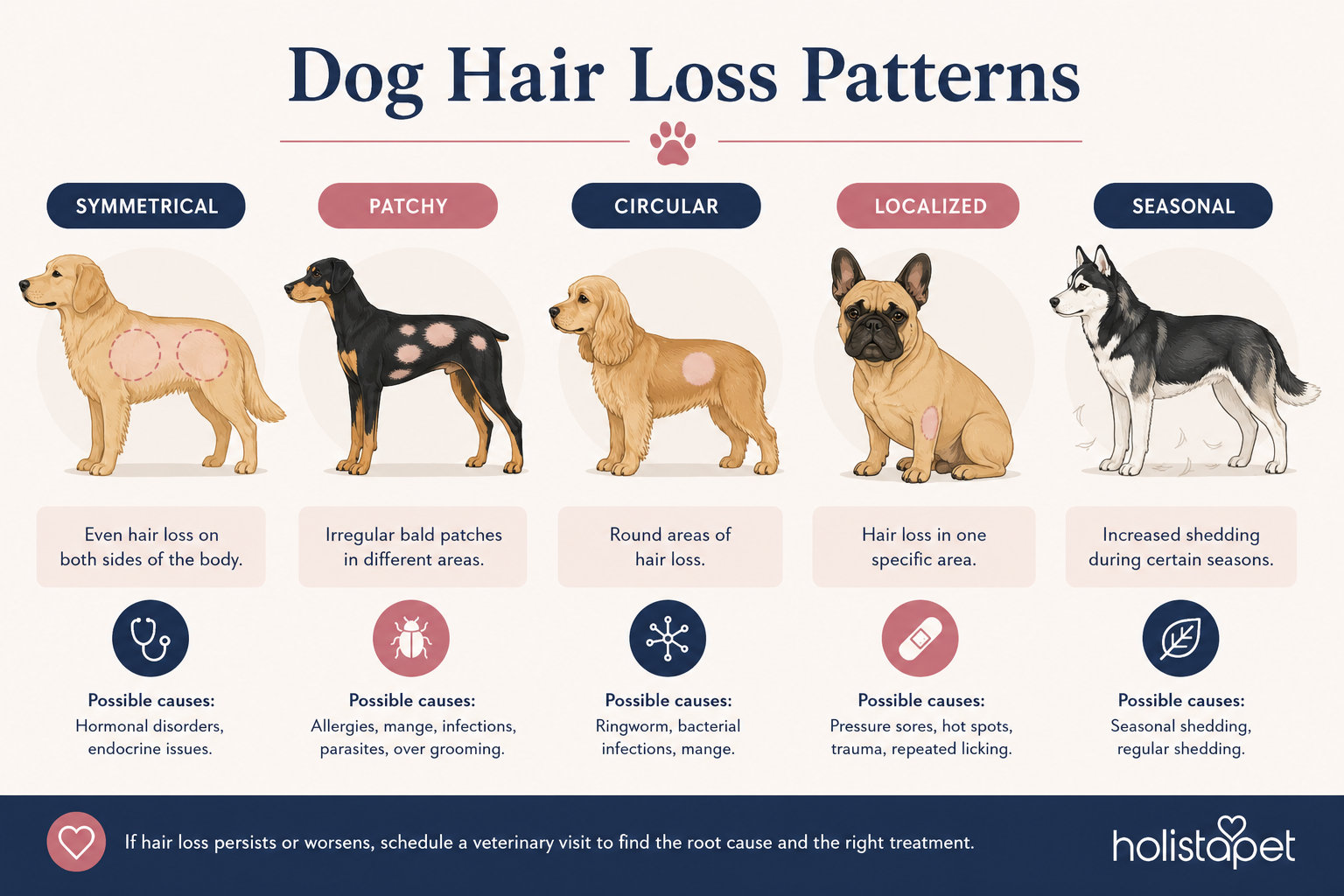
- The pattern of hair loss often provides helpful clues about the possible cause and guides the next steps for care.
- Natural home remedies can soothe the skin and support coat health, but they work best for mild cases.
- Persistent hair loss, bald patches, or worsening skin problems require a veterinary examination for an accurate diagnosis.
- Consistent grooming, proper nutrition, and early treatment help maintain a healthy coat and reduce future hair loss.
What is Dog Hair Loss?
Dog hair loss refers to abnormal shedding that exceeds normal seasonal patterns. It often appears as hair thinning, bald spots, or changes in a dog's coat caused by poor nutrition, skin infections, hormonal imbalance, or allergic reactions.
Common Causes of Hair Loss in Dogs
|
Hair Loss Pattern |
Common Appearance |
Possible Causes |
Recommended Action |
|---|---|---|---|
|
Symmetrical |
Even hair loss on both sides of the body |
Hormonal disorders, endocrine disorders, hypothyroidism, Cushing's disease |
Get a physical examination and diagnostic testing to check hormone levels and identify the root cause. |
|
Patchy |
Irregular bald patches |
Allergies, mange, skin infections, external parasites, over grooming |
Schedule a veterinary visit for a specific diagnosis and right treatment. |
|
Circular |
Round bald spots with scaly skin |
Ringworm, bacterial infections, mange |
Seek veterinary treatment to prevent the condition from worsening. |
|
Localized |
Hair loss in one area such as the paws, ears, tail, or elbows |
Pressure sores, hot spots, trauma, repeated licking |
Prevent further irritation and have the area examined if it persists. |
|
Seasonal |
Increased hair loss during shedding seasons |
Seasonal shedding, regular shedding |
Regular grooming helps manage loose fur. Excessive shedding or bald patches need veterinary evaluation. |
|
Generalized |
Thin coat across large areas |
Poor nutrition, chronic illness, stress, aging |
Review your dog's overall health and consult a veterinarian if hair loss continues. |
|
Itchy Hair Loss |
Hair loss with frequent scratching or licking |
Food allergies, flea allergies, insect bites, external parasites |
Treat the underlying cause and maintain year round parasite prevention. |
|
Darkened Skin |
Hair loss with thickened or dark skin |
Chronic allergies, hormonal disease, long term skin issues |
A physical exam and diagnostic testing can determine the right treatment. |
|
Face or Eye Area |
Hair loss around the eyes, muzzle, or ears |
Demodectic mange, fungal infections, bacterial infections |
Seek early veterinary care for accurate diagnosis and treatment. |
|
Breed Related |
Predictable hair thinning in certain breeds |
Genetics, inherited follicle disorders |
Confirm the condition with a veterinarian and discuss long term management. |
Alopecia in dogs can result from skin conditions, underlying health issues, or environmental factors. Finding the root cause helps determine the right treatment and supports healthy coat regrowth.
- Allergies: Food allergies, environmental allergies, flea allergies, and reactions to insect bites can trigger intense itching, inflammation, and excessive shedding. Constant scratching and over grooming often lead to bald patches.
- Parasites: Fleas, mites, ticks, and other external parasites irritate the skin and damage the coat. Mange caused by mites remains one of the most common causes of patchy hair loss. Year round parasite prevention helps reduce these risks.
- Skin Infections: Bacterial infections, yeast infections, and fungal infections can damage hair follicles and cause hair loss. Some infections also produce redness, scabs, unpleasant odors, or irritated skin. If your dog develops additional symptoms affecting the eyes, our eye discharge care guide explains common causes and supportive home care.
- Hormonal Disorders: Conditions such as Cushing's disease, hypothyroidism, and other endocrine disorders can affect hormone levels and lead to thinning hair, symmetrical hair loss, or slow coat regrowth. These problems appear more often in older dogs.
- Poor Nutrition: An unbalanced diet and nutritional deficiencies weaken the coat, slow hair growth, and make the skin more prone to irritation.
- Pressure Sores and Skin Trauma: Pressure sores, hot spots, frequent licking, and repeated friction can damage the skin and create localized bald patches.
- Genetics: Some breeds have an inherited tendency to experience hair loss or thinning coats as they age, even without an underlying illness.
- Seasonal Shedding: Most dogs go through regular shedding during certain times of the year. Seasonal shedding is normal, but excessive shedding or uneven hair loss may indicate another problem that requires a physical examination.
Natural Dog Hair Loss Home Remedies

Natural home remedies help soothe irritated skin, support hair follicles, and encourage hair regrowth.
1. Coconut Oil
Coconut oil nourishes the dog’s skin, strengthens coat health, and helps treat hair loss from dryness or irritated skin. Gently massage a small amount onto certain spots to support hair growth and improve coat health.
- Moisturizes damaged skin
- Supports hair follicles
- Stimulates hair regrowth
2. Aloe Vera
Aloe vera calms inflamed skin and reduces itching from flea bites, hot spots, or allergic reactions.
- Helps repair damaged skin
- Supports hair regrowth
3. Apple Cider Vinegar Rinse
Apple cider vinegar helps balance the skin surface and supports skin health when diluted with warm water. Lightly mist the dog’s coat using a spray bottle, avoiding open wounds.
- Helps with itchy skin
- Supports coat health
- May reduce bacterial infections
4. Natural Oils and Essential Oils
Natural oils like olive oil and select essential oils help distribute natural oils across coats. Use sparingly and only pet safe options.
- Supports a shiny coat
- Helps with hair thinning
- Promotes healthy coat texture
5. Diet Support and Fatty Acids
A balanced diet rich in fatty acids supports hair growth and reduces hair loss in dogs caused by poor nutrition or nutritional deficiencies. Dog food quality plays a key role in coat health.
- Strengthens dog hair
- Supports healthy diet goals
- Improves overall dog’s appearance
6. Skin Supplements
Skin supplements can support healthy skin and coat growth, especially if nutritional gaps contribute to hair loss. They work best alongside the right treatment for the underlying cause.
HolistaPet's Skin, Coat, and Immune Soft Chews provide skin supporting nutrients that help maintain a healthy coat and healthy skin. They complement a balanced diet but do not replace veterinary treatment.
Natural remedies work best when the symptoms do not involve hormonal imbalance, Cushing’s disease, or other serious conditions. Persistent hair loss, thickened skin, or other symptoms require appropriate treatment from a professional.
Some pet parents also include hemp oil tinctures for dogs or lab-tested dog treats as part of a veterinarian-approved wellness routine to help support overall comfort and skin health.
Dog Mange Treatment Options
Dog mange treatment options focus on eliminating mites, healing damaged skin, and preventing further problems. Early action helps protect their coat and reduce discomfort.
Veterinary Medications
Prescription treatments kill mites quickly and help stop hair loss caused by mange. These options often address skin infections and severe irritated skin at the same time.
Medicated Baths
Medicated shampoos help remove mites, soothe inflamed skin, and clear debris from the skin surface. Regular use supports healing and reduces intense itching.
Topical Treatments
Vet approved topical solutions target mites directly on affected areas. They help calm red and irritated skin and support hair regrowth.
Supportive Skin Care
Gentle grooming and soothing products help repair damaged skin and support hair follicles during recovery. This approach improves coat health while treatment works.
Dietary Support
A healthy diet with fatty acids helps strengthen the immune system and helps restore a healthy coat. Proper nutrition improves the dog’s appearance during healing. Supporting digestive balance with dog digestive probiotics may also help maintain immune health and overall wellness during recovery.
When to Visit the Vet for Dog Hair Loss?

Visit the vet when symptoms include rapid hair thinning, balding spots, thickened skin, red and inflamed skin, or intense itching that does not improve with home remedies.
Hair loss alongside other symptoms like skin infections, pressure sores, dog scratches, or changes in the dog’s appearance often signal an underlying cause such as, hormonal imbalance, Cushing’s disease, or fungal infection that requires proper diagnosis and appropriate treatment.
For dogs that become anxious during treatment or grooming routines, some veterinarians may recommend calming melatonin for dogs when appropriate.
Frequently Asked Questions
Can stress cause hair loss in dogs?
Yes. Stress can trigger dog losing hair by disrupting growth cycles. This often leads to dog itching and increased shedding without visible skin irritation. In some cases, stress can also worsen allergy symptoms or skin sensitivity. Before giving any over-the-counter pain medication for discomfort, read our guide on can you give a dog advil to understand the potential risks.
Is hair loss normal in senior dogs?
Some thinning can happen with age, but bald spots or inflamed areas are not usual. These signs may point to illness, atopic dermatitis, or other parasites that affect the dog’s coat health.
Can overbathing cause dog hair loss?
Yes. Frequent washing strips natural oils from the dog’s skin. This can lead to dry skin, sensitive skin, and visible skin irritation. Poor moisture balance weakens the dog’s coat type and may increase shedding.
How long does hair regrowth take in dogs?
Hair regrowth often takes several weeks or longer. Recovery depends on the dog’s diet, overall health, and the cause of the issue. Proper nutrition with vitamin A and vitamin E supports stronger regrowth and improves dog’s coat health.
Can dog hair loss spread to other pets?
Some causes can spread. Bacterial or fungal infections and other parasites may affect nearby animals. Other causes such as poor dog’s diet or stress do not transfer between pets.
Does brushing help reduce hair loss?
Yes. Regular brushing removes loose fur and supports normal shedding. It also spreads natural oils across the coat, which helps maintain dog’s coat health and reduces buildup that can lead to irritation.
Final Thoughts
Dog hair loss home remedies can improve coat health and promote hair regrowth when it remains mild and you can address the underlying cause early. Consistent care, proper nutrition, and timely veterinary support help protect their skin, restore a healthy coat, and prevent ongoing hair loss.




2 comments
Nainai
Thank you so much for the natural remedy info provided here.
Cat
Thank you for this information
Leave a comment
All comments are moderated before being published.
This site is protected by hCaptcha and the hCaptcha Privacy Policy and Terms of Service apply.