

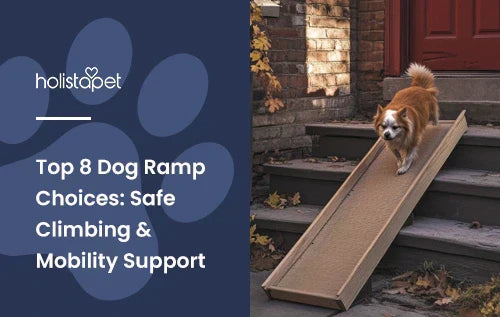
Many dogs with aging joints or mobility limitations struggle to climb stairs. A ramp provides a gradual slope that protects joints and reduces strain when accessing beds, couches, and vehicles.
Choosing a ramp designed for the dog’s size and activity level helps maintain mobility and reduces the risk of joint injury during daily movement.
What is a Dog Ramp?

A dog ramp is an inclined surface designed to help dogs move between different heights without jumping or climbing stairs. It reduces strain on joints and muscles by providing a gentle path to areas like beds, sofas, or vehicles.
Pet owners use it to support aging dogs, small breeds, or those recovering from injury.
What are the Best Dog Ramps Today?
The best dog ramps today offer stable support, reliable grip, and the right height for safe movement. These options cover small and large breeds based on daily use and mobility needs.
|
Product |
Weight Capacity |
Best Use Case |
Portability |
Surface Type |
Notable Feature |
|
PetSafe CozyUp |
Up to 120 lbs |
High beds |
Low |
Carpet |
Gentle incline |
|
Gen7Pets Mini |
Up to 200 lbs |
Indoor furniture |
High |
Fabric |
Foldable design |
|
Frisco Deluxe |
Up to 120 lbs |
Living room setups |
Low |
Carpet |
Furniture friendly look |
|
Chuiendi Ramp |
Up to 150 lbs |
Multi height access |
Medium |
Anti slip wood |
Height adjustment |
|
PetSTEP Folding |
Up to 500 lbs |
Outdoor and vehicles |
Medium |
Rubberized |
Weather resistant |
|
WeatherTech |
Up to 300 lbs |
Cars and SUVs |
High |
Textured plastic |
Compact fold |
|
Solvit Telescoping |
Up to 400 lbs |
Tall vehicles |
High |
High traction |
Extendable length |
|
X XBEN Ramp |
Up to 250 lbs |
Large dogs indoors |
Low |
Anti slip wood |
Side rails |
Best Dog Ramps for Small Breeds

1. PetSafe CozyUp Bed Ramp for Dogs – Best Furniture Ramp for Small Breeds

Product Specifications:
-
Material: Wood with carpet surface
-
Dimensions: 70 x 16 x 25 inches
-
Mount Type: Free-standing
-
Grip Support: Yes
Pros:
-
Sturdy frame
-
High traction surface
-
Blends with furniture
-
Ideal incline for beds
Cons:
-
Bulky size
-
Not portable
The PetSafe CozyUp Bed Ramp for Dogs gives small breeds a safe path to higher beds. The incline feels gradual, which helps reduce pressure on joints. The carpeted surface improves footing during daily use.
2. Gen7Pets Mini Indoor Ramp for Dogs – Lightweight Indoor Option

Product Specifications:
-
Material: Plastic with fabric surface
-
Dimensions: 42 x 16 x 16 inches
-
Mount Type: Foldable free-standing
-
Grip Support: Yes
Pros:
-
Lightweight design
-
Folds for storage
-
Soft walking surface
-
Easy to carry
Cons:
-
Lower height range
-
Less rigid build
The Gen7Pets Mini Indoor Ramp for Dogs suits smaller spaces and quick setups. It works well for couches and low beds. Pet owners can move and store it without effort.
3. Frisco Deluxe Wood Ramp – Stylish Ramp for Couch or Bed Use

Product Specifications:
-
Material: Wood with carpet
-
Dimensions: 62 x 16 x 25 inches
-
Mount Type: Free-standing
-
Grip Support: Yes
Pros:
-
Clean appearance
-
Strong construction
-
Reliable traction
-
Stable slope
Cons:
-
Heavier frame
-
Fixed height
The Frisco Deluxe Wood Ramp fits well in living spaces and supports daily movement. It offers steady footing and a consistent incline. Dogs can move up and down without slipping.
4. Chuiendi Adjustable Wooden Ramp – Best Adjustable Wooden Ramp
Product Specifications:
-
Material: Wood
-
Dimensions: Adjustable height range
-
Mount Type: Free-standing adjustable
-
Grip Support: Yes
Pros:
-
Adjustable levels
-
Durable build
-
Non-slip surface
-
Flexible use
Cons:
-
Requires setup
-
Heavier structure
The Chuiendi Adjustable Wooden Ramp adapts to different furniture heights. It supports small breeds that need consistent access across multiple areas. The adjustable design improves convenience.
Best Dog Ramps for Large Breeds

5. PetSTEP Folding Pet Ramp – Best Heavy Duty Outdoor Ramp for Large Dogs

Product Specifications:
-
Material: Composite plastic
-
Dimensions: 70 x 17 x 5 inches
-
Mount Type: Folding
-
Grip Support: Yes
Pros:
-
High weight support
-
Weather resistant
-
Wide surface
-
Strong traction
Cons:
-
Bulky fold
-
Higher cost
The PetSTEP Folding Pet Ramp handles outdoor use and heavier dogs with ease. The wide platform helps maintain balance during climbs. It works well for vehicles and outdoor setups.
6. WeatherTech PetRamp – Top Pick for Cars and SUVs

Product Specifications:
-
Material: Resin
-
Dimensions: 67 x 15 x 5 inches
-
Mount Type: Folding
-
Grip Support: Yes
Pros:
-
Strong structure
-
Compact fold
-
High traction
-
Travel friendly
Cons:
-
Narrow width
-
Premium price
The WeatherTech PetRamp supports travel needs for large breeds. It folds neatly and fits in most vehicles. Dogs can climb without jumping, which reduces strain.
7. Solvit Deluxe Telescoping Pet Ramp – Best Telescoping Option for Tall Vehicles

Product Specifications:
-
Material: Aluminum and plastic
-
Dimensions: Adjustable up to 87 inches
-
Mount Type: Telescoping
-
Grip Support: Yes
Pros:
-
Extendable length
-
Lightweight design
-
Strong support
-
Space saving
Cons:
-
Needs setup
-
Placement matters
The Solvit Deluxe Telescoping Pet Ramp suits taller vehicles. The adjustable length helps control the incline. Large dogs benefit from a smoother climb.
8. X XBEN Wooden Pet Ramp – Best Adjustable Wooden Ramp With Movable Side Rails
Product Specifications:
-
Material: Wood
-
Dimensions: Adjustable
-
Mount Type: Free-standing adjustable
-
Grip Support: Yes
Pros:
-
Side rails for safety
-
Adjustable height
-
Durable frame
-
Wide platform
Cons:
-
Takes space
-
Heavy build
The X XBEN Wooden Pet Ramp adds extra safety through its side rails. It supports large breeds that need guidance while climbing. The wide surface improves balance during use.
Are Dog Ramps Better Than Stairs?
Not exactly. Dog ramps and stairs have the same purpose but with different intensities.
Dog ramps offer a safer option for dogs with joint issues, injuries, or limited mobility. They reduce impact during movement. Stairs work well for healthy and active dogs that can handle stepping without strain.
Ramps provide a gradual incline that supports long-term joint health, while stairs require more effort and balance.
Why Should I Consider a Dog Ramp?
A dog ramp helps protect joints, prevent injuries, and support daily movement. It offers a safer way for dogs to reach higher spaces without strain.
Reduces Joint Stress
When dogs repeatedly jump, their joints absorb high impact, especially in small or aging breeds. A ramp creates a smooth path that limits impact.
-
Helps lower risk of arthritis flare ups
-
Supports dogs with hip dysplasia
-
Recommended by veterinarians for joint care
The American Kennel Club notes that frequent jumping can worsen joint conditions over time, especially in breeds prone to orthopedic issues.
Prevents Injury at Home
High surfaces like beds and couches increase the risk of slips and falls. A ramp provides controlled movement.
-
Reduces chances of sudden injuries
-
Helps avoid missed jumps
-
Improves stability during climbing
Dogs that hesitate before jumping often use a ramp to move upward with less fear and better stability.
Supports Recovery and Aging
Dogs recovering from surgery or dealing with mobility loss need extra assistance. A ramp allows safe movement without overexertion.
-
Aids post surgery recovery
-
Helps senior dogs stay active
-
Encourages independence
According to veterinary rehabilitation specialists, controlled movement helps maintain muscle strength without causing strain.
Protects the Spine
Certain breeds face a higher risk of spinal issues. Jumping can increase that risk over time.
-
Ideal for long backed breeds
-
Reduces spinal compression
-
Supports safer daily habits
The American Veterinary Medical Association highlights that minimizing repetitive impact helps reduce spinal stress in vulnerable dogs.
Improves Daily Convenience
A ramp simplifies routines for both pets and owners. It removes the need for lifting or constant assistance.
-
Easier access to favorite spots
-
Less physical strain for owners
-
Encourages consistent use
Dogs adapt quickly once they feel secure using a ramp.
What are the Different Dog Ramp Types?
Dog ramps come in different types based on where and how they are used. Each type focuses on portability, height, and stability.
-
Foldable Ramps: Designed for travel and storage, these fold in half for easy carrying.
-
Telescoping Ramps: Extend and retract to adjust length, ideal for taller vehicles.
-
Fixed Indoor Ramps: Built for home use with stable frames for beds and couches.
-
Adjustable Height Ramps: Allow angle changes to match different furniture levels.
-
Lightweight Portable Ramps: Easy to move around, suited for quick indoor setups.
-
Heavy Duty Ramps: Support larger dogs with higher weight capacity and wider surfaces.
How Do I Choose the Right Ramp for Dogs?
Choosing the right dog ramp depends on the dog’s size, mobility needs, and where it will be used. The right setup supports safety, comfort, and long term use.
-
Dog size and weight: Match the ramp to the dog’s build to ensure a perfect fit. This helps small dogs with little paws move safely and gives larger breeds like a Golden proper support.
-
Ramp length and angle: A longer design creates a gentle slope that reduces strain, especially for dogs with hip issues or those that have a hard time climbing steep surfaces.
-
Surface grip: Non slip treads give better traction for paws and help prevent slips during use.
-
Portability needs: Lightweight options or dog stairs with a light frame make movement and setup easier around the home.
-
Height compatibility: Make sure the ramp lines up with beds, couches, or vehicles so the dog can move without hesitation.
-
Stability and build: A sturdy structure provides reliable support and helps dogs feel secure as they figure out how to use it.
-
Storage space: Choose a style that fits available space when not in use and works well for homes with multiple pets.
How Do I Train My Dog to Use Ramps?
Training a dog to use a ramp takes patience, positive reinforcement, and gradual exposure. The goal is to build confidence while keeping the experience safe.
Start with a Flat Position
Begin by placing the ramp flat on the ground so the dog can learn it without pressure.
-
Let the dog sniff and walk across
-
Use treats to guide movement
-
Keep sessions short and calm
This step helps the dog get comfortable with the surface before adding height.
Use Positive Reinforcement
Reward based training builds trust and encourages repeat behavior.
-
Offer treats after each step forward
-
Use a calm and encouraging tone
-
Avoid forcing movement
Dogs respond better when they associate the ramp with rewards.
Gradually Increase the Angle
Slowly raise the ramp once the dog feels confident on a flat surface.
-
Start with a low incline
-
Increase height over time
-
Stay close for support
A gradual approach prevents fear and hesitation.
Create a Calm Environment
Distractions can make training harder, especially for nervous dogs.
-
Choose a quiet space
-
Limit noise and movement
-
Train during relaxed moments
A calm setting improves focus and learning speed.
Support Relaxation When Needed
Some dogs show anxiety during training, especially at the start. Natural calming support can help ease that tension.
-
HolistaPet offers CBD calming chews designed for pets
-
Products like CBD Dog Treats for Anxiety support relaxation without sedation
-
A calm dog learns faster and stays engaged
HolistaPet focuses on plant based formulations that support overall wellness while maintaining normal behavior.
Stay Consistent
Repetition builds confidence and routine.
-
Practice daily in short sessions
-
Use the same commands each time
-
Celebrate small progress
Consistency helps the dog feel secure and understand expectations.
Make Your Dog’s Life Easier with a Ramp
A dog ramp improves safety, protects joints, and supports daily mobility. Choosing the right one helps dogs move with confidence and stay active for years.
Frequently Asked Questions
Can puppies use dog ramps safely?
Yes. Puppies can use dog steps or a ramp to protect fragile joints and build safe habits early. A gentle slope supports growing legs and gives a furry friend more confidence during movement.
What ramp angle works best for dogs?
A gentle incline works best. Steep designs make it harder for small dogs and breeds like Dachshunds or Basset Hounds that already face joint stress.
Where should a dog ramp be placed?
Place it on a stable surface near tall beds, couches, or a truck. The ramp should stay secure on the floor to prevent slipping and give a perfect fit for safe use inside the home.
How often should a dog ramp be maintained?
Check it regularly. Clean the surface and inspect for wear to keep non slip treads effective. A well maintained ramp lasts longer and keeps its style and function.
How quickly do dogs learn to use ramps?
Most dogs adjust within a few days. With consistent guidance, even a tiny pup or a hesitant boy can finally feel comfortable using it.
Can dog ramps be used outdoors?
Yes. Choose a sturdy option suitable for outdoor use on a patio or uneven ground. Reliable sellers often offer durable designs that handle weather changes.
What ramp width suits a dog best?
Pick a width that supports balance. Small dogs need enough space for steady steps, while larger breeds need a wider surface for better support. Some designs also allow easy storage, which works well in homes with dogs and cats.








Leave a comment
All comments are moderated before being published.
This site is protected by hCaptcha and the hCaptcha Privacy Policy and Terms of Service apply.