

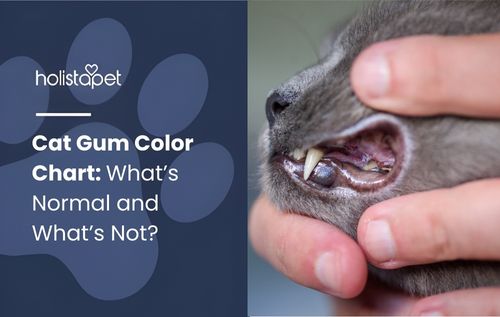
A cat gum color chart shows the range of gum colors in cats and what each one can indicate about health, from normal, soft, pink, and moist gums to pale, white, blue, bright red, or yellow shades that may signal a problem. For cat owners and caregivers, a quick gum check is a practical way to monitor a cat’s condition at home and notice changes that may need attention.
Knowing what each shade means can help identify potential problems early and keep a cat safe. Below, you’ll learn what normal and abnormal gum colors mean, how to check a cat’s gums properly, when to contact a veterinarian, and how to support healthy gums over time.
For more guidance on supporting your cat’s overall health, browse more cat wellness tips.
Medical Disclaimer: This article is for general educational purposes only and is not a substitute for veterinary diagnosis or treatment. Gum color changes can be associated with serious medical conditions. Contact a veterinarian promptly if a cat’s gums look abnormal, especially when discoloration appears with breathing difficulty, weakness, collapse, vomiting, pain, or refusal to eat.
Key Highlights
- A cat gum color chart helps pet parents understand what normal pink gums look like and when pale, blue, red, yellow, or gray gums may signal a health concern.
- Gum color can reflect circulation, oxygen levels, hydration, blood loss, organ health, and other internal changes in a cat’s body.
- Healthy cat gums are usually pink, moist, smooth, and consistent in color, while sudden or unusual changes may need veterinary attention.
- Pale, white, blue, purple, gray, muddy, or severely discolored gums can indicate an emergency, especially with weakness, breathing trouble, collapse, or cold limbs.
How Does Gum Color Indicate My Cat’s Health?
Gum color reflects how well blood circulates and how much oxygen flows through a cat’s body. Healthy tissue needs steady oxygen and proper hydration. When something disrupts that balance, the gums change shade.
A normal tone signals stable circulation. Any color shift often indicates stress in the body.
Gum color can reveal issues related to:
- Blood loss
- Oxygen levels
- Hydration status
- Circulatory function
- Organ health
The mouth contains many tiny blood vessels close to the surface. Because of this, gum tissue reacts quickly to internal changes. That makes it one of the fastest visual clues to overall wellness.
Research on feline health and cannabinoids, including a study published in PubMed, continues to explore how wellness compounds may support overall comfort and balance in cats.
Is It Important to Regularly Check My Cat’s Gums?

Yes. Regular gum checks help spot health problems early and can prevent serious complications.
- Early detection: Color changes can signal internal issues before visible symptoms develop.
- Emergency awareness: Unusual shades can indicate urgent conditions that need fast action.
- Health monitoring: Consistent checks help track changes over time.
- At-home assessment: Quick inspections support informed decisions about veterinary care.
- Peace of mind: Normal pink gums confirm stable circulation and oxygen flow.
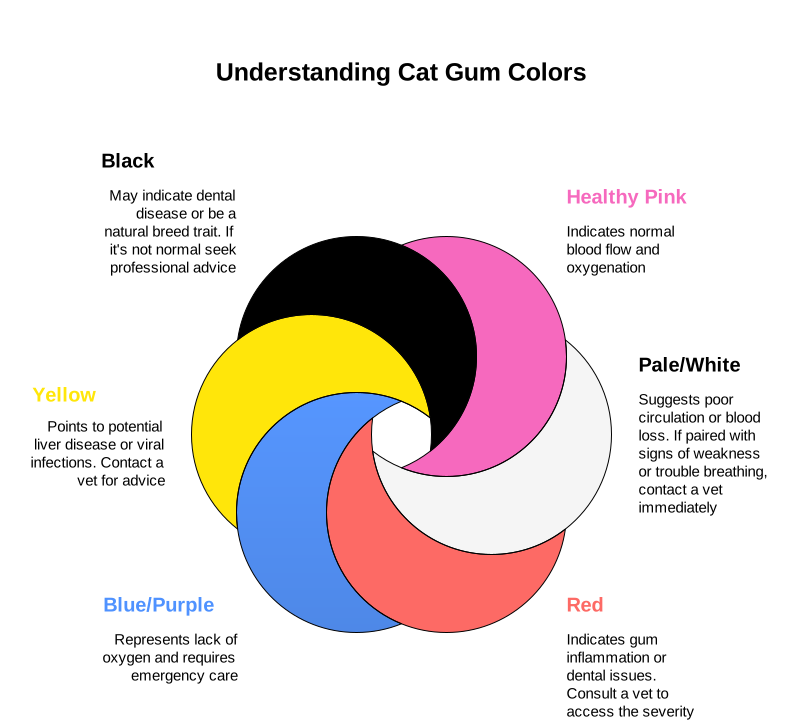
Cat Gum Color Chart
|
Gum Color |
What It May Signal |
Common Signs to Watch |
Action Level |
|---|---|---|---|
|
Pink |
Normal circulation and oxygen flow |
Even tone, moist surface, no swelling |
Routine monitoring |
|
Pale Pink or White |
Pale or white gums can point to reduced blood flow, blood loss, or shock |
Pale gums, weakness, low energy, possible anemia signs; press the gum until it turns white and watch the capillary refill time return to pink within one to two seconds as a circulation check |
Urgent evaluation |
|
Blue or Purple |
Blue gums or purple gums mean the blood may not be carrying enough oxygen |
Breathing difficulty, cold extremities |
Medical emergency |
|
Bright Red |
Bright red gums or red gums may reflect inflammation, infection, or heat stroke. |
Fever, swollen gums, discomfort |
Prompt veterinary visit |
|
Yellow |
Yellow gums suggest jaundice and may indicate liver disease or hemolysis |
Yellowing of eyes, low appetite, vomiting |
Prompt veterinary attention |
|
Brown or Black Spots |
Normal pigmentation in some cats, but changing lesions need veterinary evaluation. |
Flat, consistent spots; no texture change |
Monitor for changes |
How Do I Properly Check My Cat’s Gums?
Keep the check calm, brief, and gentle. Never force the mouth open or place fingers between the teeth.
Step-by-Step Gum Check
Step 1: Choose a calm time. Wait until the cat is relaxed. Avoid checking immediately after intense play because increased blood flow may temporarily deepen the color.
Step 2: Use good lighting. Natural light or a bright neutral indoor light makes the true gum shade easier to see.
Step 3: Position the cat securely. Allow the cat to sit comfortably on a stable surface. Support the body without restraining tightly.
Step 4: Lift the lip gently. Use one finger to lift the upper lip near the canine tooth gently. You don't need to open your mouth fully.
Step 5: Check the color on both sides. Compare the gums with the cat’s normal shade, especially along the gum line at the gum margin where the gums meet the teeth. A change on only one side may be related to a local dental problem or injury.
Step 6: Check moisture and texture. Gums are usually smooth and moist. Note dryness, swelling, bleeding, ulcers, bad breath, plaque, tartar, or receding tissue. Bright red gums near the teeth can point to gingival inflammation.
Step 7: Check capillary refill. Apply gentle pressure to one spot on the gum until it turns white, then watch it return to pink; capillary refill time should be 1 to 2 seconds. A delayed return may suggest poor circulation and is a medical concern.
Step 8: Stop if the cat resists. End the check if the cat pulls away, growls, hisses, cries, or tries to bite.
Step 9: Record meaningful changes. Note the date, color, location, and related symptoms. A clear photo and brief notes may help provide useful health data for a veterinary evaluation, but never delay urgent care to take one.
How To Perform the Capillary Refill Time Test
Capillary refill time, or CRT, indicates how quickly color returns after applying gentle pressure. It offers only a rough clue about circulation.
- Lift the upper lip and find a pink, non-pigmented area.
- Press one fingertip gently against the gum until the spot turns lighter.
- Release the pressure.
- Count how long it takes for the pink color to return.
In a stable cat, color often returns within 1 to 2 seconds. A clearly delayed, unusually fast, uneven, or difficult-to-assess result needs veterinary guidance. Merck Veterinary Manual notes that abnormal mucous membrane color or CRT warrants urgent evaluation.
Do not rely on CRT when the gums are naturally dark, the cat is struggling, or breathing is abnormal. Instead, you can focus on safe transport to a veterinary clinic.
Gum Checks for Kittens
Kittens should also have pink, moist gums. Because young kittens have less reserve than healthy adults, pale gums, weakness, poor nursing, diarrhea, vomiting, fleas, or low body temperature can quickly become serious. Contact a veterinarian promptly when a kitten’s gum color looks abnormal.
Is your kitten underweight or overweight? Review HolistaPet’s guide on how to fatten up a cat safely, but first ask a veterinarian to rule out parasites, infection, or other causes of poor growth.
Gum Checks for Senior Cats
Senior cats may be more likely to develop dental disease, dehydration, kidney-related anemia, liver problems, or other chronic conditions that affect the appearance of the gums. Do not assume pale, dry, or inflamed gums are simply part of aging.
Arrange a veterinary visit for new bad breath, difficulty chewing, drooling, weight loss, reduced grooming, hiding, or appetite changes.
When Do I Contact My Vet for My Cat’s Gum Color?

Contact a veterinarian whenever the gums change from the cat’s normal color or develop swelling, bleeding, sores, or a new mass.
Seek emergency care immediately for:
- White, blue, purple, gray, or muddy gums
- Sudden severe paleness
- Abnormal color with open-mouth breathing
- Collapse, extreme weakness, confusion, or cold limbs
- Uncontrolled bleeding
- Suspected trauma, toxin exposure, or internal bleeding
Arrange urgent same-day care for:
- Yellow gums or yellow eyes
- Bright red gums with swelling, pain, fever, or drooling
- Pale pink gums with lethargy, poor appetite
- A delayed or clearly abnormal capillary refill time
- Ongoing vomiting, diarrhea, or dehydration with a gum change
Vomiting can add important context when the gums look abnormal. HolistaPet’s cat vomit color chart explains which vomit colors may indicate blood, bile, or another urgent concern.
Schedule a prompt appointment for localized redness, tartar buildup, bad breath, a new pigmented spot, mild swelling, or discomfort while eating. Cornell lists red, swollen gums as a sign of feline gingivitis. The American Veterinary Dental College explains that periodontal disease can progress beneath the gumline and damage the tissues that support the teeth.
How Do I Maintain My Cat's Healthy Gums?

Support oral health with home care and veterinary dental exams. Gum checks do not remove plaque, diagnose disease, or replace treatment.
1. Brush the Teeth Consistently
Use a cat-safe brush and pet toothpaste. Never use human toothpaste. Begin slowly and stop if the cat shows pain.
2. Schedule Veterinary Dental Exams
Ask for a dental check during routine visits. The American Veterinary Dental College explains that disease can develop beneath the gumline and may require a complete oral exam and dental radiographs.
3. Use Dental Products With Veterinary Guidance
Choose dental diets, treats, rinses, or other products recommended for the cat’s needs. These may help with plaque control but cannot correct advanced periodontal disease, broken teeth, tooth resorption, or oral infection.
4. Feed a Balanced Diet and Encourage Hydration
Balanced nutrition and adequate water support normal tissue maintenance and hydration. Chewing on one side, dropping food, or refusing hard food may signal pain.
5. Monitor the Mouth Weekly
Look for color changes, redness, swelling, bleeding, sores, bad breath, tartar, or loose teeth. Seek care rather than attempting to scrape tartar or treat painful areas at home.
6. Use CBD to Support Oral Comfort
CBD does not treat gum disease or replace dental care. Supporting overall wellness with high-quality CBD oil promotes comfort and balance for cats when used appropriately. With veterinary approval, a properly formulated cat product may also help support relaxation or oral comfort as part of a broader wellness routine. Pet parents exploring this option can review HolistaPet’s collection of CBD oil for cats and follow the product directions carefully.
Frequently Asked Questions
Why Are My Cat’s Gums Bright Red?
Bright red gums may result from severe gum inflammation, heat stress, pain, fever, toxin exposure, or circulatory changes. Please contact a veterinarian right away, especially if redness occurs along with swelling, drooling, panting, or discomfort when eating.
What Do Yellow Gums Mean in a Cat?
Yellow gums may be a sign of jaundice caused by liver disease, bile flow problems, or RBC breakdown. Yellow gums require urgent veterinary evaluation, particularly when accompanied by vomiting, poor appetite, dark urine, or yellow eyes.
How Do I Check My Cat’s Capillary Refill Time?
Gently press a finger against a pink area of the gum until it turns lighter, then release. The pink color should usually return within 1 to 2 seconds. A delayed, unusually fast, or uneven result should be discussed with a veterinarian.
Can Dehydration Affect a Cat’s Gums?
Yes. Dehydrated cats may have dry or tacky gums instead of a smooth, moist surface. Gum moisture alone cannot confirm dehydration, so watch for reduced appetite, weakness, vomiting, diarrhea, or decreased urination.
Are Black Spots on a Cat’s Gums Normal?
Flat, stable brown or black spots may be natural pigmentation. A veterinarian should examine any new spot that is raised, bleeding, ulcerated, growing, or changing in shape or color.
Do Kittens Have Different Gum Colors Than Adult Cats?
Healthy kittens generally have the same light pink, moist gums as adult cats. Pale, white, yellow, blue, or gray gums are not normal and may become more serious more quickly in young kittens.
Can Senior Cats Have Paler Gums Because of Age?
Pale gums should not be considered a normal part of aging. Senior cats may be more likely to develop anemia, kidney disease, dental problems, dehydration, or other conditions that affect the appearance of their gums.
Final Thoughts
A cat’s gum color offers a quick look at circulation, oxygen levels, hydration, and oral health. Healthy gums are usually pink, moist, and uniform in color, while pale, white, blue, purple, yellow, gray, or unusually red gums may indicate a more serious concern.
Use the cat gum color chart as a general guide, but do not rely on color alone to diagnose a problem. Check the gums gently, watch for other symptoms, and contact a veterinarian whenever a change is sudden, persistent, painful, or accompanied by weakness, breathing difficulty, vomiting, collapse, or loss of appetite.







Leave a comment
All comments are moderated before being published.
This site is protected by hCaptcha and the hCaptcha Privacy Policy and Terms of Service apply.