


A dog that stays awake at night usually reacts to a specific cause, not random behavior. Excess energy, anxiety, discomfort, or a disrupted routine can keep a dog from settling down. Identifying the exact reason helps restore calm nights for both the dog and the owner.
Key Takeaways
- Nighttime restlessness usually has a specific cause, not random behavior.
- A dog's age plays a major role in sleep patterns and nighttime waking.
- Senior dogs may experience Canine Cognitive Dysfunction, which can affect sleep and nighttime behavior.
- A consistent evening routine supports healthier sleep habits and helps reduce nighttime disruptions.
- Simple checks can help rule out common causes before assuming a serious problem.
- Contact a veterinarian if nighttime restlessness persists or new symptoms develop.
Why Won’t My Dog Sleep at Night?
Dogs stay awake at night because a specific need or issue disrupts rest. The cause usually involves energy, stress, discomfort, routine changes, or health problems. Identify the trigger to fix the sleep pattern.
1. The dog still has excess energy
Dogs that lack enough exercise or mental stimulation stay alert at night. Short walks often do not meet the needs of active breeds. Without physical and mental outlets, the dog remains restless instead of settling down.
The AKC explains that both physical activity and mental enrichment help regulate behavior and reduce restlessness.
2. Anxiety keeps the dog alert
Stress can prevent a dog from relaxing. Changes in the home, loud noises, or separation can trigger pacing, whining, or constant movement at night.
3. Pain or discomfort disrupts sleep
Physical issues can make lying down uncomfortable. Joint pain, injuries, itching, or digestive problems often worsen at night when distractions fade.
The Merck Veterinary Manual notes that osteoarthritis causes stiffness and difficulty resting, especially in older dogs.
4. The routine no longer fits
Dogs rely on consistency. Changes in feeding time, walks, or bedtime can shift the internal clock and delay sleep.
A stable daily schedule helps the dog recognize when to rest.
5. The dog needs to go outside
Puppies and older dogs often need more frequent bathroom breaks. A full bladder can wake the dog and prevent it from settling again.
Sudden changes may point to urinary or digestive issues.
6. Food timing or late activity keeps the dog awake
Late stimulation or poor meal timing can increase alertness. Intense play before bed or long gaps between meals can make the dog restless.
Calm routines before bedtime support better sleep.
7. The sleeping environment feels uncomfortable
Noise, light, temperature, or unfamiliar spaces can prevent rest. Some dogs react to outside sounds or prefer staying close to people.
A quiet and comfortable setup improves sleep quality.
8. A medical issue needs attention
Sudden night waking may signal illness. Pain, hormonal problems, or internal issues can disrupt sleep patterns.
The AVMA notes that behavior changes often indicate underlying health conditions, not just habits.
Does a Dog's Age Affect Sleep?

Yes. A dog's age affects sleep patterns because the brain, body, and daily needs change over time. Puppies, adult dogs, and senior dogs each experience different sleep challenges.
Puppies Wake Up More Often
A young pup often wakes during the night because of potty training, feeding schedules, or adjusting to a new home. Most puppies develop longer and more consistent sleep periods as they mature.
Adult Dogs May Develop Insomnia
Adult dogs usually sleep well when they follow a stable routine. If an adult dog suddenly has trouble sleeping, stress, separation anxiety, discomfort, or an underlying medical condition may be the cause.
Senior Dogs Experience Age Related Sleep Changes
Older dogs often sleep more during the day but wake more frequently at night. Cognitive decline, joint pain, and other age related conditions can disrupt sleep and make it harder to stay asleep.
What is Canine Cognitive Dysfunction?
Canine Cognitive Dysfunction is an age related brain disorder that gradually affects memory, learning, awareness, and normal behavior in older dogs. Researchers compare the condition to Alzheimer's disease in humans because both involve progressive changes in the brain that can lead to confusion, disorientation, and disrupted sleep.
Veterinary behaviorist Dr. Gary Landsberg explains, “Sundowning is a disruption in a dog’s sleep/wake cycles depicted by increasing confusion, agitation and activity as the day progresses to night.” His statement highlights why many dogs with cognitive decline become restless after dark and struggle to settle down.
How CCDS Affects Senior Dogs and their Sleep
Canine Cognitive Dysfunction Syndrome can interfere with the brain's ability to regulate normal sleep patterns, causing many senior dogs to become confused and restless at night. Instead of settling down, they may wander through the house, stare into space, vocalize, or appear lost in familiar surroundings.
The Canine Cognitive Dysfunction Syndrome Working Group identifies sleep disturbance and disorientation as two of the condition's defining clinical signs. Dr. Landsberg also notes, “Behavioral signs such as changes in activity levels, altered responses to stimuli, altered social interactions, anxiety, altered sleep wake cycles, housesoiling, confusion or memory deficits may arise as a result of brain aging.”
This explains why nighttime confusion often becomes one of the earliest changes that families notice.
How Can I Help My Dog Sleep Better at Night?
Fixing nighttime rest starts with meeting the dog’s physical, emotional, and biological needs. Once those needs are balanced, most dogs settle into a consistent sleep routine.
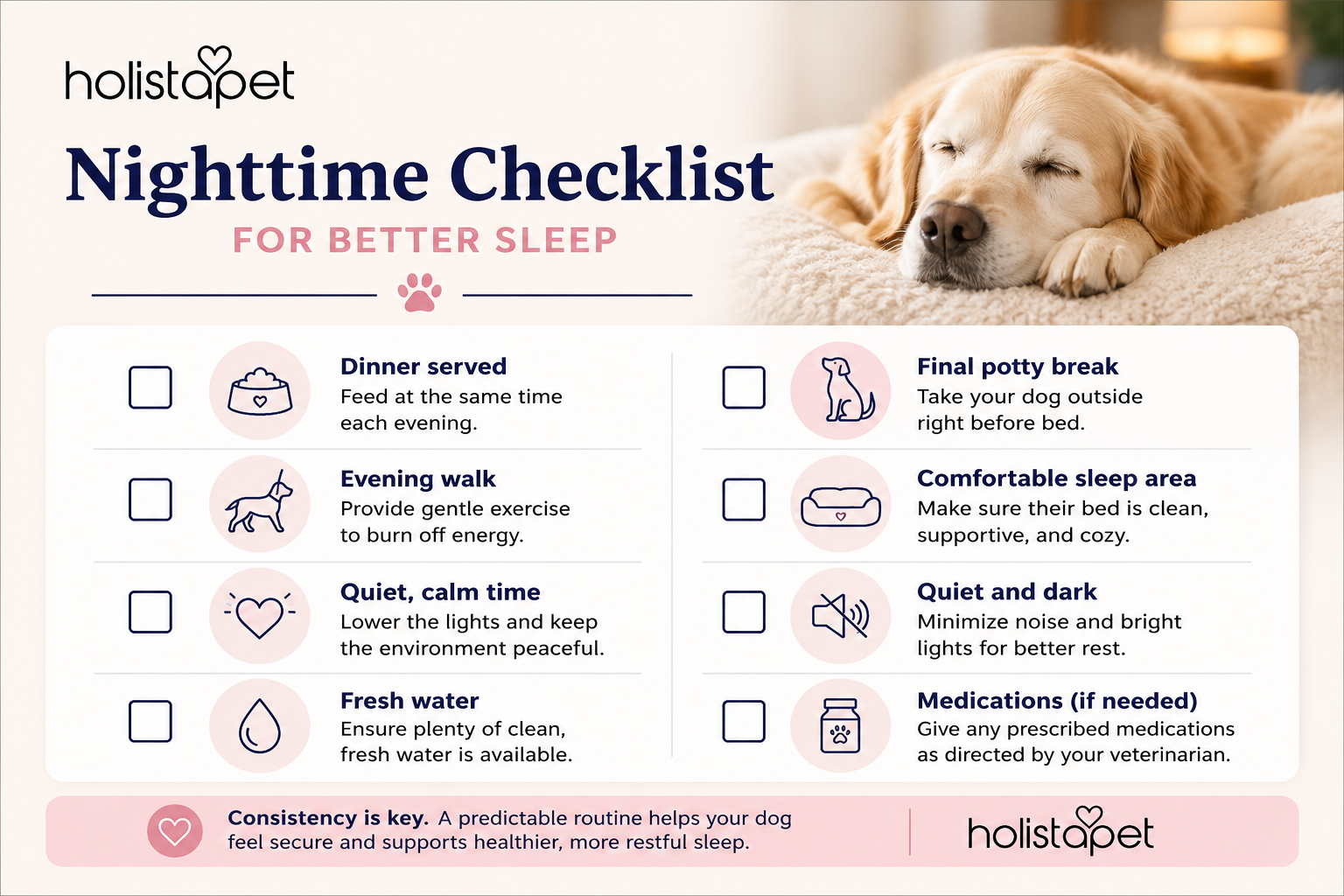
Build a consistent nighttime routine
- Feed dinner at the same time each evening. A predictable schedule helps the dog's body prepare for rest.
- Take the dog for a gentle evening walk. Light activity provides regular exercise and helps burn off leftover energy without causing overstimulation.
- Spend a few quiet minutes together. Calm petting or relaxed time can help an anxious dog settle before bed.
- Prepare the dog's sleeping area. Make sure the space is quiet, comfortable, and supports a comfortable sleeping position.
- Take the dog outside for one final bathroom break right before bedtime. This step can reduce overnight wake ups.
- Turn off bright lights and keep the home quiet. If a dog won't sleep or continues to have trouble sleeping after following this routine, schedule a veterinary visit to rule out underlying health problems.
Create a "sleep-support" checklist
A quick checklist can help identify the common reasons why a dog has trouble settling at night rather than assuming a more serious issue.
- Pain or stiffness: Watch for limping, slow movement, or difficulty lying down.
- Bathroom needs: Take the dog outside for a final potty break before bedtime.
- Hunger or thirst: Make sure the dog has eaten dinner and has access to fresh water.
- Medication timing: Check if any medication may affect sleep or needs a schedule adjustment.
- Room temperature: Keep the sleeping space cool, comfortable, and well ventilated.
- Noise and light: Reduce loud sounds and bright lights that can interrupt rest.
- Anxiety: Look for signs of stress, including pacing, whining, or separation anxiety.
- Dog's sleeping area: Make sure the bed is clean, supportive, and comfortable for restful sleep.
You can print our free checklist above to monitor your dog before sleeping.
Use melatonin supplements
Melatonin may help some dogs relax and maintain a healthier sleep cycle, especially senior dogs with age related sleep changes. Holistapet's Melatonin for Dogs contain melatonin along with chamomile and L-tryptophan to support calm behavior before bedtime.
- Follow the recommended dosage based on the dog's size
- Stop use and contact a veterinarian if unusual side effects appear or sleep problems continue
Rule out medical issues when needed
Sleep problems sometimes come from underlying health concerns.
- Watch for sudden behavior changes
- Look for signs of pain or discomfort
- Consult a veterinarian if issues persist
The AVMA emphasizes that behavior changes often signal medical conditions, not just habits.
Related Product: Probiotics for Dogs
When to Talk to a Vet for Your Dog's Nighttime Restlessness

Schedule a veterinary visit if nighttime restlessness lasts for several days, becomes more frequent, or comes with signs such as:
- Confusion
- Pacing
- Vocalizing
- Accidents indoors
- Pain
- Changes in appetite
A veterinarian can identify the cause and determine if the behavior stems from Canine Cognitive Dysfunction, another medical condition, or a treatable issue before symptoms become more severe.
Frequently Asked Questions
Can screen time or household lights affect a dog’s sleep?
Yes. Bright lights and constant activity at night can disrupt the sleep wake cycle. Reducing light and using white noise or a white noise machine can create a calm setting that helps a furry friend fall asleep and maintain quality sleep.
Do certain dog breeds struggle more with sleeping at night?
Yes. High energy breeds often need more physical exercise and mental exercise. Without enough activity, pent up energy keeps them alert, which leads to nighttime restlessness and difficulty to sleep through the night.
Can napping too much during the day cause night wakefulness?
Yes. Too much daytime rest can prevent dogs from feeling tired at night. Balanced daily exercise and regular activity help regulate the sleep schedule and support restful sleep.
Should a dog sleep in the same bed as its owner?
It depends. Some dogs feel secure and sleep comfortably near pet parents, while others rest better in a dog bed placed in a quiet place. The goal is to support enough rest and a consistent bedtime routine.
Can weather changes affect a dog’s sleep at night?
Yes. Heat, cold, or sudden shifts can cause sleep disruptions. Adjusting the house environment helps maintain comfort and supports overall health during rest.
Do dogs need complete silence to sleep well?
No. Some dogs relax with soft background sounds like soothing music. Sudden loud noises can interrupt a dog’s insomnia and lead to nighttime waking.
Can dehydration affect a dog’s sleep?
Yes. Lack of water can lead to discomfort and nighttime waking. Providing fresh water supports the dog’s overall health and helps prevent restlessness.
Is it normal for dogs to change sleep patterns over time?
Yes. Age and health changes can shift sleep habits. Older dogs may face canine cognitive dysfunction or cognitive decline, which can affect nighttime restlessness. Monitoring other signs and identifying any underlying cause helps pet parents support better sleep.
Your Dog Needs Quality Sleep Too
Dogs do not lose sleep without a reason. Identify the cause, adjust daily habits, and support overall well-being to restore a healthy sleep routine. If the problem continues or worsens, seek veterinary care to rule out underlying issues.








Leave a comment
All comments are moderated before being published.
This site is protected by hCaptcha and the hCaptcha Privacy Policy and Terms of Service apply.