

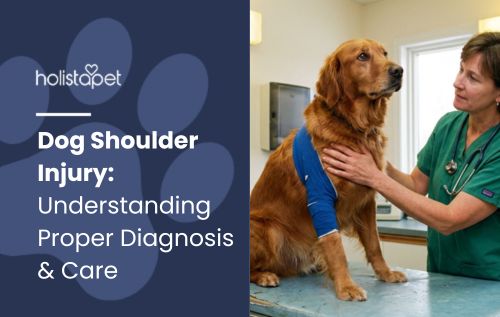
A shoulder-related injury in dogs can cause limping, discomfort, and long-term mobility issues. Early diagnosis and proper care may help preserve joint function and improve recovery outcomes pet parents can also find broader guides for dog owners covering joint health and related topics.
How Do I Know If My Dog Has a Shoulder Injury?
Dogs with shoulder injuries often limp, avoid activity, or show discomfort in one front leg. Symptoms may appear after a traumatic injury or develop gradually from repetitive strain.
-
Front leg lameness with uneven walking
-
Shoulder pain during movement or touch
-
Stiffness after rest or exercise
-
Reduced activity and less interest in play
-
Swelling around the shoulder joint
-
Muscle loss near the shoulder muscles
-
Limited range of motion in the affected limb
-
Difficulty jumping or climbing stairs
-
Abnormal posture while standing or walking
-
Signs of significant pain during daily activities
Related Post: Dog Neck Pain: Causes, Symptoms, & Home Care
What Causes Shoulder Injuries in Dogs?
 Shoulder injuries in dogs usually develop from acute trauma, repetitive strain, joint instability, or developmental conditions affecting the shoulder joint. Large breeds and highly active dogs may face a greater risk due to repeated joint strain.
Sudden accidents can damage the biceps tendon, supraspinatus tendon, subscapularis tendon, and other soft tissue structures.
Common causes include:
-
Traumatic injury from collisions or jumping
-
Overuse injuries from repetitive activity
-
Medial shoulder instability affecting shoulder stability
-
Shoulder dysplasia in certain breeds
-
Shoulder OCD involving an OCD lesion or cartilage flap
-
Biceps tendon injury linked to repetitive strain
-
Infraspinatus contracture caused by scar tissue formation
-
Sporting activities that strain the shoulder muscles
In some cases, these conditions develop slowly over time and may worsen without early intervention. Poor joint support, weak soft tissue structures, and reduced blood flow can slow the healing process and increase the risk of chronic shoulder issues supporting overall wellness with a canine multivitamin supplement may help maintain connective tissue health as part of a preventive routine.
Common Types of Shoulder Injuries in Dogs?
These injuries can involve tendons, joints, cartilage, or surrounding muscles, often leading to stiffness and reduced mobility. These conditions commonly lead to limping, stiffness, and reduced mobility.
|
Shoulder Injury |
Main Area Affected |
Common Signs |
Commonly Affected Dogs |
Typical Treatment Options |
|
Biceps tendon injury |
Biceps tendon |
Front leg lameness and pain during movement |
Active dogs and sporting dogs |
Conservative treatment, physical rehabilitation, surgical treatment |
|
Medial shoulder instability syndrome |
Medial glenohumeral ligament and joint capsule |
Shoulder instability and weakness |
Working dogs and large breed dogs |
Anti-inflammatory medications, surgical intervention |
|
Shoulder ocd |
Joint surface and underlying bone |
Limping and stiffness |
Large breed dogs |
Arthroscopic treatment or surgical removal |
|
Supraspinatus tendinopathy |
Supraspinatus tendon |
Chronic shoulder pain |
Active and athletic dogs |
Laser therapy, ultrasound therapy, pain relief |
|
Infraspinatus contracture |
Infraspinatus muscle |
External rotation of the front leg |
Sporting dogs |
Surgical intervention and tissue healing support |
|
Shoulder dysplasia |
Shoulder joint and humeral head |
Reduced range of motion |
Certain breeds |
Conservative treatment or surgery |
How Do I Treat a Dog Shoulder Injury?
 Treating a dog shoulder injury depends on the cause, severity, and structures involved. Most dogs recover with early diagnosis, proper pain relief, controlled activity, and targeted treatment options.
Rest and Activity Restriction
Restricted activity helps prevent additional strain while the shoulder heals.
-
Restrict running and jumping
-
Avoid rough play and slippery surfaces
-
Use short leash walks during recovery
-
Support recovery with consistent rest and controlled activity
Veterinary Diagnosis and Imaging
A proper physical examination helps identify shoulder instability, tendon damage, or joint problems. Veterinarians may also perform an orthopedic examination to rule out elbow problems and other injuries in dogs.
-
X-rays help detect shoulder dysplasia and shoulder ocd
-
Ultrasound can evaluate the biceps tendon and supraspinatus tendon
-
Joint fluid analysis may identify inflammation inside the joint capsule
-
Arthroscopic treatment helps confirm severe cases involving an ocd flap or cartilage flap
According to the American College of Veterinary Surgeons, arthroscopy often improves diagnosis and treatment accuracy for shoulder injuries in dogs involving the humeral head and joint surface.
Medications and Conservative Treatment
Many mild to moderate shoulder problems improve with conservative treatment. Veterinarians commonly use anti-inflammatory medications to reduce inflammation and manage significant pain.
-
Pain relief medications
-
Controlled exercise plans
-
Cold therapy after activity
-
Physical rehabilitation to improve shoulder stability
-
Laser and ultrasound therapy may support circulation and recovery, and some veterinarians also discuss the use of lab-tested CBD oil for dogs as a complementary comfort support option during conservative care.
Physical Rehabilitation
Physical rehabilitation strengthens the shoulder muscles and improves movement in the affected limb. Recovery programs often focus on the supraspinatus muscle, infraspinatus muscle, and biceps muscle and dogs experiencing pain or restlessness during recovery may also benefit from melatonin soft chews for dogs to support calm and restful sleep.
A study published in Veterinary Surgery reported that rehabilitation exercises helped improve forelimb lameness and supported the healing process after soft tissue injuries.
-
Range of motion exercises
-
Controlled swimming sessions
-
Strength training for active dogs
-
Balance exercises for shoulder stability
Surgical Treatment for Severe Cases
Surgical intervention may become necessary when conservative care fails or when structural damage affects the upper arm bone, medial glenohumeral ligament, or biceps brachii tendon.
-
Surgical removal of damaged tissue
-
Repair of medial shoulder instability syndrome
-
Arthroscopic treatment for shoulder ocd
-
Scar tissue management in chronic injuries
CBD and Recovery Support
Some pet owners consider wellness supplements as part of a broader recovery plan for dogs experiencing joint discomfort. These products are sometimes used alongside veterinary care to help support overall comfort and well-being during the healing process.
Research published in Frontiers in Veterinary Science and a PubMed: Pharmacokinetics, Safety, and Clinical Efficacy of CBD in Dogs suggest that cannabidiol (CBD) may help support comfort and mobility in dogs experiencing joint-related discomfort. However, findings are still emerging, and responses may vary depending on the individual dog and the underlying condition.
Because shoulder injuries can involve different structures such as tendons, ligaments, or joints, it is important that any supportive products including CBD dog treats or other wellness supplements are only used under veterinary guidance, as noted by the AKC: CBD Oil for Dogs What You Need to Know. A veterinarian can help determine whether it is appropriate based on the dog’s condition, treatment plan, and recovery stage.
Frequently Asked Questions
Can a Dog shoulder injury heal on its own?
Some mild soft tissue injuries can improve with rest and restricted activity. More serious shoulder problems often need veterinary treatment to prevent long-term shoulder instability and chronic pain.
How long does a dog shoulder injury take to heal?
Most dogs recover within several weeks to a few months depending on the injury type and healing process. Severe cases involving surgical treatment usually require longer recovery periods.
Are certain dogs more likely to develop shoulder injuries?
Yes. Large breed dogs, sporting dogs, and working dogs face a higher risk because repeated activity places more stress on the shoulder muscles, tendons, and joint surface.
Can dogs walk with a shoulder injury?
Many dogs can still walk, but they often show front leg lameness or stiffness. Continued activity may worsen shoulder pain and delay tissue healing.
When should a dog see a vet for shoulder pain?
Dogs should see a vet when limping lasts longer than a few days, symptoms worsen, or significant pain affects daily movement. Early care helps reduce inflammation and prevents further joint damage pet parents can also reference a dog benadryl dosage chart when managing allergy-related swelling or discomfort alongside a vet-prescribed treatment plan. Pet parents managing anxiety or stress during their dog's recovery can also explore our what can i give my pet for fireworks anxiety for guidance on keeping dogs calm during loud or stressful events.
Can shoulder injuries return after treatment?
Yes. Active dogs may develop recurring shoulder issues if they return to intense activity too quickly or skip physical rehabilitation during recovery.








Leave a comment
All comments are moderated before being published.
This site is protected by hCaptcha and the hCaptcha Privacy Policy and Terms of Service apply.