

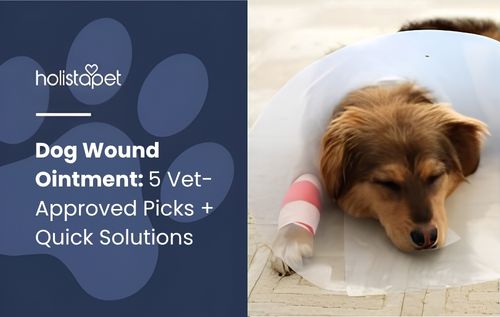
A dog’s wound can worsen fast after exposure to dirt, bacteria, and constant licking. The right dog wound ointment helps treat minor cuts, scrapes, abrasions, and hot spots while supporting healing and reducing infection risks.
This article covers vet-approved options, quick wound care steps, and signs that require a veterinarian immediately.
What is a Dog Wound Ointment?

A dog wound ointment is a topical ointment that helps treat minor cuts, scrapes, abrasions, bites, and skin irritation while supporting healing and helping prevent infection.
Veterinarians often recommend products with antiseptic or antimicrobial ingredients because they protect the wound from bacteria and reduce irritation caused by licking and debris.
What are Some Vet Recommended Dog Wound Ointments?
Dog wound ointments often contain antiseptic, antibiotic, anti-inflammatory, or moisture balancing ingredients that help protect the skin, reduce pain, and support healing.
|
Ointment Type |
Main Purpose |
Common Use |
Important Note |
Vet Guidance Needed |
|
Silver Sulfadiazine |
Control bacteria |
Burns and abrasions |
Not for untreated deep wounds |
Yes |
|
Triple Antibiotic Ointment |
Prevent infection |
Minor cuts and scratches |
Prevent licking after apply |
Recommended |
|
Hydrocortisone Ointment |
Reduce itching |
Hot spots and skin irritation |
Avoid open wounds |
Yes |
|
Chlorhexidine Gel |
Clean wounds |
Scrapes and bites |
Helps remove debris |
Recommended |
|
Medical Honey Gel |
Support healing |
Surface wounds and abrasions |
Use only medical grade products |
Yes |
1. Silver Sulfadiazine
Veterinarians commonly use silver sulfadiazine for burns, abrasions, and infected skin wounds because it fights bacteria and supports tissue repair.
The American College of Veterinary Surgeons notes that this topical ointment helps manage contaminated animal wound cases and lowers infection risks.
- Helps prevent infection
- Supports healing in moist wounds
- Commonly used for burns and scrapes
- Requires veterinary guidance for deeper injury cases
2. Triple Antibiotic Ointment
Triple antibiotic treatment combines bacitracin, neomycin, and polymyxin B to treat minor cuts and scratches in dogs.
- Used for small cuts and abrasions
- Helps protect against bacteria
- Best suited for small surface wounds
- Disposable gloves help keep the area clean during application
3. Hydrocortisone Based Ointment
Hydrocortisone helps reduce itching, inflammation, and skin irritation linked to hot spots and allergic reactions.
PetMD states that veterinarians may recommend low-strength hydrocortisone products for short term treatment in dogs.
- Calms itching and redness
- Helps dogs avoid excessive licking
- Often used for irritated skin areas
- Not suited for open or infected wounds
4. Chlorhexidine Gel
Chlorhexidine gel works as an antiseptic treatment that cleans wounds and reduces bacteria on the skin. Many vet clinics use it during wound care because it targets common contaminants without causing harsh pain during cleaning.
- Helps remove debris and dirt
- Supports safe cleaning at home
- Useful for bites and scrapes
- Often paired with bandages and regular monitoring
5. Medical Grade Honey Gel
Medical honey gel creates a protective barrier that supports healing and controls bacteria in wounds.
Research published in Frontiers in Veterinary Science highlighted honey-based treatment for animals because it supports tissue repair and limits contamination.
- Helps maintain moisture balance
- Reduces bacteria growth
- Useful for cuts and abrasions
- Requires clean wound preparation before use
What are Some Quick Solutions for Dog Wounds?

Quick home treatment can help manage minor cuts, scrapes, scratches, and skin irritation before the injury worsens. The goal is to clean the wound, protect the area, reduce pain, and monitor signs of infection or swelling.
Clean the Wound With Warm Water
Start wound care by removing dirt, debris, and bacteria from the injured skin.
The American Kennel Club recommends flushing minor cuts and abrasions with clean water or saline solution before applying treatment.
- Wash hand and wear disposable gloves
- Trim fur around the wound if needed
- Use clean water to rinse the area
- Pat the skin dry with a clean cloth
- Avoid hydrogen peroxide on open wounds
Apply a Pet Safe Antiseptic
A pet-safe antiseptic helps protect the wound and lower infection risks at home. Chlorhexidine solutions often work well for dogs because they target bacteria without causing intense irritation.
- Apply a thin layer only
- Keep the wound free from dirt
- Use clean gauze for application
- Change bandages daily if needed
- Monitor redness, swelling, or discharge
Some pet owners also include supportive wellness products like probiotic chews for dogs to help maintain overall health during recovery periods.
Stop Excessive Licking
Constant licking slows healing and increases bacteria exposure. A protective cone or soft recovery collar helps keep dogs from reopening cuts and scrapes.
- Use an e-collar or recovery suit
- Keep bandages dry and secure
- Watch for itching or chewing
- Replace dirty wraps immediately
- Prevent flies from reaching the wound outdoors
Anxious vocal behavior discussed in dog noises may also increase when dogs feel discomfort during recovery.
Use CBD Support for Stress and Comfort During Recovery
Some pet owners consider CBD (cannabidiol) products as part of a broader recovery routine when a dog appears restless, stressed, or uncomfortable during healing. These products are sometimes included in wellness care plans alongside proper wound management, rest, and veterinary supervision.
Research on CBD use in animals is still developing. Studies, including those referenced by institutions such as Cornell University, have studied how CBD may interact with factors related to comfort, stress response, and mobility in dogs. However, current findings are not yet conclusive, and more research is needed to fully understand its effects in clinical settings.
If CBD-based products are considered, they are typically used only as supportive options and not as treatments for wounds or infections. These products should always be selected carefully, as quality, formulation, and suitability may vary depending on the pet’s condition, size, and overall health status.
Common pet-formulated wellness options may include:
- Dog CBD oil designed for general wellness use in dogs
- Hemp-infused dog treats formulated for pets
- Soft chews intended for routine calming support
Before introducing any CBD product into a dog’s routine, especially during recovery from an injury, it is important to consult a veterinarian. This helps ensure the product is appropriate and does not interfere with any prescribed medications or wound care plan.
Some dogs recovering from injuries may also benefit from calming products like melatonin treats for dogs to help support restful routines.
Cover the Injury Properly
Bandages help protect wounds from debris, scratching, and outside contamination. Loose wrapping works best because tight coverings may affect circulation.
- Use sterile gauze and pet-safe tape
- Keep the area dry at home
- Replace soaked bandages quickly
- Check for odor or fluid buildup
- Remove wraps during veterinarian guidance if needed
When Do I Go to the Vet for Dog Wounds?
Visit a veterinarian immediately if a dog’s wound keeps bleeding, exposes deep tissue, produces pus, smells bad, or causes severe pain.
Dogs with bites, large cuts, punctures, swelling, fever, or injury near the eyes, paws, or joints often need professional treatment, stitches, or antibiotics to prevent infection and support healing.
Monitor the wound closely at home because delayed care can worsen skin damage and increase bacteria exposure.
For more wellness guidance, injury prevention tips, and recovery support articles, explore our library on caring for your dog probiotic chews for .
Frequently Asked Questions
What should stay inside a dog wound aid kit?
A dog wound aid kit should include disposable gloves, gauze, bandages, antiseptic solution, clean cloths, scissors, and pet-safe ointment. Keeping these things prepared at home helps provide fast treatment for minor injury cases.
How can someone tell if an animal wound may require stitches?
Deep cuts, separated skin edges, and heavy bleeding often require stitches. A veterinarian should examine the wound quickly if tissue remains exposed or the injury affects movement.
Does wound treatment price change based on severity?
Yes, treatment price often increases with wound severity, infection risks, and required procedures. Minor scrapes usually cost less than deep bites, surgery, or emergency veterinarian care.
Where should dog wound supplies stay stored at home?
Store wound care supplies in a clean, dry place away from heat and moisture. Keep bandages, ointment, and aid materials inside an easy-to-reach container or cart for quick access during emergencies.
Can flies make a dog wound worse?
Yes, flies can contaminate wounds and increase bacteria exposure outdoors. Protective measures like clean bandages and indoor recovery spaces help protect healing skin from irritation and infection.
Pet owners researching online wellness options may also come across guides discussing cbd oil for dogs amazon and product quality considerations.








Leave a comment
All comments are moderated before being published.
This site is protected by hCaptcha and the hCaptcha Privacy Policy and Terms of Service apply.