

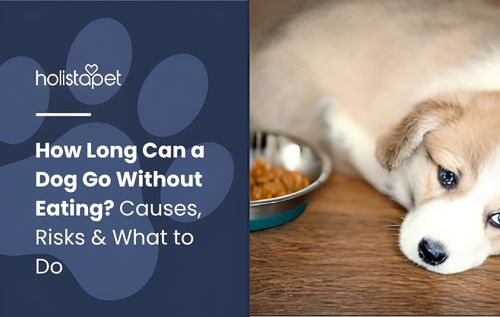
When your dog suddenly refuses food, it can be worrying. You may find yourself asking, how long can a dog go without eating before it becomes serious?
In many cases, a skipped meal is not an emergency. However, prolonged refusal to eat may indicate an underlying issue that needs attention. Understanding the possible causes and knowing when to act can help you support your dog’s health and well-being.
This guide explains why dogs stop eating, how long they may safely go without food, and what steps you can take to help restore their appetite.
Why Do Dogs Stop Eating?

A dog’s loss of appetite can be caused by physical, emotional, or environmental factors. Some of the most common reasons include:
Pain or discomfort
Dogs experiencing injury, joint pain, or stomach upset may lose interest in food. Even mild discomfort can affect their appetite.
Food sensitivities or allergies
Some dogs may react to certain ingredients or environmental triggers, which can lead to digestive discomfort or food refusal.
Dental problems
Oral pain from gum disease, tooth decay, or broken teeth can make chewing uncomfortable, causing dogs to avoid eating.
Stress, anxiety, or mood changes
Research has shown that dogs can experience emotions similar to our own, so changes in routine, environment, or household dynamics can affect a dog’s emotional state and reduce appetite.
In some cases, emotional stress or behavioral issues may also affect appetite, which is why approaches like our aggressive dog training can help support calmer routines and better overall behavior.
Is It Normal for a Dog to Skip Meals?

Occasionally skipping a meal is not uncommon in healthy dogs. Temporary appetite loss may occur due to minor stomach upset, stress, or environmental changes.
However, if your dog refuses food for more than 24–48 hours, it is important to monitor them closely. Persistent appetite loss may indicate a health concern that requires veterinary attention.
How Long Can a Dog Go Without Eating?
Most healthy dogs can survive without food for approximately 3 to 5 days, provided they continue drinking water. However, this does not mean it is safe or advisable to wait that long.
A dog’s energy levels and health can begin to decline much earlier, especially if they are also showing other symptoms such as lethargy, vomiting, or behavioral changes.
Water intake is far more critical. Dogs should never go more than 24 hours without drinking water, as dehydration can become serious quickly.
If your dog refuses both food and water, seek veterinary care immediately.
What You Can Do If Your Dog Is Not Eating?
If your dog has stopped eating, there are several safe steps you can try before seeking medical care (if they are otherwise stable).
1. Check their environment
Dogs may avoid eating due to stress around their food bowl. Try moving their feeding area to a quieter, calmer space.
2. Encourage light exercise
Short walks or gentle play can help stimulate appetite, especially when paired with consistent routines and expert dog care advice. Physical activity naturally supports hunger in many dogs.
3. Evaluate their food
Your dog may be reacting to taste, texture, or ingredient changes. Consider whether their current food is appropriate for their age, breed, or health needs.
4. Observe food preferences
Some dogs are selective eaters. However, sudden pickiness combined with other symptoms should not be ignored.
What to Feed a Dog That Won’t Eat 
If your dog has a mild stomach upset and your veterinarian approves, you may offer bland, easy-to-digest foods such as:
- Plain boiled chicken (no seasoning or skin)
- Plain cooked pumpkin
- Bone broth (low sodium, no seasoning)
- Vet-approved recovery diets or soft food options
Avoid introducing multiple new foods at once, as this may further upset digestion.
Some pet owners also add a dog probiotic supplement to help support digestive balance during mild stomach upset.
A veterinarian may also recommend supportive nutrition products such as a canine multivitamin supplement to help maintain daily wellness during recovery.
When to See a Vet
You should contact a veterinarian if your dog:
- Refuses food for more than 24–48 hours
- Refuses water or shows signs of dehydration
- Appears weak, lethargic, or in pain
- Is vomiting or has diarrhea
- Shows sudden behavioral changes
Loss of appetite can be an early sign of conditions such as infections, dental disease, organ issues, or metabolic disorders. Early evaluation helps ensure proper treatment.
If your dog also has cuts, irritation, or visible skin injuries, using an appropriate dog wound ointment may help support topical care alongside veterinary guidance.
Final Thoughts
A dog refusing food is not always an emergency, but it should never be ignored for too long. While many dogs recover their appetite within a short time, ongoing refusal to eat or drink requires professional evaluation.
Pay attention to your dog’s behavior, energy levels, and hydration. When in doubt, consulting a veterinarian is the safest step to protect your pet’s health.
Some pet owners also explore wellness options like a dog CBD tincture collection or calming CBD dog biscuits to help support relaxation and appetite during stressful periods.
FAQs
How long can a dog go without eating?
Generally speaking, most healthy dogs can go without food for about three to five days, but that does not mean they should. A dog can typically survive longer without food than without water, but refusing food for more than 24–48 hours is still a reason to monitor them closely. The article notes that dogs must keep drinking water during this time because dehydration can become dangerous much faster than hunger.
How long can a dog go without eating if they are still drinking water?
If your dog is drinking water normally, they may be able to go a few days without eating food, especially if they are otherwise acting normal. However, a dog owner should not wait too long before seeking veterinary advice. If your dog’s appetite does not return after a day or two, or your furry friend has other symptoms, it is best to contact a vet sooner.
How long can a dog go without eating or drinking?
A dog should never go long without eating or drinking. While long dogs and small dogs may have different energy needs, water is always essential. If your dog refuses water for a full day, a vet visit is urgent. Changes in eating or drinking habits can point to an underlying health problem, especially if your dog stops eating and also becomes weak, lethargic, or withdrawn.
When should I worry if my dog refuses food?
You should worry if your dog refuses food for more than 24 hours, has severe symptoms, or shows changes in drinking habits, energy, stool, vomiting, or behavior. Refusing food can occur due to an upset stomach, stress, dental or mouth pain, kidney failure, low blood sugar, or other health issues. If your dog’s appetite drops suddenly and they are eating or drinking much less than usual, seek advice from your vet clinic.
Can adult dogs safely skip a meal?
Yes, many adult dogs may skip one meal without serious consequences, especially if they are healthy dogs and still drinking water. Most adult dogs may start eating again by the next meal. However, if your dog repeatedly refuses their regular food, has a decreased appetite, or is not acting like themselves, it may be more than simple picky eating.







1 comment
Jeanne Blackburn
My small pooshon has crystals in here urinary tract so needs to eat prescription diet food. It as been 3 days now and she won’t eat, but drinks a lot. She has always been picky.
Leave a comment
All comments are moderated before being published.
This site is protected by hCaptcha and the hCaptcha Privacy Policy and Terms of Service apply.