

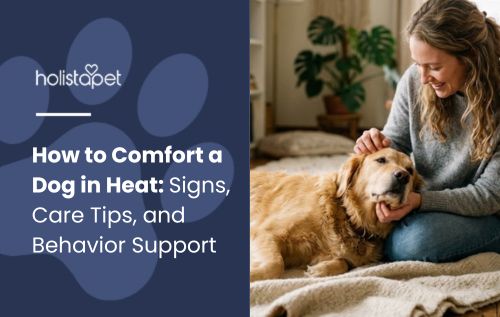
When a female dog enters her heat cycle, her body undergoes hormonal changes that can affect her behavior, comfort level, and daily routine. Understanding how to comfort a dog in heat can help you support her needs while keeping her safe, clean, and calm throughout the cycle.
Providing a stable environment, proper hygiene care, and gentle attention can help reduce stress and make this period easier for both the dog and the owner, find more dog owner tips covering everyday canine wellness and care routines.
Understanding the Heat Cycle in Dogs

The canine heat cycle isn't just a phase but a whole experience. When your female dog enters this stage, her body gears up for potential motherhood with hormonal changes that can lead to noticeable shifts in her behavior and mood.
Typically, a dog's heat cycle begins around six months old for smaller breeds, though larger breeds may take a little longer. During this time, you'll notice signs like a swollen vulva, bloody discharge, and even mood swings.
Common Signs That Your Dog Is in Heat
When female dogs are in heat, they might display some telltale signs that can clue pet parents right away. These physical and behavioral changes are normal, but keeping a close eye on your pup can help her stay comfy and happy:
-
Swollen Vulva. A noticeable physical change indicating her body is ready for reproduction.
-
Bloody Discharge. This can vary from light spotting to a more pronounced discharge.
-
Mood Shifts. Her emotions might fluctuate from being extra cuddly to acting a bit aloof.
-
Increased Urination. A way for her to spread her scent and signal readiness to male dogs.
-
Restlessness. She may seem more fidgety or unable to relax.
How to Comfort a Dog in Heat
Understanding how to comfort a dog in heat is all about meeting her needs while keeping her calm and happy. These thoughtful steps can help your dog feel her best, even when her hormones are in overdrive:
-
Create a Cozy Space. Give her a quiet, comfortable environment with her favorite blankets and toys.
-
Offer a Little Extra Attention. Gentle pets and soothing words can ease her mood shifts and help her feel secure.
-
Keep Her Active. Gentle exercise like short walks or mental stimulation with puzzle games can help reduce stress and restlessness.
-
Maintain Hygiene. Use dog diapers to manage any mess and keep her feeling fresh.
-
Consider Calming Products. Natural calming items like hemp dog treats or premium CBD oil for dogs can promote rest and relaxation during this time.
Managing Behavioral Changes in Dogs in Heat
Dogs in heat may experience noticeable behavioral changes, including increased clinginess, restlessness, or bursts of energy. Managing these changes requires patience, consistency, and a calm environment.
Providing mental stimulation, such as puzzle toys or chew toy can help redirect energy in a positive way. Short, controlled walks or safe exercise in a fenced area may also help reduce restlessness while keeping your dog secure.
Minimizing Restlessness and Excess Energy
A combination of mental stimulation and light exercise can help manage restlessness during a dog’s heat cycle. Keeping a consistent routine may also support calmer behavior.
Some pet owners consider calming aids such as dog multivitamin soft chews as part of a broader care routine. However, effectiveness may vary depending on the dog, and these should only be used with caution.
Only use veterinarian-approved or pet-formulated calming products, and always follow dosage instructions carefully. These aids should not replace proper supervision, care, or veterinary advice. Supporting gut balance with dog probiotics during this period may also help maintain overall comfort as hormonal shifts can sometimes affect digestion.
Preventing Escape Attempts During Heat
When a female dog is in heat, her behavior may become more driven by instinct, including a stronger interest in seeking male dogs. Careful supervision is important during this time.
Keep your dog indoors or in a secure, fenced area when outside understanding where do fleas hide is also worth knowing since outdoor exposure during heat increases contact risk. Avoid dog parks or areas where intact male dogs may be present.
Use a secure leash during walks, and ensure doors, gates, and enclosures are properly closed. If there is an intact male dog in the household, separation is necessary unless closely supervised.
Hygiene and Care During the Heat Cycle
Maintaining hygiene during a dog’s heat cycle helps support comfort and cleanliness.
Gently cleaning your dog with a soft, damp cloth can help remove discharge and reduce irritation. Dog diapers or absorbent pads may also be used to manage mess more effectively.
Regular cleaning and changing of materials helps prevent discomfort and supports skin health.
Keeping Your Dog Clean and Comfortable
Cleanliness is an important part of care during a dog’s heat cycle. Checking your dog regularly for signs of irritation and keeping the area clean can help maintain comfort, the VCA: Pruritus (Itching) in Dogs resource offers helpful guidance on identifying skin-related discomfort during sensitive periods.
Dog diapers or pads can be used to manage discharge and protect furniture. These should be changed frequently to maintain hygiene and prevent skin irritation.
Some dogs may take time to adjust to wearing diapers. Gradual introduction and positive reinforcement can help with acceptance.
Using Dog Diapers or Pads for Mess Management

Doggy diapers or pads are handy tools for managing discharge. They keep your home clean while making sure your pup stays comfortable. Look for diapers that fit snugly but aren't too tight.
Change the diapers and pads frequently to prevent irritation and keep your dog feeling fresh, refer to the Merck Vet Manual: Skin Disorders Overview for guidance on preventing skin issues caused by prolonged moisture or friction. For pets not used to wearing diapers, a little positive reinforcement with treats can help them adjust.
Should You Consider Spaying Your Dog?
It's worth considering spaying your female dog for the long-term health benefits. Spaying eliminates the stress of managing heat cycles and prevents unwanted pregnancies, making life easier for pets and their humans.
This procedure also reduces the risk of certain health issues and can help with behavioral issues linked to hormonal shifts. While spaying isn't for every breed or situation, talking to your vet can help you make an informed decision that's best for your furry friend.
Benefits of Spaying for Long-Term Comfort
Spaying your dog offers plenty of perks that can improve her overall health and simplify her care. Discuss these benefits with your vet to see if spaying aligns with your dog's needs and lifestyle:
-
No More Heat Cycles. Eliminates the hormonal fluctuations and behavioral shifts that come with being in heat.
-
Prevents Unwanted Pregnancy. Keeps your pup safe from unexpected puppies and reduces the risk of complications.
-
Reduces Certain Health Risks. Can lower the likelihood of specific reproductive health issues later in life.
-
Calmer Behavior. Helps with mood shifts and behavioral issues caused by hormonal fluctuations.
Related Post: Dog Spay After Care: Smooth Recovery Tips
When To Consult a Veterinarian
Sometimes, managing your dog's heat cycle may require a little extra guidance. If you notice anything unusual, reaching out to your vet can give you peace of mind and ensure your pup stays healthy. Here are a few instances when it's best to consult a professional:
-
Signs of Complications During Heat. Excessive bleeding, lethargy, or other unusual symptoms may indicate a problem.
-
Addressing Unusual Behavior or Health Concerns. If your dog displays extreme mood shifts or changes in her eating habits, it's worth investigating further.
Don't delay consulting an expert when you notice these signs. Your vet can provide expert advice to keep your furry companion comfortable and safe, no matter what stage of the canine heat cycle she's in.
For more seasonal and lifestyle guidance, read about whether can you really bring your dogs to the beach safely, especially relevant during warmer months when heat cycles and outdoor activity overlap.
Final Thoughts
Caring for a dog in heat takes patience, comfort, and close attention. By keeping her clean, calm, and safely away from male dogs, you can reduce stress, prevent unwanted pregnancies, and support her well-being until her cycle ends.
FAQs About How to Comfort a Dog in Heat
1. What does it mean when a dog is in heat?
A dog in heat is going through the female dog's reproductive cycle, also called the estrous cycle or estrus cycle. During this time, hormonal changes prepare her body for mating and possible pregnancy. Common signs include a swollen vulva, bloody discharge, vaginal discharge, mood changes, and restlessness. Most dogs go into heat about twice a year, but this can vary by breed, dog ages, and overall health.
2. What are the first signs my dog is in heat?
The first stage of the heat cycle often includes physical changes like a swollen vulva, bloody discharge, and increased licking. You may also notice behavior changes, such as clinginess, nervousness, or wanting extra attention. Some dogs may feel uncomfortable, while others act mostly normal.
3. How long does one heat cycle last?
A dog’s cycle usually lasts around two to three weeks, though the exact cycle lasts differently for each dog. The fertile period often happens during the estrus stage, which may last about nine days. During this time, she may attract male dogs and become more interested in mating.






Leave a comment
All comments are moderated before being published.
This site is protected by hCaptcha and the hCaptcha Privacy Policy and Terms of Service apply.