

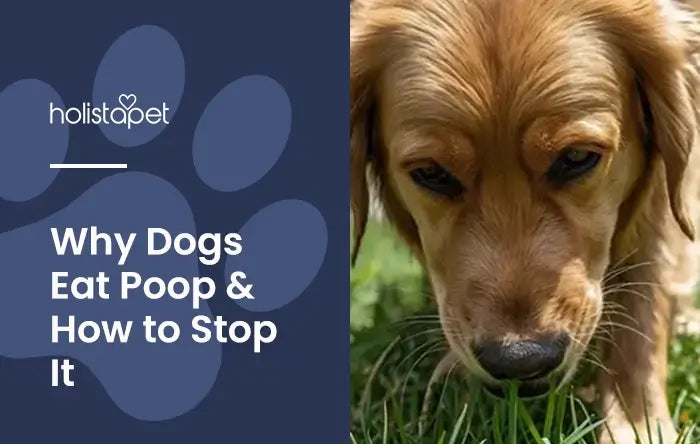
Eating poop is normal dog behavior. VCA Animal Hospitals notes that 23% of dogs have eaten poop at least once, and mother dogs eat their puppies' waste to keep the den clean. Hunger, boredom, stress, and illnesses such as exocrine pancreatic insufficiency can also contribute. Other dogs' poop can carry worm eggs, so clean up promptly and have your vet rule out a medical cause.
Key points
- Poop eating with weight loss, loose stools, or an increased appetite needs a vet visit. These are common signs of exocrine pancreatic insufficiency, says the Merck Veterinary Manual.
- Manure from recently dewormed horses can cause ivermectin poisoning. Dogs with the MDR1 (ABCB1) gene mutation, such as collies and Australian shepherds, are extremely sensitive, warns Pet Poison Helpline.
- Pick up poop right away, and call your dog to you for a treat as soon as it has pooped, as the AKC suggests.
- Give your dog at least 30 minutes of aerobic exercise a day, one of the first steps recommended by the American Veterinary Society of Animal Behavior (AVSAB).
- AVSAB notes that taste-deterrent chews have not been systematically tested, and VCA says these products may work for only a small percentage of dogs.
Why does my dog eat poop?
Eating poop, called coprophagia, is considered a completely normal behavior for dogs, which have a long history of scavenging for food, says VCA Animal Hospitals. VCA cites research in which as many as 16% of dogs were frequent poop eaters, and 23% had eaten poop at least once.
Normal does not always mean harmless. This table summarizes the causes identified by behavior experts and researchers, the clues that point to each one, and what to do next.
| Cause | Clues you may see | What to do | Source |
|---|---|---|---|
| A mother dog cleaning up after her litter | A nursing mother licks her puppies and eats their waste | Nothing: this is how she keeps the den clean |
AVSAB |
| Normal scavenging | Your dog eats poop it finds on walks or in the yard | Clean up promptly, teach a strong "drop it" and mention the habit at your dog's next vet visit | VCA Animal Hospitals |
| Hunger or the feeding routine | Only one meal a day, or long hours shut in with little to do | Ask your vet about the amount and the number of meals |
2022 paper in Veterinary Sciences |
| A medical problem such as exocrine pancreatic insufficiency | Weight loss, loose stools, a bigger appetite, pale and bulky stools | Book a vet visit |
Merck Veterinary Manual |
| Boredom, stress or anxiety | Long confinement with little exercise, play or company | Daily exercise and play, and a better home-alone setup | AVSAB |
| Attention from you | You rush over whenever your dog sniffs poop | Stay calm and call your dog to you for a treat | AVSAB |
| Another poop eater in the home | A second dog or other pet in the house eats poop too | Supervise every pet and clean up right away | 2022 paper in Veterinary Sciences |
Is it normal for puppies and mother dogs to eat poop?
Yes. After a litter is born, the mother dog licks each pup's rear end to help it pee and poop. She then eats the waste to keep the den clean, AVSAB explains. VCA considers poop eating normal dog behavior and recommends two habits for puppies: clean up promptly, and teach a reliable “drop it” command.
Hunger and mealtimes
Hunger can play a role. AVSAB describes dogs that began eating feces out of hunger, boredom, or anxiety while confined to a crate or pen for long periods with little to do. The 2022 paper in Veterinary Sciences lists feeding only one meal a day among the possible causes identified in earlier research.
If your dog seems hungry all the time, ask your vet whether the food amount and number of meals suit your dog's needs. An increased appetite combined with weight loss is a medical clue, covered below.

Is poop eating a sign of a vitamin deficiency?
Not necessarily. AVSAB notes that various medical and nutritional conditions can cause poop eating, which is why a vet exam comes before any training plan. The 2022 paper adds that there is no scientific evidence that an unbalanced diet causes the habit. Let your vet check before adding a supplement. To learn what a complete and balanced food already provides, read about whether dogs need vitamins.
Medical causes your vet looks for
Exocrine pancreatic insufficiency (EPI) is one disease that may cause poop eating, VCA notes. With EPI, the pancreas produces and releases too few of the enzymes needed to digest food, the Merck Veterinary Manual explains.
The most commonly reported signs in dogs with EPI are weight loss and loose stools. Affected dogs also commonly have an increased appetite. Their stool is usually pale, loose, and bulky, and it may smell bad. Your vet confirms EPI with a blood test that measures serum trypsin-like immunoreactivity (TLI). Your vet may also check a stool sample for worm eggs, as the next section explains.
Boredom, stress and attention
Dogs left alone for long hours without exercise or play may start eating poop out of boredom or anxiety, AVSAB notes. The Merck Veterinary Manual's owner guide groups poop eating with eating nonfood items (pica) and scavenging. These behaviors can be part of a compulsive disorder or simply normal exploration. If your dog seems stressed in other ways, too, read about the signs of stress in dogs.
Your reaction matters, too. Owners can accidentally reward the habit by rushing over to interrupt with play or picking the dog up for a cuddle, AVSAB warns. The 2022 paper also lists stress and punishment among the possible causes. If your dog also eats grass or plants, see why dogs eat weeds.
Is it bad if my dog eats poop?
It can be. The main risks are parasites and other diseases from other animals' poop, along with drug poisoning from the manure of recently dewormed horses. A puppy that eats other dogs' poop could easily pick up diseases and parasites, warns VCA Animal Hospitals.
The risk depends on whose poop your dog ate. Let's take a closer look below.
| Whose poop | Main risk | What to do |
|---|---|---|
| Other dogs' poop | Diseases and parasites; roundworm eggs can come from the feces of infected dogs, per VCA's roundworm page |
Walk on a leash, pick up promptly, and ask your vet about a stool test |
| Horse manure | Ivermectin poisoning if the horses were recently dewormed; dogs with the MDR1 (ABCB1) gene mutation are extremely sensitive, per Pet Poison Helpline |
Keep your dog out of horse areas, and call your vet or Pet Poison Helpline if it ate some |
| Any poop, eaten by a healthy dog | A 2026 study of 44 healthy dogs found poop eaters carried no more of the tested germs; it did not test parasites, per Animals (2026) |
Clean up promptly and keep up your dog's routine stool checks |
Can dogs get worms from eating poop?
Yes. Dogs get roundworms by swallowing roundworm eggs in the environment, which can come from infected dogs' feces, VCA explains. An adult dog may show no signs or only soft stool and vomiting. A puppy may have a pot-bellied appearance, vomiting, diarrhea, and poor growth.
Your vet detects the infection by examining a small stool sample under a microscope, a test called fecal flotation, or by using a PCR test on the sample. VCA also advises proper disposal of pet feces, especially in yards and playgrounds.
Is horse poop dangerous for dogs?
It can be if the horses were recently dewormed. Pet Poison Helpline reports accidental ivermectin poisoning in dogs that ate feces from recently dewormed horses. Dogs that eat horse dewormer are also at risk because it contains large amounts of ivermectin. Dogs with the MDR1 (ABCB1) gene mutation, such as collies, Border collies, Australian shepherds, and Old English sheepdogs, are extremely sensitive to this drug class.
Signs include dilated pupils, trouble walking, tremors, drooling, seizures, and coma. Without aggressive treatment, the poisoning can be deadly. If your dog ate horse manure and the horses may have been recently dewormed, call your vet or Pet Poison Helpline at (855) 764-7661 right away. An $89 incident fee applies.
Does eating poop make a healthy dog sick?
Not necessarily. In the 2026 study in Animals, owners reported that 23 healthy dogs ate feces. These dogs carried no more of the tested gut germs, such as Campylobacter, Salmonella, and Clostridioides difficile, than the 21 dogs that did not eat feces. Their core gut bacteria also looked the same.
The study was small, relied on owner reports, and did not test for parasites, so it does not rule out the worm risk described above.
What to do when you catch your dog eating poop
Keep calm, call your dog to you, and clean up what is left. Then consider whose poop it was, because manure from dewormed horses requires a call to your vet.
- Call your dog away in a cheerful voice, and give a treat when it comes to you. The AKC suggests building this habit right after every potty break.
- Pick up the remaining poop and any other piles in the yard. VCA Animal Hospitals advises cleaning up promptly after a puppy.
- If it was horse manure and the horses may have been recently dewormed, call your vet or Pet Poison Helpline at (855) 764-7661 now.
- Write down what happened: whose poop it was, how often you have seen the behavior, and any changes in appetite, weight, or stool. AVSAB advises giving your vet a full description of the behavior.
Should I punish my dog for eating poop?
No. A 2022 paper in Veterinary Sciences lists punishment by owners who catch their dogs eating feces among the possible causes. AVSAB also notes that even a rushed, friendly interruption can reward the habit. A calm recall and a treat show your dog what to do instead.
When to call the vet about poop eating
Call right away if your dog ate manure from recently dewormed horses or shows signs of poisoning. Book a visit soon if poop eating comes with weight loss, loose stools, or an increased appetite. Any dog that regularly eats poop needs a routine exam before starting a training plan.
Use this guide to decide how quickly to act.
| What you see | What to do |
|---|---|
| Dilated pupils, trouble walking, tremors, drooling or seizures after your dog ate horse manure or horse dewormer | Emergency: call your vet or Pet Poison Helpline at (855) 764-7661 now. |
| Your dog ate manure from horses that may have been dewormed recently, with no signs yet | Call your vet or Pet Poison Helpline now. Dogs with the MDR1 (ABCB1) gene mutation are extremely sensitive to ivermectin. |
| Poop eating with weight loss, loose stools or a bigger appetite | Book a vet visit soon. These are common signs of exocrine pancreatic insufficiency, per the Merck Veterinary Manual. |
| Pale, loose, bulky stools that may smell bad | Book a vet visit and bring a fresh stool sample. |
| A puppy with a pot belly, vomiting, diarrhea or poor growth | Book a vet visit for a stool test, as VCA Animal Hospitals describes for roundworms. |
| A healthy dog that eats poop as a habit | Book a routine exam before you start a training plan, as AVSAB advises. |
What your vet checks
Your vet starts with an exam and your description of the habit, so bring your notes. They may check a stool sample for worm eggs using fecal flotation or PCR. If the signs point to EPI, they may also run a blood test that measures serum trypsin-like immunoreactivity (TLI). Once your vet has checked for medical causes, the training plan below is the next step.
How to stop a dog from eating poop
Start with a vet check, then remove opportunities to eat poop: clean up, supervise, and teach “leave it” and “come.” Add daily exercise, and keep your reactions calm, as the American Veterinary Society of Animal Behavior advises.
Step 1: Clean up before your dog can reach it
Keep the yard free of poop, and pick up right after your dog goes, as the AKC advises. AVSAB recommends diligent yard cleaning, and VCA Animal Hospitals advises cleaning up promptly after puppies. Long-handled poop scoopers for the yard make daily cleanup faster.
Step 2: Supervise yard time and walk on a leash
Go outside with your dog, even in your own yard, so you can intervene before it reaches a pile. The AKC advises supervising your dog on walks, and AVSAB recommends closer supervision in the yard. A leash keeps your dog away from other dogs' poop on walks.

Step 3: Teach "leave it", "drop it" and "come"
Practice these cues every day, away from poop at first. The AKC recommends “leave it” and “come,” VCA recommends a reliable “drop it,” and AVSAB lists “leave it” or “stay.”
Step 4: Make a treat the post-potty routine
Call your dog to you for a treat as soon as it has pooped, the AKC suggests. This builds a routine of “poop, then run to you.” AVSAB suggests a recall or a game of catch right after each potty break.
Step 5: Add exercise and play
Give your dog at least 30 minutes of aerobic activity a day, plus social time such as play, walks, or car rides, AVSAB advises. If your dog spends long hours confined to a crate or pen, change where it spends that time or how long it is left alone. For dogs that began eating poop in those circumstances, AVSAB addresses the home-alone setup first.
Step 6: Keep the cat litter box out of reach
Keep the litter box clean and out of your dog's reach, or block access with a gate, the AKC advises.
Step 7: Review meals with your vet
Ask your vet whether your dog's food, portion size, and number of meals are appropriate. Feeding only one meal a day is among the possible causes listed in a 2022 paper in Veterinary Sciences, and AVSAB notes that a better-quality food sometimes lowers interest in feces. To check the daily amount, start with the dog calorie calculator, then confirm the number with your vet.
Daily stop-plan checklist
- Before yard time: Check the yard for poop, and pick it up.
- On walks: Keep your dog on a leash, and pick up right after it goes.
- After every potty break: Call your dog to you, and give a treat.
- Exercise: At least 30 minutes of aerobic activity, plus play.
- Training: A few short practice rounds of “leave it,” “drop it,” and “come.”
- Litter box: Keep the gate closed and the box clean.
-
Your reaction: Use a calm voice, with no punishment.
Do taste deterrents and food additives work?
The evidence is limited. AVSAB notes that soft chews designed to make feces taste or smell less appealing are available, but their effectiveness has not been systematically tested. VCA says these products are safe to try, though they may work for only a small percentage of dogs.
AVSAB adds that some owners report less interest in poop after adding pineapple to their dog's food. This is based on owner reports, not trials. Use any additive as an addition to cleanup and training, not as the entire plan.
A daily digestion routine for your dog
A simple digestion routine includes meals at set times, fresh water, and food that suits your dog. Some owners also add a daily probiotic. This routine focuses on everyday digestion, not the poop-eating habit: no source in this article tested a probiotic for poop eating.
Probiotics are beneficial microorganisms that live in a dog's intestines and boost healthy gut bacteria that help digest food, according to Cornell's Riney Canine Health Center. If you add one, Cornell suggests checking the label for an expiration date, the exact species, the number of microorganisms, and a guarantee of live organisms.

HolistaPet makes Probiotics for Dogs, soft chews designed to support normal digestion as part of a daily routine. Visit the product page for label details on HolistaPet's probiotic soft chews, and ask your vet whether a daily probiotic is a good fit for your dog.
Next step: book a vet check, then start the plan
Book a vet check this week, and bring your notes on the habit. AVSAB recommends an exam before any training plan. Start cleanup and supervision today to remove opportunities to eat poop. To learn what healthy digestion and stool look like, read about the signs of a healthy dog gut.
Browse all dog care blogs here
Sources
- VCA Animal Hospitals. Why Is My Puppy Eating Poop. Undated.
- American Veterinary Society of Animal Behavior (Megan E. Maxwell, PhD, CAAB). Coprophagia: My Dog Eats His Own Waste. 2018.
- Vendramini and colleagues, Veterinary Sciences (MDPI). Evaluation of the Influence of Coprophagic Behavior on the Digestibility of Dietary Nutrients and Fecal Fermentation Products in Adult Dogs. 2022.
- Merck Veterinary Manual (Jörg M. Steiner). Exocrine Pancreatic Insufficiency in Dogs and Cats. 2025.
- Merck Veterinary Manual, Dog Owners version (Gary M. Landsberg). Behavior Problems in Dogs. 2026.
- VCA Animal Hospitals (Malcolm Weir, Ryan Llera, Amy Panning, Ernest Ward). Roundworm Infection in Dogs. 2025.
- Pet Poison Helpline. Ivermectin. 2022.
- Pilla and colleagues, Animals (MDPI). Coprophagy in Healthy Dogs Does Not Alter Fecal Core Microbiota or Increase Carriage of Enteropathogens. 2026.
- American Kennel Club. Why Dogs Eat Poop and How to Stop It. 2026.
- Cornell University College of Veterinary Medicine, Riney Canine Health Center. The power of probiotics. Undated.





Leave a comment
All comments are moderated before being published.
This site is protected by hCaptcha and the hCaptcha Privacy Policy and Terms of Service apply.