

Dogs need lysine to support immunity, recovery, and daily health. Many diets fall short, especially during stress or illness. Knowing when and how to give lysine helps keep a dog strong and resilient.
What is Lysine?
Lysine is an essential amino acid that dogs must get from food since the body cannot produce it. It supports protein production, helps build and repair tissues, and plays a key role in immune function.
Many dog foods contain lysine, but some dogs need extra support during illness, stress, or recovery.
How Does Lysine Help Dogs?

Lysine supports immune response by contributing to antibody production and cellular defense mechanisms, which helps animals better tolerate infections. Study indicates lysine’s role in immune response: “Amino acids and immune function,” Journal of Nutrition
Supports Immune Defense
Lysine helps the body respond to infections and maintain strong defenses.
- Aids antibody production
- Helps reduce severity of certain viral flare ups
- Research from the University of Maryland Medical Center links lysine to improved immune response in animals
Promotes Tissue Repair
Dogs need lysine to rebuild and maintain body tissues.
- Supports muscle repair after activity or injury
- Helps with wound healing
- Contributes to collagen formation for skin and joints
Helps Manage Stress Recovery
Stress can weaken a dog’s system and slow recovery.
- Supports faster recovery during illness
- Helps maintain appetite and energy levels
- Useful during travel, environment changes, or post surgery care
Supports Healthy Growth
Growing dogs need consistent nutrient support.
- Aids proper development of muscles
- Supports protein synthesis for growth
- Helps maintain overall body condition in young dogs
Can Dogs Have Too Much Lysine?

Yes, dogs can get too much lysine, but excess intake rarely causes serious issues when given in proper amounts.
High doses can lead to mild side effects, especially if supplementation goes beyond recommended levels.
- Upset stomach
- Diarrhea
- Reduced appetite
Very high intake over time may disrupt nutrient balance.
- Can interfere with arginine levels, another essential amino acid
- May affect metabolic processes if not properly balanced
Veterinary guidance matters when adding supplements.
- Follow dosage based on weight and health condition
- Avoid combining multiple supplements with overlapping ingredients
- Consult a vet for long term use, especially in dogs with existing conditions
Stick to appropriate dosing to avoid unnecessary risks while still gaining the benefits.
How Do I Know If My Dog Needs More Lysine?
Dogs may need more lysine when signs of poor recovery, low immunity, or slow growth appear.
- Frequent infections: Recurring illness or slow recovery from common infections.
- Delayed wound healing: Cuts or injuries take longer to close and repair.
- Low energy levels: Reduced activity or quick fatigue during normal routines.
- Poor coat condition: Dull fur, excessive shedding, or weak hair growth.
- Loss of appetite: Eating less than usual without a clear cause.
- Stunted growth: Slower development in puppies compared to expected growth rates.
How Can I Give Lysine to My Dog?

You can give lysine through food, supplements, or targeted products. The best method depends on a dog’s needs, routine, and tolerance.
|
Method |
Best For |
Key Advantage |
Limitation |
|
Natural food sources |
Daily maintenance |
Nutrient rich and balanced |
May not meet higher needs |
|
Powder supplements |
Flexible dosing |
Easy to mix and adjust |
Requires measuring |
|
Tablets or chews |
Convenience |
Pre measured and portable |
Some dogs may refuse |
|
Mixed with food |
Picky eaters |
Improves intake consistency |
Depends on appetite |
|
HolistaPet products |
Daily support |
Clean and easy to use formulas |
Requires consistent use |
Add Lysine Through Diet
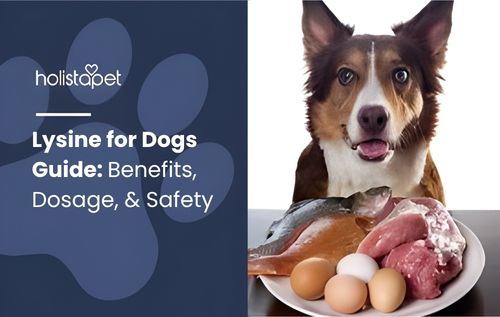
Animal proteins such as beef, chicken, turkey, and fish contain high levels of lysine compared to plant-based sources. Processing, especially high-heat extrusion used in kibble, reduces lysine availability because heat breaks down lysine’s structure, making it less usable for absorption. [National Center for Biotechnology Information (PubChem)]. Food provides the most natural source of lysine and works well for daily support.
- High protein foods like meat and fish naturally contain lysine.
- Balanced diets help maintain daily nutrient intake.
- Processing methods in kibble can reduce usable lysine levels, as noted in findings published in The Journal of Nutrition.
Use Powder Supplements
Powder remains one of the most common and flexible options.
- Mixes easily into meals without changing feeding habits.
- Allows accurate dosing based on size and health needs.
- Research shows lysine supports protein synthesis and immune response in animals.
Give Tablets or Chews
Tablets and chews offer convenience for structured supplementation.
- Pre measured servings simplify daily use.
- Fits easily into a consistent routine.
- Flavored options help improve acceptance.
Mix with Wet Food or Treats
Combining lysine with palatable food improves consistency.
- Encourages dogs to consume supplements without resistance.
- Helps reduce digestive discomfort when taken with meals.
- Veterinarians like Dr. Duncan Houston recommend giving lysine with food for better tolerance.
Use HolistaPet Lysine Support Products
At HolistaPet, clean formulations focus on ease and consistency without unnecessary fillers.
- Soft chews and powders support simple daily use.
- Natural ingredient profiles align with wellness focused care.
- Designed to fit seamlessly into regular feeding routines.
Related Post: Top 9 Superfoods for Your Dog's Diet
When Do Visit the Vet for Lysine Deficiency in Dogs?

Visit a vet when signs of deficiency persist or worsen despite proper diet and care. Early evaluation helps prevent complications and ensures accurate treatment.
Ongoing or severe symptoms need professional attention.
- Frequent infections that do not improve with basic care
- Wounds that heal slowly or reopen
- Noticeable weight loss or muscle decline
Behavioral and physical changes can signal deeper issues.
- Low energy that affects daily activity
- Poor coat quality that does not improve with diet changes
- Reduced appetite lasting more than a few days
Certain dogs need closer monitoring.
- Puppies with delayed growth
- Dogs recovering from illness or surgery
- Pets with chronic conditions that affect nutrient absorption
A vet can confirm the issue and guide treatment.
- May recommend dietary adjustments or targeted supplementation
- Can rule out other conditions with similar symptoms
- Provides safe dosing based on the dog’s size and health status
Lysine is Essential for All Canines
Lysine supports key functions that keep dogs healthy, especially during stress, growth, or recovery. Proper intake, the right method, and timely vet guidance help ensure a dog gets the support it needs without risk.
Frequently Asked Questions
Can lysine help dogs with respiratory issues?
Lysine may support immune response, which can help dogs handle certain respiratory infections. It does not replace veterinary treatment.
Is lysine safe for long term use in dogs?
Most dogs tolerate lysine well when given in proper amounts. A vet should guide long term use to ensure balanced nutrition.
Do all dog breeds need lysine supplements?
Not all dogs need supplements. Dogs on complete and balanced diets usually get enough lysine from food.
Can lysine interact with other supplements?
Yes, lysine can affect how other amino acids work in the body. Avoid combining supplements without checking with a vet.
What time of day should lysine be given to dogs?
Give lysine with meals to improve absorption and reduce stomach discomfort. Consistency matters more than timing.
Is lysine better from food or supplements?
Food provides natural lysine for maintenance. Supplements help when a dog needs extra support beyond diet.







1 comment
Iris
Is lysine good for diabetic dog beginning to lose eyesight?
Leave a comment
All comments are moderated before being published.
This site is protected by hCaptcha and the hCaptcha Privacy Policy and Terms of Service apply.