

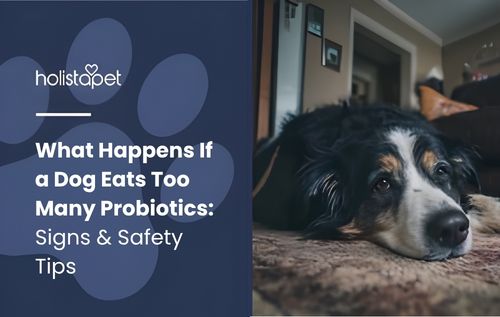
When a dog consumes too many probiotics, the digestive system may become temporarily unsettled. Since gut bacteria function in a carefully balanced environment, excessive intake can interfere with normal digestive activity.
This imbalance may result in mild gastrointestinal changes such as gas, loose stool, or temporary discomfort. In most cases, these effects are short-term and improve once probiotic intake is reduced or paused.
Why Probiotics Are Given to Dogs

Probiotics for dog gut health support normal digestive function by helping maintain a balanced gut environment.
Potential roles of probiotics in dogs may include:
- May help support normal digestive function and gut balance
- Helping maintain balanced gut bacteria
- May help support normal immune function
- Assisting nutrient absorption
- May contribute to general wellness as part of a balanced diet
These supplements are best used as part of a balanced digestive care routine and are not a substitute for veterinary care.
How Probiotics May Support Digestive Health
Probiotics introduce beneficial bacteria that may help support a balanced gut environment and normal digestive processes. This may help support regular stool consistency and normal nutrient breakdown, depending on the dog’s individual condition.
A balanced gut environment may support:
- Regular stool consistency
- Efficient nutrient breakdown
- Normal intestinal function
However, the effects of probiotics may vary depending on the dog’s age, diet, and overall health condition.
Can Dogs Have Too Much Probiotics?
Yes. While probiotics are generally considered safe, excess intake may cause digestive imbalance.
Dogs have different digestive systems than humans, so dosage must be carefully adjusted based on:
- Body weight
- Age
- Product strength (CFU count)
- Strain composition
Overuse is more likely when dosing is estimated instead of measured.
What Is Considered Too Much Probiotics for Dogs?
“Too much” depends on the dog’s size, weight, and product formulation. Each probiotic supplement typically includes recommended serving guidelines.
Factors that influence proper dosage include:
- Dog’s body weight
- Age
- Product concentration (CFU count)
- Specific probiotic strains
Giving more than the recommended amount may increase the risk of digestive upset.
What Can Happen If a Dog Eats Too Many Probiotics
When a dog consumes more probiotics than recommended, the digestive system may temporarily react to the sudden increase in bacterial intake. This can lead to mild, short-term changes such as gas, loose stool, or reduced appetite. These symptoms usually resolve once intake returns to the proper dosage.
Common short-term effects may include gas, mild bloating, or loose stool. These responses usually indicate that the digestive tract is adjusting to an imbalance in bacterial levels rather than a serious condition.
In most cases, symptoms improve once probiotic intake is adjusted back to the recommended amount.
Some pet owners also include supportive wellness products such as natural multivitamin for dogs to help maintain balanced nutrition during digestive recovery.
Digestive Issues
An excessive amount of probiotics may place temporary strain on the digestive system. Instead of supporting gut function, the imbalance can lead to changes in stool consistency and mild stomach discomfort.
Some dogs may experience softer stools, increased gas, or reduced appetite during this adjustment period. These signs typically resolve once the digestive system stabilizes.
Appetite Changes or Discomfort
When probiotic intake goes overboard, a dog’s appetite may shift. Some pups eat less, while others may beg for food more often. Sensitive dogs may experience more pronounced appetite changes or discomfort when given too many probiotics. These changes signal that the digestive system feels unsettled. A dog’s stomach may feel sore, making meals less appealing.
Other signs include licking lips, pacing, or mild whining linked to stomach upset. Dog probiotics meant to support canine digestion can backfire if serving sizes climb too high. Watching closely helps catch these small red flags early.
Rare but Possible Immune or Gut Imbalance
In uncommon cases, excessive probiotic intake may disrupt the natural balance of intestinal bacteria. The gut normally relies on a stable microbial environment, and significant shifts may temporarily affect digestive harmony.
Sensitive dogs or those with underlying health conditions may be more reactive to changes in diet or supplements, especially when working toward strong gut health. Proper dosing helps maintain stability and reduces the likelihood of unwanted digestive responses.
Signs Your Dog May Have Had Too Many Probiotics
Common signs to monitor include:
Mild Symptoms
- Gas
- Loose stool
- Mild bloating
- Temporary discomfort
More Noticeable Symptoms (Less Common)
- Ongoing diarrhea
- Vomiting
- Reduced appetite
- Abdominal sensitivity
If symptoms persist, veterinary guidance may be helpful.
Behavioral Changes to Watch For
Too many probiotics may cause your dog to act a little differently. Watch for subtle shifts in behavior that point to digestive discomfort or gut imbalance. These changes can show up quickly and offer early warning signs:
- Restlessness. Pacing or trouble settling down signals stomach troubles.
- Excessive Licking. Dogs may lick their lips or paws when upset.
- Whining or Vocalizing. Extra noises can point to irritation or soreness.
- Lower Energy. A normally playful pup may seem less active.
The gut-brain axis connects your dog's digestive health to their behavior, mood, and stress levels. By supporting a balanced gut flora, probiotics may help reduce stress and anxiety in dogs.
Some owners also explore calming products like broad spectrum CBD oil for dogs or organic CBD dog treats as part of broader canine wellness routines.
Physical Symptoms in Mild vs. Severe Cases
Dogs that eat too many probiotics often show physical symptoms first. Some cases stay mild, while others may grow more serious. Watching your pup closely helps you spot the difference.
- Mild Physical Symptoms. Gas, bloating, loose stool, or queasiness that clears up in a short time.
- Severe Cases. Ongoing diarrhea, vomiting, swelling in the stomach, or major appetite loss that signals a bigger problem.
What To Do If Your Dog Eats Too Many Probiotics
![Probiotics For Dogs [Soft Chews] - HolistaPet](https://cdn.shopify.com/s/files/1/0765/3946/1913/files/Probiotic-Infographic-1_472d7a29-e30c-435a-9638-1365d8c3a9f9.jpg?v=1725384841)
If a dog eats too many probiotics, the first step is to stay calm and watch your pet closely. Most pups only experience mild digestive issues that resolve in a day or two. Still, paying attention helps you spot whether your furry buddy needs extra care.
Dog owners should also monitor stool, appetite, and energy levels after a probiotic overdose. Keeping supplementation paused for a short time can help the digestive tract settle. If symptoms persist or grow worse, it’s time to seek help from a veterinarian. Make sure your dog has constant access to fresh water to avoid dehydration.
When To Monitor at Home
Many dogs only show mild signs after too many probiotics, so home monitoring often works. Owners can monitor stool, appetite, and overall energy while waiting for their pet's stomach to calm. Most pups bounce back once their system clears the extra probiotics.
Offer fresh water and stick with a simple diet during recovery. Avoid giving more probiotics until the digestive tract feels normal again. If discomfort lingers longer than expected, call your vet.
Pet owners researching probiotic schedules may also benefit from learning how long should a dog be on probiotics for long-term digestive support.
When To Call the Veterinarian
Some canines need more than at-home care after a case of probiotic overdose. Call the vet if your pup has nonstop diarrhea, vomiting, or stomach swelling. Severe loss of appetite or rapid weight changes also raise red flags.
If your dog has underlying health issues, such as urinary tract infections or immune system concerns, special veterinary attention may be needed if symptoms arise after probiotic overconsumption.
Proper Use and Safe Dosage Suggestions
Your dog’s probiotic dosage should always be tailored to their size, age, and digestive health needs. When introducing probiotics into your dog's diet, start with a small amount and gradually increase to the recommended dose, monitoring for any adverse reactions. A small pup may only need a pinch, while larger dogs can handle higher servings. Following safe ranges helps support proper digestion without risking overdose.
Additional antioxidant nutrients discussed in astaxanthin for dogs may also support overall canine wellness and recovery.
Starting Small and Adjusting Gradually
When introducing probiotics, ease them into your pet’s diet gradually. A sudden overload can upset the digestive system rather than help it. Beginning small lets your pup’s gut bacteria adjust without stress. It's important to note that dog-human probiotics are not interchangeable—human probiotics are formulated for human gut flora, which is different from the bacterial needs of dogs. Always choose probiotics specifically designed for dogs to ensure safety and effectiveness.
Following Vet or Product Guidelines
Safe probiotic habits start with following clear directions from your vet. Each probiotic routine includes serving details based on the pet's size and weight. Skipping or guessing amounts increases the risk of discomfort and adverse reactions.
Veterinary guidance keeps probiotic supplementation tailored to your dog's condition. Product labels also show strains and strength for proper serving. Sticking to these rules supports healthy digestion and maintains a balanced gut microbiome.
How To Avoid Giving Dogs Too Much Probiotics
Pet parents can prevent probiotic overdose by carefully reading product labels. Serving directions show how many probiotics, including probiotic chews, are needed for a dog’s size and weight. Accidental ingestion of too many probiotic chews can lead to symptoms like gas, diarrhea, and discomfort, so it’s important to monitor your dog’s intake closely.
FAQs – Probiotics and Dogs
How do I know how much probiotic to give my dog?
The right probiotic dosage depends on your dog's size, age, and health needs. Small breeds often need much less than large breeds. Product labels typically list serving suggestions to ensure probiotic supplementation remains safe and balanced. Your trusted veterinarian can also guide you on amounts if your dog has special conditions.
What is the best type of probiotics to give dogs?
The probiotics formulated for dogs come from products made specifically for canine consumption. Human probiotics don't always match the canine digestive system so that they may cause issues. Dog owners should look for probiotic strains that support a balanced gut flora in canines.
Products with listed strains and CFU counts, and ingredients to help guide proper use. These details help indicate whether a product may be appropriate for canine digestive support. Choosing probiotics designed for dogs keeps their digestive health on track.
Can probiotics make my dog sick?
Probiotics can make a dog sick if they get too much or the wrong kind. An overload may upset their stomach and bring queasiness, gas, or loose stool. Some pups also show reduced appetite or mild agitation from probiotic overdose.
Are probiotics safe for daily use in dogs?
Probiotics are safe for daily use when given in the right amounts. Many dogs benefit from steady probiotic supplementation that supports their digestive health and gut bacteria balance. A regular probiotic regimen also helps maintain a healthy immune system.
What's the best way to introduce probiotics into my dog’s diet?
The best way to introduce probiotics is to start small and go slowly. A sudden load of probiotic strains can upset the digestive system rather than help it. Beginning with tiny amounts allows the gut microbiome to adjust. Gradually introducing probiotics supports your dog's gastrointestinal tract, promotes healthy gut bacteria, and may help alleviate food allergies by supporting digestive health.
Final Thoughts on Feeding Too Much Probiotics to Dogs
Probiotics can benefit dogs by supporting their digestive health and immune system. But giving too much can upset the balance and may cause queasiness, loose stools, or changes in appetite. Keeping servings steady and watching your pup closely helps prevent probiotic overload.
Probiotic supplements featured in our dog food and nutrition resources may help support digestive balance when used according to product guidelines. These supplements typically contain beneficial bacteria intended to support normal gut function and daily digestive wellness.






Leave a comment
All comments are moderated before being published.
This site is protected by hCaptcha and the hCaptcha Privacy Policy and Terms of Service apply.