

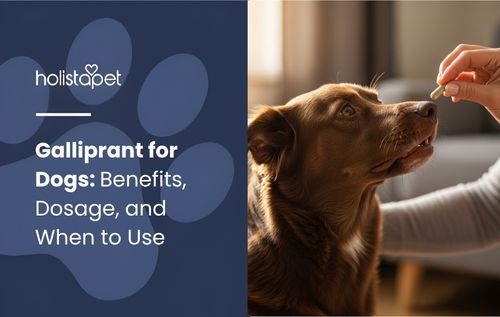
Joint pain can quietly change how dogs move, play, and rest. Galliprant offers targeted pain relief for osteoarthritis in dogs without the broader effects seen in other anti inflammatory drugs.
Understanding how it works, when to use it, and how to dose it correctly helps pet owners support comfort and mobility early and safely — explore more in our natural dog wellness guides.
What is Galliprant for Dogs?
Galliprant for dogs is a nonsteroidal anti-inflammatory drug that uses the active ingredient grapiprant to control pain and inflammation associated with osteoarthritis.
It specifically targets a primary mediator involved in inflammation associated with osteoarthritis, which helps manage canine OA pain while limiting broader effects seen with other NSAIDs.
Veterinary professionals prescribe Galliprant as an oral use treatment to improve comfort and mobility in dogs experiencing osteoarthritis pain.
Is Galliprant Safe for Dogs?
Galliprant is considered safe for most dogs when prescribed by a licensed veterinarian, with research showing a targeted approach that lowers the risk of complications seen with other NSAIDs.
Clinical studies, including placebo controlled trials, report that most dogs tolerate it well, though possible side effects include vomiting, diarrhea, soft stool, and decreased appetite — findings supported by PubMed research on CBD pharmacokinetics and safety in dogs when evaluating complementary options.
Caution remains important for dogs younger than nine months, pregnant or lactating dogs, and those with heart disease or on other medications due to potential drug interactions.

How Do I Dose Galliprant for My Dog?
Getting the dose right ensures safe and effective pain relief. Galliprant dosing depends on body weight and must follow veterinary guidance to keep dogs accurately dosed.
|
Dog Weight (pounds weight) |
Recommended Dose |
Tablet Strength Options |
How to Give |
|
8–15 lbs |
2 mg per kg once daily |
20 mg tablet |
Use whole or half tablet if needed |
|
16–30 lbs |
2 mg per kg once daily |
20 mg or 60 mg tablet |
May require half tablet increments |
|
31–60 lbs |
2 mg per kg once daily |
60 mg tablet |
Give as whole or half tablet |
|
61–100 lbs |
2 mg per kg once daily |
100 mg tablet |
Adjust using half tablet if needed |
|
Over 100 lbs |
2 mg per kg once daily |
Combination of tablets |
Follow veterinarian instructions |
Does Galliprant Have Side Effects on Dogs?
Galliprant can cause side effects in dogs, though most dogs tolerate it well when used as directed. The drug focuses on targeted pain relief, but some reactions can still occur, especially during early treatment or dose adjustments.
Most common adverse reactions include:
- Vomiting
- Diarrhea
- Soft stool or mucus stool
- Decreased appetite
Less common but more serious adverse reactions may include:
- Bloody stools
- Lethargy or unusual behavior
- Signs linked to potential drug toxicity
Certain dogs face higher risk. Extra caution applies to dogs younger than nine months, pregnant or lactating dogs, and pets with cardiac disease or existing health conditions. Concomitant use with other anti inflammatory drugs, other NSAIDs, or protein bound drugs can increase complications.
Can I Combine Galliprant with Other Medications?
Combining Galliprant with other medications should never happen without veterinary guidance.
The FDA label and veterinary pharmacology references warn against haphazard concomitant use with other NSAIDs, corticosteroids, or certain protein bound drugs due to increased risk of gastrointestinal injury and potential drug toxicity.
Research cited by the manufacturer and supported by veterinary experts highlights that drug interactions can alter blood pressure, kidney function, and overall treatment safety.
SSome pet owners explore supportive options like a CBD oil dropper for dogs or best CBD treats for dogs to help manage discomfort alongside veterinary treatment. While early studies suggest CBD may support pain relief, veterinary professionals stress that it still counts as a biologically active compound and may interact with medications.
A licensed veterinarian should always review all medications and supplements before combining them to ensure safe use and proper treatment outcomes. Pet owners seeking additional support may also consider a dog immune vitamin supplement or probiotics for dogs to help maintain overall wellness during long-term pain management.

What Do I Do If My Dog Misses a Galliprant Dose?
If a dog misses a dose of Galliprant, give it as soon as remembered unless it is close to the next scheduled dose. In that case, skip the missed dose and continue with the regular daily dosing schedule.
Do not double the dose to make up for a missed one, as this can increase the risk of adverse reactions.
Consider Galliprant to Alleviate Pain in Dogs
Galliprant offers targeted pain relief for dogs with osteoarthritis when used correctly. Work with a licensed veterinarian to ensure safe use, proper dose, and the best outcome for long term comfort and mobility.
Frequently Asked Questions
How long does Galliprant take to work in dogs?
Most dogs show improvement within a few days. Full relief from pain and inflammation associated with osteoarthritis may take up to two weeks.
Can Galliprant be used for long-term treatment?
Yes, veterinarians use it for long-term management. Ongoing monitoring ensures safe use and consistent pain relief.
What should pet owners avoid while giving Galliprant?
Avoid mixing it with other medications without approval. This includes other NSAIDs and certain supplements that may raise risks — the AKC's guide on CBD oil for dogs offers a useful reference for evaluating common supplement choices.
How should Galliprant tablets be stored?
Store them at room temperature in a secure place. Keep them away from children and pets to prevent accidental ingestion.
Can Galliprant be given with food?
Yes, dogs can take it with or without food. Meals may help reduce mild digestive issues like diarrhea.
What happens in case of overdose?
Seek help immediately. Contact an animal poison control center or a licensed veterinarian and watch for symptoms like vomiting or bloody stools.
Why do some dogs not respond well to Galliprant?
Response varies based on condition severity and overall health. A veterinarian may adjust the dose or treatment plan.








Leave a comment
All comments are moderated before being published.
This site is protected by hCaptcha and the hCaptcha Privacy Policy and Terms of Service apply.