

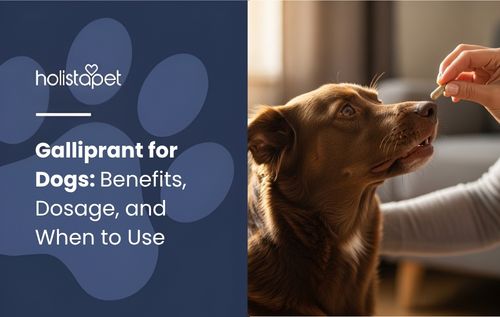
Watching a dog struggle to rise, climb stairs, or enjoy a walk can be upsetting. Galliprant may help control pain and inflammation associated with canine osteoarthritis, but it also has possible side effects.
If a dog became seriously ill while taking it—or if a family is grieving a pet—questions are understandable. An adverse-event report alone does not prove causation, so a veterinarian must review the timing, health history, other medications, and test results.
Medical disclaimer: This article is for general educational purposes and does not replace veterinary diagnosis or treatment. Galliprant is a prescription medication. Give it only to the dog for whom it was prescribed and follow the prescribing veterinarian’s instructions. If a side effect is suspected, stop the medication and contact the veterinarian immediately.
Key Highlights
- Galliprant is a prescription NSAID used to control pain and inflammation associated with osteoarthritis in dogs.
- The FDA-labeled dose is 0.9 mg per pound, or 2 mg/kg, by mouth once daily, but owners should always follow their veterinarian’s instructions.
- Galliprant may help improve comfort and mobility in dogs with osteoarthritis, but it is not risk-free and requires proper screening and monitoring.
- Possible side effects include vomiting, diarrhea, appetite loss, lethargy, stool changes, kidney or liver value changes, allergic reactions, incoordination, or seizures.
What Is Galliprant for Dogs?

Galliprant is the brand name for grapiprant, a prescription nonsteroidal anti-inflammatory drug (NSAID) in the piprant class. The FDA has approved it for controlling pain and inflammation associated with osteoarthritis in dogs.
Unlike traditional COX-inhibiting NSAIDs, grapiprant blocks the prostaglandin E2 EP4 receptor, one pathway involved in osteoarthritis pain and inflammation. This targeted mechanism is different, but it does not make Galliprant risk-free. It remains an NSAID and carries gastrointestinal, kidney, liver, and other safety considerations.
A veterinarian may consider Galliprant after confirming that osteoarthritis contributes to stiffness, limping, difficulty rising, reluctance to jump, or reduced activity. These signs can have other causes, so an examination is important. Pet owners can also learn about subtle mobility changes in dogs that walk normally but stop jumping.
What Are the Benefits of Galliprant?
For an appropriate patient, Galliprant may reduce osteoarthritis pain and inflammation. In the FDA effectiveness study, owner assessments showed significantly better pain and function results in treated dogs than in the vehicle-control group.
Response varies, so follow-up is important. Galliprant is approved for osteoarthritis and should not be used for unrelated or sudden pain unless a veterinarian directs it.
Is Galliprant Safe for Dogs?
Galliprant can be used safely in many dogs when a veterinarian selects the patient, prescribes the dose, and monitors treatment. No NSAID is best for every dog. The FDA advises using the lowest effective dose for the shortest duration consistent with the dog’s response.
Before treatment, the veterinarian should review the dog’s history, medications, supplements, hydration status, prior NSAID reactions, and any digestive, kidney, liver, or heart concerns. Dogs with a known hypersensitivity to grapiprant should not receive it.
How Do I Dose Galliprant for My Dog?
The FDA-labeled dose is 0.9 mg per pound (2 mg/kg) by mouth once daily. The following chart reflects the FDA label, but it is not a substitute for the prescription label or veterinary instructions.
|
Dog’s weight |
FDA-labeled tablet amount once daily |
|---|---|
|
8–15 lb (3.6–6.8 kg) |
One-half of a 20 mg tablet |
|
15.1–30 lb (6.9–13.6 kg) |
One 20 mg tablet |
|
30.1–45 lb (13.7–20.4 kg) |
One-half of a 60 mg tablet |
|
45.1–75 lb (20.5–34 kg) |
One 60 mg tablet |
|
75.1–150 lb (34.1–68 kg) |
One 100 mg tablet |
|
Over 150 lb (68 kg) |
A veterinarian-selected combination of tablets or half-tablets |
Only the 20 mg and 60 mg tablets are scored. Do not split the 100 mg tablet because equal amounts of the active ingredient are not guaranteed in each half. Dogs under 8 pounds cannot be accurately dosed using the available tablet sizes. Never change the amount or frequency without the prescribing veterinarian.
The FDA-approved Galliprant label notes that food significantly reduced galliprant exposure in a pharmacokinetic study. Follow the veterinarian’s directions on meal timing and give each dose consistently, rather than switching between fed and fasted administration on your own.
Galliprant Side Effects and Safety Concerns
Digestive effects are the most commonly recognized problems. The current FDA label also includes post-approval reports involving other body systems.
An event reported after a medication is marketed is not necessarily proven to have been caused by that medication. The FDA explains that these reports cannot always establish frequency or a causal relationship.
The following side-effect table is based on a 28-day controlled field study in the FDA label. Dogs could experience more than one event.
|
Adverse reaction |
Galliprant group (141 dogs) |
Vehicle-control group (144 dogs) |
|---|---|---|
|
Vomiting |
24 |
9 |
|
Diarrhea or soft stool |
17 |
13 |
|
Loss of appetite or reduced appetite |
9 |
7 |
|
Lethargy |
6 |
2 |
|
Mouth ulcer |
1 |
0 |
|
Immune-mediated hemolytic anemia |
1 |
0 |
The label also identifies mucoid, watery, or bloody stool and decreases in serum albumin and total protein. Post-approval reports have included gastrointestinal ulceration, changes in kidney or liver values, kidney failure, anemia, low platelets, allergic reactions, incoordination, and seizures.
Death, including euthanasia, was an outcome in some reports, but the reports do not show that Galliprant caused every event or death.
When Should I Call the Veterinarian Immediately?
Stop Galliprant and contact the prescribing veterinarian immediately if the dog develops a possible sign of intolerance, including:
- Vomiting or diarrhea
- Reduced appetite or refusal to eat
- Black, tarry, bloody, watery, or mucus-covered stool
- Marked lethargy, restlessness, depression, or another behavior change
- Increased or decreased drinking or urination
- Pale gums or yellow gums, skin, or whites of the eyes
- Facial swelling, hives, or difficulty breathing
- Loss of coordination, collapse, or seizures
Seek an emergency veterinary hospital for severe bleeding, collapse, breathing difficulty, repeated seizures, or rapidly worsening signs.
Early recognition matters. The FDA label notes that most patients with drug-related adverse reactions recovered when signs were recognized, the medication was stopped, and veterinary care was provided when needed. Panting can sometimes accompany discomfort, but it can also have many causes; a sudden or unexplained change warrants veterinary advice.
Which Dogs Require Extra Caution?
The safe use of Galliprant has not been evaluated in dogs younger than nine months and under 8 pounds, breeding dogs, or pregnant or lactating dogs.
Extra caution is important for dogs that:
- Are dehydrated
- Take a diuretic
- Previously reacted to another NSAID
- Have kidney, liver, cardiovascular, or gastrointestinal disease
Use in dogs with cardiac disease has not been studied.
Tell the veterinarian about planned anesthesia or surgery. Anesthetic drugs may affect kidney blood flow, and the FDA label recommends caution and appropriate perioperative monitoring when anesthetics and NSAIDs are used.
Can Galliprant Be Combined With Other Medications?

Do not combine Galliprant with aspirin, another oral or injectable NSAID, or a corticosteroid such as prednisone unless the veterinarian has specifically created a transition plan. Concurrent use raises concern for gastrointestinal injury and other toxicity.
A veterinarian should choose an appropriate washout period when switching anti-inflammatory medications.
Also disclose:
- Diuretics
- Potentially kidney-toxic medications
- Cardiac medications
- Seizure medications
- Behavioral medications
- Vitamins, herbs, and dietary supplements
These combinations have not all been adequately studied, so compatibility may require closer monitoring. Share every prescription and over-the-counter product the dog receives.
Bloodwork, Monitoring, and Follow-Up Care
The FDA recommends a thorough history and examination before NSAID therapy, with baseline blood tests and periodic monitoring. The veterinarian may recommend a complete blood count, chemistry panel, and urinalysis to assess blood cell counts, protein levels, liver and kidney values, and urine concentration.
Monitoring is especially important during long-term use. Follow-up timing depends on age, health, test results, and treatment duration.
Discuss changes in:
- Appetite and stool
- Thirst and urination
- Energy and behavior
- Walking and mobility
- Other medications or supplements
A weekly mobility record can help the veterinarian judge whether benefit still outweighs risk.
HolistaPet Galliprant Safety Checklist
Before the first dose: Confirm the diagnosis, dose, meal timing, and any washout period. Complete baseline tests and request the FDA Information for Dog Owners sheet.
During treatment: Give only the prescribed amount. Track appetite, stool, water intake, urination, energy, and mobility. Keep tablets secured from all pets and children.
At follow-up: Bring the medication list, mobility record, and photos of visible reactions. Complete repeat tests when recommended.
How Does Galliprant Compare With Other Osteoarthritis Medications?
|
Option |
How it differs |
Important considerations |
|---|---|---|
|
Galliprant (grapiprant) |
Oral EP4-receptor antagonist NSAID approved for canine osteoarthritis pain and inflammation |
Once-daily prescription that requires screening, interaction review, and monitoring |
|
Traditional COX-inhibiting NSAIDs |
Oral or injectable drugs such as carprofen, firocoxib, or meloxicam, depending on the product |
FDA-approved options with individual dosing and labels; should not be combined with Galliprant |
|
Anti-NGF monoclonal antibody |
Veterinarian-administered injection targeting a different osteoarthritis pain pathway |
Has a different dosing schedule and safety profile; the veterinarian should review its current label and the dog’s history |
|
Adjunct pain medications |
Other medication classes that may be included when one medicine is not enough |
Evidence, purpose, and monitoring vary; selection must be individualized |
No option is universally best or safest. The FDA says NSAID response varies and no NSAID is considered safer than all others. The AAHA pain management guidelines support an individualized plan that may also include weight management, controlled exercise, rehabilitation, and home modifications.
Can CBD Be Used With Galliprant?
Some owners ask about CBD as possible comfort and mobility support. Research in dogs remains limited, and CBD may affect laboratory values or interact with medications.
CBD must never replace Galliprant or another prescribed treatment. Ask the veterinarian to review the formula and amount before using CBD oil for dogs.
What If My Dog Misses a Galliprant Dose?
Contact the prescribing clinic if its instructions are unclear. In general, give the missed dose when remembered unless it is close to the next scheduled dose.
If it is close, skip the missed dose and resume the usual schedule. Never give two doses together.
Final Thoughts on Galliprant for Dogs
Galliprant can be useful when prescribed for the right dog and monitored carefully. Knowing the side effects helps owners act early. Keep follow-up appointments and report changes promptly.
Frequently Asked Questions
Can Galliprant cause serious harm?
Yes. Galliprant can cause serious adverse reactions, including gastrointestinal ulceration or bleeding and kidney, liver, blood, neurologic, or allergic problems. Some post-approval cases had death or euthanasia as an outcome.
How long does Galliprant take to work in dogs?
Some dogs show improved comfort or mobility within several days, but response varies. Ask the veterinarian when to reassess. Do not increase the dose if improvement is not immediate.
Can Galliprant be used long term?
It may be prescribed long term when the veterinarian determines that the benefits continue to outweigh the risks. The FDA label recommends appropriate monitoring during long-term use, including periodic examinations and laboratory testing.
Can Galliprant be given with food?
Follow the prescribing veterinarian’s directions. The FDA label reports that food reduced grapiprant exposure in a pharmacokinetic study, so do not change the medication’s relationship to meals without veterinary guidance.
What happens if my dog receives too much Galliprant?
Contact a veterinarian or emergency veterinary clinic immediately, even if the dog appears normal. Do not induce vomiting unless a veterinary professional or animal poison-control expert instructs you to do so.
Why might a dog not respond well to Galliprant?
The osteoarthritis may be advanced, the pain may have another cause, or that individual dog may respond better to a different plan. A follow-up examination can help the veterinarian reassess the diagnosis and consider another medication or a multimodal approach.








Leave a comment
All comments are moderated before being published.
This site is protected by hCaptcha and the hCaptcha Privacy Policy and Terms of Service apply.