

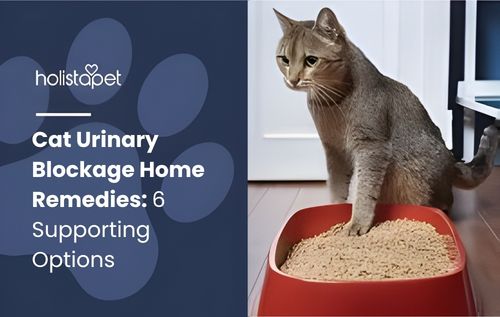
A urinary blockage in cats is an emergency that needs a vet right away. Home care cannot fix the blockage. It can only support recovery or help while arranging urgent care.
Knowing what to do next can protect a cat from serious harm.
What is Urinary Blockage in Cats?
Urinary blockage in cats happens when something stops urine from leaving the body, which causes a dangerous buildup of toxins and pressure in the bladder. Crystals and stones in the urinary tract can form when minerals clump together and lodge in the urethra, which can block urine flow and create a medical emergency in cats.
This condition becomes life threatening within hours if left untreated. Male cats face a higher risk of urethral obstruction because their longer, narrower urethra makes them more susceptible to plugs and stones that block urine flow. [Cornell Feline Health Center]
What are the Symptoms of Cat Urinary Blockage?

Urinary blockage shows up fast and signals a medical emergency. Spotting the signs early can save a cat’s life.
- Frequent trips to the litter box with little or no urine
- Straining or crying while trying to urinate
- Blood in the urine
- Licking the genital area often
- Vomiting or loss of appetite
- Lethargy or weakness
- Hard or swollen abdomen
- Hiding or sudden behavior changes
Why Do Cats Get Urinary Blockages?
Urinary blockages happen when material or swelling narrows or plugs the urethra. Several factors increase this risk, especially in indoor cats.
Crystal and Stone Formation
Minerals in urine can form crystals or stones that obstruct flow. Diet, low water intake, and urine concentration all play a role. Research from the American College of Veterinary Internal Medicine links struvite and calcium oxalate crystals to common feline lower urinary tract issues.
Inflammation of the Urinary Tract
Inflammation can thicken the bladder wall and create debris that blocks urine. Feline idiopathic cystitis, a condition with no clear cause, accounts for many cases. According to the American Veterinary Medical Association, stress often triggers this inflammation.
Urethral Plugs
Soft plugs made of mucus, cells, and crystals can lodge in the urethra. These plugs can fully stop urine flow within a short time, which makes them especially dangerous.
Dehydration and Low Water Intake
Cats that drink little water produce more concentrated urine. Concentrated urine raises the chance of crystal formation. Studies published in veterinary nutrition journals show that wet diets help reduce this risk by increasing hydration.
Stress and Environmental Factors
Stress can disrupt normal bladder function and trigger urinary problems. Changes in routine, new pets, or lack of stimulation can increase risk. Veterinary behavior research supports a strong link between stress and urinary tract flare ups in cats.
Diet and Nutrition Imbalance
Certain diets can alter urine pH and mineral balance. Poor quality or unbalanced food may increase the risk of crystal buildup. Therapeutic diets often help manage and prevent recurrence.
What are the Best Home Support for Urinary Blockage in Cats?

Home remedies cannot remove a blockage, but they can support recovery and lower the risk of it happening again.
|
Support Method |
Main Benefit |
When to Use |
Key Note |
|
Increased hydration |
Dilutes urine and reduces irritation |
Daily and during recovery |
Most important step |
|
Wet food diet |
Improves moisture intake |
Long term prevention |
Backed by research |
|
Stress reduction |
Lowers inflammation risk |
Ongoing |
Critical for sensitive cats |
|
CBD support |
Promotes calm and comfort |
During stress periods |
Use pet safe products only |
|
Litter box management |
Encourages regular urination |
Daily |
Cleanliness matters |
|
Monitoring symptoms |
Detects early warning signs |
Post treatment |
Act fast if signs return |
Increase Water Intake Immediately
Hydration helps flush the bladder and reduce urine concentration.
- Feed wet food instead of dry kibble
- Add water or broth to meals
- Use water fountains to encourage drinking.
Switch to a Moisture Rich Diet
Diet plays a direct role in urinary health and recurrence prevention.
- Choose high moisture canned food
- Focus on balanced mineral content
- Avoid foods high in magnesium and phosphorus
Reduce Stress at Home
Stress triggers bladder inflammation and flare ups.
- Keep a consistent routine
- Provide quiet resting areas
- Add enrichment like toys and scratching posts
Research on feline idiopathic cystitis shows stress plays a major role in urinary problems and can worsen symptoms.
Support with CBD and Calming Aids
CBD may help manage stress and discomfort during recovery.
- Use CBD oil or treats designed for cats
- Start with low doses and monitor response
- Pair with a calm environment
HolistaPet offers CBD oils and calming chews made for pets. These products support relaxation and overall wellness without harsh additives. Many pet owners use them to help reduce stress related urinary flare ups.
Encourage Frequent Litter Box Use
Regular urination helps prevent buildup in the bladder.
- Keep litter boxes clean at all times
- Place boxes in quiet and accessible areas
- Use multiple boxes in multi cat homes
Veterinary guidance shows that consistent urination reduces the chance of irritation and debris accumulation.
Monitor Recovery Closely
Close observation helps catch problems early.
- Watch urine output daily
- Check for straining or discomfort
- Track eating and drinking habits
Veterinary sources warn that symptoms can return quickly, especially within the first week after treatment.
What Can I Do to Prevent Urinary Problems in Cats?

Prevention focuses on hydration, proper diet, and stress control. Daily habits can lower the risk of urinary issues and keep a cat healthy.
- Provide fresh water at all times: Encourages frequent urination and keeps urine diluted. Use fountains or multiple bowls to increase intake.
- Feed a high moisture diet: Supports hydration and promotes regular bladder flushing. Wet food helps reduce mineral concentration in urine.
- Maintain a clean litter box: Prevents avoidance and supports normal urination habits. Scoop daily and place boxes in quiet areas.
- Reduce stress in the environment: Keeps bladder function stable and lowers flare ups. Provide routine, safe spaces, and enrichment.
- Schedule regular vet checkups: Helps detect early signs before they become serious. Routine exams can catch subtle urinary changes.
- Encourage daily activity: Supports overall health and weight control. Playtime helps reduce stress and improves body condition.
- Use urinary support diets if needed: Helps manage mineral balance and urine pH. Vet recommended formulas can lower recurrence risk.
When Do I Take My Cat to the Vet for Urinary Blockage?
Take a cat to the vet immediately at the first sign of urinary blockage. This condition can become fatal within hours, so fast action matters.
Watch for urgent warning signs:
- Straining with little or no urine
- Crying during urination
- Frequent litter box visits with no output
- Vomiting or not eating
- Lethargy or weakness
- Hard or swollen abdomen
Do not wait or try to manage these symptoms at home. A blocked cat needs immediate medical care to relieve pressure, restore urine flow, and prevent organ failure.
Even mild signs can worsen fast, so early intervention gives the best chance of recovery.
Deal With Your Cat’s Urinary Blockage Right Away
Urinary blockage in cats needs urgent veterinary care, not home treatment. Supportive steps can help with recovery and prevention, but fast action saves lives. Recognize the signs early and never delay care.
Frequently Asked Questions
Can a cat still pass small amounts of urine with a blockage?
Yes. A partial blockage can allow small drops of urine, but it still requires urgent care.
How long can a cat survive with a urinary blockage?
A cat can decline within 24 to 48 hours. Immediate treatment gives the best chance of survival.
Do indoor cats face a higher risk of urinary blockage?
Yes. Indoor cats often drink less water and move less, which increases risk factors.
Can certain cat breeds develop urinary blockage more often?
Some breeds like Persians show higher risk due to genetic and lifestyle factors.
Does neutering increase the risk of urinary blockage?
Neutering does not directly cause blockages, but it can link to lower activity levels and weight gain, which may increase risk.
Can dirty water bowls contribute to urinary problems?
Yes. Cats may avoid drinking from dirty bowls, which leads to lower water intake.
Is tap water safe for cats with urinary concerns?
Clean tap water works in most cases, but filtered water may encourage better intake in picky cats.
 CBD Oil for Cats - Fast Acting
 Salmon Flavored CBD Oil For Cats - Easy Dose
 Chicken Flavored CBD Oil for Cats - Highly Rated
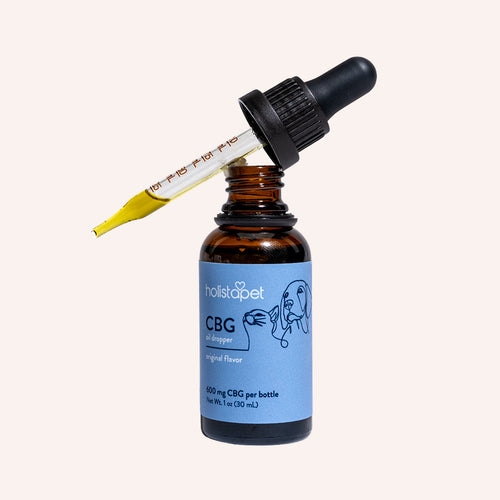 CBG Oil for Dogs and Cats - Loved by Thousands








Leave a comment
All comments are moderated before being published.
This site is protected by hCaptcha and the hCaptcha Privacy Policy and Terms of Service apply.