

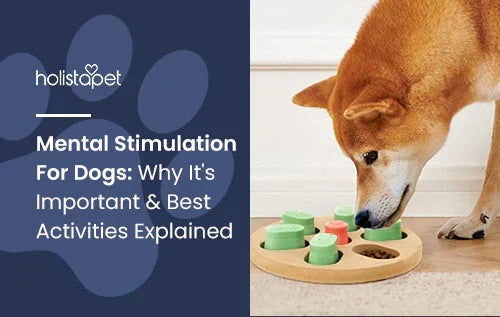
Mental stimulation for dogs gives curious pups healthy ways to sniff, search, learn, and solve problems. Alongside physical exercise, it helps keep your dog's mind active and everyday life a little more interesting.
From food puzzles to sniff-filled walks, this guide offers 15 simple ways to keep your pup’s mind active. You’ll also learn when your dog needs more enrichment and how to build a balanced routine.
Key Highlights
- Mental challenges pair well with walks and physical exercise in a balanced routine.
- Destructive behaviors may reflect boredom, though discomfort or behavior concerns can look similar.
- Scent games, training, and food puzzles offer outlets for natural instincts.
- Match every activity to your dog’s age, health, interest, and abilities.
- Calming CBD products may support focus during enrichment.
Why Is Mental Stimulation Important for Dogs?

Your dog’s brain needs something interesting to do—not advanced mathematics, but regular challenges that encourage healthy natural behavior. The best mental stimulation for dogs creates opportunities to sniff, forage, chew, explore, learn, and make choices.
Walks offer movement and fresh scents, but physical activity alone cannot engage every skill. Puzzle toys and scent play present simple problems to solve. Short training sessions keep a dog engaged without making the day feel like homework.
Benefits of Mental Stimulation for Dogs
The benefits of mental stimulation for dogs go well beyond keeping busy paws away from the sofa. The right challenge builds focus and confidence. Regular mental enrichment may:
- Channel energy into appropriate activities
- Help prevent boredom and related unwanted behaviors
- Strengthen focus and problem-solving skills
- Refresh learned behaviors while teaching new skills
- Build confidence through achievable wins
- Create rewards with pet parents
Match difficulty to your dog’s ability, so success feels possible without becoming too easy. Enrichment benefits well-being, but cannot replace veterinary care or qualified behavioral guidance.
Signs Your Dog Needs More Mental Stimulation

A bored dog cannot request a crossword, so behavior often speaks for them. Your furry companion may need mentally stimulating activities if these patterns appear:
- Excessive barking or whining
- Pacing or trouble settling
- Digging or destructive chewing
- Repeated bids for attention
- Tail-chasing or another repetitive behavior
- Reduced interest in familiar activities
- Poor focus during training
Boredom is one possible cause. Discomfort, too little exercise, poor sleep, illness, or nutritional problems can look similar. Ask your veterinarian about sudden or lasting differences.
Related Post: Stages of Starvation in Dogs
How Much Mental Stimulation Do Dogs Need?
No fixed daily amount of dog mental stimulation works for every pet. An active herding dog may want more challenge than a senior enjoying an easy snack search. Age, health, temperament, and task difficulty influence individual needs.
Try 5- to 15-minute sessions for games, training, or other mental exercises. Pause if your dog seems tired, frustrated, or uninterested. Brain work should complement walks, play, sleep, and appropriate physical exercise. Quality beats clock-watching. A cheerful finish is better than one puzzle too many.
Best Ways to Mentally Stimulate Your Dog
Learning how to mentally stimulate a dog takes creativity, not a packed toy cupboard. These 15 activities use food, scent, play, learning, and exploration to keep canine minds pleasantly busy.
Puzzle Toys and Food-Dispensing Games

Food puzzles turn part of mealtime into brain work. Start easy, then increase difficulty after your dog understands how the reward appears.
- Serve part of a meal in a beginner puzzle feeder.
- Fill durable interactive toys with appropriate food.
- Scatter kibble across a snuffle mat for a nose-led search.
Choose dog toys that match your pet’s size and chewing habits. Supervise unfamiliar items, clean food toys after use, and include tasty treats in daily calorie totals. The goal is thoughtful effort, not a dinner puzzle worthy of a canine detective.
Scent Games and Sniff-Focused Walks
A dog’s incredible sense of smell turns ordinary spaces into information-rich playgrounds. Nose work can begin indoors, outdoors, or during your daily walk.
- Give your dog time to sniff approved areas at an easy pace.
- Hide treats or a favorite toy for your curious canine to find.
- Create a short scent trail with a rewarding finish.
Use obvious hiding places first, then increase the challenge as your dog learns to seek. Avoid harmful plants, household chemicals, cupboards, and waste bins that could inspire unwanted scavenging later.
Short Training Sessions and New Tricks
Reward-based training turns learning into a clear, playful question: “What action earns that treat?” Short training sessions keep the answer easy to find while helping your dog focus.
- Teach simple new tricks, including touch, spin, or toy identification.
- Train your dog to carry toys to a basket and put them away.
Break each behavior into small steps, then reward progress right away. Practice basic commands before meals or walks to work training into everyday moments. End after a successful attempt, while your eager student is still hoping class runs overtime.
Fetch, Tug, Hide-and-Seek, and Interactive Play
Familiar favorite games become richer brain work when the simple rules vary slightly. These playful adjustments encourage attention while helping dogs cooperate closely with their hoomans.
- Vary the direction, distance, or toy during fetch.
- Play tug of war using clear start, release, and restart cues.
- Play hide and seek by asking your dog to find a family member.
Choose dog-appropriate equipment and flooring with reliable traction. Let your playful sidekick pause or leave the activity freely. Shared play should feel like great fun, not canine boot camp with mandatory overtime.
DIY and Indoor Enrichment Activities

Rainy-day enrichment can come from household items already in your house. These low-cost challenges add variety without recruiting another gadget for floor duty.
- Sprinkle kibble across a towel, roll it loosely, and let your dog uncover each piece.
- Hide kibble in a muffin tin or open cardboard box filled with appropriate objects.
Supervise both activities closely. Some household items aren't dog-friendly when your household companion tends to shred and swallow loose pieces. Skip toilet paper rolls, plastic containers, or other breakable objects that could create choking hazards or intestinal blockages.
Outdoor Exploration, Social Activities, and Agility
Fresh surroundings provide environmental enrichment through unfamiliar scents, sights, sounds, and surfaces. Even a different route can make an outing feel new.
- Try a new trail, walking route, or dog-friendly location.
- Build a low obstacle course with cones, tunnels, or barriers.
Dog-friendly gatherings, such as Corgi Beach Day, offer social experiences, but crowds can overwhelm timid or reactive pets. Watch your furry friend’s body language before joining. Match obstacles to your dog’s age and mobility, and never force contact with unfamiliar animals.
Mental Stimulation for Puppies, Adults, and Senior Dogs

Brain-friendly activities keep dogs mentally stimulated throughout life. Puppies thrive with short searches and simple lessons that build confidence. Adults often enjoy scent work, puzzles, training, and interactive games.
Senior dogs may prefer food searches, familiar tricks, accessible toys, or sniff walks. Adjust difficulty for dental discomfort, hearing loss, limited vision, or reduced mobility. The aim is an interested dog, not a confused or exhausted one. Discuss CBD with your veterinarian before adding it to your dog’s routine.
Canine CBD research remains developing and condition-specific. For example, PubMed assessed CBD use in dogs with joint issues, not mental stimulation or focus. Meanwhile, AKC offers a broader overview.
How to Build Mental Enrichment into Your Dog’s Daily Routine
Mental enrichment works best when it slips easily into your daily routine. You do not need a packed calendar. Try this simple rhythm with a few games:
- Serve breakfast in a puzzle feeder.
- Allow extra sniff time on the morning walk.
- Practice five minutes of afternoon training.
- Offer supervised chewing during quiet time.
- Use part of the evening meal for a search.
Give probiotics for dogs and other wellness products according to label or veterinary directions. Do not hide them in food puzzles if your best buddy might leave pieces behind. Rotate activities to prevent boredom without overwhelming your dog.
How to Choose Safe Activities for Your Dog

A worthwhile activity should challenge your dog without creating avoidable risks. Check these details before play begins:
- Toy size and durability
- Choking or swallowing hazards
- Food allergies and treat calories
- Floor traction and obstacle height
- Health or mobility limits
- Difficulty and supervision needs
Repeated jumping, high-impact games, or slippery floors may worsen mobility concerns or a suspected dog shoulder injury. Choose low-impact movement and ask your veterinarian what is appropriate before vigorous play.
Lower the difficulty if your dog barks, paws frantically, leaves, or destroys the materials. Inspect toys often and discard damaged pieces. Early adjustments can keep minor problems from escalating. Dogs with resource guarding, dietary restrictions, or physical conditions may need guidance from a veterinarian or qualified trainer.
Can You Overstimulate a Dog?
Yes, even fun activities can become too much. Once stimulation piles up, your dog can't process everything happening at once. The result may look frantic rather than settled.
Jumping, grabbing, persistent barking, or trouble settling may signal overarousal. End the activity calmly, offer water, and provide a quiet environment for rest. Make the next session shorter or easier. If this happens often, consult a veterinarian or qualified behavior professional.
Supporting Calm During Enrichment with HolistaPet

A calm dog can focus on the fun instead of missing the assignment. HolistaPet offers premium wellness options for canine routines. They are thoughtful extras, while enrichment does the real brain work.
HolistaPet CBD Calming Chews for Dogs combine broad-spectrum CBD with an easy, pre-portioned format. For serving flexibility, a CBD oil dropper for dogs can go directly into the mouth or food. Follow the label and consult your veterinarian if medications or health conditions are involved.
Our best CBD treats for dogs feature plant-based, non-GMO ingredients without gluten, artificial ingredients, or preservatives. Oils and capsules add convenient serving choices for pet parents. Your four-legged companion gets premium options, while exercise, training, and veterinary care keep their leading roles.
Frequently Asked Questions About Mental Stimulation for Dogs
A balanced enrichment plan leaves room for movement, learning, relaxation, and ordinary dog business. These quick answers can help you find that sweet spot.
Do walks provide enough mental stimulation?
Not always. A walk offers exercise and new scents when your dog can sniff. Many dogs enjoy puzzles, training, or interactive play.
Does chewing count as mental stimulation?
Yes. Appropriate chewing can keep a dog entertained while meeting a natural need. Treat it as one piece of a varied routine.
Can mental stimulation tire a dog out?
Yes. Searching and learning require concentration, which may help your dog settle afterward. Brain games should accompany suitable physical activity.
What can I leave for my dog while I am away?
Leave only sturdy products your dog has used without problems. New puzzles, homemade games, or easily damaged materials need supervision, so test them while you are home.
Final Thoughts on Keeping Your Dog Mentally Active
Keeping your dog’s mind active does not require an elaborate schedule. Start with one appropriate activity and watch how your dog responds. Build the routine slowly so each challenge matches their personality and ability.
For more dog care help, browse HolistaPet’s practical guides and find ideas for your beloved companion’s daily routine.








Leave a comment
All comments are moderated before being published.
This site is protected by hCaptcha and the hCaptcha Privacy Policy and Terms of Service apply.