


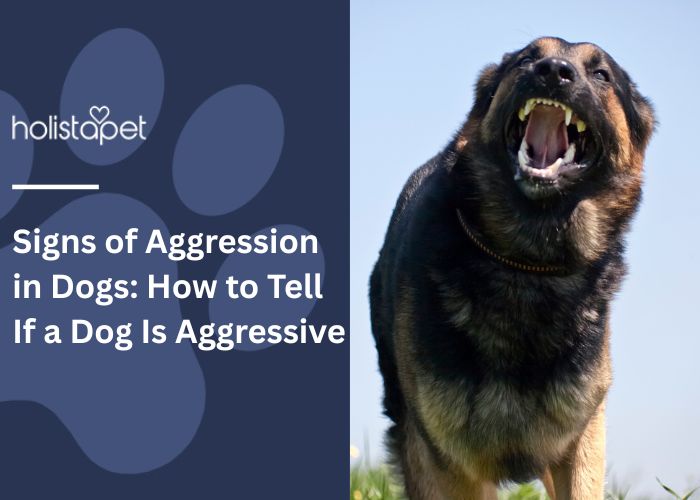
Signs of aggression in dogs often appear before barking or biting, giving you a chance to respond calmly. Recognizing these early clues helps you better understand what your pup may be trying to communicate.
In this guide, you'll learn what different signals may mean, why they happen, and how to respond in ways that help your dog feel more secure. You'll also see where calming wellness options, including CBD, may fit into a veterinarian-guided approach.
Key Highlights
- Freezing, a rigid body, hard staring, growling, or baring teeth often appear before a bite.
- Looking away, lip licking, or moving off can signal uneasiness.
- One body language cue never tells the whole story. Look at the full picture.
- Fear, guarding, physical discomfort, or illness may trigger aggressive behavior.
- Giving your pup space is safer than punishing warning signals.
- Veterinary care, behavior modification, and patient training help many dogs.
- HolistaPet CBD may complement a veterinarian-guided wellness routine.
How to Read Your Dog’s Body Language

Canine aggression becomes easier to recognize when you read your dog's whole body instead of focusing on one signal. Eyes, ears, mouth, tail, posture, movement, and voice work together, giving your furry friend one clear way to communicate every day.
Watch whether your pup's body looks relaxed or rigid, where weight shifts, and whether they approach, back away, or feel trapped. Also consider what happened beforehand and recovery speed. Combined signals paint a far clearer picture than one bark alone.
Common Signs of Aggressive Dogs
A tense dog may give several clear signals before acting. Read the whole pattern, then create space without adding pressure. Watch for these signs:
- Freezing or becoming rigid
- Holding an intense stare
- Curling the lips or showing teeth
- Growling or snarling
- Snapping at the air
- Lunging or charging
- Blocking someone’s path
- Biting or attempting to bite
These warning signs of dog aggression can appear in any order. Some dogs move quickly from subtle tension to an aggressive response when earlier cues go unnoticed.
Subtle Warning Signs before Aggression Escalates

Dogs rarely jump straight to an aggressive reaction. Your furry friend often drops quiet hints first, almost like saying, "I'd rather not." Those moments can slip by during busy days, yet they deserve attention. One signal means very little on its own. Looking for repeated patterns gives you a much clearer picture of what your dog is trying to say.
Freezing, Stiffening, and Hard Staring
A motionless dog can speak volumes without making a sound. If your canine pal suddenly freezes, stiffens, closes their mouth, fixes a hard stare, or pins their ears back, they may feel cornered or overwhelmed.
Give them room instead of moving closer. Avoid touching, challenging, or staring back. Calmly increase the distance from the scary thing whenever it is safe, allowing tension to ease naturally.
Facial, Eye, Ear, and Mouth Signals
Your best buddy's face often reveals what words never could. Watch for whale eye, enlarged pupils, a wrinkled muzzle, baring teeth, or a tightly closed mouth. Ear position offers valuable context, too.
Ears tightly held back may signal fear-based aggression, while forward ears can reflect intense focus. Because breeds differ, always compare facial expressions with posture, movement, and the surrounding situation.
Tail Position, Raised Hackles, and Body Posture
Tail position and posture become much more meaningful when interpreted together. A fearful dog may crouch with a tucked tail, while another stands rigidly with weight shifted forward and the tail held high.
Raised hackles reflect heightened arousal and may appear with excitement, uncertainty, fear, or surprise. Even in most dogs, a slow, stiff wag paired with staring or body tension signals increased risk.
Growling, Barking, Snarling, and Other Vocal Warnings
Not every growl means a bite is coming. Dogs vocalize during play, while guarding valued resources, or when frightened, frustrated, restrained, or uncomfortable. Loose bodies, play bows, and brief pauses usually point toward playful interactions.
Stiffness, freezing, intense staring, or attempts to drive someone away call for greater caution. Never punish growling. Instead, create space and consider whether territorial instincts triggered the response.
Aggression vs Reactivity, Fear, Overstimulation, and Play
Barking or lunging does not always point to aggression. Compare the trigger, body language, and the dog's recovery afterward for better context.
- Reactivity describes an intense response to a trigger and does not automatically mean a bite will follow.
- Fear may lead to retreating, crouching, freezing, or defensive aggression when escape feels impossible.
- Overstimulation often includes jumping, mouthing, frantic movement, and difficulty settling.
- Play features loose movement, play bows, pauses, and voluntary re-engagement.
These behaviors can overlap as arousal continues building. Avoid drawing conclusions from a single behavior or one brief moment.
What Causes Aggressive Behavior in Dogs?
Aggressive behavior rarely happens without a reason. The common causes are not always obvious, but there is usually a trigger, an emotion or situation driving the response.
Fear and Anxiety
Fear is a common contributor to defensive behavior. Trauma can intensify it. When a dog perceives sudden movement, loud noise, unfamiliar handling, or a scary thing, they may retreat before they react aggressively.
If you fearful dog sees no exit, following, cornering, restraining, or forcing contact raises bite risk. Creating distance reduces pressure, while fear-based aggression may require a structured behavior modification program.
Resource Guarding around Food, Toys, and People
Resource guarding happens when a dog tries to protect something they value—a food bowl, chew, toy, bed, stolen object, resting place, or favorite person. Signs may include eating faster, hovering, carrying the item away, freezing, staring, growling, or snapping.
This possessive aggression should never be tested or challenged by force. Use careful management and seek professional guidance, especially when children or other dogs may approach the guarded resource.
Territorial, Protective, and Maternal Behavior
Some dogs display aggression and become especially alert around places or people they value. Territorial aggression may involve barking, charging, blocking access, or reacting strongly when visitors enter the home, yard, gate, or window.
Protective aggression should never be assumed from barking alone. Stiffness, snapping, lunging, or refusing to disengage provide stronger clues. A mother dog in particular needs a quiet space away from visitors and other animals, especially while raising puppies.
Related Post: Food Aggression In Dogs: Causes, Signs & What To Do
Leash Frustration and Redirected Aggression
Leashes, windows, gates, and fences can leave your pup feeling trapped when a trigger is nearby. That frustration or fear may lead to barking, pulling, growling, or lunging. Redirected aggression happens when your dog reacts to a different target because they cannot reach the original one.
Never grab the collar of an agitated dog or step between dogs involved in a confrontation. Increase distance and use a physical barrier whenever possible.
Pain, Illness, and Sudden Aggression
Pain and medical issues can lower your dog's tolerance for handling. Sudden aggression in a previously tolerant dog deserves prompt veterinary attention. Notice whether your dog reacts during lifting, grooming, waking, eating, walking, climbing stairs, or when you touch one body area.
Socialization, Past Experiences, and Learned Responses
Your dog's genes, early socialization, life experiences, health, environment, and learning all shape aggressive dog behavior. Evaluate purebred dogs and mixed breeds as individuals. If your dog scares a perceived threat away, they may repeat that response.
Rescue dogs may have unknown histories. Puppies often mouth and growl during play. Persistent guarding, freezing, hard staring, or escalating bites may require immediate evaluation by a certified dog trainer or veterinarian.
What to Do When a Dog Shows Aggression

When dealing with aggression signs in dogs, your response can help prevent the situation from escalating. Focus on creating distance and reducing immediate safety risks:
- Stop approaching, touching, or reaching toward your dog.
- Turn slightly sideways and avoid direct staring.
- Give your dog a clear path to move away.
- Calmly move children and other pets away.
- Use a door, gate, or barrier if safe.
- Avoid reaching for guarded food, toys, or resting places.
If a bite breaks the skin, wash the wound thoroughly and seek medical care right away. Contact your veterinarian if you notice increasing aggression or repeated biting after the incident.
What Not to Do around an Aggressive Dog
Some reactions can unintentionally make an aggressive situation worse. The goal is to avoid adding fear, frustration, or pressure while keeping everyone safe:
- Do not yell, hit, pin, or "alpha roll" your dog.
- Never punish growling or baring teeth.
- Avoid staring directly into your dog's eyes.
- Never grab the collar of a highly aroused dog.
- Leave guarded objects alone instead of taking them by force.
- Don't force your dog to face a trigger.
- Never step between fighting dogs.
Punishment may suppress early warnings without addressing the cause of the aggressive response. Instead, identify the trigger and work with a professional.
How to Identify and Manage Aggression Triggers
Keeping a log helps pet parents spot patterns that are easy to miss during stressful moments. Write down what happened before, during, and after each reaction. Include the trigger, location, people or animals present, distance, warning signs, intensity, and recovery time.
Management might include avoiding crowded places, blocking window views, separating food and toys, or adjusting visitor routines. It is not giving up. Rather, it helps prevent aggression from being rehearsed while your veterinarian or behavior professional builds a treatment plan.
Can Training Help an Aggressive Dog?

Many dogs can learn safer responses through consistent training and behavior modification. Progress depends on the individual dog, the cause, bite history, and safe management.
Positive reinforcement teaches alternative behaviors without adding fear. Professionals may also use gradual desensitization and counterconditioning below your dog's reaction threshold.
Some dogs improve within weeks, while complex aggression issues may take months. Success often means fewer reactions, quicker recovery, calmer choices, and better disengagement, not eliminating every risk overnight.
Using Barriers, Leashes, and Basket Muzzles Safely
Management tools help protect you, your dog, and other animals while training continues. Gates, closed doors, leashes, and visual barriers can reduce unexpected encounters with known triggers. A properly fitted basket muzzle adds another layer of safety when introduced gradually with positive reinforcement.
Your dog should still pant, drink, and accept treats comfortably. Remember, a muzzle manages risk but does not cure canine aggression or make unnecessary trigger exposure safe by itself. Continue working with your veterinarian or behavior professional.
Keeping Children, Visitors, and Other Pets Safe
When your dog has shown threatening behavior, clear household boundaries help reduce preventable risks. Consistency also helps everyone know how to respond in different situations. Never leave a young child alone with your dog. Separate pets during meals, chews, and high-value treats.
Create a quiet resting space away from children and visitors. Use gates or closed doors during arrivals. Prevent hugging, climbing, cornering, or disturbing your dog while sleeping or eating. Aggression within the same household requires prompt professional guidance.
When to Contact a Veterinarian or Behavior Professional
Don't wait to seek help if your dog has bitten, tried to bite, shown sudden aggression, or become harder to manage. Aggression toward children or unpredictable reactions also need prompt attention.
Your veterinarian can check for pain and medical issues. A certified professional dog trainer or behavior consultant can guide training and management. More complex cases may need a board-certified veterinary behaviorist, who can evaluate medical and behavioral factors, prescribe medication when appropriate, and improve long-term safety.
How to Calm Aggressive Behaviors in Dogs
Helping your dog stay calm starts with understanding what triggers aggressive behavior. Small, consistent changes can build confidence and strengthen trust over time. Try these practical strategies:
- Give Space Early. Step back before your dog reaches an aggressive response. Extra distance often lowers tension and supports better choices.
- Identify Triggers. Watch for patterns, including perceived threats or specific situations.
- Keep Routines Consistent. Daily structure and probiotics for dogs may help support overall wellness and predictability.
- Reward Calm Choices. Use positive reinforcement to encourage relaxed behavior.
- Skip Punishment. Harsh corrections can increase fear and make problems worse.
For extra relaxation support, vet-recommended melatonin for dogs may complement training and other behavior management strategies.
Can CBD Help Support Calm Behavior in Dogs?
Yes, CBD may help support calm behavior in some dogs when used as part of a veterinarian-guided wellness routine. Some pet parents use pet-formulated CBD to promote relaxation and physical comfort. This may complement a broader behavior modification plan, although results vary.
Before introducing CBD, talk with your veterinarian, especially if your dog takes medication or has a medical condition. CBD should never replace training, veterinary care, or professional support for dog aggression.
HolistaPet CBD Products for Canine Calm and Comfort
When it comes to supporting your dog's well-being, quality matters. HolistaPet's premium CBD products feature pet-friendly ingredients, clear serving guidance, transparent labeling, and third-party lab testing, so you can feel confident with every purchase.
- Calming CBD Oil for Dogs. Our CBD oil for dogs offers fast absorption and flexible, drop-by-drop serving adjustments. Give it directly or mix it into food for personalized support that fits your dog's routine.
- Calming CBD Chews and Treats for Dogs. These tasty CBD hard chews for dogs deliver pre-measured servings, making daily use simple and consistent. Added calming ingredients help encourage relaxed behavior while turning wellness into treat time.
- CBD Mobility Treats and Chews for Dogs. If joint discomfort affects your dog's mood or activity, these formulas support mobility and comfort so your best friend can stay more active and at ease.
HolistaPet products are designed to complement your dog's wellness journey, not replace professional care for aggression issues. Pair them with training, management, and veterinary guidance to help your companion feel more comfortable, confident, and ready to enjoy life's adventures.
Frequently Asked Questions about Aggressive Dog Signals
Is Growling Always a Sign of Aggression?
No. Growling is a common warning sign of aggression, but it does not always mean your dog is about to attack. Dogs may also growl during play or when frightened, uncomfortable, restrained, or guarding resources. Watch body language closely. Loose movement and play bows suggest play. Freezing, stiffness, hard staring, or retreating signal concern. Never punish growling. It helps communicate.
How Can You Tell Play from Aggression in Dogs?
Play feels balanced. Your dogs should show loose movement, play bows, brief pauses, and happily choose to re-engage. They often take turns chasing, wrestling, and walking away before returning for more. Aggression is usually more rigid and intense. Watch for stiffness, fixed staring, snarling, forceful lunging, or attempts to escape. End the interaction if either dog appears frightened, trapped, or cannot disengage comfortably.
Can Neutering or Spaying Affect Aggressive Behavior?
Sometimes. Spaying or neutering may reduce sex-related aggression in some male dogs or female dogs, but results depend on your dog and the cause. Surgery alone rarely resolves resource guarding, territorial behavior, or other aggression issues. Training, health, past experiences, and environment still matter. Ask your veterinarian whether behavior modification should remain part of your treatment plan for lasting success.
Are Some Dog Breeds More Aggressive Than Others?
Not necessarily. While certain breeds may be more inclined toward guarding, chasing, or territorial behavior, breed alone cannot predict whether your dog will behave aggressively. Every dog is an individual. Genetics, health, early socialization, training, life experiences, and environment all shape behavior. Judge the dog in front of you by observing body language, triggers, and the situation, not stereotypes.
Can a Dog Be Aggressive toward Dogs but Friendly with People?
Yes. Your dog can show aggression toward dogs while staying friendly with people. Those reactions often stem from fear, frustration, guarding, limited socialization, or previous experiences rather than a dislike of everyone. Focus on the specific triggers behind the behavior. A qualified behavior professional can assess safety concerns and create a tailored management and training plan for your dog's needs.
Can Medication Help Manage Dog Aggression?
Sometimes, medication may help when anxiety, fear, or another behavioral condition contributes to aggression. It works alongside management and training, not instead of them. For some dogs, it can make a behavior modification program more effective by improving learning and emotional regulation. Only a veterinarian or board-certified veterinary behaviorist should prescribe medication. Never give your dog human medication.
Final Thoughts on Recognizing and Managing Aggression in Dogs
Recognizing dog aggression begins with paying attention to your dog's body language and everyday behavior. Catching early warning signs lets you respond with patience instead of panic. Remember, aggressive behavior often grows from fear, discomfort, or confusion rather than bad intentions. Consistent routines, positive reinforcement, and thoughtful management can help your companion feel safer over time.







Leave a comment
All comments are moderated before being published.
This site is protected by hCaptcha and the hCaptcha Privacy Policy and Terms of Service apply.